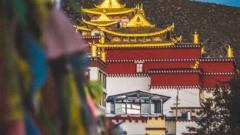

Ngari No Man’s Land
There are still places on Earth where roads feel temporary, maps feel incomplete, and silence carries more weight than words.
Ngari No Man’s Land is one of them.
Located in the far western reaches of Tibet, Ngari is often described as “the roof of the roof of the world.” Yet this phrase barely captures its reality. What defines Ngari is not altitude alone, but emptiness — vast, uncompromising, and profoundly humbling.
To travel into Ngari No Man’s Land is not to seek comfort or convenience. It is to step into a space where the landscape dominates, and the human presence becomes secondary.
Where Is Ngari No Man’s Land?
Ngari lies in western Tibet, bordering Ladakh, Nepal, and the great expanse of the Changtang Plateau. Much of what is known as Ngari No Man’s Land overlaps with sparsely inhabited zones of the high plateau, where permanent settlements are almost nonexistent.
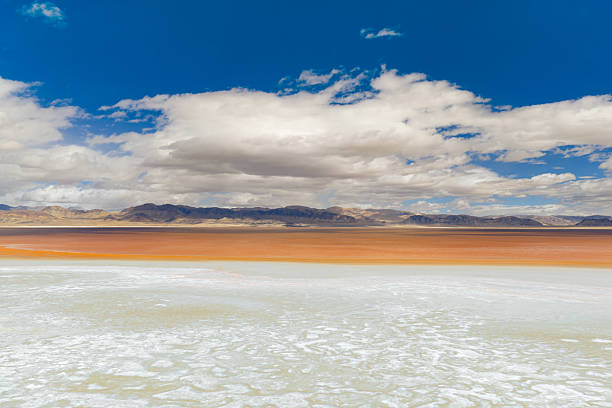
With an average elevation above 4,500 meters (14,700 feet), this region is one of the highest and most inhospitable inhabited areas on Earth. Beyond the last villages, the land stretches on in silence — hundreds of kilometers of open plateau, alpine desert, salt lakes, and unnamed mountain ranges.
This is not a place shaped by tourism. It is shaped by wind, time, and geological patience.
Why Ngari Is Considered One of the Last True Wildernesses
In an age of satellites, highways, and constant connectivity, true wilderness has become rare. Ngari No Man’s Land remains one of the few regions where:
-
Human infrastructure is minimal or absent
-
Nature operates without visible intervention
-
Wildlife migrates freely across immense distances
-
Silence is not an absence, but a presence
There are no attractions built for visitors. No fences, no viewpoints, no curated experiences. What exists here has existed long before any traveler arrived — and will remain long after.
Extreme Landscapes: Beauty Without Softness
Ngari’s beauty is not decorative. It does not try to please. It simply exists.
High-Altitude Deserts and Wind-Carved Plains
Vast gravel plains and alpine deserts dominate the landscape, shaped by relentless winds and extreme temperature shifts. The earth here is raw and exposed, stripped of excess, revealing geological layers that feel ancient and intimate.
Salt Lakes and Mirror Waters
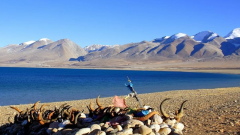
Scattered across the plateau are high-altitude lakes with mineral-rich shores. Their colors shift from deep indigo to pale turquoise depending on light and season. Often, they sit in complete solitude — no boats, no people, no sound but the wind.
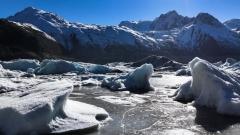
Snow Peaks Without Names
Unlike famous Himalayan summits, many mountains in Ngari remain unnamed and unclimbed. They rise quietly, indifferent to recognition, reminding visitors that not everything exists to be conquered or documented.
Life in the Absence of Humans
Though called “No Man’s Land,” Ngari is far from lifeless.
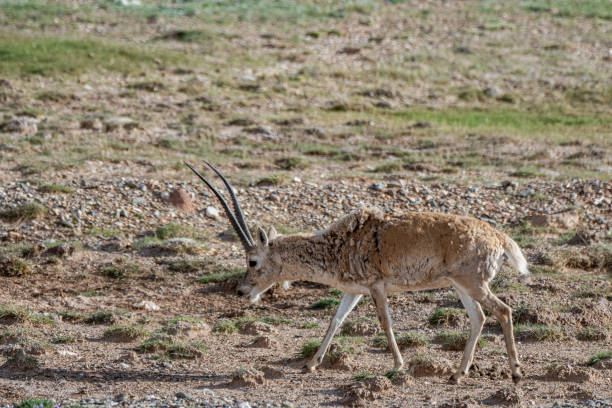
Wild Tibetan antelope (chiru), wild yaks, kiang (Tibetan wild ass), and migratory birds traverse these open spaces freely. Their movements follow ancient patterns, unaffected by borders or human schedules.
Encountering wildlife here feels different from seeing animals in parks or reserves. There is no sense of observation — only coexistence at a distance, as equal inhabitants of a vast landscape.
A Landscape That Forces Inner Silence
Most journeys are filled with stimulation: sights, schedules, conversations. Ngari removes all of that.
Here, the long drives, the empty horizons, and the thin air create an unusual effect — the external noise fades, and the internal voice grows louder.
Travelers often report:
-
A heightened awareness of time passing slowly
-
An acute sense of physical presence
-
Moments of unexpected emotional clarity
-
A deep, sometimes unsettling calm
Ngari does not entertain. It confronts — gently, but persistently.
Spiritual Expedition Beyond Religion
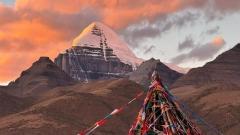
While Ngari is close to sacred sites like Mount Kailash, the No Man’s Land itself is not defined by temples or rituals. Its spirituality comes from scale and solitude.
Standing alone on the plateau, with no sign of human life in any direction, it becomes impossible to maintain the illusion of control. The landscape strips away distraction and invites humility.
This is why many describe Ngari as a spiritual expedition — not because it teaches belief, but because it teaches perspective.
Who Is This Journey For?
Ngari No Man’s Land is not designed for everyone, and that is precisely its value.
It speaks most strongly to those who:
-
Seek profound natural experiences over comfort
-
Are drawn to extreme landscapes and remoteness
-
Value silence, solitude, and introspection
-
Have experience traveling at high altitude
-
Understand that discomfort can be meaningful
This is not a journey to escape life — but to see it more clearly.
How Ngari Differs from Other Tibet Experiences
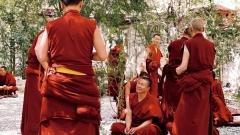
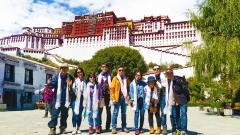
Many travelers know Tibet through Lhasa, monasteries, and cultural routes. Ngari represents a different dimension entirely.
If central Tibet reflects spiritual heritage and daily devotion, Ngari reflects existential scale — the relationship between humans and the planet itself.
It is less about learning history, and more about feeling proportion.
The Ethics of Traveling to Ngari
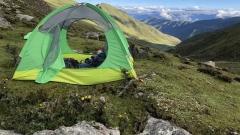
To enter Ngari No Man’s Land is to enter a fragile environment. Responsible travel here means:
-
Minimal impact and maximum respect
-
Understanding that nature sets the rules
-
Accepting limitations without resistance
-
Traveling slowly, deliberately, and consciously
This land does not reward haste.
Some Places Are Not Meant to Be Conquered
Ngari No Man’s Land does not promise beauty in the conventional sense. It offers something rarer — truth without decoration.
Those who arrive expecting spectacle may feel overwhelmed or disappointed. But those who arrive with patience, humility, and openness often leave changed in subtle, lasting ways.
Ngari does not ask to be visited.
It simply exists — vast, silent, and unapologetically real.
And for some, that is exactly the journey they have been searching for.