

The cuisine of Chongqing is never merely about sustenance; it is a magnificent declaration of survival, geography, and character. Perched at the confluence of the Yangtze and Jialing Rivers, this city is perpetually swathed in mist and humidity. This unique basin climate prompted the locals to develop a culinary system centered on “dampness expulsion” and “detoxification,” eventually evolving into a pinnacle of numbing, spicy, fresh, and aromatic flavors. The bedrock of Chongqing’s food is the robust “Wharf Culture”—the grit and hospitality of the ancient porters and trackers—which has transformed over time into the spirited “Jianghu” (underground/folk) atmosphere found at every dinner table today.

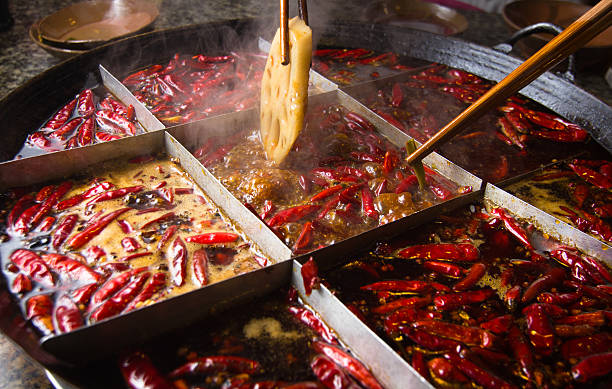
When discussing Chongqing, the Nine-Grid Hotpot stands as an eternal totem. To understand Chongqing hotpot, one must trace its roots back to the Chaotianmen docks of the late Qing Dynasty. As a critical water transport hub, Chongqing attracted merchants but also a massive population of manual laborers. Parts of the cattle discarded by slaughterhouses—tripe, duck intestines, and throat—were affordable and durable. Trackers would salvage these, boiling them in mud stoves filled with chili, Sichuan peppercorns, and heavy beef tallow. This “upcycling” of discarded ingredients for survival evolved into the sophisticated tripe hotpot we see today. The Nine-Grid design was not born of aesthetic preference, but for “pot-sharing”: strangers would each take a grid, eating their own portion while sharing a single boiling pot. Today, sitting in a hotpot restaurant converted from an air-raid shelter, watching the crimson tallow sizzle, that mellow aroma is the deepest cultural foundation of the city.
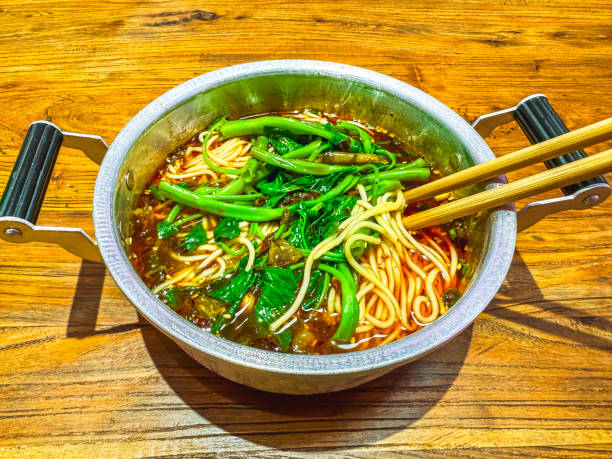
If hotpot is the king of Chongqing’s nights, then Chongqing Small Noodles (Xiao Mian) are the signal of the city’s awakening. The history of these noodles is intrinsically linked to the “shoulder pole” culture. Early vendors carried their stoves on one end of a pole and noodles with seasonings on the other, navigating the stone stairways of the mountain city. For a local, the noodle itself is secondary; the “soul” lies in the bowl of seasonings meticulously blended from over a dozen ingredients, including chili oil, Sichuan pepper powder, crushed peanuts, preserved vegetables, and sesame paste. A morning in a noodle shop is often accompanied by the rhythmic shouting of “Teacher, two taels of noodles, extra chili!” The “Wan Za Mian” (Peas and Meat Sauce Noodles), featuring soft, mashed peas and savory minced meat sauce, creates a creamy, spicy lingering taste that remains a nostalgic hallmark for every Chongqing native.
The other half of Chongqing’s culinary empire is occupied by the legendary Jianghu Cuisine. These dishes do not belong to formal cookbooks; they originated in roadside eateries and driver canteens, emphasizing a “rugged, bold, and adaptable” style. From the Gele Mountain Spicy Chicken to Nanshan Spring Water Chicken, every dish delivers a thrill of adrenaline. The hallmark of Jianghu cuisine is “heavy flavor and massive portions”—it is often a quest to find the chicken amidst a mountain of chilies or to fish out intestines from a sea of peppercorns. This philosophy, which shuns meticulous plating in favor of extreme sensory impact, perfectly mirrors the straightforward and passionate character of the people.
Chongqing’s culinary map extends far beyond the bustling streets of the main districts. Regional specialties from surrounding counties are indispensable pieces of this gastronomic puzzle. The most representative is Wanzhou Grilled Fish. Its origins can be traced to the fishing culture of the Wanzhou and Wushan areas. Legend has it that early fishermen would grill fresh catch directly over charcoal to ward off the cold, a method that later merged with the braising and marinating techniques of Sichuan cuisine to create the “grill first, braise later” style. The essence of Wanzhou Grilled Fish lies in the precise control of the flame, ensuring the skin remains crispy while locking in the succulent juices inside.
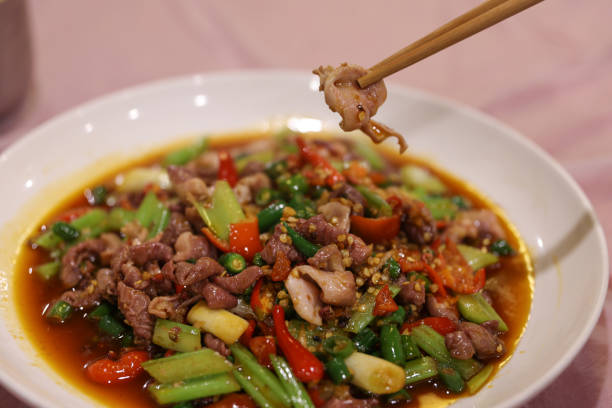
Simultaneously, Qianjiang Chicken Giblets represents the wisdom of the Tujia people in utilizing every part of an ingredient. It involves stir-frying chicken hearts and gizzards over a high flame with locally unique pickled chilies and radishes. The acidity of the pickles neutralizes the gaminess of the organs, transforming it into a crisp, sour, and spicy delight. Meanwhile, the western districts of Bishan and Laifeng are the birthplaces of Jianghu cuisine, where “live fish and live rabbits” are the standard, offering an extreme fusion of freshness and heat that draws foodies from hundreds of miles away.
For international visitors or first-time travelers to Chongqing, this culinary adventure requires some practical strategy. The spice levels here are unlike anywhere else; “mildly spicy” is often a formidable challenge. We recommend starting with a lower intensity and making full use of local “heat-quenchers.” Beyond soy milk, street-side treats like “Liang Gao” (cold rice cakes) and “Liang Xia” (cold rice shrimp)—sweet desserts made from rice flour served in brown sugar syrup—provide the perfect soothing contrast after a spicy meal. To find the true heart of Chongqing, look beyond the chain brands in tourist spots. The real treasures are hidden in the residential quarters behind Jiefangbei, the alleys of Guanyinqiao, or the old shops in Danzishi. The crowds in line, the weathered signboards, and the year-round aroma of beef tallow and peppercorns are the only navigators you need to find the soul of this city.
Chongqing’s food is more than a sensory baptism; it is a deep reading of the city’s character. It teaches you that no matter how rugged life becomes, as long as there is a boiling pot of crimson broth, everything can be met with passion. Standing by the Yangtze River, watching the neon lights flicker while holding a bowl of spicy noodles, you truly understand why this city is a sanctuary for the spirit—because the warmth of Chongqing is as eternal as spring, and its fire as vibrant as summer.