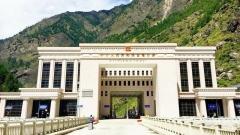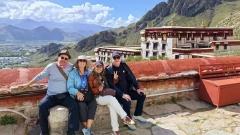

When people imagine Tibet, they often picture snow-covered mountains, dry highlands, monasteries, and vast open skies. While those landscapes certainly exist, they represent only part of the region. Eastern Tibet offers a very different side of the plateau—one that surprises many first-time visitors.
Instead of endless barren terrain, eastern Tibet features dense forests, deep river valleys, alpine lakes, wildflower meadows, and snow peaks rising above green landscapes. In some areas, the scenery feels closer to the Alps or the Pacific Northwest than the stereotypical image of Tibet.
For travelers willing to go beyond the classic Lhasa–Everest route, eastern Tibet may become the most visually diverse and emotionally memorable part of the journey.
What Is Considered Eastern Tibet?
The term “Eastern Tibet” can refer to different areas depending on cultural or administrative definitions, but for travelers, it usually includes:
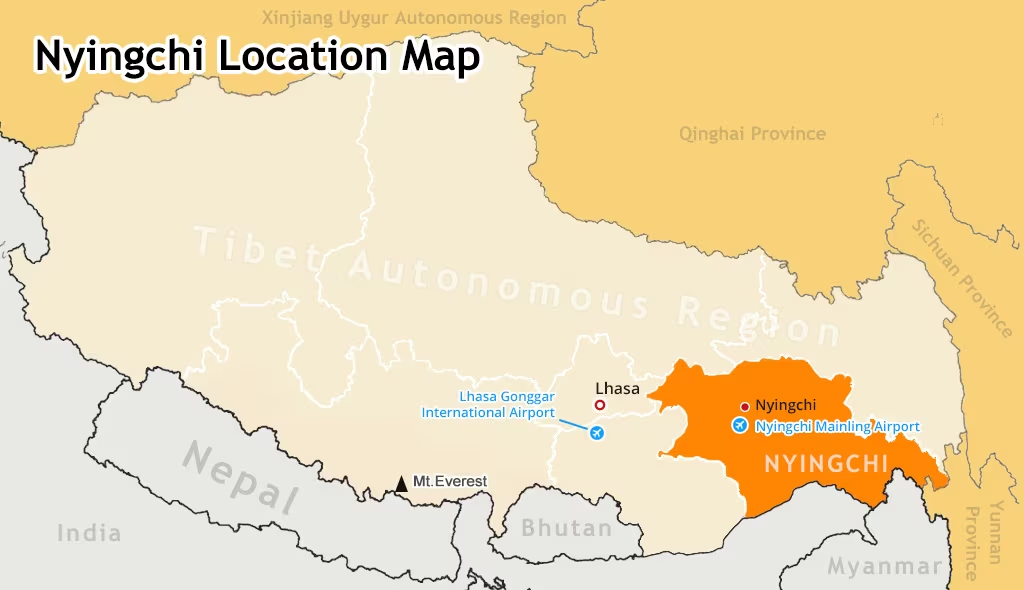
- Nyingchi in southeastern Tibet
- Parts of Chamdo
- Border regions connected to Sichuan and Yunnan Tibetan areas
Compared to central Tibet around Lhasa and Shigatse, eastern Tibet sits at lower elevations and receives more rainfall from the Indian Ocean monsoon. This creates a dramatically different environment, with forests, rivers, and greener mountain landscapes.
Because of this climate transition, the scenery changes quickly as you travel. In a single day, you may pass through snowy mountain passes, pine forests, farmland, and mist-covered valleys.
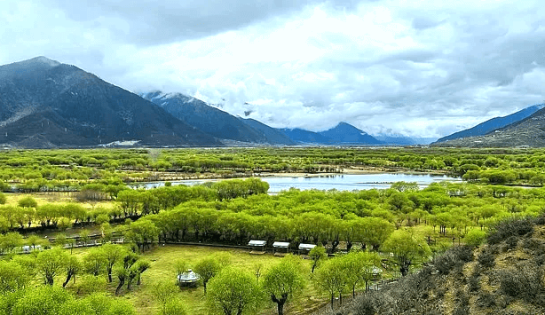
Nyingchi
Why Eastern Tibet Feels So Different
The biggest surprise for many travelers is the color.
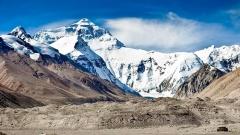
Central Tibet is often dominated by browns, golds, and deep blue skies. Eastern Tibet, however, introduces layers of green rarely associated with the plateau. Forests cover hillsides, clouds move through valleys, and rivers cut through mountain terrain with far more vegetation than most people expect.
This environmental diversity creates a softer, more dynamic visual experience. The landscape feels alive and constantly changing, especially during summer and early autumn.
Another difference is the atmosphere. Many areas in eastern Tibet feel less exposed and more intimate than the wide-open plateau regions. Roads curve through forests and villages rather than crossing endless empty plains.
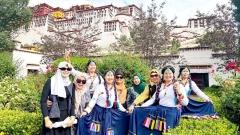
Nyingchi: Tibet’s Greenest Region
If there is one place that best represents eastern Tibet’s beauty, it is Nyingchi.
Often called the “Switzerland of Tibet,” Nyingchi is known for:
- Lulang Forest
- Basum Tso Lake
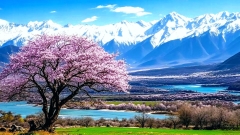
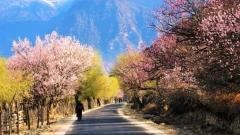
- Peach blossom valleys in spring
- Snow mountains hidden among clouds
Unlike the stark high-altitude landscapes around Everest, Nyingchi combines forests, lakes, rivers, and Tibetan villages into a layered environment that changes with weather and season.
Spring brings pink peach blossoms across valleys. Summer transforms the region into deep green landscapes filled with mist and flowing rivers. Autumn introduces golden forests and clearer mountain views.
For photographers and slow travelers, this seasonal variation makes eastern Tibet especially rewarding.
The Roads Are Part of the Experience
One reason eastern Tibet leaves such a strong impression is that the journey itself becomes part of the scenery.
Routes such as the G318 Sichuan–Tibet Highway are considered among the most scenic roads in China. Instead of moving between isolated attractions, travelers continuously experience changing landscapes throughout the drive.
You may cross high snow passes in the morning, eat lunch near forested rivers, and arrive at a misty Tibetan village by evening.
This constant transition creates a sense of depth and immersion that many travelers feel is missing from more standardized sightseeing routes.
Fewer Crowds, More Atmosphere
Compared with Lhasa, Yamdrok Lake, or Everest Base Camp, many areas in eastern Tibet remain relatively less crowded.
Even during peak travel season, it is still possible to find quiet villages, empty viewpoints, and peaceful stretches of road. This slower pace changes how travelers interact with the environment. Instead of rushing between major landmarks, you have more opportunities to stop, observe, and absorb the atmosphere.
In places like Bomi or Ranwu Lake, the experience often feels less commercialized and more connected to the natural surroundings.
Is Eastern Tibet Better for First-Time Travelers?
For some travelers, yes.
Eastern Tibet offers several practical advantages:
- Lower average altitude in many areas
- Easier acclimatization
- More varied scenery
- A softer introduction to Tibetan landscapes
Travelers concerned about altitude sickness often find eastern Tibet physically easier than immediately heading to Everest or western Tibet.
At the same time, eastern Tibet still delivers classic Tibetan cultural elements, including monasteries, prayer flags, mountain villages, and yak pastures.
For those wanting both nature and culture, it provides a balanced introduction.
The Best Time to Visit Eastern Tibet
The best seasons depend on what kind of scenery you want to experience.
Spring (March–April):
Peach blossoms and snow mountain contrasts make this one of the most visually unique periods.
Summer (May–August):
The landscape becomes intensely green, rivers are full, and forests look at their most vibrant.
Autumn (September–October):
Often considered the best overall season due to stable weather, golden forests, and clearer mountain visibility.
Winter (November–February):
Much quieter, with occasional snow scenery, though some remote roads may be affected by weather.
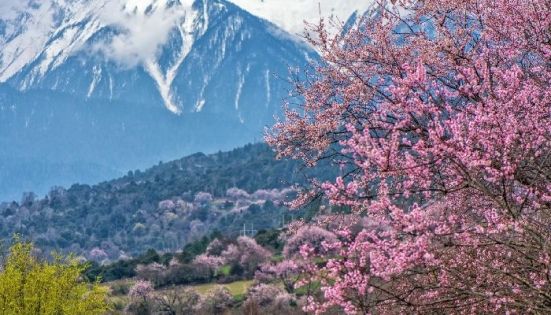
Peach Blossoms in Nyingchi in March
Challenges of Traveling in Eastern Tibet
Despite its beauty, eastern Tibet also presents logistical challenges.
Road conditions can vary, and long-distance driving is common. Weather changes quickly, especially during the rainy season. Some areas may experience landslides or temporary road delays in summer.
Travel infrastructure is improving, but services remain less developed than in major tourist cities.
Because of this, many travelers choose guided or customized tours rather than fully independent travel.
Planning an Eastern Tibet Route
A common and highly recommended route is:
Lhasa → Nyingchi → Bomi → Ranwu Lake → eastern Tibet highway sections
This allows travelers to gradually experience environmental changes while acclimatizing more comfortably.
For travelers entering Tibet overland, the Sichuan–Tibet route offers one of the most scenic approaches into the region.
China Dragon Travel provides customized eastern Tibet itineraries covering transportation, permits, accommodations, and flexible route planning for travelers seeking a deeper and less rushed Tibet experience.
So, Is Eastern Tibet More Beautiful Than You Think?
For many travelers, absolutely.
Eastern Tibet challenges the stereotype that Tibet is only dry plateau and snow mountains. Its forests, rivers, lakes, cloud-covered valleys, and changing seasons reveal a side of the region that feels more diverse and emotionally immersive.
It may not replace the iconic appeal of places like the Potala Palace or Everest Base Camp—but it often becomes the part of Tibet travelers remember most vividly after the journey ends.