
When the Tarim River Turns Gold
When autumn winds ripple across the Tarim River, the light begins to look different.
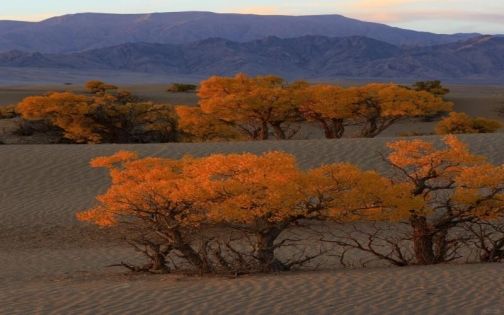
By mid-October, more than 400,000 hectares of Populus Euphratica forest turn shades of gold, amber, and bronze, creating one of the most dramatic autumn landscapes in all of China.
This isn’t a “polished” autumn with neat viewpoints and manicured paths.
It’s raw, quiet, and powerful — desert, river, sky, and trees shaped by time.
If you’re planning your first visit to Xinjiang in autumn, Luntai Populus Euphratica Forest is one place I genuinely believe deserves a spot at the very top of your list.

Hu Yanglin
Best Time to Visit Luntai Populus Euphratica Forest
Peak season: October 15 – November 5
This window offers the best balance of color, weather, and fewer crowds (especially after the National Day holiday).
-
Mid–late October: Leaves are fully golden and most photogenic
-
Late October: Some leaves fall early, but the tree shapes become more dramatic
-
Early November: Fewer yellow leaves, but stronger contrast with blue skies and desert sand
💡 Honest tip:
In some years, leaves fall earlier than expected. If you’re chasing “full gold,” aim for around October 20. Even after leaf fall, the forest still feels powerful — just more wild and solitary.
Best Photo Spots
📍 Qiangyang River Station – “Poplar Forest Train”
A small train runs through the forest, instantly creating a fairytale-like scene.
Slow movement, filtered sunlight, and endless poplars make this one of the easiest places to get great photos.
Best clothing colors: royal blue, red, or white.
Best time: 9:00–11:00 AM or after 4:00 PM
📍 Tarim River Bend
This is the most breathtaking spot in the entire park.
Golden poplars reflected in the river look like a moving oil painting.
At sunset, the colors deepen and barely need editing.
📍 24-meter Observation Tower
A panoramic view over the entire 400,000-hectare forest.
Even without a drone, the scale here is overwhelming and helps you truly understand why this is the largest original poplar forest in the world.
📍 “Dead Tree Forest” Area
Twisted, weathered trunks shaped by wind and time.
Less about color, more about mood. Perfect for silhouettes, black-and-white shots, and minimalist photography.
📍 Poplars in Water
Some trees grow half-submerged, creating a rare “forest in water” effect.
Water levels vary by year, but if conditions are right, this is one of the most unique scenes in the park.

Hu Yanglin
Getting There: Why Luntai Town Is the Smart Choice
Many travelers wonder whether to visit from Korla (Kuerle) or Luntai.
Go via Luntai. No question.
-
Luntai → Forest: ~70 km, about 1 hour
-
Korla → Forest: ~4 hours one way
-
Fewer return transport options from Korla
Visiting from Luntai gives you more time in the forest and far less travel fatigue.
Recommended Route from Urumqi
Friday night
-
Train from Urumqi to Luntai at 20:27
Saturday early morning
-
Arrive around 05:00
At the station, you have two options:
-
Wait inside until sunrise (around 3 hours)
-
Take a taxi to Luntai town (about ¥20 per person)
I chose option 2 and went straight to the hotel.
Accommodation in Luntai
Lansheng Hotel, Luntai
-
Price: around ¥150+ per night
-
Clean, simple, and easy to communicate with
-
Close to transport and local breakfast spots
💡 Tip:
If you arrive early, message the hotel in advance. I arrived before 6:00 AM and was allowed to check in early, which made a huge difference after the night train.
The breakfast shop across the street serves excellent corn porridge, perfect before heading out.

Hu Yanglin
Luntai Town → Forest Transport
At Luntai Bus Station, shared rides are easy to find:
-
Taxi (4 seats): ¥60 per person (¥120 round trip)
-
Minivan (6 seats): ¥40 per person (¥80 round trip)
Drivers wait at the park and return at the agreed time.
If you stay longer than planned, drivers can usually help arrange another return ride — communication is surprisingly flexible.
Inside the Park: How to Explore Properly
🎫 Ticket: ¥60+ (includes shuttle bus)
Take the shuttle to the final stop, then explore on foot.
I skipped the small train and walked the railway loop instead:
-
Distance: ~14 km
-
Time: 4+ hours
-
Almost no other visitors
⚠️ This route requires good stamina. Sandy ground makes walking more demanding than it looks.
What to Wear & Pack
-
Temperature:
-
Daytime: long sleeves or light jacket
-
Morning/evening: thin down jacket
-
-
Clothing colors for photos:
-
Red, royal blue, white
-
Avoid brown or yellow-on-yellow
-
-
Essentials:
-
Strong sunscreen
-
Lip balm
-
Dust-resistant shoes
-
Shoe covers if possible
-
The desert dust is real — wear clothes you don’t mind getting dirty.
Hu Yanglin
Suggested 3-Day Route
Day 1
Kashgar → Tashkurgan → Yarkand
Day 2
Night train to Luntai → Poplar Forest full day
Day 3
Luntai → Korla (Tata Secret Land) → Aksu departure
Balanced pace, rich scenery, and manageable distances.
Final Thoughts
I didn’t see the “perfect” golden peak this time — and that’s okay.
The beauty of the Populus Euphratica forest isn’t just in its color.
It’s in its resilience.
These trees live for thousands of years, standing firm against wind, sand, and drought. Even stripped of leaves, they carry a quiet strength that stays with you long after the trip ends.
If you can only choose one place in China to experience autumn,
make it Luntai Populus Euphratica Forest.
Not a trendy autumn —
but a timeless one.