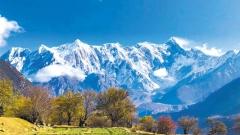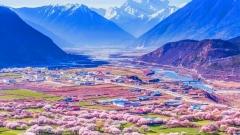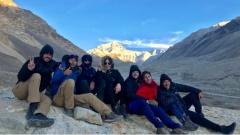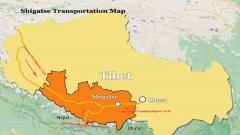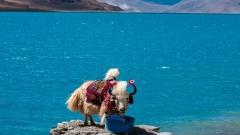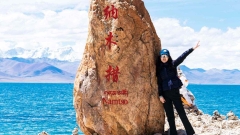

Riding the train from Beijing to Lhasa along the Heavenly Road is the ultimate dream of many travelers. This 3,753-kilometer railway connects the prosperous metropolis to the snow-covered plateau, linking diverse landforms like plains, plateaus, gobi deserts and lakes, integrating North China’s profoundness with Tibet’s purity. Compared with direct flights, its slow travel allows tourists to gradually adapt to the plateau and calmly encounter the stunning scenery along the way. Below is a comprehensive guide covering practical travel information and scenery insights to ensure a smooth Heavenly Road trip.
Overview of Core Information on Trains from Beijing to Lhasa
Main Train Types and Details: There are mainly two options for trains from Beijing to Lhasa, with specific information as follows:
Z21 Direct Express Train (Regular Service):
- Route Length and Travel Time: Total length of 3,753 kilometers, travel time of approximately 40 hours and 20 minutes
- Passing Stations and Regions: Departs from Beijing West Railway Station, passing through major cities such as Shijiazhuang, Taiyuan, Zhongwei, Lanzhou and Xining, traversing eight provinces, municipalities directly under the Central Government and autonomous regions
- Train Configuration: Adopts plateau-specific Type 25T carriages, equipped with oxygen supply devices and vacuum toilets, suitable for plateau travel needs
- Fare Reference: See the table below for specific fares
| Seat Class | Fare (Approx.) |
| Hard Seat | ¥363 |
| Upper Hard Sleeper | ¥720 |
| Lower Soft Sleeper | ¥763 |
“Heart to Heart · Beijing-Tibet” Tourist Special Train (Seasonal Service):
- Operation Schedule: Operates seasonally, with three trips in 2024 and the first trip on May 16, 2025
- Itinerary Information: 14-day journey, passing through Xining, Lhasa, Nyingchi, Shannan and other places
- Tourist Resources: Connects famous scenic spots such as the Potala Palace and the Yarlung Zangbo Grand Canyon, covering 5A-level and 4A-level scenic areas
- Organization and Services: Organized by the Ministry of Culture and Tourism, China State Railway Group Co., Ltd. and other units, with complete supporting travel services
Additional Operational Basics: Regular trains from Beijing to Lhasa operate daily, and departure times may be adjusted slightly according to the season. It is recommended to check the latest schedule on the 12306 official website before traveling; tourist special trains do not have fixed daily schedules, so it is necessary to pay attention to official operation announcements and learn about registration and departure details in advance.
Practical Ticketing Guide: Tickets are generally in short supply. Specific ticketing methods and suggestions are as follows:
- Ticketing Methods for Regular Z21 Train: Priority is given to purchasing tickets through the 12306 official website and 12306 mobile APP. Tickets can also be purchased at ticket windows and railway agency points of Beijing West Railway Station and railway stations across the country; if you need to refund or change tickets, you must do so in accordance with railway regulations before the departure time indicated on the ticket. The refund handling fee is higher during peak seasons, so it is recommended to plan your trip carefully.
- Ticketing Methods for “Heart to Heart · Beijing-Tibet” Tourist Special Train: Ticket purchase through the 12306 platform is not supported. You need to register through designated regular travel agencies or travel platforms authorized by the Ministry of Culture and Tourism. When registering, you must submit personal identity information and relevant documents, and pay the fee to lock the quota after completing the qualification review.
- Key Ticketing Suggestions: For the Z21 train, tickets need to be purchased immediately when they go on sale 15 days in advance during the peak season (June to September) and holidays, especially for popular seat classes such as hard sleepers and soft sleepers. You can set a ticket opening reminder on 12306; for tourist special trains, you need to pay attention to official operation announcements 1-2 months in advance and register as early as possible to avoid missing the trip due to full quotas; when purchasing tickets, you must accurately fill in the passenger’s identity information. Foreign and Hong Kong, Macao and Taiwan passengers need to prepare additional valid documents such as passports and travel permits to ensure that the information is consistent with the documents to avoid affecting travel.
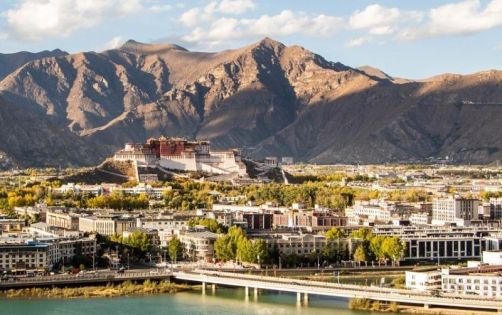
Potala Palace
Detailed Introduction to Carriage Facilities of Trains from Beijing to Lhasa
Core Oxygen Supply Facilities: The entire train is equipped with a diffused oxygen supply system, which automatically turns on when the train travels to areas above 3,000 meters above sea level, continuously delivering oxygen to relieve altitude sickness; there is an independent oxygen supply port near each seat and berth, and passengers can wear oxygen tubes to supplement oxygen by themselves.
Complete Living Facilities: Both hard sleeper and soft sleeper carriages have independent washing rooms and toilets, with 24-hour hot water supply; there is a dining car in the middle of the carriage, providing hot meals such as rice, noodles and stir-fried dishes, and also selling snacks and drinks to meet dietary needs.
Professional Guarantee Configuration: The train is equipped with professional medical staff who can respond to emergencies such as altitude sickness at any time, enhancing the sense of peace of mind during travel.
Beautiful Scenery Along the Train from Beijing to Lhasa: Every Stop is Extreme Scenery
The charm of the train from Beijing to Lhasa lies not only in the snow-covered scenery at the destination, but also in the constantly changing beautiful pictures along the way. Departing from Beijing, the train first passes through the vast North China Plain, then enters the rugged Loess Plateau, and then enters the Qinghai-Tibet Plateau via Xining, climbing from an altitude of 50 meters to 3,650 meters along the way. Each section of the journey is accompanied by unique scenery.
Xining to Golmud Section: Encounter Between Gobi and Lakes
Departing from Xining, the train from Beijing to Lhasa officially enters the prelude to the Qinghai-Tibet Plateau. This section of the journey is not only an important transition zone for landforms, but also a key stage for adapting to the plateau environment. The scenery outside the window constantly changes as the train moves forward, and every view hides the integrated beauty of the northwest and the plateau.
- Core Positioning of the Section: Xining is the starting point for trains from Beijing to Lhasa to enter the Qinghai-Tibet Plateau, and also a key station for the train to replace plateau oxygen supply locomotives.
- Scenery Transition Track: After departing from Xining, the train travels on the connecting section of the Lanzhou-Xinjiang Railway and the Qinghai-Tibet Railway, and the scenery outside the window gradually transitions from farmland to gobi.
- Must-see Scenic Highlights: When passing near Qinghai Lake, on clear days, you can overlook the blue lake water and rapeseed flower fields. July to August is the best viewing period, where the lake water meets the blue sky, presenting a spectacular scene; later, when passing through the edge of the Qaidam Basin, the yardang landforms in the vast gobi reflect with the snow-capped mountains in the distance, showing the desolate and magnificent beauty of the northwest.
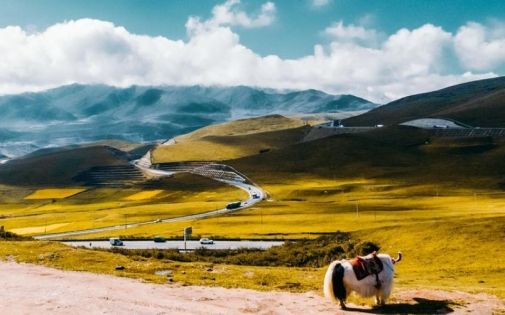
Xining
Golmud to Nagqu Section: The Shock of Crossing Hoh Xil
After arriving in Golmud, the train from Beijing to Lhasa steps into the most shocking core section of the Qinghai-Tibet Railway. Here, there are not only the miracles of world-class plateau railway engineering, but also the primitive ecology of Hoh Xil and the towering grandeur of Kunlun and Tanggula Mountains, which are the essence of the Heavenly Road scenery.
- Core Positioning of the Section: Golmud Station is a key station for trains from Beijing to Lhasa to enter the core plateau section. From here, it enters the core area of the Qinghai-Tibet Railway, which is also the section with the most concentrated beautiful scenery along the way.
- Important Passage Nodes: The train passes through many plateau tunnels such as the Kunlun Mountain Tunnel and the Fenghuo Mountain Tunnel in succession, allowing you to feel the shock of plateau railway engineering.
- Natural Landscape and Ecology: Entering the Hoh Xil National Nature Reserve, there is a high probability of seeing rare wild animals such as Tibetan antelopes, Tibetan wild asses and wild yaks galloping on the grassland, forming a beautiful picture with the snow-capped mountains and blue sky.
- Landmark Check-in Points: Passes through famous landmarks such as Kunlun Mountain Pass and Tanggula Mountain Pass. Among them, Tanggula Mountain Pass, at an altitude of 5,072 meters, is the highest point of the Qinghai-Tibet Railway. You can feel the towering and sacred plateau by the train window.
Nagqu to Lhasa Section: Plateau Lakes and Tibetan Village Customs
Departing from Nagqu, the journey of the train from Beijing to Lhasa enters the final stage, and the style changes from desolate grandeur to gentle and vivid. The vitality of the Northern Tibet Grassland, the holiness of Namtso and the strong Tibetan village customs are intertwined, laying a warm and unforgettable end for this Heavenly Road trip.
- Core Positioning of the Section: After departing from Nagqu, the train from Beijing to Lhasa gradually heads to the Northern Tibet Grassland, starting the final journey of plateau customs.
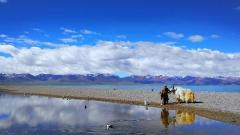
- Scenery Transition Track: The scenery outside the window changes from desolate gobi to fertile grassland with abundant water and grass. Herds of cattle and sheep are scattered, and Tibetan blockhouses are dotted among them, with strong Tibetan village customs.
- Must-see Scenic Highlights: When passing near Namtso, if the weather permits, you can overlook the “Heavenly Lake” Namtso. The blue lake water merges with the snow-capped mountains and grassland, presenting a holy and pure scene.
- Transition Before Arrival: As approaching Lhasa, the altitude gradually decreases, passengers’ altitude sickness eases, and the Tibetan-style buildings outside the window become more dense, indicating that the Heavenly Road trip is about to reach its destination.
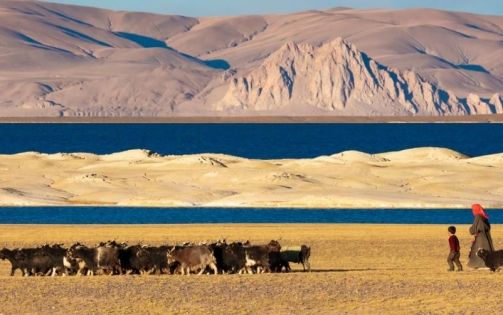
Shepherds of Nagqu City
Practical Travel Tips for Trains from Beijing to Lhasa to Facilitate a Smooth Journey
Tips for Coping with Altitude Sickness
Altitude sickness is one of the core concerns for passengers taking the train from Beijing to Lhasa. Scientific response can greatly improve travel comfort. The following collates comprehensive coping skills from before departure to during the trip combined with the train travel scenario to help smoothly adapt to the plateau environment.
- Prevention Before Departure: Avoid strenuous exercise one week in advance, maintain a good physical condition, and lay a foundation for adapting to the plateau environment
- Precautions During the Trip: Avoid strenuous movements such as getting up quickly and running; drink plenty of water and ensure adequate rest; eat a light diet and greasy food
- Suggestions on Medication Preparation: You can prepare anti-altitude sickness drugs in advance, but you must take them under the guidance of a doctor and do not take them blindly without authorization
Luggage Preparation Suggestions
The climate of the Qinghai-Tibet Plateau is special, and the journey is long. Reasonable luggage preparation is the basis for a smooth trip. Combined with the travel characteristics of the Beijing to Lhasa train and the needs of the plateau environment, the following sorts out targeted luggage list suggestions, taking into account practicality and portability.
- Warm Clothing: The climate of the Qinghai-Tibet Plateau is changeable with large temperature differences between day and night. Even when traveling in summer, it is necessary to prepare down jackets, fleece jackets, thermal underwear, etc.
- Sunscreen Products: The plateau has strong ultraviolet rays, so it is necessary to carry sunscreen, sunglasses, sun hats, etc. to do a good job in sun protection
- Personal Items: It is recommended to carry thermos cups, personal toiletries, commonly used medicines, etc. Although the train provides basic items, it is more convenient to bring your own
Itinerary Planning Suggestions
Since the total travel time of the train from Beijing to Lhasa is relatively long, it is recommended that passengers plan their itinerary reasonably. They can give priority to trains such as Z21 that pass through core scenic sections such as Hoh Xil and Namtso during the day, check the train schedule in advance, and reserve sufficient time for viewing scenery. After arriving in Lhasa, do not rush to visit scenic spots. It is recommended to rest in the urban area for 1-2 days first, gradually adapt to the plateau environment through low-intensity activities, and then go to scenic spots such as the Potala Palace and Jokhang Temple. In addition, if time permits, you can stay in intermediate stations such as Xining and Golmud for 1-2 days. In Xining, you can feel the integration of Tibetan and Han cultures, and in Golmud, you can experience the customs of a gobi new city, and deeply feel the local customs along the way.
An Unforgettable Heavenly Road Journey
Traveling by train from Beijing to Lhasa is not just a simple transportation trip, but also a visual feast across time, space and landforms, and a spiritual journey to feel the charm of the plateau and human customs. From the prosperous metropolis of Beijing to the snow-covered holy city of Lhasa, every scenery along the 3,753-kilometer journey is worth savoring carefully, and every moment is worth remembering permanently. It is hoped that this guide can provide practical references for you who plan to take the train from Beijing to Lhasa, making your Heavenly Road trip smooth and peaceful, and allowing you to freely encounter the extreme beauty of the Qinghai-Tibet Plateau.