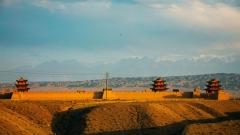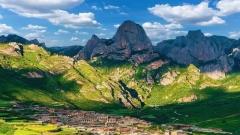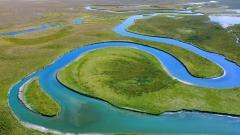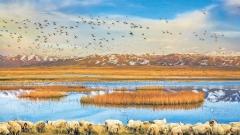

China’s size and geographic variety produce some of the world’s most dramatic and diverse landscapes: towering karsts, enchanted pillar forests, crystalline lakes, alpine plateaus and dense tropical rainforests. Every region tells a different natural story, and the country’s system of national parks and nature reserves preserves habitats that range from subtropical coasts to the roof of the world. Whether you’re a wildlife photographer, a landscape painter at heart, or simply someone who wants to breathe wide-open air, these 15 parks represent the most compelling natural destinations across China.
Zhangjiajie National Forest Park – Sculpted Sandstone Pillars and Otherworldly Views
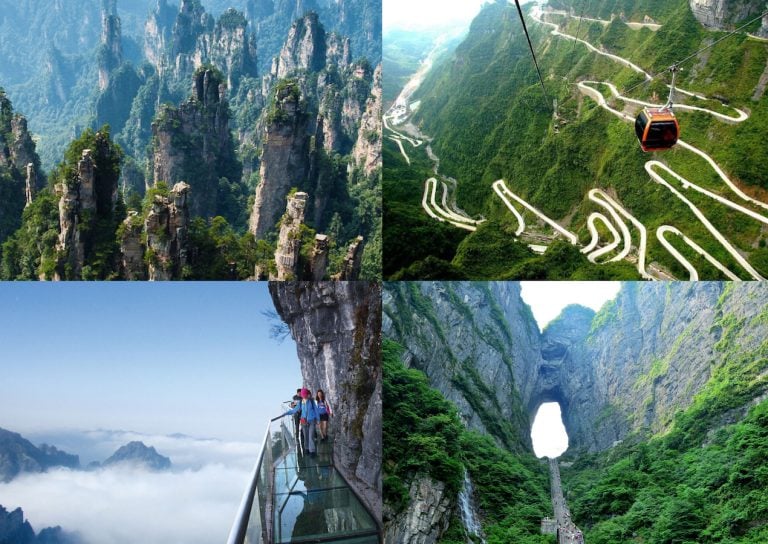
Zhangjiajie in northwestern Hunan Province became China’s first national forest park and later rose to global fame when its soaring sandstone pillars inspired the floating mountains in the film Avatar. The park’s vertical karst towers thrust from mist-filled valleys, creating surreal panoramas that change with light, fog, and season. Over three thousand named peaks and pillars take on fantastical shapes — some suggest human or animal forms, others mimic everyday objects — and photographers prize the mood shifts at dawn and dusk.
Trails and an extensive system of cable cars and glass walkways allow visitors to sample multiple viewpoints without disturbing fragile slopes. The park’s mix of mixed broadleaf and coniferous forest supports a variety of birdlife and endemic plants, while the cultural fabric of nearby communities offers a window into local Hunan traditions. The best windows for crisp visibility are during shoulder seasons when haze is lower; however the park’s dramatic mist often lends the most cinematic images in the cooler months too. Remember to stick to designated trails and viewing platforms to preserve the delicate sandstone and understory plants.
Zhangjiajie National Forest Park
Jiuzhaigou National Park – Alpine Lakes, Waterfalls and Tibetan Culture
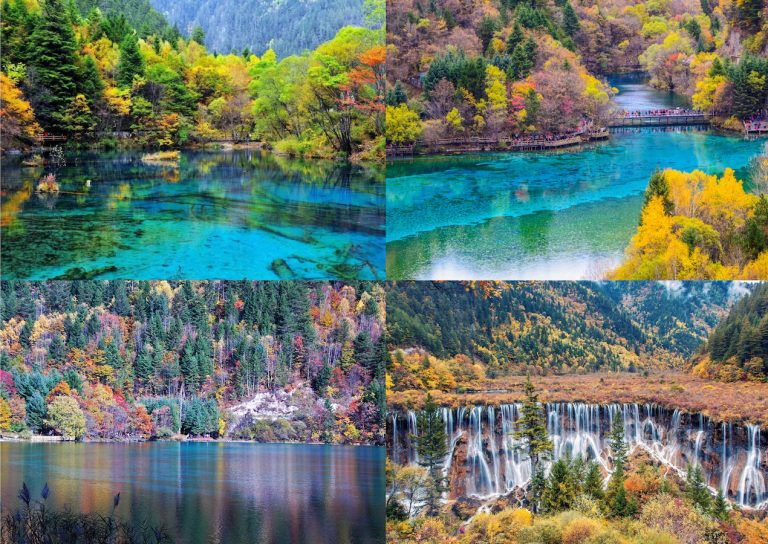
High in Sichuan’s Aba Tibetan and Qiang Autonomous Prefecture, Jiuzhaigou is famed for vividly colored lakes, tiered waterfalls, dense forests and traditional Tibetan villages perched within a deep glacial valley. Its name — which translates roughly as “Nine Village Valley” – reflects the human settlements that historically dotted this long, forested gorge. Water chemistry, mineral deposits and seasonal plankton give Jiuzhaigou’s lakes their striking emerald and turquoise hues; waterfalls descend in multi-tiered cascades framed by larch and fir.
Beyond scenery, the area is ecologically important, supporting rare species including giant pandas and Sichuan takin in surrounding ranges. The valley’s combination of cultural architecture, prayer flags and remote villages also makes it an appealing destination for travelers seeking an immersive mountain atmosphere. For photographers, autumn color and clear water reflections are showstoppers; in cooler months expect occasional snow-capped peaks and a quieter visitor experience. To protect fragile aquatic ecosystems, follow park signage regarding boatless viewing and avoid disturbing shorelines.
Jiuzhaigou National Park
Huangshan National Park – Pines, Sea of Clouds and Classical Chinese Aesthetics
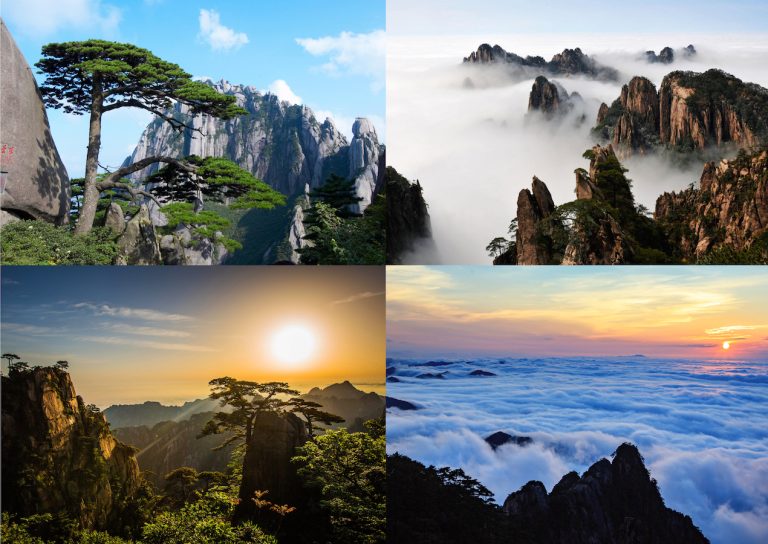
Huangshan, or Yellow Mountain, in southern Anhui Province has long been both a natural and cultural icon in China. The mountain is celebrated for its “Five Wonders”: ancient and wind-sculpted pines clinging to granite outcrops, dramatic rock formations, the rolling sea of clouds, mineral hot springs, and winter snows that drape the ridgelines. Artists and poets have drawn inspiration from Huangshan for centuries; the ridges, carved gullies and weathered stones appear throughout classical Chinese painting and literature.
Trails through the mountain reveal a varied microclimate and striking viewpoints, some famous for dramatic sunrise and cloud inversion effects. Nearby Tunxi Old Street and surrounding Huizhou villages preserve traditional architecture and local crafts, pairing cultural discovery with mountain scenery. Huangshan’s weather can be changeable — the mountain’s clouds are part of its charm — so travelers benefit from packing for varied conditions and respecting trail safety in wet or snowy weather.
Huangshan National Park
Guilin Li River National Park – Timeless Karst Scenery and River Life
The Li River and its surrounding karst landscapes near Guilin are among China’s most iconic natural images: steep green peaks reflected in a slow ribbon of emerald water, fishermen practicing traditional bamboo-raft skills, and villages tucked into river bends. The Li River corridor spans a sequence of extraordinary karst towers, rice terraces and limestone pinnacles that have defined Chinese landscape aesthetics for centuries.
Visitors explore the river by sightseeing cruise or smaller bamboo rafts for an intimate perspective of riverbank life, riverside fields and limestone reflections. Beyond the river itself, the Guilin–Yangshuo region offers walking routes, caves, and local markets that reveal rural Guangxi customs. Rainy seasons influence navigability and river levels, so timing and local conditions are important. Practicing leave-no-trace values along river banks and choosing low-impact operators for river excursions help conserve aquatic habitats and cultural landscapes.
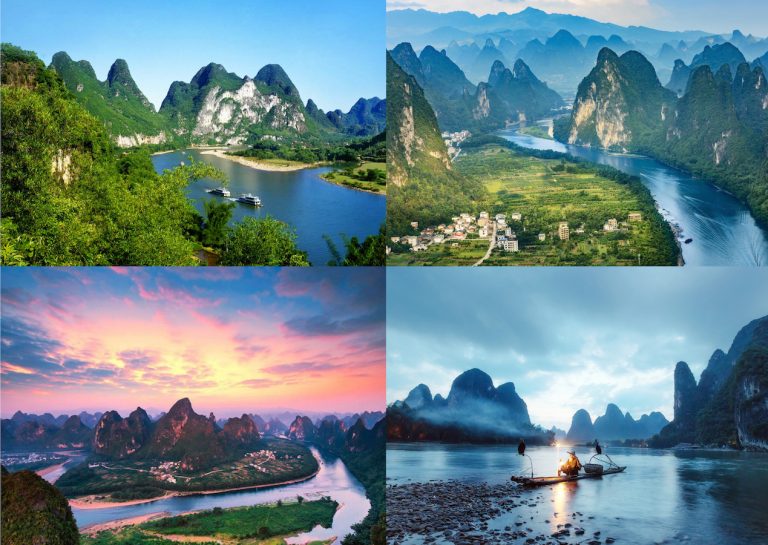
Guilin Li River National Park
Potatso National Park – High Plateau Lakes and Pristine Wetlands
In northwestern Yunnan, Potatso (often called Pudacuo) sits within the larger Shangri-La region and forms a well-preserved alpine ecosystem at high elevation. With reflective lakes, flower-filled meadows, peat bog wetlands and primeval forests, the park is a photographic magnet and an ecological stronghold. The park’s place within the “Three Parallel Rivers” World Natural Heritage corridor underscores its geological and biological value.
Potatso’s scenery is defined by clear, mirror-like waters and wide pastoral expanses punctuated by migrating waterfowl in season. The intact wetland mosaics support a variety of high-altitude plants and birds; the park’s trails and boardwalks provide easy, low-impact access to sensitive habitats. Because of the altitude, many visitors will notice thinner air — acclimatisation and sensible pacing are recommended — and seasonal weather shifts make summer and autumn especially vivid for wildflowers and foliage color.
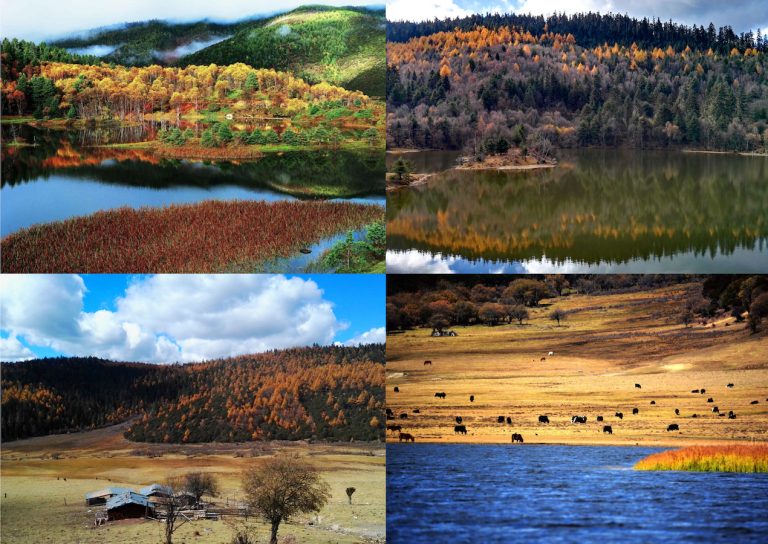
Potatso National Park
Stone Forest National Park – Living Limestone Sculptures and Karst Diversity
Shilin’s Stone Forest near Kunming is a breathtaking demonstration of karst geomorphology: vast fields of limestone pillars carved by millions of years of solutional erosion into towers, arches and caverns that resemble a petrified forest. UNESCO recognition highlights the region’s exceptional value for geologists and nature enthusiasts alike. Among the vertical forms are spires that take on familiar shapes — swords, mushrooms and columns — creating a labyrinthine landscape that invites exploration.
Boarded walks and guided routes balance visitor access with landform protection; in many places the stone pillars shelter microhabitats with unique lichens and plants adapted to the calcareous substrate. The Stone Forest is impressive in any season, and cooler months often mean clearer skies for dramatic silhouette photography. Because the karst terrain is fragile, stick to marked pathways to prevent damage to formations and the fragile soils that support endemic flora.
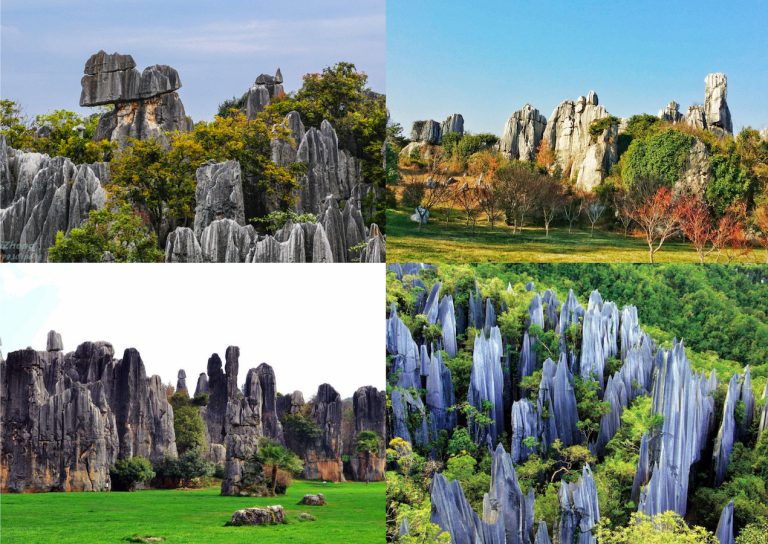
Stone Forest National Park
Sanjiangyuan National Nature Reserve – The Source of Three Great Rivers
Sanjiangyuan — literally “Three Rivers’ Source” — is a vast plateau reserve on the northeastern Tibetan Plateau and the birthplace of the Yangtze, Yellow and Lancang (Mekong) rivers. This high-elevation wetland and alpine grassland mosaic is ecologically vital not only to China but to downstream regions across Asia. Snow-capped peaks, expansive marshes, braided streams and glacial remnants create an essential water-storage landscape.
The reserve safeguards species adapted to harsh plateau conditions, including Tibetan antelope and snow leopard in higher ridges, alongside rich botanical assemblages and wetlands that store and filter water for billions downstream. Visiting Sanjiangyuan offers a perspective on large-scale water security and conservation. Respect for local Tibetan communities and traditional grazing practices is essential — support community-led tourism where available and avoid activities that disturb sensitive breeding seasons or fragile marshes.
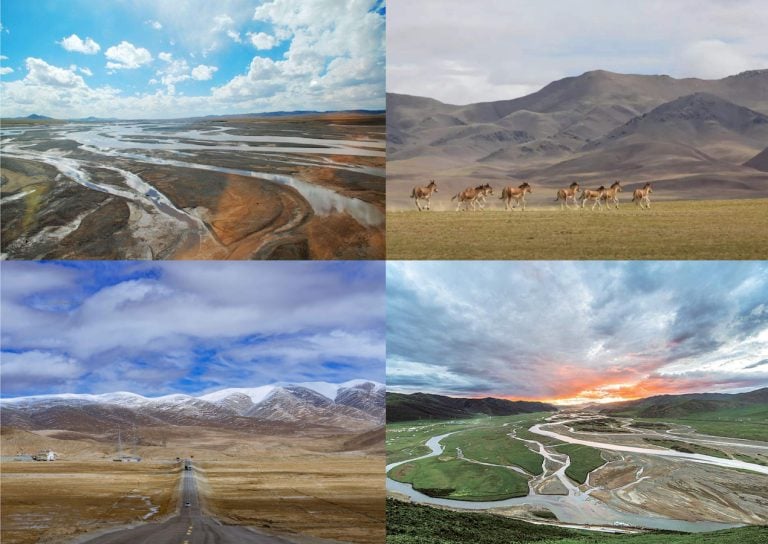
Sanjiangyuan National Nature Reserve
Narat National Forest Park – Coniferous Elegance and Kazakh Culture
Narat National Forest Park in Yining (Ghulja), located at a transportation junction between Main Highways 217 and 218 in Xinjiang, is a mixed cultural and natural forest reserve. Dense coniferous stands, wide grasslands and alpine meadows create a backdrop for wildlife and active local traditions. The park is especially known for supporting large mammals and bird species adapted to the colder, continental interior.
Beyond nature, Narat’s cultural fabric is woven with Kazakh music, equestrian events and seasonal festivals — a reminder that Xinjiang’s natural attractions are inseparable from the living cultures that have grazed and celebrated here for generations. Visitors can enjoy short hikes or interpretive programs to learn about local customs, but always with sensitivity toward pastoral lands and seasonal grazing cycles.
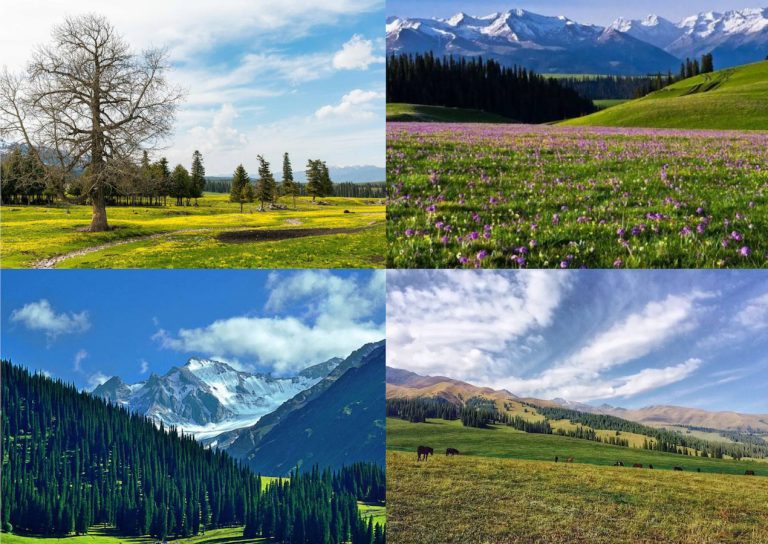
Narat National Forest Park
Altay National Parks – Lakes, Boreal Forests and Steppe Cultures
Xinjiang’s Altay region in the far north hosts a constellation of protected areas, of which Kanas, Jiadengyu and Baihaba are the most celebrated. Kanas Lake is the centerpiece: a remote, highland lake set in a framed valley of conifers, glaciers and rolling pastures. Nearby Jiadengyu forms the natural entry corridor to Kanas, while Baihaba protects old-growth forests, meadows and cultural enclaves of the Tuva people.
This region blends taiga, alpine meadows and steppe in an often-surprising palette of colors across the season cycle. Wildlife viewing, traditional pastoral culture and striking lake reflections make Altay a favorite of photographers and nature-lovers seeking remote, pristine landscapes. Summer brings gentle warmth and abundant wildflowers; autumn turns larch and birch golden. Because of its latitude and elevation, weather can change quickly — plan for warm days and cool nights, and respect local grazing areas.
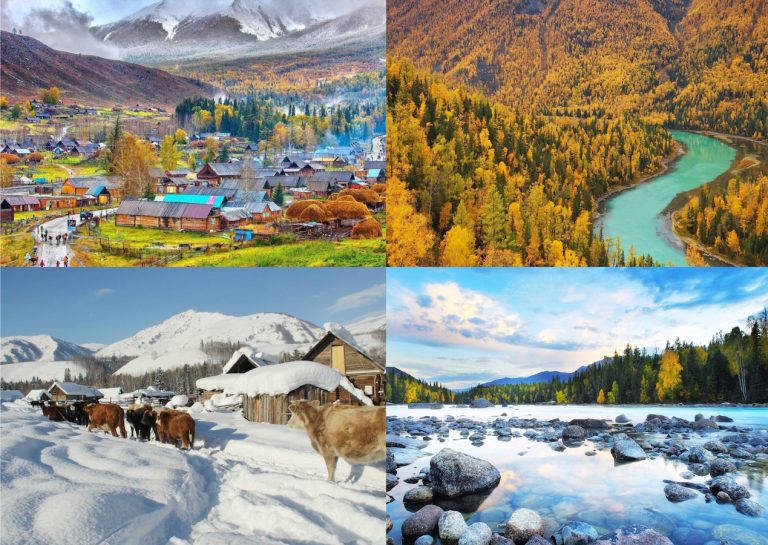
Altay National Parks
Giant Panda National Parks – Conservation Hubs and the World’s Most Famous Bears
China’s national system includes multiple protected areas dedicated to giant panda conservation and the forest ecosystems they depend on. While not all panda reserves are open to tourism, they are indispensable for species recovery. Two of the most established and visitor-accessible panda centres are Wolong and Bifengxia in Sichuan, both integral to conservation research, captive breeding, and educational outreach.
Wolong’s long-term research programs and rewilding efforts make it a global leader in panda science, while Bifengxia combines breeding facilities with visitor-friendly habitats and rehabilitation centres. Observing pandas in a responsible setting — ideally within programs emphasising education and habitat protection rather than photo-focused encounters — can be a moving experience that underscores how species recovery requires landscape-scale stewardship. When visiting, look for interpretive talks and support facilities that fund in-situ conservation.

Giant Panda National Parks
Changbai Mountain National Forest Park – A Volcanic Summit and Heavenly Lake
Changbai Mountain (Paektu/ Baekdu in other languages) along China’s northeastern border presents a dramatic volcanic profile with the famous crater known as Heavenly Lake at its summit. This giant caldera lake sits ringed by steep cliffs and alpine forests, creating a cinematic, almost primeval scene. The region’s waterfalls, jade pools and quiet valley forests offer a variety of micro-ecosystems from dense mixed forest to subalpine scrub.
Changbai’s combination of geological drama and winter snow sports makes it appealing year-round; winter brings a chance to see frost and snow-shrouded forests, while summer unveils the lake’s deep blue and the surrounding green. Because parts of Changbai are ecologically fragile, visitors should adhere to trail closures and access guidelines designed to protect alpine flora and minimize erosion.
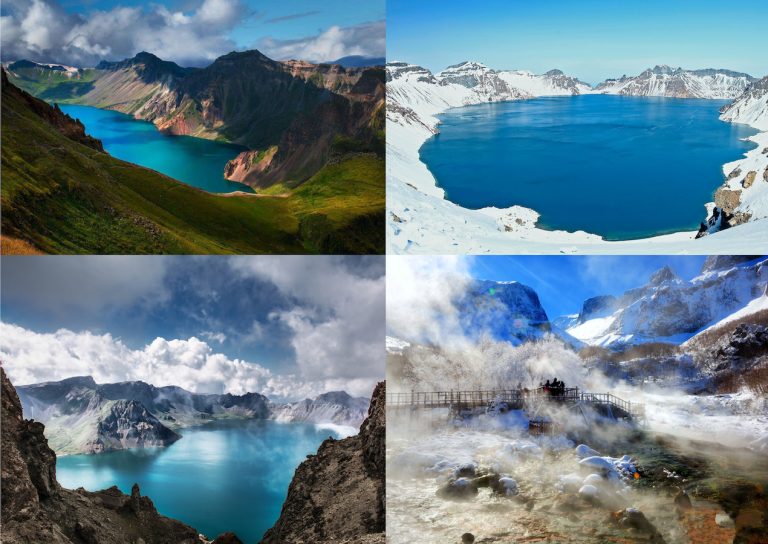
Changbai Mountain National Forest Park
Ejina Populus euphratica National Nature Reserve – Desert Forests and Seasonal Color
Ejina’s Populus euphratica forest in far-west Inner Mongolia is an extraordinary remnant: a vast stand of desert-adapted poplars that survive in an arid environment where few trees persist. These trees undergo dramatic seasonal color changes — lush green in spring and summer, brilliant gold in autumn and russet-red tones in some colder months — providing spectacular photogenic contrasts against dune and steppe backdrops.
The reserve’s mosaic of viewing areas, dunes and overlooked cultural landscapes has made it a magnet for landscape photographers and those curious about desert ecology. The site also supports desert-based recreation — from starry-night camping to sand sports — when managed sustainably. As with all fragile desert systems, avoid trampling root zones and choose guided activities that minimize soil disturbance.
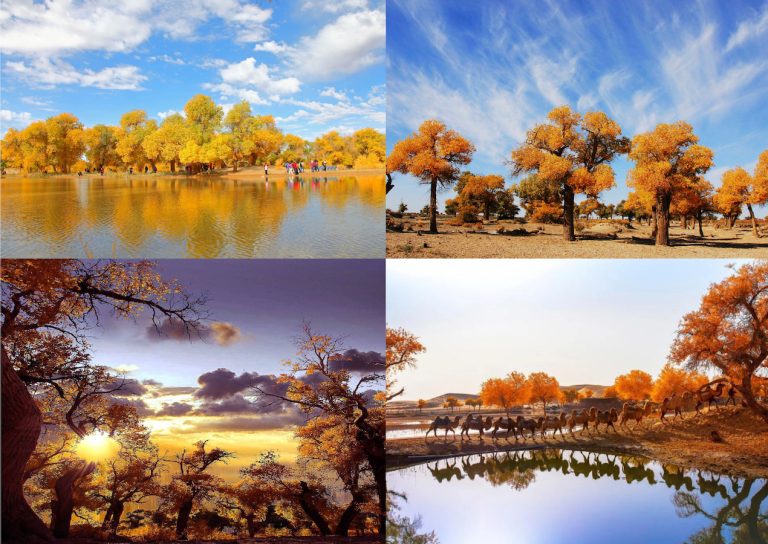
Ejina Populus euphratica National Nature Reserve
Kuqa Grand Canyon National Geopark – Red-Sandstone Canyons and Silk Road Relics
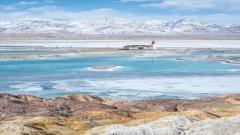
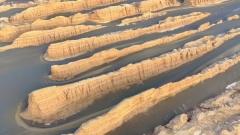
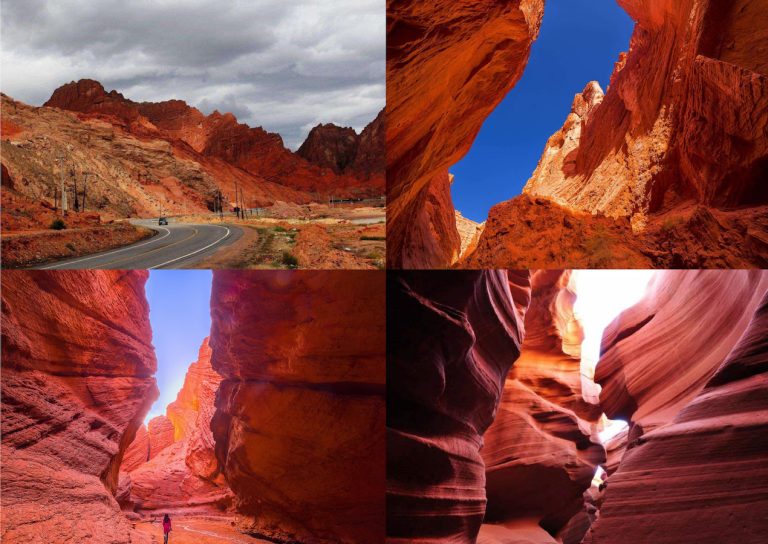
Kuqa Grand Canyon in southern Xinjiang’s Aksu region is a dramatic red-sandstone canyon cut by wind and water over millennia. The canyon’s sculpted walls, narrow slots and dramatic views bear testament to geological forces and also sit alongside important Silk Road archaeological sites, including cliff grottoes with ancient murals and rock carvings.
Exploring Kuqa yields a combination of natural spectacle and human history: canyon walks reveal stratified colors and erosion features, while nearby grotto art attests to millennia of cultural exchange. The canyon’s arid climate creates stark, high-contrast light that is especially appealing to photographers — but always observe safety advice on narrow trails and in slot canyons, and support conservation initiatives that preserve mural sites and rock art.
Kuqa Grand Canyon National Geopark
Pangong Lake National Park – High-Altitude Serenity on the Tibetan Plateau
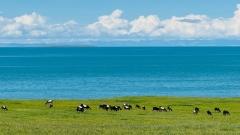
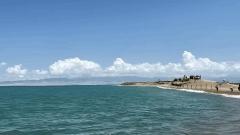
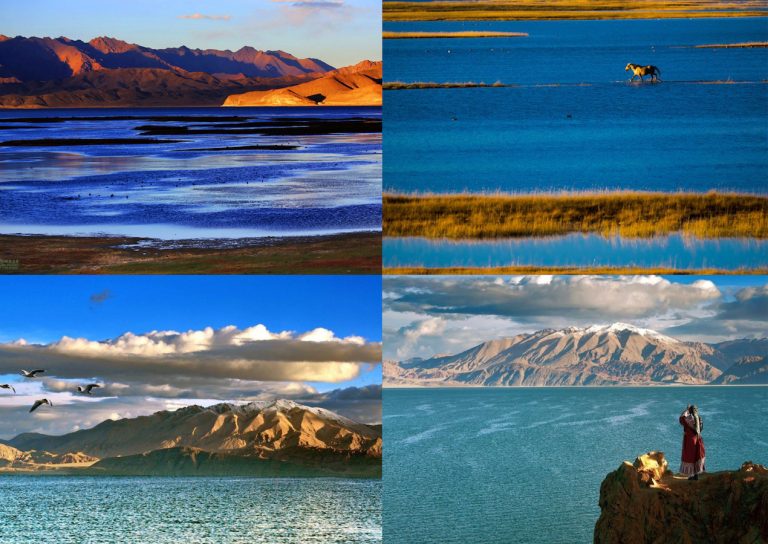
Pangong Lake in Ngari (Ali) Prefecture on the western Tibetan Plateau is an enormous, high-altitude lake famed for its shifting palette of blues and aquamarines and its role as a high, remote bird habitat. The lake’s saline and fresh-water gradients, its surrounding snow peaks and sweeping pastures create a pristine highland tableau.
Access to Pangong evokes the broader experience of plateau travel: wide skies, clear light and a sense of profound remoteness. Birdlife, including many migratory species, and the rhythmic presence of yaks and grazing livestock enrich the scene. Because of high altitude, visitors should be prepared for thinner air and rapidly changing weather; respect protected areas and bird-breeding zones and choose operators who practice low-impact travel on the fragile plateau soils.
Pangong Lake National Park
Hainan Tropical Rainforest National Park – Coastal Tropics, Biodiversity and Island Culture
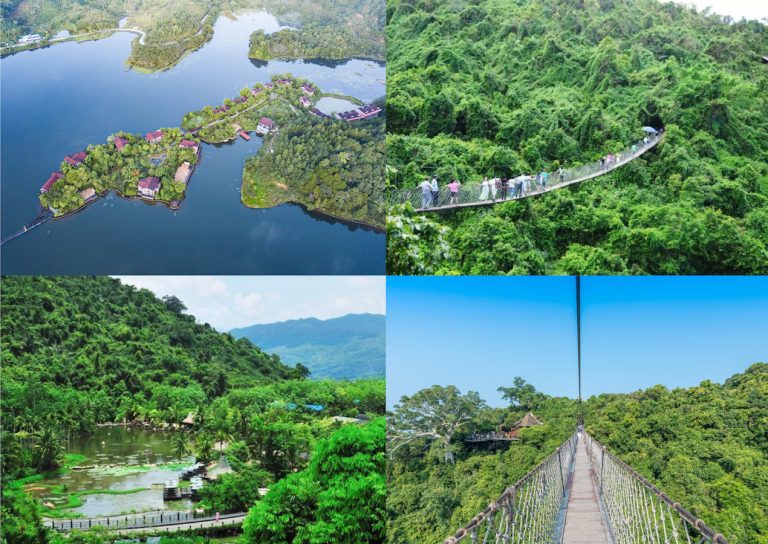
Hainan’s tropical rainforest covers a significant portion of the island and protects lush lowland and montane rainforests, unique endemic species, and an intricate coastal ecology. The island’s tropical monsoon climate produces year-round warmth, spectacular plant diversity and forest formations that differ markedly from mainland temperate zones.
Beyond hiking through ancient stands and canyon streams, Hainan’s park network links multiple nature reserves and forest parks — making the island a compact base for exploring unique tropical habitats, endemic fauna and the interface of rainforest and coastal systems. For international visitors, Hainan offers a tropical contrast to alpine and temperate parks elsewhere in China, pairing beach and marine attractions with inland biodiversity. Respect local conservation rules, and support community initiatives that protect endemic species and traditional livelihoods.
Hainan Tropical Rainforest National Park
Tailored Nature Experiences for China National Parks
If you’d like logistical support, tailored advice or professionally guided national-park experiences in China, China Dragon Travel can help with customised itineraries, local guides who emphasize conservation-friendly practices, and bilingual support for international visitors. Reach out to discuss how to visit these parks responsibly and make the most of each destination’s unique natural and cultural strengths.