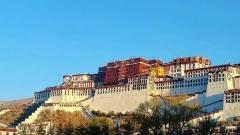

For many visitors, Lhasa is introduced through monumental imagery: vast palace walls, golden rooftops, and ceremonial processions. These images are powerful, but they can also be incomplete.
To understand Lhasa in a deeper and more meaningful way, one must look beyond its grand monuments and into the quieter spaces where belief, nature, and everyday life intersect. Here, spirituality is not only performed—it is lived. Culture is not preserved behind glass—it is practiced daily.
This journey focuses on places that reveal Lhasa as a human landscape shaped by devotion, environment, and survival over centuries.
Qusang Monastery: The Earliest Shape of Tibetan Spiritual Life
Located in a secluded valley on the outskirts of Lhasa, Qusang Monastery offers a glimpse into the earliest form of Tibetan Buddhist practice.
Long before large institutional monasteries emerged, spiritual seekers practiced in remote valleys and caves, drawn by solitude rather than grandeur. Qusang retains this original character. Its scale is modest, its environment quiet, and its rhythm slow.
For travelers, Qusang represents a rare opportunity to encounter Tibetan Buddhism in its most elemental form—unmediated by ceremony or crowds. The surrounding landscape is not a backdrop but an integral part of spiritual life.
Zaki Temple: Faith Rooted in Everyday Needs
Among all religious sites in Lhasa, Zaki Temple is perhaps the most vividly human.
Known for its association with prosperity and fortune, Zaki Temple attracts locals from all walks of life. Business owners, families, and individuals facing uncertainty come here with deeply practical hopes: stability, success, and peace of mind.
This is not faith in abstraction. It is faith grounded in daily reality.
For Western visitors, Zaki Temple challenges common assumptions about Tibetan Buddhism as purely philosophical or ascetic. It reveals a living belief system that engages directly with material life, without contradiction.
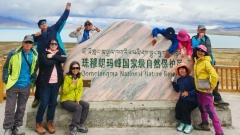
Chiren Chea Mountain Museum: How Mountains Shape Worldviews
In Tibet, mountains are never merely geological formations. They are protectors, teachers, and spiritual anchors.
The Chiren Chea Mountain Museum explores this relationship between people and high-altitude landscapes. Through exhibitions on mountaineering history, local culture, and environmental adaptation, the museum shows how Tibetan identity has been shaped by elevation, climate, and isolation.
Rather than separating nature from culture, the museum presents them as inseparable. Human resilience, belief systems, and social structures emerge as responses to the mountains themselves.
The Lhasa River: A Living Artery of the City
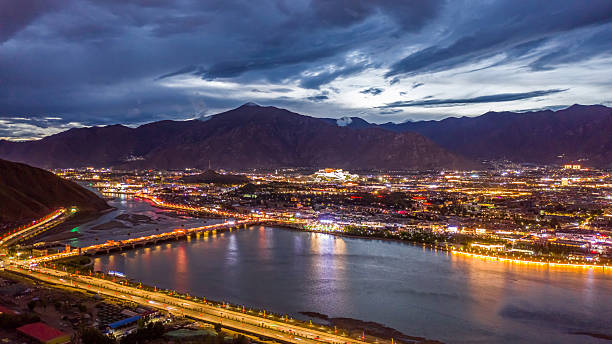
The Lhasa River flows quietly alongside the city, often overlooked by visitors rushing between landmarks.
Yet this river has sustained Lhasa for generations. It nourishes farmland, connects communities, and forms a subtle boundary between urban life and the open plateau.
For locals, the river is both practical and symbolic—a source of life and continuity. Observing daily activities along its banks reveals a slower, grounded rhythm of existence that contrasts with the city’s monumental core.
For travelers, walking beside the Lhasa River offers a chance to witness Lhasa as a lived-in place rather than a curated destination.
The Yak Museum: The Foundation of Plateau Civilization
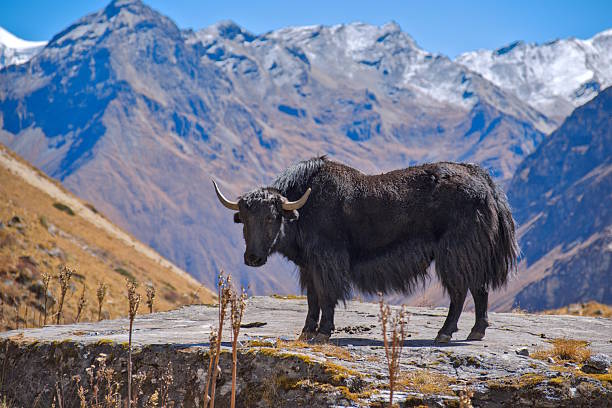
Few animals have shaped a culture as profoundly as the yak has shaped Tibetan life.
The Yak Museum documents this deep relationship, showing how yaks provide food, clothing, transportation, fuel, and economic stability. In many ways, yak culture is not a subset of Tibetan civilization—it is its foundation.
What emerges from the museum is a lesson in coexistence. Tibetan society did not conquer its environment; it adapted to it. This balance between human need and ecological respect remains central to Tibetan values today.
Reading Lhasa as a Human Landscape
Together, these places reveal Lhasa through a different lens:
-
Qusang Monastery: spirituality rooted in landscape
-
Zaki Temple: belief embedded in daily survival
-
Mountain Museum: environment shaping identity
-
Lhasa River: life flowing alongside history
-
Yak Museum: coexistence as civilization
This is Lhasa not as spectacle, but as continuity.
Why This Matters for Thoughtful Travelers
For travelers seeking more than iconic images, this approach offers something rare:
-
Insight into lived belief rather than formal ritual
-
Understanding of how environment shapes culture
-
Encounters with places that function for locals, not tourists
These experiences foster respect, patience, and genuine connection—qualities essential to meaningful travel.
Lhasa Is a Place to Be Understood, Not Consumed
Lhasa does not reveal its essence through monuments alone.
Its deeper story unfolds in valleys, rivers, working animals, and humble temples—where life continues without performance.
For those willing to observe carefully, Lhasa offers a profound lesson:
that culture is not something preserved—it is something lived.
And that understanding is the most enduring journey of all.