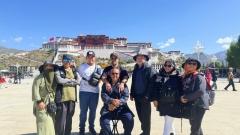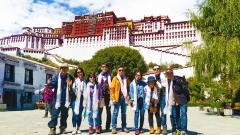

For many travelers, Lhasa is defined by a familiar set of images: the towering Potala Palace, the spiritual energy of Jokhang Temple, and the steady flow of pilgrims circling Barkhor Street. These landmarks are essential—but they represent only the most visible layer of a far more complex cultural landscape.
To truly understand Lhasa, one must look beyond its famous icons and step into the quieter spaces where religion, history, and daily life intersect in subtle ways. Scattered across the city and its surrounding hills are smaller monasteries and historical sites that rarely make it into standard itineraries, yet play a crucial role in shaping Tibet’s spiritual and political identity.
This guide introduces a selection of lesser-known but deeply significant sites in Lhasa—places that reward patience, curiosity, and cultural sensitivity. It is designed for travelers who seek depth rather than checklists, and meaning rather than spectacle.
Ramoche Temple: The Other Spiritual Anchor of Early Lhasa
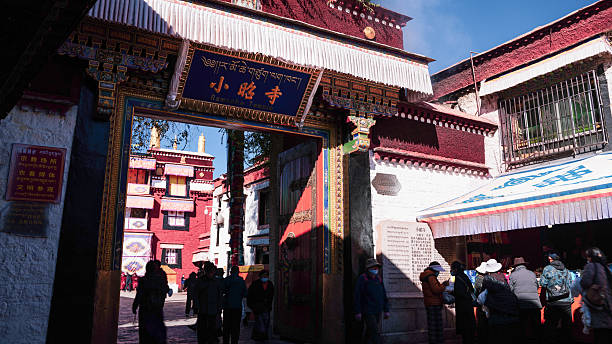
Ramoche Temple, often referred to as “Little Jokhang,” holds a status far more important than its modest scale suggests. Founded during the Tibetan Empire period, Ramoche Temple was established around the same time as Jokhang Temple and played an equally vital role in the early spread of Buddhism in Tibet.
Historically, Ramoche Temple housed one of the most sacred statues brought to Tibet through royal marriage alliances, making it a focal point of devotion for centuries. While Jokhang became the primary pilgrimage center, Ramoche retained a quieter, more localized role—serving the daily religious needs of Lhasa’s residents.
Today, visiting Ramoche Temple offers a striking contrast to Jokhang. The atmosphere is calmer, the rituals more intimate, and the presence of local worshippers more pronounced. For travelers, this contrast provides valuable insight into how Tibetan Buddhism operates both as a public institution and as a lived, everyday practice.
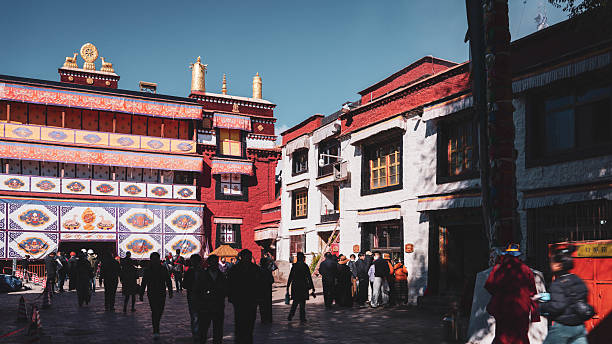
Changshou Monastery: A Place of Blessings Above the City
Perched on a hillside at the edge of Lhasa, Changshou Monastery is closely associated with prayers for health, longevity, and well-being. Its location alone sets it apart—removed from busy streets and tourist routes, the monastery offers sweeping views over the Lhasa Valley.
The journey to Changshou Monastery is part of its appeal. As visitors ascend through quiet residential areas and open terrain, the city gradually fades behind them. The pace slows naturally, encouraging reflection rather than observation.
Unlike major monasteries, Changshou is primarily visited by local Tibetans rather than tourists. Elderly residents, families, and individuals seeking blessings come here regularly, reinforcing the monastery’s role as a living part of community life rather than a historical monument.
The Lower Tantric College: The Intellectual Heart of Tibetan Esoteric Buddhism
The Lower Tantric College (Gyumé Dratsang) represents one of the most important institutions within the Gelug school of Tibetan Buddhism. Dedicated to advanced tantric studies, the college functions less as a temple and more as a rigorous academic and spiritual training center.
Entry is limited, and daily life within the college remains largely closed to outsiders. Yet even from the outside, the atmosphere conveys discipline, order, and seriousness of purpose. The monks here dedicate years—often decades—to mastering complex philosophical and ritual traditions.
For culturally curious travelers, the Lower Tantric College offers a deeper understanding of Tibetan Buddhism as a structured intellectual system, not merely a set of rituals or visual symbols. It underscores Lhasa’s role as a center of religious scholarship with influence extending far beyond the city itself.
Muru Monastery: Faith Woven into Urban Life
Located within Lhasa’s old city, Muru Monastery is a perfect example of how religion and daily life coexist in Tibetan society. Rather than standing apart from its surroundings, the monastery is woven seamlessly into the neighborhood.
Here, locals enter casually to pray before work, spin prayer wheels during errands, or pause briefly in moments of reflection. Children play nearby, vendors chat in alleyways, and life continues uninterrupted. Faith is not separated from routine—it is embedded within it.
For visitors, Muru Monastery offers one of the most authentic glimpses into everyday Tibetan spirituality. It is not a place for spectacle, but for observation and quiet appreciation.
The Qing Amban Residence: Understanding Tibet’s Political Past
While monasteries dominate Lhasa’s cultural landscape, the city has also played a crucial political role in Chinese history. The Qing Amban Residence provides a window into this often-overlooked dimension.
During the Qing Dynasty, Ambans served as imperial representatives in Tibet, overseeing administrative and diplomatic affairs. The residence functioned as both a government office and living quarters, symbolizing the complex relationship between the Qing court and Tibetan authorities.
Architecturally, the site reflects a blend of Tibetan and Han Chinese styles, mirroring its political function. For travelers interested in history, the Qing Amban Residence adds essential context to Lhasa’s identity as not only a religious center, but also a focal point of regional governance.
Why These Places Matter
Including these lesser-known sites in a Lhasa itinerary transforms the travel experience in meaningful ways:
-
Fewer crowds, allowing for unhurried exploration
-
Greater cultural authenticity, rooted in local life
-
A deeper understanding of Tibetan religious and political systems
Rather than replacing famous landmarks, these sites complement them—adding nuance, context, and depth.
Traveling Slowly: The Key to Understanding Lhasa
Lhasa is not a city that reveals itself quickly. Altitude alone demands patience, but so does culture. Travelers who rush from one landmark to another often leave with photographs but little understanding.
By slowing down and engaging with places like Ramoche Temple, Changshou Monastery, and Muru Monastery, visitors gain access to layers of meaning that are otherwise invisible. These experiences are quieter, but also more enduring.
The Real Lhasa Lives in Its Details
Beyond its famous skyline and sacred icons, Lhasa is a city shaped by subtle interactions—between monks and scholars, residents and pilgrims, faith and governance. Its deeper identity is preserved not only in grand monuments, but in modest temples, hillside monasteries, and historical residences.
For travelers willing to look beyond the obvious, Lhasa offers something rare:
a journey that changes understanding, not just scenery.