
No matter if you’re a domestic traveler from across China or an international visitor coming overseas, understanding Chinese currency is the foundation of a smooth journey in China. The official currency is Renminbi (RMB), with yuan as the main unit and jiao/fen as auxiliary units. Details like exchange channels, payment methods, and anti-counterfeiting skills directly impact your trip’s convenience. This guide integrates the latest policies and practical insights, covering everything from basics to advanced tips, helping you master RMB usage logic, avoid unnecessary troubles, and make every transaction safe and worry-free.
Basic Understanding of Chinese Currency
Building a basic knowledge of Chinese currency will facilitate your subsequent use. Issued uniformly by the People’s Bank of China, RMB is the sole legal tender in China. Currently circulating banknotes come in denominations of 100 RMB, 50 RMB, 20 RMB, 10 RMB, 5 RMB, and 1 RMB.
RMB banknotes are designed with rich Chinese cultural elements. The front side features a portrait of Chairman Mao, the text “People’s Bank of China,” and denomination numbers. The back side showcases famous scenic spots and historical sites: the Great Hall of the People (100 RMB), Potala Palace (50 RMB), Guilin Scenery with Hills and Waters (20 RMB), Yangtze Three Gorges (10 RMB), Mount Tai (5 RMB), and West Lake in Hangzhou (1 RMB). You can notice these details while using the notes to experience their cultural connotations.
It’s important to note that most transactions in China are settled in RMB. Although some foreign-related hotels and large business districts may accept foreign currency, the exchange rate is unfavorable and additional service fees may apply. Therefore, it’s recommended that travelers prioritize exchanging for RMB.
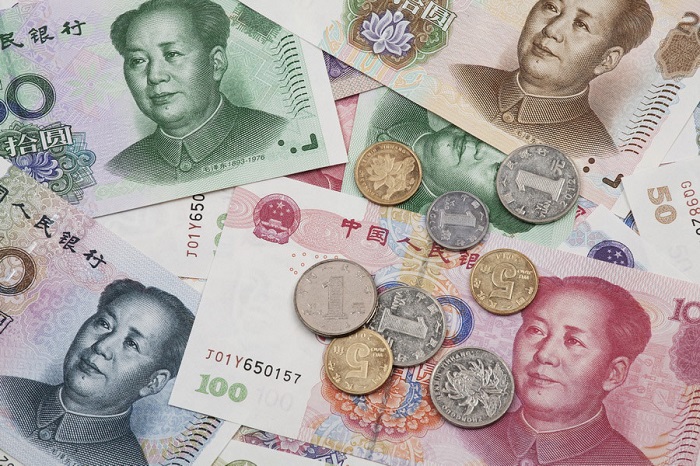
National Currency of China
Guide to Exchanging RMB
There are various channels for exchanging RMB, each with its pros and cons. Travelers can choose based on their needs, with the core principle of selecting formal channels to avoid traps of high fees or poor exchange rates.
Bank Exchange
This is the safest channel with the most favorable exchange rates. Major banks at home and abroad support RMB foreign exchange. Among domestic banks, Bank of China offers the most comprehensive range of foreign currencies and relatively competitive rates. Large state-owned banks like Industrial and Commercial Bank of China (ICBC) and China Construction Bank (CCB) also provide sound exchange services. Note that banks generally don’t charge service fees for RMB exchange but profit from exchange rate spreads. You can check the daily foreign exchange rate in advance and choose an appropriate time to transact.
International travelers exchanging at domestic banks only need to present valid documents such as a passport. Domestic travelers exchanging a small amount of foreign currency for backup can do so with their ID cards. Additionally, if you need to transfer the exchanged money to another bank, a cross-border remittance fee may apply, usually 1% of the remittance amount with a minimum of 50 RMB per transaction, plus possible telegraphic fees. Specific charges are subject to the bank’s actual regulations.
Airport Exchange Counters
Airport exchange counters are conveniently located, ideal for travelers in urgent need of cash upon arrival. However, they have obvious drawbacks: poor exchange rates and fixed service fees (usually around 50 RMB per transaction), resulting in high overall costs. It’s recommended to exchange only a small amount of RMB here, just enough to cover transportation from the airport to the city center. Exchange the rest at downtown banks or formal exchange points.
Online Exchange Platforms
With the development of the internet, many formal online platforms offer currency exchange services. Travelers can place orders in advance and choose to pick up cash at a physical store or have it delivered by courier. These platforms offer exchange rates between banks and airport counters, with transparent service fees. Some even provide preferential activities for new users. However, it’s crucial to select platforms with formal qualifications to avoid scams.
Off-Site Currency Exchange Machines
Off-site currency exchange machines are available in some business districts, airports, and railway stations, supporting 24/7 exchange with easy operation. However, these machines usually charge service fees (up to 50 RMB per transaction) and offer less favorable rates than banks, making them suitable for temporary small-amount exchanges.
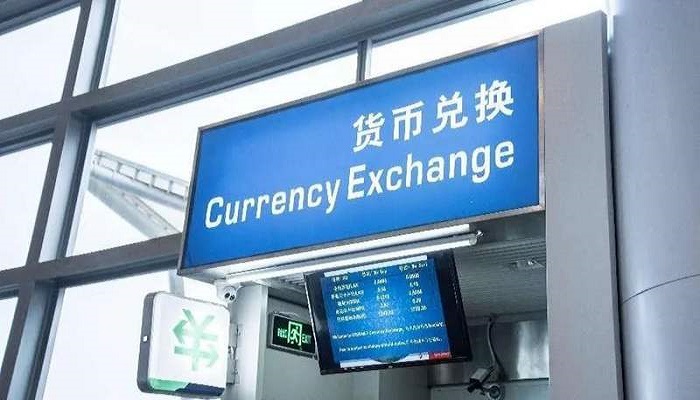
Currency Exchange Sign
Payment Methods in China
China boasts extremely convenient payment methods, currently forming a pattern of “card payments for large sums, QR code scans for small transactions, and cash as a backup.” Travelers can choose the right method for different scenarios, with mobile payment being the most widely used.
Mobile Payment
Alipay and WeChat Pay are China’s two dominant mobile payment platforms, covering almost all daily scenarios including catering, shopping, transportation, attraction tickets, and hotel bookings. From street stalls and convenience stores to large shopping malls and five-star hotels, QR code payment is universally accepted.
International travelers don’t need to worry about card binding. Currently, overseas phone numbers can be used to register Alipay or WeChat Pay, with the option to link international credit cards like VISA or Mastercard. The binding process is simple, no passport verification required, and can be completed in less than a minute. Additionally, Alipay and WeChat Pay have increased transaction limits for overseas users: the single transaction limit has been raised from 1,000 USD to 5,000 USD, and the annual cumulative limit from 10,000 USD to 50,000 USD, fully meeting travel consumption needs.
Some overseas e-wallets are also usable in China, such as Thailand’s K PLUS, South Korea’s Naver Pay, and Malaysia’s Touch’n Go eWallet. Travelers with these e-wallets can use them for QR code payments without downloading additional apps. Alipay has also piloted 16-language translation services, covering high-frequency scenarios like taxi-hailing, hotel bookings, and exchange rate inquiries, making it effortless for foreign travelers to use.
Bank Card Payment
Large shopping malls, hotels, and restaurants all accept bank card payments. Domestic debit and credit cards are usable, as well as international credit cards with VISA, Mastercard, or UnionPay logos. Note that using a dual-currency credit card for transactions in non-USD or non-RMB denominations may incur a 1.5%-2% currency conversion fee. It’s advisable to prioritize UnionPay-branded credit cards to save this cost.
Cash Payment
Despite the popularity of mobile and bank card payments, cash remains an indispensable backup. In some remote areas’ stalls, farmers’ markets, or certain time-honored stores, cash may be the only accepted payment method. Additionally, cash is more convenient for taking suburban minibuses or paying small service fees. It’s recommended to carry a small amount of 10 RMB, 20 RMB, and 50 RMB notes. A moderate amount of 100 RMB notes is sufficient; avoid carrying large sums of cash to minimize safety risks.
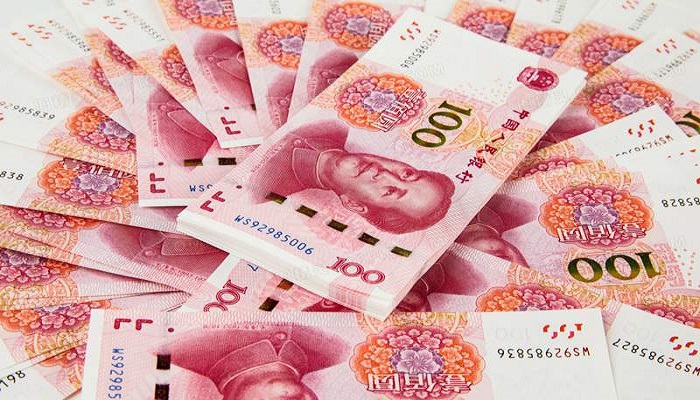
100 RMB Sample
Anti-Counterfeiting & Money-Saving Tips
Mastering anti-counterfeiting skills helps avoid receiving counterfeit money, while understanding money-saving tips reduces unnecessary losses when using RMB.
Anti-Counterfeiting Techniques
Remember the core method of “rotate, touch, and hold against light” to quickly identify genuine RMB. Rotate the note: the denomination number in the middle of the front side changes color – 100 RMB, 20 RMB, and 5 RMB shift from gold to green; 50 RMB and 10 RMB change from green to blue. For large-denomination notes like 100 RMB and 50 RMB, the security thread on the right side of the front changes from red to green. Touch the front side: the portrait of Mao Zedong, national emblem, “People’s Bank of China” text, denomination number in the top right corner, and braille dots have a distinct tactile texture, which is hard for counterfeits to replicate. Hold against light: a clear 3D watermark pattern and denomination number watermark appear in the blank area on the left front side, and the registration marks on the bottom left of the front and bottom right of the back align perfectly.
Common Pitfalls to Avoid
Be vigilant against common counterfeit money scams. For example, criminals may mix counterfeit notes with genuine ones in dimly lit or busy payment scenarios. Some may first pay with a large-denomination genuine note, then take it back claiming to have change, quickly swap it with a counterfeit, and then pretend to have insufficient change to pay with the fake note. Additionally, avoid illegal exchange counters – they offer extremely poor rates and may use counterfeit money to defraud travelers. If someone actively approaches you offering currency exchange, refuse firmly.
If you accidentally receive counterfeit money, never use it again. Submit it to a bank or local public security bureau promptly and explain its source to assist relevant authorities in investigation.
Tax Refund Policies for Foreign Travelers
Foreign travelers who shop in China can claim a tax refund if eligible, saving some expenses – a valuable benefit of using RMB.
Tax Refund Eligibility
Foreign travelers can apply for a tax refund if they purchase tax-refundable items totaling 200 RMB or more in the same store on the same day, depart China within 90 days of purchase, and carry the tax-refundable items abroad. Tax-refund stores display obvious tax refund signs; travelers can look for these when shopping and remember to ask the merchant for a tax refund application form and invoice.
Tax Refund Process
When departing, first complete the tax-refund item verification at customs. After successful verification, customs will stamp the tax refund application form. Then proceed to a tax refund agency to process the refund, with options including cash refund, bank card refund, or mobile payment refund. Currently, the cash refund limit has been increased to 20,000 RMB, greatly facilitating travelers. Additionally, the “instant tax refund upon purchase” service has been promoted nationwide – some tax-refund stores or centralized refund points allow on-site tax refund processing, eliminating the need to wait until departure.
Important Notes
Tax-refundable items must be carried abroad by the traveler. Failure to present the items during customs inspection may result in revocation of the tax refund eligibility. When claiming the refund, bring your passport, tax refund application form, invoice, and tax-refundable items. It’s recommended to organize these documents in advance to avoid delaying your departure.
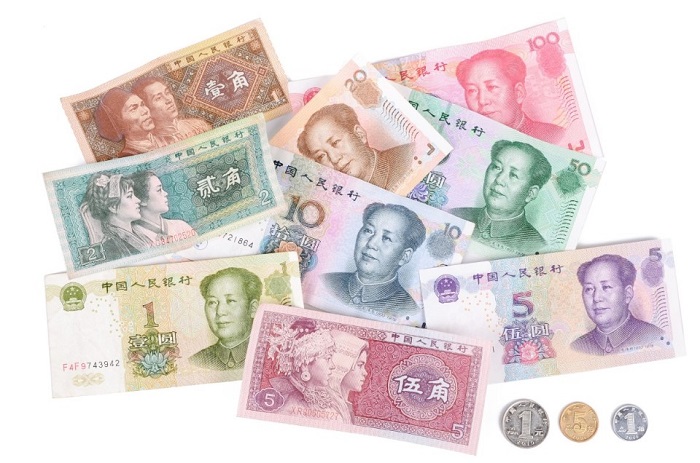
China Currency
Warm Tips for Using RMB in China
Mastering RMB exchange, usage, anti-counterfeiting, and tax refund skills is essential for a smooth trip in China. Whether exchanging currency at a bank or using mobile payment, the core is to choose formal channels and pay attention to details. It’s advisable to learn relevant knowledge in advance, carry a small amount of cash for backup during your trip, and keep your bank cards and mobile phone secure to prevent property loss.
For a more worry-free journey, consider products from China Dragon Travel. Their staff will provide pre-trip RMB exchange advice, payment skill guidance, and reminders on tax refunds and other practical information, helping you avoid various troubles so you can fully enjoy your trip and experience China’s customs, traditions, and modern convenience.