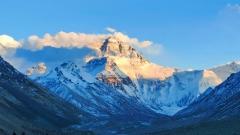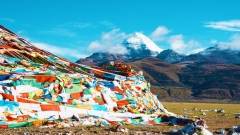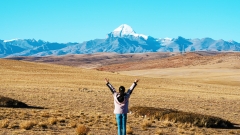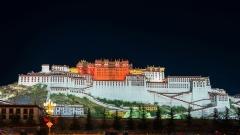

As the cradle of Tibetan culture, Shannan carries the millennial memories of the Tubo Dynasty, boasting snow-capped mountain-surrounded sacred lakes, Tibet’s first palace, vast grasslands, and profound canyons. The Shannan travel map is your key to this secret land, clearly marking scenic spots’ location connections, transportation routes, and unique highlights, giving every traveler a sense of direction. Whether you’re a photography enthusiast craving natural beauty or a culture lover obsessed with humanistic history, following this map will help you find your own poetry and distant horizons in Shannan. Next, this complete guide will take you deep into the core attractions and practical information on the Tibet Shannan travel map.
Overview of Core Areas on the Tibet Shannan Travel Map
Opening the Tibet Shannan travel map, you’ll find core attractions mainly distributed in Naidong District, Langkazi County, Cona City, Lhozhag County, Comai County, etc., each with distinct features yet interconnected. Naidong District, Shannan’s political and cultural center, gathers humanistic landmarks like Yongbulakang Palace and Trandruk Monastery, serving as the starting point to understand Tibetan source culture. Langkazi County is home to two sacred lakes—Yamdrok Yumtso and Pumoyong Tso—paired with Mount Khula Kangri to form a breathtaking natural picture. Lhoba Valley and Yumai Township in Cona City hide the vitality of the southern Himalayas and the sentiment of guarding the border. Lhozhag County is famous for its precipitous canyons and ancient monasteries, where Kharchu Monastery is located. Zhegu Lake and Zhegu Grassland in Comai County are perfect for experiencing plateau pastoral scenery. Familiarizing yourself with the distribution characteristics of each area helps you plan your itinerary more reasonably and avoid unnecessary backtracking.
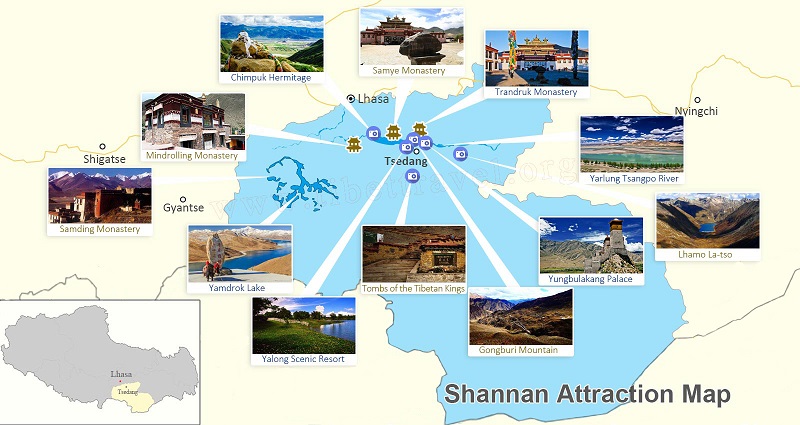
Tibet Shannan Travel Map
In-Depth Analysis of Must-Visit Attractions on the Tibet Shannan Travel Map
Lake Landscapes: Blue Gems of the Snowy Plateau
On the Tibet Shannan travel map, lakes are the most dazzling existences, among which Yamdrok Yumtso and Pumoyong Tso are the core must-visit attractions. As one of Tibet’s three sacred lakes, Yamdrok Yumtso is located in Langkazi County, with its surface inlaid among the mountains like a sapphire. Multiple viewing platforms are accessible along National Highway G219. Yamdrok Lake exhibits different beauties in different seasons: peach blossoms bloom along the banks in spring, the lake water is crystal clear and bright blue in summer, the surrounding forests are dyed in layers of colors in autumn, and it exudes a sense of tranquility and vastness in winter. It’s recommended to visit on a sunny day—under the sunlight, the lake water presents rich layers of blue, and every random shot is a stunning photo.
Pumoyong Tso, known as Yamdrok’s sister lake, is also located in Langkazi County at an altitude of 5,010 meters, marked as a plateau blue ice secret on the Tibet Shannan travel map. From December to February each year, the lake surface freezes completely, forming a dreamlike deep blue ice sheet, hailed as China’s Lake Baikal. Especially around February, villagers from Tuiwa Village drive their flocks across the ice to the central island for winter. This millennium-old folk spectacle has become a scene longed for by countless travelers. When visiting Pumoyong Tso, keep warm and follow the guide closely while walking on the ice to ensure safety.
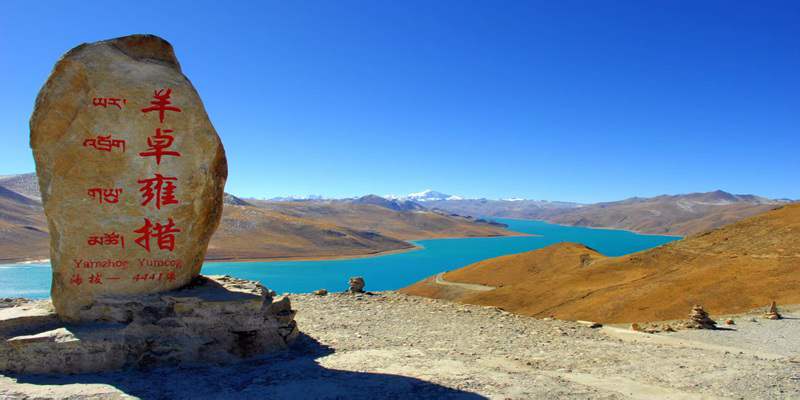
Yamdrok Yumtso
Humanistic Landmarks: Millennial Imprints of Tibetan Source Culture
Following the guidance of the Tibet Shannan travel map, arriving in Naidong District allows you to touch the source of Tibetan culture. Built in the 2nd century BCE, Yongbulakang Palace is the first palace in Tibetan history. Named for the mountain it sits on, which resembles a reclining female deer, the palace is constructed on the hind legs of this “deer”. The entire building is fortress-style, consisting of a watchtower, a main hall, and monk quarters. Inside the palace, there are not only precious Buddha statues and murals but also the tower where Princess Wencheng once lived. Standing atop the palace, you can overlook the vast Yarlung Valley and imagine the rise and fall of the Tubo Dynasty thousands of years ago. As a national 3A-level scenic spot, Yongbulakang has been well renovated and protected, allowing visitors to deeply understand the origin and development of the Tibetan people.
Not far from Yongbulakang, Trandruk Monastery also holds an important position on the Tibet Shannan travel map. Founded during the reign of Songtsen Gampo, it is one of the earliest monasteries in Tibet. The most famous treasure in the monastery is a thangka made of 10,000 pearls, with exquisite craftsmanship, worthy of being a national treasure. In addition, the monastery’s architectural style integrates Tibetan, Han, and other elements. The murals inside vividly depict stories related to Songtsen Gampo and Princess Wencheng, serving as important physical materials for studying Tubo history and culture.
Grasslands and Canyons: The Intertwined Beauty of Nature and Humanities
In the southern part of the Tibet Shannan travel map, Lhoba Valley in Cona City is a surprising secret land. The altitude drops sharply from 4,700 meters at Bola Pass, and the landscape along the way changes from grasslands to dense forests, with waterfalls cascading and rhododendrons blooming, earning it the reputation of “Jiangnan above the clouds”. As a settlement of the Lhoba people, Lhoba Valley retains a strong ethnic style. Lhoba women weave bangdian (traditional Tibetan aprons) on traditional looms, using dyes extracted from plants in the canyon—each work carries the wisdom of the ethnic group. June to August is the best time to visit Lhoba Valley. During this period, the canyon has a humid climate, abundant waterfall flow, and particularly beautiful scenery.
Zhegu Lake and Zhegu Grassland in Comai County are labeled as a plateau ecological paradise on the Tibet Shannan travel map. The 70-square-kilometer Zhegu Lake is inlaid in the grassland, surrounded by habitats for Tibetan wild asses, black-necked cranes, and other wild animals. Visitors can rent a horse to ride around the lake, reaching a bird island known only to locals, and feel the vastness and tranquility of the grassland. The Zhegu Herdsmen’s Festival in the 9th lunar month is the busiest time of the year, with horse racing, Guozhuang Dance, and other activities taking turns, allowing you to deeply experience the joyful life of Tibetan herdsmen.
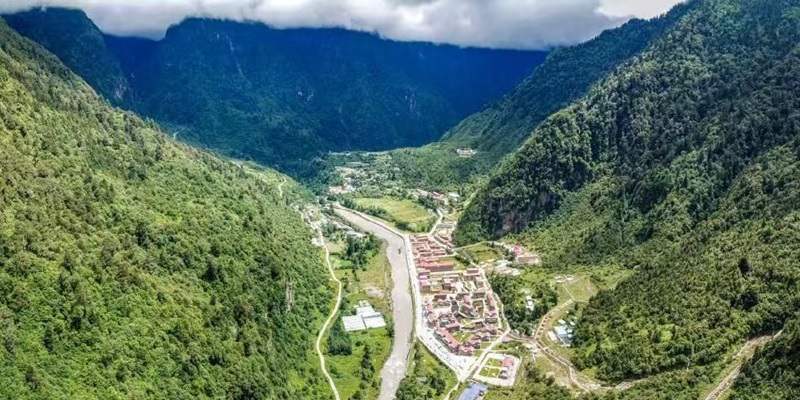
Lhoba Valley
Emerging Popular Attractions: Unique Charm of Niche Secrets
In recent years, Shannan has added several national 3A-level tourist attractions, which have gradually become popular marks on the Tibet Shannan travel map. Zhaxi Qudeng Scenic Area in Naidong District is known as “Tibet’s First Tibetan Opera Village”. Relying on the national intangible cultural heritage Yarlung Zhaxi Shueba Tibetan Opera, it has created a cultural and tourism integration project. Visitors can watch Tibetan opera performances, stay in characteristic homestays, and feel the charm of intangible cultural heritage. Kharchu Scenic Area in Lhozhag County centers on Kharchu Monastery, which is 4,019 meters above sea level. Surrounded by sea of clouds, the monastery houses more than ten millennial cultural relics, making it a must-pass when traveling to Lhozhag County. Qiangji Scenic Area, known as “Tibet’s No.1 Highland Barley Wine Village” in Qonggyai County, takes highland barley wine culture as the core, connecting folk experience with pastoral scenery, allowing visitors to savor the wine while feeling the unique charm of traditional Tibetan brewing techniques.
Practical Travel Tips on the Tibet Shannan Travel Map
Border Defense Permit Application: Some areas in Shannan, such as Lhozhag County and Cona City, are border management zones. Traveling along National Highway G219 requires applying for a border defense permit in advance. You can apply for it at your place of household registration in advance, or after arriving in Shannan, go to the Permit Office of Shannan Border Control Detachment on Sanxiang Avenue or the 1st floor of Shannan Staff Service Center. Bring your original ID card, specify the exact areas you plan to visit when filling out the application, and the whole process is free of charge.
Transportation Planning
The distance between various attractions in Shannan is relatively long. It’s recommended to charter a car or join a local travel agency’s itinerary. If self-driving, note that some road sections have complex conditions, especially possible snow accumulation in winter. Check the vehicle condition in advance and prepare anti-skid chains. Refer to the route markings on the Tibet Shannan travel map to plan a circular itinerary and avoid taking detours.
Season Selection
Shannan presents different beauties in different seasons. Spring (March-April) features peach blossoms contrasting with snow-capped mountains; summer (May-September) has green grasslands and bright blue lakes, making it the best season for summer resort and natural scenery viewing; winter (November-February) allows you to visit Pumoyong Tso to admire the blue ice and feel the serene beauty of the plateau.
Altitude Sickness Response
Shannan has a relatively high average altitude. Visitors need to make preparations for altitude sickness prevention in advance and avoid strenuous exercise. You can carry Rhodiola rosea, oxygen cylinders, etc. After arrival, drink plenty of warm water and have a light diet. If severe altitude sickness symptoms occur, seek medical attention in time.
Cultural Taboos
Respect local religious and folk customs. When entering monasteries, take off your hat and keep quiet, and do not touch Buddha statues and murals at will. Be polite when communicating with Tibetan compatriots and avoid mentioning sensitive topics. Before taking photos of local residents, ask for their permission in advance.
Follow the Map to Start the Shannan Secret Journey
The Tibet Shannan travel map not only marks the locations of attractions but also carries the millennial culture and stunning scenery of this land. From the deep blue of sacred lakes to the vicissitudes of ancient palaces, from the vastness of grasslands to the vitality of canyons, every mark is worth stopping to explore. Here, you can feel the Tibetan people’s reverence for nature and love for life, and also meet a better self during the journey.
If you want to start this journey more easily, you may choose China Dragon Travel. We have been deeply engaged in Tibet tourism for many years, familiar with every detail on the Tibet Shannan travel map, and can tailor exclusive itineraries for you, avoid peak tourist crowds, and take you to deeply experience the niche secrets of Shannan. Our professional guide team will tell you the history and stories of each attraction, and the comprehensive logistics support will make your journey more secure. Follow the guidance of the Tibet Shannan travel map, and with the company of China Dragon Travel, let this Shannan trip become an unforgettable memory in your life.