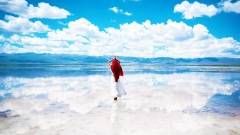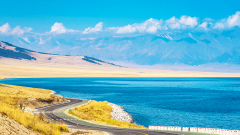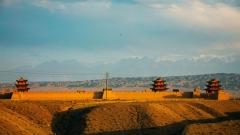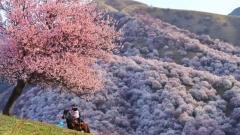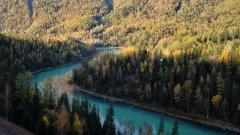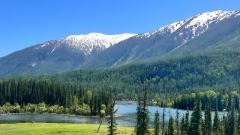

Xinjiang Uygur Autonomous Region covers one sixth of China’s area and boasts rich and diverse natural landscapes and ethnic cultures, making it the ultimate dream destination for self driving enthusiasts. For Hong Kong drivers, the vast land, magnificent scenery, and unique cultural atmosphere here form a sharp contrast with the urban landscape of Hong Kong, bringing an unprecedented driving experience. However, Xinjiang has a vast territory, complex road conditions, and variable climate, requiring detailed planning and preparation. This article will provide a comprehensive and practical guide for Hong Kong drivers on Xinjiang self driving tours from multiple perspectives, including document processing, route design, and vehicle preparation.
Hong Kong Self-driving License Processing Procedures in Xinjiang
Hong Kong driving licenses are bilingual in Chinese and English, while mainland driving licenses are in simplified Chinese. The most critical step is applying for the “Mainland Motor Vehicle Driving Permit.” This document is not permanently valid and is typically issued based on the validity period of the applicant’s Home Visit Permit, with a maximum validity of six years. Required documents include:
- Original and copy of a valid Mainland Travel Permit for Hong Kong and Macao Residents.
- Original and copy of a Hong Kong driving license (including both front and back).
- Original and copy of a Hong Kong Permanent Identity Card.General Adult Ticket: Priced at 72 RMB, it grants access to all three permanent exhibition halls.
These documents can be processed at service points of transportation management departments at various Shenzhen ports, usually completed within 30 minutes. If already in the mainland, applicants must visit the Vehicle Management Office of the Public Security Bureau Traffic Police Detachment in cities at or above the county level. The Vehicle Management Office of the Urumqi Public Security Bureau Traffic Police Detachment also has dedicated service windows for Hong Kong, Macao, and Taiwan residents.
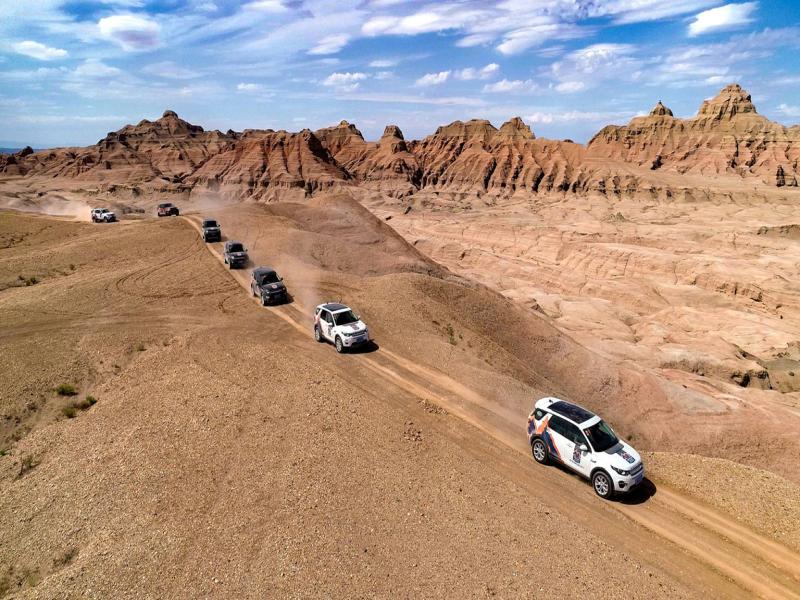
Xinjiang Self-Driving Tour
Xinjiang Self-Driving Tour Vehicle Document Checklist
If opting for a car rental, ensure the rental company provides a complete and compliant set of documents, including:
- Original vehicle registration certificate.
- Road Transport Certificate (mandatory for operating vehicles).
- Vehicle insurance policy.
- Vehicle annual inspection compliance label.
Check the validity period of all documents to ensure they cover the entire rental period. It is particularly important to note that insurance provided by Xinjiang car rental companies typically does not cover standalone glass breakage or tire damage. Due to Xinjiang’s unique road conditions and many gravel sections, it is advisable to purchase these two additional insurances separately, costing approximately RMB 30-50 per day, which can save significant repair costs in case of accidents.
Analysis of Selected Xinjiang Self-Driving Routes
Hong Kong drivers planning a Xinjiang self-drive tour need to carefully plan daily itineraries, balancing driving intensity and sightseeing experiences.
- Day 1: Depart from Urumqi and drive northeast along the G30 Lianhuo Expressway, with a speed limit of 120 km/h. Drivers accustomed to right-hand drive in Hong Kong should pay special attention to lane discipline, as mainland China follows right-hand traffic rules, and overtaking must be done from the left side.
- Day 2: Head to Fuyun County, a journey of approximately 480 km, mostly along the G216 National Highway, featuring typical Gobi desert landscapes. Ensure sufficient safety distance in the opposite lane when overtaking. Roads within scenic areas are narrow and winding, requiring cautious and slow driving.
- Day 3: Travel to Burqin, a route known as the “North Xinjiang Scenic Line.” The 250 km stretch from Fuyun to Burqin offers a transition from desert to grassland landscapes. It is recommended to arrive in Burqin before dusk to visit the Colorful Beach for sunset views.
- Day 4: Head to Hemu Village, approximately 120 km from Burqin. The first 80 km are flat asphalt roads, while the remaining 40 km enter the Altai Mountains, becoming a two-way single-lane winding mountain road. It is advisable to depart before 9 a.m. to avoid peak tourist bus hours.
- Day 5: Visit the Kanas Scenic Area. It is recommended to depart between 7-8 a.m. when the light is soft and there are fewer tourists, effectively avoiding peak hours.
- Mastering the above information will greatly assist in planning your travel schedule and arrangements.
Preparation for Xinjiang Self-Driving Tour: Recommended Accessories
Given Xinjiang’s complex road conditions, it is advisable to thoroughly prepare your vehicle before embarking on a self-drive tour to mitigate potential risks.
- Tires: Consider replacing factory highway tires with all-terrain tires (AT tires). These tires have sturdy sidewalls, adapt well to asphalt, gravel, and light off-road surfaces, and improve traction in sand and mud.
- Suspension System: Consider installing adjustable shock absorbers to handle the rugged and uneven roads in Xinjiang’s scenic areas. Modification costs approximately RMB 8,000-12,000 but significantly enhance driving safety and comfort.
- Engine Guard Plate: Install an aluminum-magnesium alloy guard plate with a thickness of at least 3 mm to effectively protect critical components such as the oil pan and transmission. Ensure maintenance openings are reserved for future oil changes during installation.
- Fuel System: Consider installing a fuel additivedevice or storing several bottles of octane booster in the trunk, as gas stations in some remote areas of Xinjiang may only offer 92-octane gasoline.
Recommended Professional Navigation and Communication Equipment
During a Xinjiang self-drive tour, traditional smartphone navigation may fail due to signal issues. For safety, it is essential to equip yourself with professional navigation systems.
- Navigation System: Garmin’s Overlander series is recommended, preloaded with detailed maps of China and featuring offline map functionality. It allows precise GPSpositioning even without mobile network signals.
- Satellite Phone: Consider purchasing or renting an Iridium 9555 model, which can connect calls even in deep canyons. Acall package must be purchased before use, and sending short messages is cost-effective, suitable for regular updating family on your safety.
- Vehicle Radio: The Baofeng UV-5R series is recommended for its highcost-effective and comprehensive features. Legal use in Xinjiang requires applying for a Radio Operation Certificate and Radio Station License. Communication range can reach 5-8 km in open areas.
Emergency Equipment Checklist for Xinjiang Self-Driving Tour
A Xinjiang self-drive tour cannot do without vehicle emergency equipment. This is a crucial element to ensure your journey proceeds smoothly
- Recovery Gear: A 2.5-ton capacity manual winch must be installed inside the front bumper, equipped with a 30-meter-long high-strength cable.
- Hydraulic Jacks: It is recommended to prepare two jacks—one for use on hard surfaces and one for sand.
- Traction Mats: It is recommended to prepare four traction mats to be placed under the tires to provide friction when the vehicle is stuck in mud or snow.
- High-Strength Tow Rope: Minimum length of 10 meters with a breaking strength of no less than 5 tons.
- In-Vehicle Emergency Items: High-energy food (such as compressed biscuits and chocolate), drinking water reserves, a warm sleeping bag, a multi-purpose survival knife, a signal mirror, and a whistle.
- Medical First Aid Kit: Must include supplies for treating trauma, acetazolamide (for treating altitude sickness), gastrointestinal medicine, anti-allergy medication, sunscreen, and lip balm.
It is recommended to participate in wilderness first aid training courses organized by the Red Cross to learn how to handle common outdoor injuries such as fractures, dislocations, and burns. Meanwhile, having this equipment ready can help you solve urgent problems when necessary.
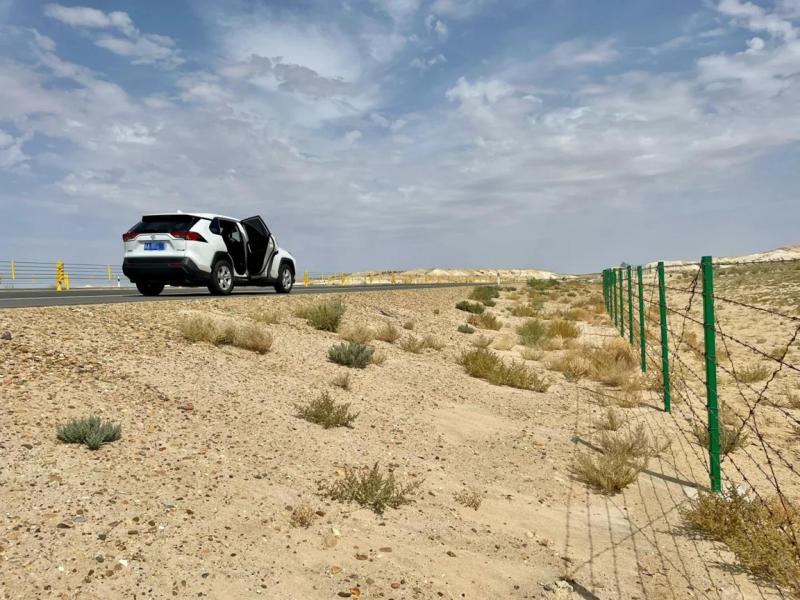
Xinjiang Self-Driving Tour
Special Road Condition Handling Techniques for Xinjiang Self-Driving Travel
- Desert Roads: When starting off, you must engage low-range four-wheel drive mode, lock the transmission into second gear, and gently press the accelerator to start slowly. Maintain a steady speed while driving, avoid sudden acceleration or braking, to prevent the vehicle from getting stuck in sand.
- Steering Wheel: Avoid large steering inputs to reduce rolling resistance.
- Extreme Weather: If encountering extreme weather, be sure to turn on the front and rear fog lights and hazard warning lights, and find a safe place to stop. In wilderness situations, park the vehicle sideways by the roadside and turn off the air conditioner’s external circulation mode. Do not attempt to continue driving in extreme weather conditions.
- High-Altitude Driving Techniques: As altitude increases, thin air will cause a drop in engine power—typically about a 10% decrease for every 1000 meters gained in altitude. At this point, you must use engine braking, switch the transmission to manual mode, and select a low gear to avoid prolonged brake use leading to overheating and failure of the braking system.
- Snow and Ice Roads: Be sure to install tire chains. When starting off, gently press the accelerator to avoid wheel spin. Reduce speed early before turning, and maintain a steady steering angle once in the turn. Avoid adjusting steering or braking while in the curve. If the vehicle skids, immediately steer gently in the direction of the skid while lightly applying the accelerator.
For Hong Kong drivers, a Xinjiang self-drive tour is not only a geographical crossing but also a profound cultural experience. From the bustling Urumqi to the remote Pamir Plateau, from the scorching Turpan Basin to the icy glaciers of the Tianshan Mountains, every turn of the steering wheel writes a unique travel story. Thorough preparation, a respectful attitude, and an adaptable mindset are the three pillars for successfully completing this journey to the Western Regions. As your vehicle speeds across the vast Gobi, as your eyes are amazed by the colorful canyons, and as your taste buds revel in the rich cuisine, you will find that this journey has transcended ordinary tourism, becoming an indelible chapter of memory in your life.