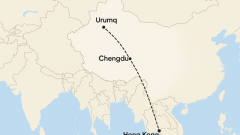

If you’re planning a trip to Xinjiang, learning about local cuisine is an essential part of your preparation. Xinjiang’s food culture is unique and rich, with direct flavors and generous portions, closely linked to the region’s geography and humanities. To help you eat wisely and authentically during your trip, this guide will systematically introduce the Xinjiang specialty foods that are truly worth trying. We will not only list the must-try dishes but, more importantly, provide specific ordering methods, eating skills, and suggestions for finding reliable restaurants, helping you enjoy the food like a local, avoid common dining mistakes.
How to Eat Xinjiang Classic Signature Dishes Like a Local?
When you first arrive in Xinjiang, several well-known signature dishes on the menu are worth trying first. Understanding the secrets behind them and the correct way to enjoy them can elevate your experience to a higher level.
Grilled Lamb Skewers and Naan Pit Lamb: Choose the Right Type Before Ordering
In Xinjiang, “kao rou” (grilled meat) usually refers specifically to grilled lamb skewers. You can directly say “Bring me X skewers of grilled lamb” when ordering. Authentic stalls use iron skewers or red willow branches to thread large pieces of lamb, seasoned only with salt, cumin, and chili powder, emphasizing the original flavor of the meat and the aroma of charcoal fire.
Practical Tip: When choosing a stall, observe—if there are many local diners around, the charcoal fire is lively, and the meat skewers have alternating lean and fatty pieces (the common “three lean and one fatty” threading method), the taste is usually good. If you want to experience more tender meat, you can go to a restaurant with a “naan pit” (traditional clay pit) and order “naan pit lamb”, which is large pieces of lamb braised and roasted in a traditional clay pit, with a slightly charred outer skin and juicy interior.
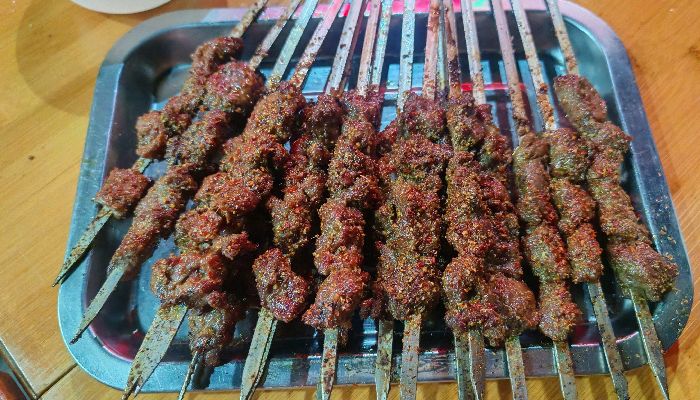
Xinjiang Grilled Lamb Skewers
Big Plate Chicken: The Correct Order Affects Half the Flavor
The soul of this dish lies in the “belt noodles” added at the end. When ordering, the waiter usually asks if you want to add noodles—be sure to say yes.
Correct Eating Order: First, focus on tasting the chicken and potatoes in the pot to feel the rich sauce flavor. When most of the chicken is eaten and thick sauce remains in the plate, ask the waiter to pour in the cooked wide noodles, stir thoroughly to let every strand of noodle coat the sauce. Eating the noodles at this time is the most flavorful. Note that even a “medium plate” is quite large; it is recommended for 3-4 people to share, paired with other snacks.
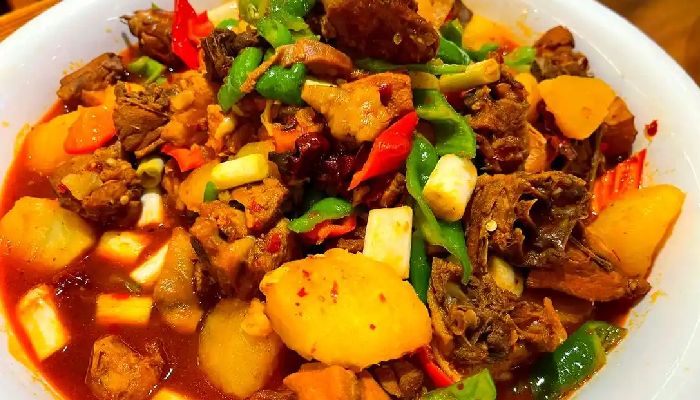
Xinjiang Big Plate Chicken
Polo (Hand-Grabbed Rice): To Grab or Not? When to Eat?
Nowadays, spoons and chopsticks are mostly used in restaurants, and “hand-grabbing” is more of a cultural symbol. Polo is best enjoyed at lunchtime (before 2 PM), as this is a local tradition—many reputable old shops sell out a pot of rice and stop serving, so you may be disappointed or get less fresh rice if you go for dinner.
Practical Tip: Authentic polo has glossy golden rice grains, thanks to the sweetness of yellow carrots and the fat from lamb. When eating, it is recommended to take a bite of rice, carrot pieces, and tender lamb together for the most balanced flavor. Most restaurants offer a free refill of rice or meat sauce once—feel free to ask.
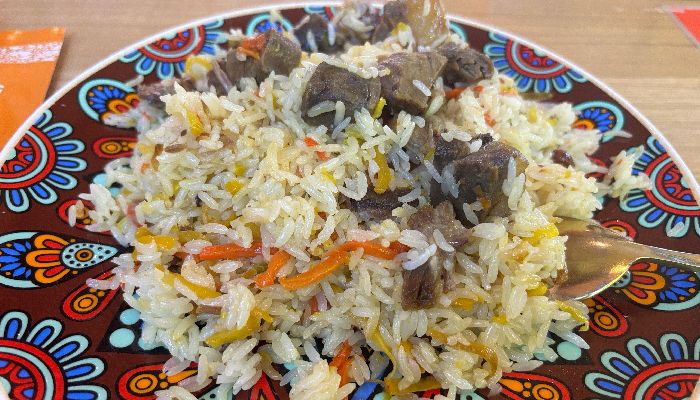
Xinjiang Polo
Explore the Xinjiang Streets: These Snacks Are Daily Staples for Locals
To experience the most vivid Xinjiang flavors, you must visit bazars (markets) and areas around residential districts. The snacks here are affordable and better reflect the daily dietary style.
Naan: More Than Just Staple Food, It’s a “Versatile Partner”
Freshly baked naan has a strong wheat aroma and is delicious eaten directly. But for locals, it’s a versatile staple: tear it open and stuff with freshly grilled meat to make “naan-wrapped meat”; break it into small pieces and soak in hot milk tea or lamb soup for a warm meal.
Purchasing Suggestion: Wait for freshly baked naan by the naan pit—it usually costs only a few CNY. If you want to carry it as travel food, choose plain oil naan with only sesame seeds on the surface; it has less moisture and is more durable.
Cold Rice Noodles and Lung with Noodle Paste: Boldly Try Local Favorites
These are the most popular fast snacks in Xinjiang during summer and autumn. Cold rice noodles are refreshing, sour, and spicy, appetizing and relieving summer heat. Lung with noodle paste is made by pouring noodle batter into sheep’s lungs, boiling, and cutting into pieces, with a unique texture. It is often stir-fried with rice sausages and is a popular choice at night markets.
How to Order: You can order one type alone, or tell the boss “Give me a little of each” to mix and taste. Seasoning cannot do without chili oil and mature vinegar—if you can’t eat spicy food, remember to remind in advance “Less chili”.
Dried Fruits and Dairy Products: Reliable Portable Souvenirs
Buying loose dried fruits at large bazars is more cost-effective than packaged ones in scenic areas. There are various types such as raisins, dried figs, dried apricots, and walnuts.
Selection Tip: You can ask to taste before deciding to buy. Note that large, brightly colored raisins are not necessarily the sweetest—small seedless white raisins are often sweeter. Be sure to taste before buying dairy products like kurut (a type of yogurt cheese), as their sourness varies greatly. For first-time tries, it is recommended to choose those with a milder taste.
Practical Tips for a Smoother Xinjiang Food Journey
Have a Clear Idea of Portion Sizes
Xinjiang dishes generally have very generous portions. A practical reference: one medium plate of Big Plate Chicken, plus two to three servings of staple food (such as polo or mixed noodles), and one cold dish, is enough to feed 3-4 people. If you’re traveling with a small group, it’s recommended to order more snacks in units of “skewers”, “pieces”, or “bowls”—this way, you can taste a variety of flavors without wasting food.
Deal with Taste Differences
If you find the dishes too salty or rich, you can order a plate of “Laohu Cai” (also called Pi La Hong, a cold dish of onions, chili, and tomatoes) or “Sugar-Tossed Tomatoes” to refresh your palate. Local yogurt is very thick and unsweetened—you can add sugar or honey to stir according to your taste, which is a great companion to relieve greasiness. After eating a lot of lamb, drinking some hot tea helps with digestion.
Tips for Finding Authentic Restaurants
There are two simple and effective methods: first, avoid the busiest commercial main streets, take a few more steps and turn into adjacent streets with a stronger sense of daily life; second, observe the customers in the restaurant—if there are many local middle-aged and elderly residents or families, the taste of the restaurant is usually authentic and reliable. For travelers who want to save time and effort, some local travel agencies, such as China Dragon Travel, will specially arrange for guests to dine at these reputable old shops hidden in residential areas when planning itineraries, which is more efficient than exploring on your own.
Start Your Xinjiang Food Exploration Journey
Tasting Xinjiang’s featured cuisine is the most direct and pleasant way to deeply understand this land. This guide provides not only a list of dish names but also a set of practical dining methods. From learning to pair a piece of hot naan with grilled meat to identifying and selecting your favorite dried fruits in the lively bazar, every order and taste is a small cultural experience. We hope these specific suggestions will make every meal of your trip to Xinjiang full of confidence and surprises. Now, with this knowledge, you can confidently walk into those small, unassuming but crowded shops and start your delicious adventure.