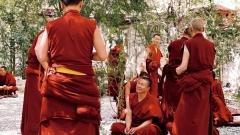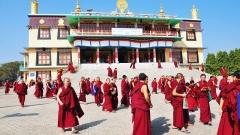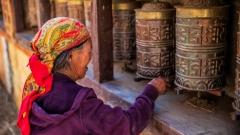

For thousands of years, Jokhang Temple has stood in the hinterland of Lhasa. Built by Princess Wencheng, this temple is a sacred shrine for Buddhism and witnessed the integration of Han and Tibetan cultures. The temple’s white walls and gilded roofs set off against the stream of pilgrims spinning prayer wheels around it. The light of butter lamps, the chanting of scriptures, and the prayers of believers outline Tibetan culture. Visiting here is about admiring architecture and cultural relics, and is also a journey of dialogue with history and faith.
Jokhang Temple Tickets and Opening Hours
As the core holy land of Tibetan Buddhism in Lhasa, Jokhang Temple is not just a simple sightseeing trip, but a cultural pilgrimage that requires the participation of both body and mind. It is recommended that you carefully follow the three-step principle of “Reservation – Visit – Experience”, which can help you complete an efficient tour and gain a touching in-depth experience within a limited time.
- Tickets Price: 85 yuan per person in peak season (May-October), 35 yuan per person in off-season (November-April). Real-name reservation is required one day in advance through the official WeChat public account of Jokhang Temple to avoid the trap of high-priced tickets from scalpers. Special groups can apply for discounts with valid documents.
- Travel Notes: It is recommended to enter the temple before 9 a.m. to avoid the peak of tourists. At this time, the light is soft, and you can also encounter the solemn scene of believers’ morning prayers for a better experience.
- Visiting Order: First, look at the Tang-Tubo Alliance Monument and the Princess Willow at the entrance to witness the friendship between Han and Tibetan peoples and the origin of the temple. The core Jokhang Hall enshrines the 12-year-old statue of Sakyamuni brought by Princess Wencheng, which is solemn and sacred under the light of butter lamps. Walk along the Prayer Wheel Corridor and turn the prayer wheels clockwise, then climb to the Golden Roof Platform on the third floor to overlook the pilgrims spinning prayer wheels on Barkhor Street and look far at the Potala Palace.
- Etiquette Notes: Dress appropriately, wear long clothes and long pants, take off your hat when entering the temple, do not make noise or cross religious artifacts. You can spend 10 yuan to offer a butter lamp, silently recite your wishes, and immerse yourself in the power of faith.
In general, visiting Jokhang Temple is a cultural pilgrimage that requires careful planning and in-depth immersion. Its core lies in taking reservation, visit and experience as clear main lines to ensure that your travel itinerary is smooth and meaningful.
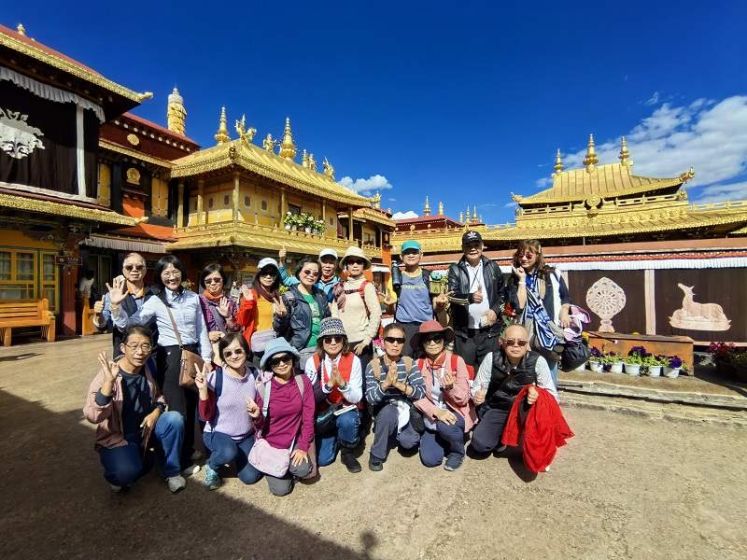
Jokhang Temple
Must-Visit Temples in Jokhang Temple
Jokhang Temple’s internal temples are not only spaces for religious activities, but also a vivid witness of Tibetan cultural history. Visiting these temples is like a spiritual dialogue across time and space, where you can not only witness the supreme sustenance of faith, but also feel the shocking power of the integration of art and history here.。
- Jokhang Hall: This is the core of Jokhang Temple, enshrining the 12-year-old statue of Sakyamuni brought into Tibet by Princess Wencheng. The statue is about 1.5 meters high, inlaid with countless pearls, agates, corals and other treasures. It is said that this statue was personally blessed by Sakyamuni, which is no different from the Buddha himself, so it has become the most sacred statue in Tibet. Believers line up for hours just to touch the base of the statue and pray for peace and smoothness.
- Thousand Buddha Corridor: Lining both sides of the corridor connecting the temple’s various halls are thousands of small Buddha statues, including Sakyamuni, Guanyin Bodhisattva and the Dalai Lamas of all dynasties, each with a unique design and exquisite craftsmanship. Most of these statues were cast during the Ming and Qing dynasties, making them precious physical relics for the study of Tibetan Buddhist sculpture art.
- Padmasambhava Hall: This hall houses a gilded bronze statue of Guru Padmasambhava, who stands with a solemn expression, wearing a cassock, holding a vajra in his left hand and a ghanta in his right. As the founder of the Nyingma school of Tibetan Buddhism and revered as the “Founding Master of Tibet”, Guru Padmasambhava is worshipped by believers who pray for wisdom and blessings. The walls of the hall are painted with murals depicting Guru Padmasambhava subduing demons and evil spirits.
The halls of Jokhang Temple offer every visitor a key gateway to understanding the spiritual world of Tibet. When visiting, we recommend not only admiring the beauty of its architecture and statues but also pausing to feel the devout atmosphere that pervades the halls. This journey through the temple will ultimately transcend visual wonder and become a spiritual enlightenment that touches the depths of Tibetan culture.
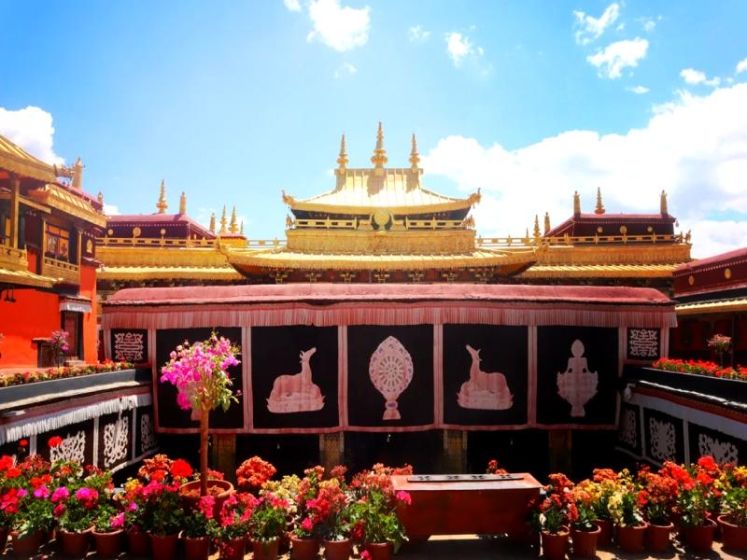
Jokhang Temple
Distinctive Scenery of Jokhang Temple
Every scenic spot inside and outside Jokhang Temple freezes time in physical form, allowing visitors to touch the profound historical veins of Tibet and the enduring power of faith as they walk and explore. Below is an in-depth look at the historical connotation and experiential value of the four core scenic spots.
- Tang-Tubo Alliance Stele: Located on the square just outside the main entrance of Jokhang Temple, it is also known as the “Uncle-Nephew Alliance Stele”. Erected in 823 AD to commemorate the alliance between the Tibetan king Trisong Detsen and the emperor of the Tang Dynasty, the inscription clearly states that “the Han and Tibetan peoples are one family”. Though weathered by thousands of years of wind and rain, the characters on the stele are still legible, making it an eternal symbol of the friendship between the Han and Tibetan peoples.
- Princess’s Willow: Said to have been planted by Princess Wencheng herself, it stands beside the Tang-Tubo Alliance Stele. Today, this ancient willow is lush and vigorous, with a thick trunk and branches stretching out in all directions, as if telling the stories of the past to all who see it. Locals regard it as an auspicious tree, and many believers hang prayer flags under its branches to pray for peace.
- Golden Roof Terrace: Situated on the third floor of Jokhang Temple, it is the perfect spot to overlook Lhasa’s old town and take panoramic photos. The terrace features four gilded roofs, each corresponding to one of the main halls in the temple, adorned with auspicious patterns such as dharma wheels, mythical qilin and treasure vases that shine brilliantly in the sun. From the terrace, visitors can gaze at the magnificent Potala Palace in the distance and watch the endless stream of pilgrims spinning prayer wheels on Barkhor Street up close, experiencing the unique urban atmosphere of Lhasa.
- Prayer Wheel Corridor: Lining the inner wall of the temple, hundreds of red wooden prayer wheels are neatly arranged, each filled with Buddhist scriptures. Believers spin the prayer wheels clockwise with their right hands, reciting the Six-Syllable Mantra to pray for blessings. Visitors can follow in the footsteps of the faithful and gently spin the prayer wheels, experiencing the daily ritual of Tibetan faith. Please note to spin them clockwise and do not let go halfway.
The scenic system of Jokhang Temple fully presents the unique aesthetic of Tibetan culture, where the sacred and the secular blend, and history converses with the present. These scenic spots are not only visual highlights for visitors’ cameras but also the key to understanding the spiritual core of Tibetan civilization. We recommend visitors slow down their pace, view the sights with reverence and experience them with immersion, feeling the profound friendship between the Han and Tibetan peoples and the power of faith passed down through generations.
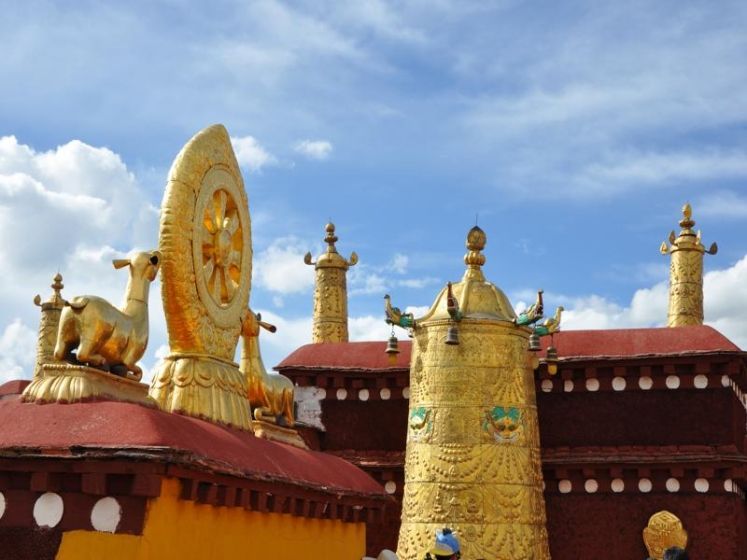
The resplendent golden roof of the Jokhang Temple
Travel Tips for Jokhang Temple
To truly connect with the soul of this thousand-year-old holy land, in addition to following a set itinerary, it is essential to master a series of practical and detailed preparation and etiquette tips. Though these details may seem small, they directly impact the quality of your visit, and every step serves as an important bridge connecting visitors to this pure land of faith.
- Best Entry Time: Arrive before 9 a.m. daily to avoid crowds of tour groups and witness the devout scenes of Tibetans performing morning prayers and spinning prayer wheels. The soft morning light also provides ideal conditions for photography.
- Avoid Major Religious Days: Jokhang Temple is crowded during important Tibetan calendar festivals. If you seek a quiet experience, check the Tibetan calendar in advance to plan your trip.
- Code of Conduct: Photography and loud talking are prohibited in the halls; do not point at Buddha statues with your fingers—instead, gesture with your palm facing up; do not step over religious artifacts or prayer wheels; all circumambulation and worship must be done clockwise.
- Sun Protection and Moisturization: Lhasa has strong ultraviolet radiation, so bring sunscreen, a hat (to be removed before entering the halls) and lip balm.
- Prepare Small Change: Bring plenty of 1 CNY and 5 CNY banknotes for offering butter lamps or making voluntary donations.
- Safety and Health: Butter lamps are densely placed in the temple, so please be careful with fire safety; move slowly in the plateau area and avoid strenuous exercise.
Experiencing the Spiritual Core of Lhasa
What defines Jokhang Temple is not only its age or artistic treasures, but the fact that it remains a living center of devotion. Pilgrims still travel great distances to bow before the sacred statue of the Buddha, continuing rituals unchanged for centuries. Travelers who approach the temple with patience, respect, and cultural awareness will discover that its true power lies in quiet moments of observation and reflection.
Because Jokhang Temple follows strict visiting procedures and religious etiquette, thoughtful planning is essential for a meaningful experience. China Dragon Travel, with deep local knowledge of Lhasa’s religious traditions and travel conditions, helps visitors navigate timing, access, and cultural nuances—ensuring that a visit to Jokhang Temple becomes a genuine encounter with Tibet’s spiritual heart, not just a stop on a journey.