As the cultural hub of Western Tibet, Shigatse is located in the core area of the Roof of the World, with dramatic differences in altitudes among its scenic spots—ranging from around 3,800 meters above sea level in urban areas to 5,200 meters at Mount Everest. Each altitude holds a unique snowy landscape. Mastering the introduction to altitudes of tourist attractions in Shigatse Area not only helps you plan your itinerary and adapt to the rhythm in advance but also allows you to safely experience the grandeur and sacredness of this land. Below is a compilation of altitude information for popular and distinctive attractions, paired with practical travel suggestions to make your Western Tibet journey more comfortable.
Understanding the Overall Altitude Pattern of Shigatse
Shigatse’s terrain is mainly composed of mountains, broad valleys, and lake basins, with an average altitude exceeding 4,000 meters. The overall terrain is higher in the north and south and slightly lower in the central part. As an important transportation hub, the urban area has an average altitude of about 3,840 meters, slightly higher than Lhasa, where most tourists can initially adapt to the plateau environment.
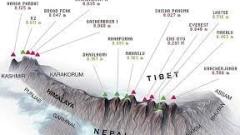
Radiating from the urban area, the altitudes of attractions in the east are relatively gentle, while those in the west extend toward the Himalayas and gradually rise. The highest point, the summit of Mount Everest, reaches 8,844 meters. This gradual change in altitude creates a rich layer of landscapes.
Detailed Altitude Introduction of Core Attractions
The altitude of different attractions directly affects the travel experience and physical burden. Below is a summary of altitude and supporting information for popular attractions to help you arrange your itinerary reasonably.
- Mount Everest Base Camp: At an altitude of 5,200 meters, located south of Rongbuk Monastery, it is one of the best spots to view Mount Everest. There are sightseeing tent areas and altitude monuments here, where most tourists take photos as souvenirs. Due to the high altitude, it is recommended to stay for no more than two hours, avoid strenuous exercise, and carry oxygen equipment with you.
- Tashilhunpo Monastery: Sitting at 3,950 meters above sea level, it is built on the slope of Nyiseri Mountain in the western part of Shigatse City and is the largest Tibetan Buddhist monastery in Western Tibet. The buildings in the monastery are stacked undulating, forming a unique landscape integrated with the altitude. When visiting, you can walk slowly along the steps and admire the murals and gilded Buddha halls along the way.
- Rongbuk Monastery: At an altitude of 5,210 meters, it is the highest monastery in the world, consisting of old and new buildings. The old monastery is closer to Mount Everest and is an excellent location for shooting the sunset over Mount Everest. Due to the extremely high altitude, it is recommended to visit briefly and avoid prolonged stay.
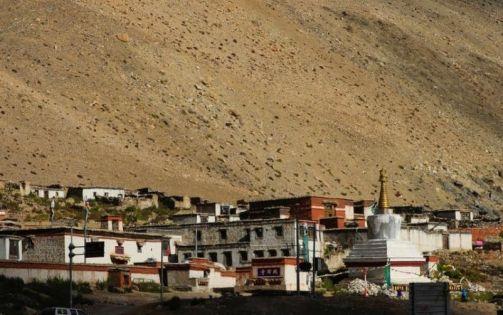
Rongbuk Monastery
- Saga County and Surroundings: The county seat has an average altitude of 4,600 meters and is an important stop on National Highway G219 before entering Ngari. The Lengbugangri Mountain within its borders, with an altitude of 7,095 meters, is the highest peak of the Gangdise Mountains. The maximum altitude for hiking around the mountain reaches 5,840 meters, suitable only for professional outdoor enthusiasts.
- Pulha Chim: With an altitude of about 6,530 meters, it belongs to the Lengbugangri Mountain group and is famous for its perfect pyramid shape. The viewing spot at the foot of the mountain is between 5,500 and 5,600 meters above sea level, accessible only by off-road vehicles. There is no mobile phone signal on the way, so preparations should be made in advance.
- Gyantse Dzong (Gyantse): Located on the top of Dzong Hill in the center of Gyantse County, its altitude ranges from 4,022 meters to 4,140 meters. Known as the “Little Potala Palace”, it is also a famous historical site of the Gyantse Resistance Against Britain. Built on steep cliffs, visiting the ancient castle requires climbing steps. Due to its moderate altitude and undulating terrain, it is recommended to slow down your pace to not only enjoy the panoramic view of the ancient city but also avoid excessive physical exertion.
- Chomolhari Snow Mountain: With a main peak altitude of 7,350 meters, also known as the Goddess Peak, it belongs to the Himalayas and forms a sacred mountain and lake landscape with Dorje Phagmo Lake (Doqing Co) in mutual accompaniment. The commonly used viewing spot is about 4,485 meters above sea level, located near Daina Township in Yadong County. Here, the view is wide, allowing you to take magnificent photos of the snow-capped mountains reflecting in the lake. Due to its medium altitude, it is adaptable to most tourists, and it is recommended to go on a sunny day for the best viewing effect.
Planning Routes by Altitude Zones to Optimize Travel Experience
Based on the introduction to altitudes of tourist attractions in Shigatse Area, the itinerary can be divided into three stages: low-altitude adaptation, mid-to-high altitude travel, and high-altitude challenge. Gradually adapting to altitude changes reduces the risk of altitude sickness.
- Low-Altitude Adaptation Stage: Centered on Shigatse urban area, visit attractions such as Tashilhunpo Monastery and Gyantse Dzong, with altitudes between 3,800 and 4,140 meters. It is recommended to stay here for one to two days to adapt to the plateau air pressure. Drink plenty of water and avoid strenuous exercise during this period. You can also visit Gyantse Ancient City along the way, gradually adapting to the plateau rhythm in a low-altitude environment to recharge for the subsequent itinerary.
- Mid-to-High Altitude Travel Stage: Travel to Saga County, Dagyeling Monastery, Chomolhari Snow Mountain viewing spot, etc., with altitudes ranging from 4,485 meters to 4,600 meters. Here you can experience the wilderness scenery of National Highway G219, admire the sacred mountain and lake landscape, and visit Tibetan Buddhist monasteries. Walk slowly during the visit, pay attention to your physical condition at all times, and enjoy the unique scenery of snow-capped mountains blending with grasslands on sunny days.
- High-Altitude Challenge Stage: Targeting attractions such as Mount Everest Base Camp, Rongbuk Monastery, Mala Mountain Pass, and Lengbugangri Hiking, with altitudes above 5,200 meters. Only recommended for tourists in good physical condition. It is necessary to prepare altitude sickness medicine and warm clothing in advance, strictly follow local guidance, and avoid traveling alone. Due to strong winds at Mala Mountain Pass, special attention should be paid to wind protection and warmth retention.
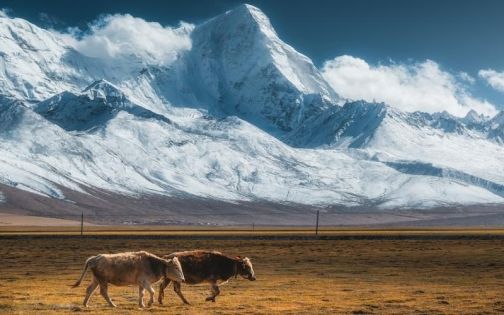
Chomolhari Snow Mountain
Practical Travel Tips Combined with Altitude Characteristics
Prevention and Response to Altitude Sickness
Based on the introduction to altitudes of tourist attractions in Shigatse Area, the key points for preventing altitude sickness vary at different heights. Scientific response ensures a smooth itinerary.
For areas below 4,500 meters above sea level, you can take Rhodiola rosea one week in advance. Avoid bathing and strenuous exercise after arrival, drink no less than 3 liters of water per day, and maintaining an optimistic attitude helps adaptation.
For areas above 4,500 meters above sea level, carry a portable oxygen cylinder, avoid prolonged stay, and eat light and easy-to-digest food, avoiding overeating. If symptoms such as headache and nausea occur, rest immediately and inhale oxygen. Seek medical attention promptly if symptoms worsen.
When traveling to areas such as Mount Everest Base Camp and Lengbugangri, it is advisable to go with companions, check the weather forecast in advance. Severe weather is likely to cause physical discomfort, and the itinerary needs to be adjusted in a timely manner.
Matching Seasons with Altitudes
Climatic conditions in different seasons are closely related to the altitude experience. Choosing the travel time based on the introduction to altitudes of tourist attractions in Shigatse Area can improve travel comfort.
April to May and September to November are the peak seasons, with moderate temperatures and little rainfall, allowing clear views of the golden sunrise over Mount Everest. Whether in low-altitude urban areas or high-altitude base camps, the travel experience is excellent.
June to August is summer. Low-altitude areas are covered with lush vegetation, suitable for viewing grasslands and lakes, but high-altitude areas are prone to rainfall, making mountain roads slippery. Pay attention to traffic safety.
December to February of the following year is winter, with extremely low temperatures. High-altitude attractions may be closed to traffic, suitable only for visiting urban attractions. At this time, there are few tourists, allowing you to experience the quiet Tibetan style.
Preparation of Altitude-Related Equipment and Documents
Prepare corresponding equipment according to the altitude differences of attractions and complete relevant documents to ensure a smooth itinerary.
For equipment, in areas above 4,500 meters, carry a -15℃ sleeping bag, windproof and warm clothing, trekking poles, and sun protection products; in low-altitude areas, prepare a light down jacket and carry skin care products to cope with the dry climate.
For documents, to travel to border areas such as Mount Everest Base Camp and Saga County, apply for a border pass in advance. It can be processed at the public security bureau of your household registration place or supplemented in Lhasa and Shigatse to avoid affecting the itinerary.
Introduction to Altitudes of Hidden Attractions
In addition to popular attractions, Shigatse has many niche spots whose altitude characteristics are also worth paying attention to, suitable for tourists pursuing unique experiences.
- Qulong Gam Co Lake: At an altitude of about 5,400 meters, located at the foot of Pulha Chim, it is an excellent spot to admire the golden sunrise over sacred mountains and glaciers. The surrounding area is uninhabited, so you need to bring your own food and equipment.
- Dagyeling Monastery: With an altitude of about 4,600 meters, located 40 kilometers west of Saga County, the ruins of the old monastery and pagoda groups are full of a sense of vicissitude. You can overlook the Yarlung Zangbo River and the Himalayas to the south, with low visiting difficulty.
- Karo La Glacier: At an altitude of 5,560 meters, it is one of the three major glaciers in Tibet. The front edge of the glacier is close to the highway, allowing close-up viewing. Due to the high altitude, it is recommended to visit quickly and avoid prolonged stay.
- Mala Mountain Pass: At an altitude of 5,200 meters, it is located along National Highway 318 at the junction of Lhasa and Shigatse, serving as an important altitude node between the two places. The pass is equipped with a viewing platform and altitude signs, with strong winds and obvious temperature differences. Although its altitude is equivalent to that of Mount Everest Base Camp, the stay time is short. It is recommended to wear windproof and warm clothing, avoid strenuous exercise when taking photos, and carry oxygen for emergencies.
Taking Altitude as the Guide: Enjoy the Snowy Beauty of Shigatse
The introduction to altitudes of tourist attractions in Shigatse Area is the core basis for planning the itinerary. From the mild altitude of the urban area to the extreme height of Mount Everest, each climb is a deep encounter with the snowy scenery. Mastering the altitude data of each attraction in advance, making preparations for altitude sickness prevention, route planning, and equipment, allows you to safely reach your desired attractions and carefully appreciate the cultural heritage and natural wonders of Western Tibet.
Whether you are an adventurer pursuing magnificent scenery or a traveler who loves culture, you can gain unique travel memories on this high-altitude land. When traveling to Shigatse, take altitude as your guide to slowly explore the bright charm of this snow-capped pearl, making every stop full of meaning and surprises.