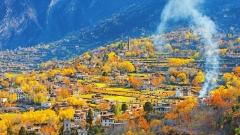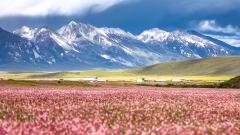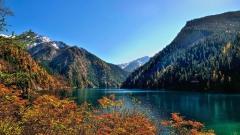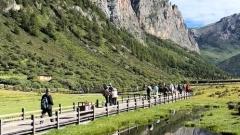

Every year from late March to early April, the Jinchuan Valley in western Sichuan enters one of the most beautiful seasons of the year. Thousands of pear trees bloom across the river valley, covering terraces, hillsides, and Tibetan villages with a vast sea of white flowers. Along the banks of the Dajin River, traditional Jiarong Tibetan houses and ancient watchtowers stand among blooming orchards, creating a unique landscape that combines natural scenery with local culture. In the early morning, mist often drifts through the valley, making the blossoms and villages appear almost dreamlike. Because of its massive scale and concentrated distribution, Jinchuan has become one of the most famous spring flower destinations in western China, attracting photographers and travelers from across the country.
Best Time to View Jinchuan Pear Blossom
The flowering period of Jinchuan Pear Blossom is concentrated from mid-to-late March to mid-April every year, and the full bloom period lasts about 10 to 15 days. Due to the altitude of the Jinchuan River Valley ranging from 2,000 to 3,000 meters, pear blossoms bloom from low altitude to high altitude.
- Early to mid-March: Pear blossoms bloom initially in low-altitude areas of the river valley with few tourists, suitable for travelers who prefer quietness.
- Mid-March to early April: Core areas enter full bloom. Pear blossoms in Sha’er, Ge’er, Qingning and other townships are in full bloom, which is the best time for viewing and photography.
- Mid-April: The flowering period ends in high-altitude areas, and some late-blooming varieties can still be viewed.
The flowering period is significantly affected by the climate of the year. A fast temperature rise in spring will advance the flowering period, while a late spring cold will delay it. It is recommended to obtain real-time flowering information through local tourism departments, weather forecasts or consult agencies familiar with western Sichuan (such as China Dragon Travel) before departure. The best daily viewing time is 7:00 to 9:00 in the morning (mist shrouded, soft light) and 4:00 to 6:00 in the afternoon (setting sun shining, rich colors).
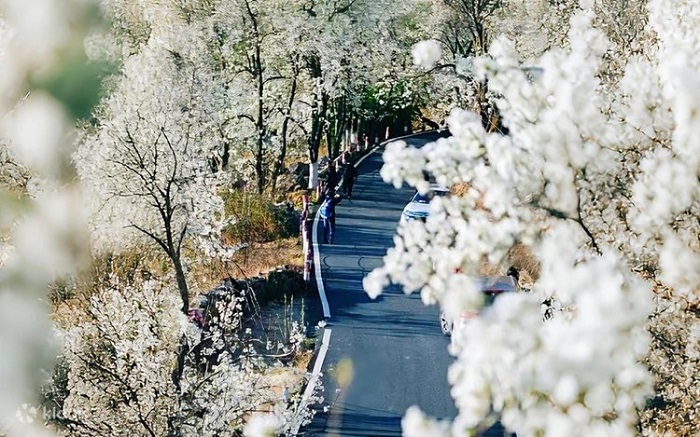
Jinchuan Pear Blossom
Best Viewing Areas of Jinchuan Pear Blossom
The essence of Jinchuan Pear Blossom is concentrated in Sha’er Township, Ge’er Township and Qingning Township northwest of the county seat. The three townships are adjacent and can be visited in half a day. If time permits, Zhonglu Tibetan Village and villages along the river valley are also worth staying.
Fairy Bag (Sha’er Township)
Fairy Bag is a prominent hill with a viewing platform on the top, overlooking the entire Jinchuan River Valley. Terraced fields, Tibetan villages and pear blossoms spread layer by layer, with the Dajinchuan River winding through it, offering a wide view. There is often thin fog in the early morning, making it a classic spot for panoramic photos. No admission fee, parking fee under the viewing platform is 10-20 CNY.
Ge’er Township
There are many century-old pear trees growing here, with twisted trunks interspersed with highland barley fields and rape flower fields. Tourists can walk along the field ridges into the flower sea to take close-up photos of pear blossoms. There are viewing platforms in Fuxing Village and Desheng Village, and the viewing platform in Fuxing Village is especially suitable for panoramic photos.
Qingning Township
Pear trees in Qingning Township grow freely along the hillsides, forming sheet-shaped flower forests. Pear blossoms near Songping Village contrast with ancient watchtowers, and pear blossom avenues are lined with pear trees on both sides, suitable for portrait photography.
Zhonglu Tibetan Village
Located in Danba County, about 2 hours’ drive from Jinchuan. Tibetan villages and watchtowers are scattered among terraced fields, dotted with century-old pear trees, with a strong original ecological atmosphere and few tourists, suitable for tourists who like humanistic photography.
Hundred-mile Jinchuan River Valley
Drive along National Highway G248, with continuous pear blossoms on both sides of the road. Tourists can stop at any time and enter any flower sea to enjoy free viewing without fixed scenic spots.
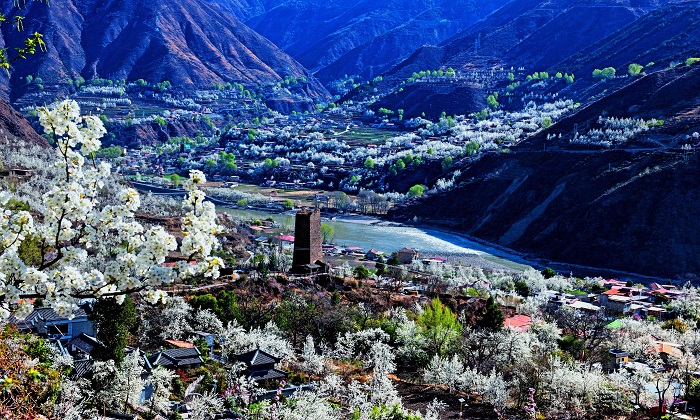
Jinchuan Pear Blossom
Accommodation Options for Jinchuan Pear Blossom Season
Accommodation is tight during the peak flower viewing season (late March to mid-April), with prices 30%-50% higher than usual. It is recommended to book 2-3 weeks in advance.
Hotels in Jinchuan County
There are many guesthouses and hotels in the county, priced at 200-400 CNY per night. Recommended Jinchuan Hotel, Lanfeng Hotel, with new facilities and convenient parking. The advantage is convenient catering and shopping, but it is about 10-20 kilometers away from the core flower viewing areas, requiring driving or chartering a round trip.
Rural Homestays
There are many Tankan homestays and homestays in Sha’er Township and Ge’er Township, priced at 180-300 CNY per night, usually including simple breakfast. Stay beside the flower fields, with a view of the scenery when opening the window, and you can enjoy the flower sea alone in the early morning. Confirm whether there is an independent bathroom, hot water and heating before booking (the night temperature in March is close to 0℃). Well-reputed ones include “Liyuan Home”in Sha’er Township and “Yunshang Lihua”in Ge’er Township.
Transportation to Jinchuan Pear Blossom Viewing Areas
Jinchuan County is located in the southwest of Aba Tibetan and Qiang Autonomous Prefecture, Sichuan Province, about 450 kilometers away from Chengdu. The overall road condition is good. The common transportation methods are as follows.
Self-driving
Starting from Chengdu, take Chengguan Expressway and Duwen Expressway to Wenchuan, drive along National Highway 317 via Lixian and Maerkang, then transfer to Provincial Highway 211 to Jinchuan. The whole journey takes about 5-6 hours, mainly asphalt roads, with complete service areas and gas stations along the way. Another route goes via Ya’an, Luding, Danba to Jinchuan, which can connect Danba Tibetan Villages, but the journey is slightly longer. Notes for self-driving: Mountain roads have many curves and steep slopes, with occasional snowfall in spring. Check the vehicle condition and prepare snow chains before departure; drive at a controlled speed on the plateau and avoid fatigued driving.
Coach
There are daily direct coaches to Jinchuan at Chengdu Chadianzi Bus Terminal, the journey takes about 7-8 hours, and the fare is 120-180 CNY. Tickets are in short supply during peak season, so it is recommended to book 3 days in advance through “Sichuan Bus Ticket Network”or Ctrip. If there are no direct tickets, you can take a coach to Maerkang first (about 5 hours, fare about 100 CNY), then transfer to a coach from Maerkang to Jinchuan (about 2 hours, fare about 50 CNY).
Local Transportation
There are rural passenger buses from Jinchuan County to various pear blossom viewing spots, but the frequency is low. A more flexible way is to charter or share a car: Chartering a local van for a day costs about 300-400 CNY, covering main areas such as Sha’er, Ge’er and Qingning. Drivers are familiar with the routes and can help find niche shooting spots. You can also consult carpooling information at your accommodation.
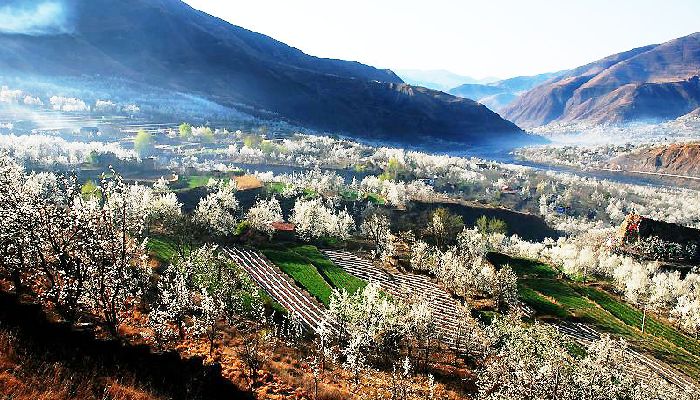
Jinchuan Pear Blossom Tibetan Village
Catering Recommendations for Jinchuan Pear Blossom Season
The local diet integrates plateau characteristics and Jiarong Tibetan flavors. The following are worth trying:
- Tibetan Hot Pot: Main ingredients include yak meat, vegetables and fungi, with rich yak bone soup, suitable for sharing by multiple people.
- Butter Tea: A traditional plateau drink that warms the body and dispels cold, often paired with tsampa.
- Sour Cabbage Noodle Blocks: A common local staple food, sour and appetizing, with chewy noodle blocks.
- Monk Buns: Special Tibetan buns. suck out the oil soup inside first when eating, then dip in seasonings.
- Jinchuan Snow Pear Paste: A local specialty, moistens the lungs and relieves cough, can be used as a souvenir.
Catering budget: A meal in an ordinary restaurant is about 20-40 CNY, breakfast 10-15 CNY; Tibetan hot pot is 50-80 CNY per person. There are few catering options in remote areas, so it is recommended to bring your own dry food.
Budget Reference for Jinchuan Pear Blossom Trip
Core areas of Jinchuan Pear Blossom are open for free, and the main expenses are transportation, accommodation and catering. Taking Chengdu as the starting point, the reference for various expenses is as follows:
- Transportation: Round trip carpool from Chengdu is about 300-400 CNY per person; fuel fee + toll for self-driving is about 500 CNY per person; round trip by bus is 240-360 CNY. Local charter is 300-400 CNY per day (can be shared by carpool).
- Accommodation: Rural homestay 180-300 CNY per night; county hotel 200-400 CNY per night.
- Catering: 50-80 CNY per person per day.
- Others: Parking fee for viewing platform 10-20 CNY per car; set aside 50-100 CNY for souvenirs and snacks.
Total budget is about 800-1500 CNY per person (excluding personal shopping). Choosing a package service of travel agencies (such as carpool + accommodation package provided by China Dragon Travel) can simplify the itinerary and better control the budget.
Practical Tips for Jinchuan Pear Blossom Trip
Clothing Preparation
The temperature difference between day and night in Jinchuan in March is large (10-20℃ in the daytime, 0-5℃ at night). It is recommended to wear multi-layer clothes: quick-drying underwear, fleece jacket, windproof jacket (or light down jacket). Keep warm when shooting sunrise in the morning, sun protection equipment (sunglasses, wide-brimmed hat, SPF50+ sunscreen) is essential.
Photography Tips
- Clothing color: Pear blossoms are mainly white, it is recommended to wear bright colors such as red, bright yellow and royal blue, avoid pure white.
- Equipment: Wide-angle lens is suitable for shooting large scenes, telephoto lens can compress the picture to highlight layers; drone aerial photography can show the full view of the river valley, but it is necessary to confirm whether it is banned locally.
- Time: The light is best from 7-9 am and 4-6 pm, with fewer tourists at this time.
Health Tips
The altitude of Jinchuan is 2,000-2,500 meters, and most people have no altitude sickness. However, avoid strenuous exercise when first arriving at the plateau, keep warm and prevent colds. If you have a history of cardiopulmonary disease, it is recommended to consult a doctor before departure.
Respect Local Customs
Please abide by local regulations when entering Tibetan villages and temples, and obtain consent before taking photos of villagers.
Common Problems to Avoid
- Do not only focus on Fairy Bag, villages along the way are also wonderful.
- Be sure to book accommodation in advance during peak season, temporary search is expensive and in poor condition.
- Long-distance mountain roads are easy to cause carsickness, prepare carsickness medicine.
- The flowering period changes with the climate, check real-time flowering information before departure, do not trust fixed dates.
Frequently Asked Questions about Jinchuan Pear Blossom
Q: What is the difference between Jinchuan Pear Blossom and Danba Pear Blossom?
A: Jinchuan Pear Blossom is large in scale with open river valleys and magnificent momentum; Danba Pear Blossom is closely combined with Tibetan villages and watchtowers with strong cultural atmosphere. The two places are about 2 hours’ drive away and can be visited in series.
Q: When is the Jinchuan Pear Blossom Festival usually held?
A: It is usually held from late March to early April in conjunction with the flowering period, and the specific date is announced by the local government every year.
Q: Can I fly a drone?
A: Drones are allowed to fly in most outdoor areas, but avoid crowded places and over temples, and abide by local temporary control regulations.
Q: What is the local temperature? What clothes should I wear?
A: 10-20℃ in the daytime, 0-5℃ at night. Onion-style dressing is recommended, prepare enough warm clothes.
Q: Do I need to apply for a border permit?
A: Jinchuan is not a border area, no border permit is required.
Q: Is Jinchuan suitable for the elderly and children?
A: Yes, the altitude is not high, but the drive is long. It is recommended to drive in sections and take more breaks on the way.
Q: Is mobile payment convenient locally?
A: WeChat and Alipay are supported in the county and main towns, but it is recommended to prepare a small amount of cash in remote villages.
Planning Your Jinchuan Pear Blossom Trip
The pear blossom season in Jinchuan is short but spectacular. For about two weeks each spring, the entire valley transforms into a landscape of white blossoms stretching across terraces, villages, and hillsides. Combined with the dramatic scenery of western Sichuan and the cultural charm of Jiarong Tibetan settlements, the region offers one of the most distinctive spring travel experiences in China. Whether you are a photographer searching for dramatic mountain landscapes or a traveler looking for a peaceful countryside escape, Jinchuan provides a memorable destination during the blooming season.
Travelers who prefer a smoother journey can also consider arranging their trip through experienced local travel services. China Dragon Travel has extensive experience organizing trips across western China and is familiar with the seasonal changes and logistics of the Jinchuan blossom season. With proper planning, visitors can enjoy the best viewpoints, comfortable accommodation, and a well-paced itinerary while exploring one of the most beautiful spring landscapes in Sichuan.