
If Mount Kailash is the spiritual center of the world, then Lake Manasarovar is where the soul finds absolute peace.
Located in Tibet’s remote Ngari (Ali) region near Purang County, Lake Manasarovar is revered as the “King of Sacred Lakes” by four major religions: Tibetan Buddhism, Bon, Hinduism, and Jainism.
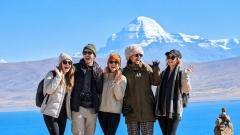
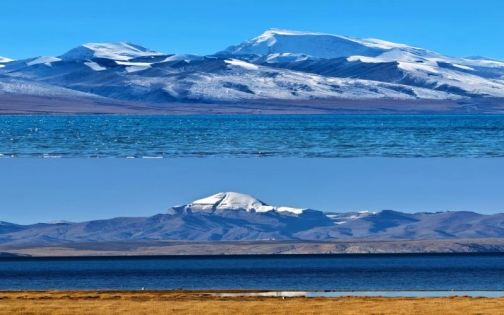
For many travelers, the first sight of Manasarovar is unforgettable — crystal-blue water stretching endlessly beneath snow-covered mountains, powerful highland winds sweeping across the shore, and an overwhelming sense of silence that feels almost unreal.
More than just one of Tibet’s holiest lakes, it is also known as the “Mother of World Rivers.”
Lake Manasarovar
🏞️ About Lake Manasarovar
Lake Manasarovar sits at an altitude of approximately 4,588 meters, making it one of the world’s highest freshwater lakes.
In Tibetan, “Mapam Yumtso” means:
“The Eternal Invincible Jade Lake.”
The lake covers around 412 square kilometers, and its water is extraordinarily clear. Under changing sunlight, the colors shift beautifully from turquoise and emerald green to deep sapphire blue.
But what truly makes Manasarovar extraordinary is its immense spiritual significance.
✨ Sacred to Four Major Religions
Very few places on Earth are revered by multiple religions the way Lake Manasarovar is.
✔ Tibetan Buddhism
Buddhists believe the holy water cleanses the “Five Poisons” of the mind: greed, anger, ignorance, pride, and jealousy.
✔ Bon Religion
Bon followers regard the lake as a sacred center of cosmic energy.
✔ Hinduism
In Hindu tradition, Lord Shiva and Goddess Parvati are believed to have bathed here.
✔ Jainism
Jains consider the region a sacred site connected to ancient spiritual enlightenment.
Because of this, pilgrims from across Asia travel thousands of kilometers to complete the sacred lake pilgrimage.
🌊 Why It Is Called the “Mother of World Rivers”
Lake Manasarovar lies near the source regions of several major Asian river systems.
Four important rivers originate from the surrounding area:
- East: Mapcha Tsangpo → Ganges River system
- West: Langqen Tsangpo → Sutlej River
- North: Sengge Tsangpo → Indus River
- South: Peacock River → Brahmaputra River
Standing beside the lake, it is difficult to imagine that this peaceful body of water nourishes civilizations across Asia.
🚘 How to Get to Lake Manasarovar
Most travelers visit Lake Manasarovar together with Mount Kailash as part of the classic Ngari South Route in Western Tibet.
✔ Main Route from Lhasa
Lhasa → Shigatse → Saga → Darchen → Lake Manasarovar
Total distance:
approximately 1,200–1,400 km.
🚗 Transportation Options
① Self-Drive or Private Vehicle (Recommended)
This is the most flexible and popular option.
Advantages:
- Freedom to stop for photography
- Easier lake exploration
- Better access to remote viewpoints
Important:
- SUVs or 4WD vehicles are strongly recommended
- Some roads are unpaved
- Sedans can easily scrape the chassis
② Small Group Tours
Ideal for first-time travelers to Ngari.
Usually includes:
- 7–10 day itineraries
- Driver and accommodation
- Shared transportation costs
③ Long-Distance Bus
Possible but less flexible and significantly slower.
Best suited for budget travelers.
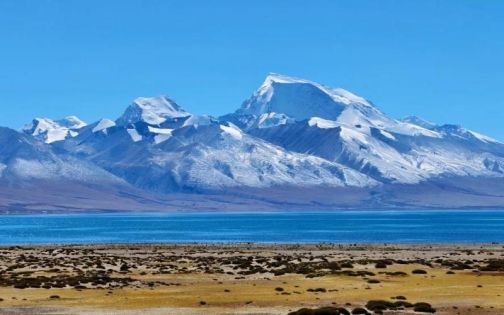
Lake Manasarovar
🗺️ Current Lake Route Conditions
Many older travel guides mention free lake access routes, but conditions have changed in recent years.
⚠️ Important Update
Some lake access points now charge entrance fees, including:
- Chiu Monastery area
- Chugu Monastery entrance
Some local-managed sections charge approximately 150 RMB per person.
Road conditions:
- Mostly gravel and dirt roads
- Muddy during rainy season
- Strongly affected by weather
Low-clearance vehicles are not recommended.
📸 Best Photography Locations
Lake Manasarovar is enormous, and choosing the right viewpoint makes a huge difference.
① Hills Near Chiu Monastery
One of the most iconic photography locations.
You can capture:
- Panoramic lake views
- Mount Kailash in the distance
- Reflections on calm water
During good weather, you may even witness the famous “Golden Sunrise on Kailash.”
② Around Chugu Monastery
This area has the strongest spiritual atmosphere.
You’ll often see:
- Pilgrims walking clockwise around the lake
- Prayer rituals
- Sacred bathing areas
Perfect for documentary and cultural photography.
③ Eastern & Southern Shores
Best locations for photographing Mount Kailash reflections.
Sunrise and sunset conditions can be spectacular.
🌅 Best Time to Visit
Recommended travel season:
June to October
Season highlights:
- July–August: dramatic clouds and vivid colors
- September–October: clearest skies for photography
Winter travel is possible but difficult due to:
- Extreme cold
- Strong winds
- Road closures
Not recommended for casual travelers.
🛕 Must-Do Experiences at Lake Manasarovar
✔ Circumambulating the Lake
The full pilgrimage circuit is approximately 60 km.
Pilgrims often:
- Walk the entire route
- Perform prostration pilgrimages
- Move clockwise according to Tibetan Buddhist tradition
It is believed to cleanse sins and negative karma.
✔ Sacred Water Rituals
Some pilgrims perform symbolic purification rituals in the lake.
Important:
- Water temperature is extremely cold
- Avoid prolonged exposure at high altitude
✔ Visiting Lakeside Monasteries
There are nine monasteries surrounding the lake.
Most famous:
- Chiu Monastery
- Chugu Monastery
These monasteries offer deep insight into Tibetan spiritual culture.
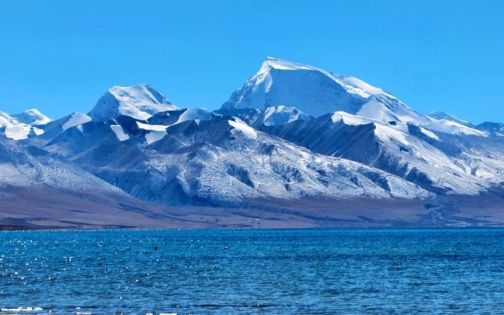
Lake Manasarovar
⚠️ Altitude & Health Tips
At nearly 4,600 meters above sea level, altitude sickness is very common.
Travel advice:
- Ascend gradually
- Avoid intense physical activity
- Stay hydrated
- Carry oxygen if needed
- Use sunscreen and lip balm
The ultraviolet radiation here is extremely strong.
🎒 Essential Packing List
Weather in Ngari changes rapidly, even within a single day.
Recommended gear:
Clothing
- Softshell jacket
- Fleece layer
- Lightweight down jacket
- Waterproof outer shell
Footwear
- Hiking shoes
- Warm socks
Essentials
- Sunglasses
- Thermos bottle
- Power bank
- Trekking poles
- High-calorie snacks
- Sunscreen
- Lip balm
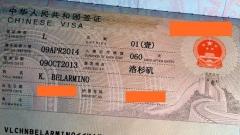
📌 Border Permit Required
Ngari Prefecture is a restricted border region.
You must carry:
- Tibet Travel Permit
- Border Permit for Ngari
There are frequent checkpoints along the route.
It is highly recommended to:
- Keep paper copies
- Carry ID at all times
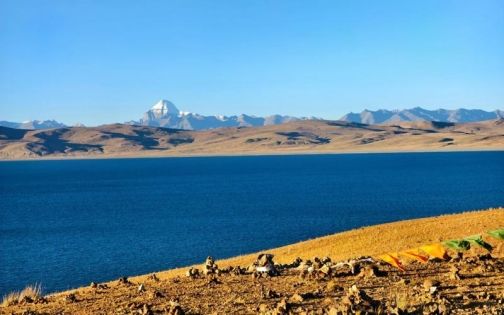
Lake Manasarovar
💭 The Real Power of Manasarovar
Many people think Lake Manasarovar is simply “a beautiful lake.”
But once you stand on its shores, surrounded by endless sky, sacred mountains, and silent pilgrims, you begin to understand why people have journeyed here for thousands of years.
The true impact of Manasarovar is not only visual.
It is spiritual.
Some places impress you with scenery.
Manasarovar changes the way silence feels.