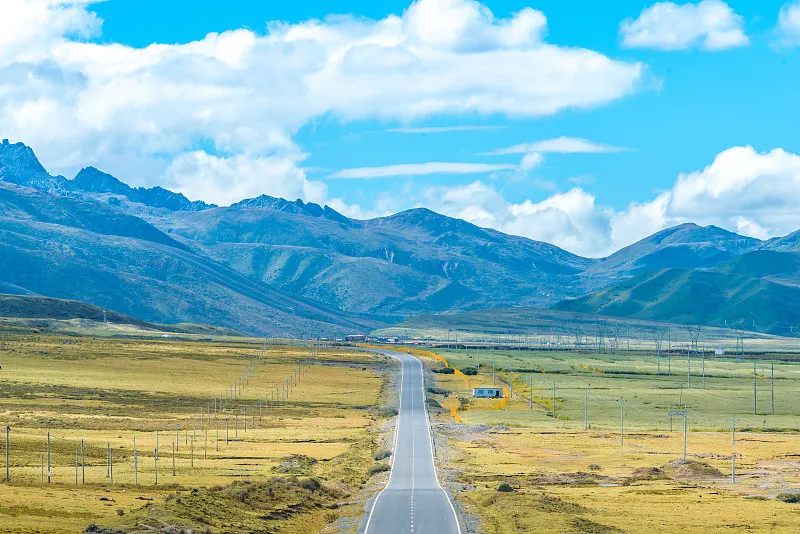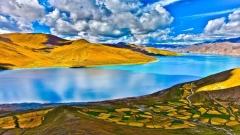

As one of the world’s highest electrified railways, the 435.48km Lhasa-Nyingchi Railway crosses the Yarlung Zangbo River 16 times, cutting road travel time from 6-8h to 3-5h by train. Taking it lets you enjoy scenery and acclimatize to the plateau gradually, lowering altitude sickness risk. Key trains C4397 and K6833 suit different travelers. This guide covers all trip aspects, starting with in-depth train info for a smooth journey.
Train Details: A Comparison Between C4397 and K6833
Understanding the basic information of these two trains is the first step in planning your trip. The key data below is based on the latest railway operation information (please refer to the official 12306 website for updates), including departure and arrival times, total travel time, ticket prices, and carriage types for easy comparison.
C4397 Intercity EMU: The Top Choice for Efficiency and Comfort
The C4397 is a Fuxing Plateau Dual-Source EMU, a flagship train on the Lhasa-Nyingchi Railway specially designed for high-altitude environments. Equipped with a sophisticated oxygen supply system, it maximizes travel comfort, making it ideal for travelers seeking efficiency and convenience.
Departure and Arrival Times: Typically departs Lhasa Station at 07:45 and arrives at Nyingchi Station at 11:33, with a total travel time of 3 hours and 48 minutes. It perfectly covers the morning peak travel period, leaving you ample time to explore Nyingchi’s urban attractions upon arrival.
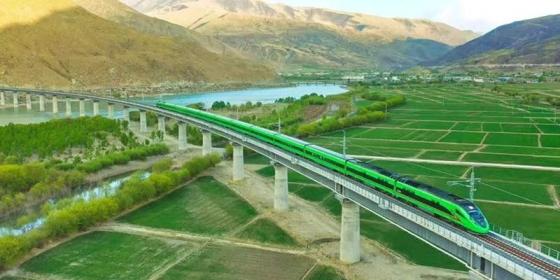
C4397 Intercity EMU
Ticket Prices: Second-class seat is 129 RMB, first-class seat 206 RMB, and business-class seat 452 RMB (business-class tickets are usually in short supply and need to be snapped up in advance). Standing tickets are also available at the same price as second-class seats (129 RMB). Compared to flight tickets, EMU tickets offer excellent value for money while allowing you to enjoy the scenery along the way, making them a standout choice.
Carriage Configuration: The train adopts a 12-car formation with 3 powered cars and 9 unpowered cars. The body is marked with Chinese, Tibetan, and English characters to cater to both domestic and foreign travelers. The seats are arranged rationally—second-class seats follow a 3+2 layout, providing ample space. Each row of seats is equipped with emergency oxygen outlets underneath, and some carriages have independent oxygen supply systems to effectively alleviate discomfort caused by the high-altitude environment. Additionally, the carriages feature charging sockets, luggage racks, and restrooms with hot water, offering comprehensive facilities.
K6833 Express Train: Budget-Friendly Option for Leisurely Travelers
The K6833 is an express train with a slightly longer travel time but more affordable ticket prices. It also allows you to enjoy the full range of scenery along the route, making it suitable for budget-conscious travelers with more flexible schedules. In addition to Nyingchi Station, the train stops at Shannan, Gyaca, Nangxian, and other stations, making it a great choice if you plan to make stops and explore along the way.
Departure and Arrival Times: Departs Lhasa Station daily at 16:10 and arrives at Nyingchi Station at 21:19, with a total travel time of 5 hours and 9 minutes. Covering the afternoon to evening period, it’s perfect for travelers looking to avoid the morning rush. Upon arrival in Nyingchi, you can head directly to your accommodation to rest and acclimatize.
Ticket Prices: Hard seat is 64.5 RMB; hard sleeper (upper/middle/lower berths) are 159.5 RMB, 163.5 RMB, and 166.5 RMB respectively; soft sleeper (upper/lower berths) are 245.5 RMB and 252.5 RMB. Standing tickets are priced the same as hard seats (64.5 RMB). The hard and soft sleeper carriages offer spacious and comfortable seating, making them ideal for long-distance travel with excellent value for money.
Carriage Configuration: It offers three types of carriages—hard seat, hard sleeper, and soft sleeper—to meet different travelers’ needs. Hard sleeper carriages have 6-person compartments, while soft sleeper carriages have 4-person compartments, both providing a comfortable space. The carriages are also equipped with oxygen supply devices and charging sockets. Restrooms offer cold water, and some carriages have hot water supply points. Additionally, a dining car is located in the middle of the train, offering a variety of meal options.
Ticketing Guide: Tips and Notes to Avoid Missing Out
The Lhasa-Nyingchi Railway is surrounded by abundant attractions, and during peak travel seasons such as the Nyingchi Peach Blossom Festival (March-April), summer vacation (July-August), and National Day, train tickets are in high demand and often sell out quickly. Mastering scientific ticketing skills is crucial for a smooth train journey from Lhasa to Nyingchi. Please pay close attention to the following details.
Ticketing Channels: Official Platforms as Priority, Auxiliary Channels as Backup
The preferred channel is the official China Railway 12306 APP or website, the most authoritative and reliable platform for ticketing. It allows you to check real-time ticket availability, prices, departure times, and other information, as well as support online ticket cancellation and modification. When registering, please fill in your personal identity information accurately. Foreign travelers need to register with their passport numbers to ensure the information matches their documents.
Auxiliary channels include regular travel platforms such as Ctrip and Qunar. These platforms synchronize data with 12306 and some offer ticket-snatching services, which are useful during peak seasons. However, note that auxiliary platforms may charge a small service fee, and ticket cancellation and modification rules are subject to the platform’s terms. It is recommended to read the relevant clauses carefully before purchasing tickets.
Ticketing Time: Plan in Advance and Seize Presale Windows
According to railway regulations, the presale period for regular train tickets is 15 days (including the departure date). It is advisable to purchase tickets as soon as the presale period opens, especially for travelers during peak seasons. Set an alarm to snap up tickets promptly. For example, if you plan to take the C4397 train on October 1st, you need to purchase tickets immediately after the ticketing channel opens on September 17th.
If you fail to get a direct ticket, you can try purchasing connecting tickets. For instance, take the C4379 train from Lhasa to Shannan first, then transfer to the K6833 train from Shannan to Nyingchi. Although the total travel time is slightly longer, it increases the chances of successful travel. In addition, 1-2 days before the train departs, some passengers may cancel their tickets, and a small number of leftover tickets may be released. You can refresh the 12306 platform regularly to check.
Special Notes: Documents and Modification Rules
When boarding the train, you must carry valid documents consistent with those used for ticket purchase—ID cards for domestic travelers and passports for foreign travelers. You need to go through document verification and security checks when entering the station. It is recommended to arrive at Lhasa Station 1 hour in advance to allow sufficient time for boarding procedures.
If your travel plans change, please cancel or modify your ticket in a timely manner. No service fee will be charged for ticket cancellations made 8 days (inclusive) or more before departure; a 5% service fee of the ticket price will be charged for cancellations made more than 48 hours but less than 8 days before departure; a 10% service fee will be charged for cancellations made more than 24 hours but less than 48 hours before departure; and a 20% service fee will be charged for cancellations made less than 24 hours before departure. Ticket modifications must be made before the train departs, and each ticket can be modified at most once. If the modified ticket is canceled again, the above service fee rules will apply.
Travel Preparation: Altitude Sickness Prevention and Packing List for a Comfortable Journey
Lhasa has an altitude of approximately 3,650 meters, and Nyingchi is around 3,000 meters. Although the Lhasa-Nyingchi train journey is relatively short, it is still necessary to take precautions against altitude sickness and prepare necessary travel items to ensure a safe and comfortable trip. Based on the characteristics of the train journey from Lhasa to Nyingchi, please refer to the following packing list and notes.
Altitude Sickness Prevention: Key Priority with Advance Preparation
Although the train journey allows your body to acclimatize to the high-altitude environment gradually, some travelers may still experience mild altitude sickness symptoms (such as headaches, dizziness, and chest tightness). It is recommended to take anti-altitude sickness medications such as Rhodiola rosea 1-2 weeks in advance (please follow medical advice for specific usage). You can carry a portable oxygen cylinder during the trip. If you feel unwell, inhale oxygen in a timely manner to relieve symptoms, but avoid excessive reliance on it.
During the journey, avoid strenuous exercise, maintain steady breathing, try not to stay up late, and drink plenty of water (it is recommended to drink more than 2,000ml per day). Avoid alcohol, smoking, and coffee. Opt for light meals and avoid overeating. The temperature inside the carriage is relatively low, so it is advisable to wear warm clothing to prevent catching a cold, as colds may worsen altitude sickness symptoms.
Essential Packing List: Practical and Minimalist Items
Clothing: The temperature difference between day and night on the plateau is significant. Even when traveling in summer, bring a light jacket and long pants; in winter, pack down jackets, scarves, gloves, and other warm clothing. It is recommended to wear comfortable flat shoes for easy movement.
Documents and Cash: Carry your ID card/passport and a printed copy of your train ticket (a paper backup is recommended). Although mobile payments are supported inside the carriage, some vendors at stations along the route may only accept cash. It is advisable to carry a small amount of cash (100-500 RMB is sufficient).
Daily Necessities: Bring a thermos cup (free hot water is available in the carriage), wet wipes, tissues, and toiletries (if traveling on the K6833 train and needing to stay overnight, a simple toiletry bag is recommended). Don’t forget sunscreen, sunglasses, and a hat (the plateau has strong ultraviolet rays, so sun protection is necessary even inside the carriage).
Other Items: A power bank (to ensure your mobile phone has sufficient battery for taking photos and staying in touch), a camera (to capture the stunning scenery along the way), and common medications (such as cold medicine, gastrointestinal medicine, painkillers, and motion sickness pills).
Scenery Guide Along the Route: Unmissable Plateau Beauty
One of the biggest highlights of taking the train from Lhasa to Nyingchi is the breathtaking natural scenery along the way. The Lhasa-Nyingchi Railway winds through the Yarlung Zangbo River Valley, with snow-capped mountains, grasslands, lakes, and Tibetan villages unfolding one after another, like a moving plateau landscape painting. Below is a summary of the core scenic sections and photography tips to help you not miss any beautiful views.
Core Scenic Sections and Highlights
Lhasa to Shannan Section: After departing Lhasa Station, the train travels south along the Lhasa River Valley. You can enjoy the vast scenery of the Lhasa River Valley, with the snow-capped Nyainqêntanglha Mountains in the distance, contrasting beautifully with the highland barley fields and Tibetan-style dwellings in the valley. This section also offers a distant view of Lhasa Gonggar Airport, and you may occasionally see planes taking off and landing, creating a unique scene.
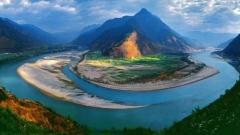
Shannan to Gyaca Section: This is one of the most stunning sections of the entire journey. The train crosses the Yarlung Zangbo River multiple times, and the Zangmu Yarlung Zangbo Grand Bridge is a must-see highlight. Spanning the Yarlung Zangbo Grand Canyon, the bridge is magnificent. As the train passes over the bridge, you can clearly see the surging river below and the steep canyons and dense forests on both banks. In addition, you can admire the unique Tibetan villages in the Shannan area, nestled between mountains and rivers, full of rural charm.
Gyaca to Nyingchi Section: Entering Nyingchi, the vegetation becomes increasingly dense and the climate more humid, gradually revealing the charm of “Jiangnan on the Plateau.” Along the way, you can enjoy the scenery along the Nyang
River, with clear water flowing, lush forests and farmland on both banks, and the distant snow-capped mountains shining brightly in the sun. If you travel in spring (March-April), you can also see the peach blossoms in full bloom along the route, with pink flowers contrasting beautifully with the snow-capped mountains and rivers, creating an unforgettable sight.
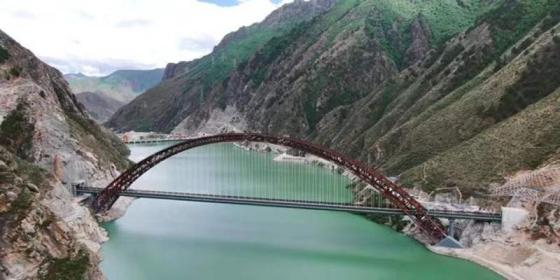
Zangmu Yarlung Zangbo Grand Bridge
After Arriving in Nyingchi: Transportation Connections and Travel Suggestions
After arriving at Nyingchi Station smoothly, reasonable transportation connections and travel planning can make your subsequent journey more seamless. Nyingchi Station is approximately 15 kilometers from the urban area, with convenient transportation. Meanwhile, Nyingchi’s attractions are widely distributed, so it is recommended to plan your itinerary based on your own needs.
Transportation Connections from Nyingchi Station to Urban Area and Attractions
Public Transport: After exiting Nyingchi Station, you can take Bus No. 1 or 2 to the urban area (Bayi Town). The fare is 2 RMB, and the journey takes about 30 minutes. The bus stop is located on the right side of the exit, and the operating hours are synchronized with the train arrival times for convenient transfers.
Taxi: There is a taxi waiting area at the exit. The fare to the urban area is approximately 30-50 RMB, with a travel time of about 20 minutes. If you are heading directly to scenic spots such as the Yarlung Zangbo Grand Canyon or Basum Tso Lake, you can negotiate a chartered price with the taxi driver, usually around 200-300 RMB for a one-way trip (subject to negotiation).
Chartered Car/Shared Ride: This is the most convenient way to visit Nyingchi’s attractions, especially for travelers planning to visit multiple spots. You can book a chartered car service in advance through China Dragon Travel or online platforms. The chartered price varies depending on the car type and itinerary length, usually around 500-800 RMB per day. Shared ride prices are relatively lower, with an average of 200-300 RMB per person per day.
Other Practical Tips: Details Enhance Travel Experience
In addition to the above core content, the following practical tips can make your train journey from Lhasa to Nyingchi more smooth and comfortable. It is recommended to familiarize yourself with them in advance.
Dining on the Train: Both the C4397 and K6833 trains have dining cars offering breakfast, lunch, dinner, and various snacks and drinks. Breakfast mainly includes porridge, eggs, and bread, priced at around 10-20 RMB; lunch and dinner offer stir-fried dishes, noodles, and bento boxes, priced at around 30-50 RMB per serving, with moderate value for money. It is recommended that travelers bring some snacks, fruits, and instant noodles, as free hot water is available in the carriage for easy preparation.
Schedule Arrangement: The C4397 has a shorter journey, so it is recommended to use the travel time to rest or enjoy the scenery. The K6833 arrives relatively late. If you plan to get up early the next day to visit attractions, it is advisable to rest appropriately during the trip and avoid staying up late.
Language and Communication: Train attendants are proficient in Chinese and English, and some also have basic Tibetan skills, facilitating communication with both domestic and foreign travelers. Most merchants at stations along the route and in Nyingchi’s urban area can communicate in Chinese, so foreign travelers do not need to worry too much about language barriers.
Safety and Taboos: During the trip, be sure to keep your personal belongings safe, especially valuables. Respect the local customs and traditions of Tibet, avoid discussing sensitive topics, and when entering religious sites such as temples, abide by relevant regulations and do not touch Buddha statues, prayer flags, etc. at will.
Embark on a Worry-Free Plateau Journey from Lhasa to Nyingchi by Train
This guide to the train journey from Lhasa to Nyingchi covers all core information throughout the trip, from choosing between the C4397 and K6833 trains to ticketing, boarding, sightseeing, and post-arrival connections. Every detail has been carefully organized to provide strong support for your Tibet trip.
If you want to make your journey even more hassle-free, you can choose relevant products from China Dragon Travel. They not only offer professional consultation services for traveling to Tibet but also customize exclusive travel packages including the Lhasa-Nyingchi train journey according to your needs, allowing you to enjoy the plateau scenery to the fullest without worrying about the details.
No matter which way you choose, this train journey through snow-capped mountains and rivers will become the most precious memory of your Tibet trip.