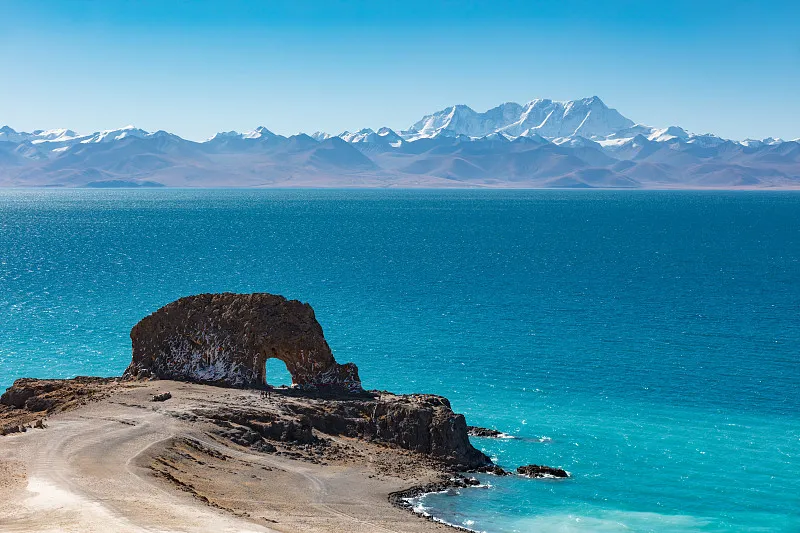

Rising like a colossal pyramid from the vast wilderness of western Tibet, Mount Kailash dominates the Ngari Plateau as the main peak of the Gangdise (Transhimalaya) Mountains. For centuries, it has been revered as the spiritual center of the world by Tibetan Buddhism, Hinduism, Bon, and Jainism, making it one of the most sacred mountains on Earth. Unlike other famous Himalayan peaks, Mount Kailash is not admired for conquest or summiting, but for circumambulation, devotion, and restraint.
Standing at approximately 6,656 meters above sea level (with some scientific sources recording 6,638 meters), Mount Kailash’s altitude is central to both its religious symbolism and its real-world challenges. The extreme elevation, thin air, volatile weather, and remote location turn every visit into a serious physical undertaking. For travelers and pilgrims alike, understanding Mount Kailash altitude, acclimatization, and kora safety is essential for a successful journey.
Where Is Mount Kailash Located?
Mount Kailash is located in Baga Township, Burang County, within Ngari Prefecture of the Tibet Autonomous Region, China. Geographically, it lies close to the borders of India and Nepal, reinforcing its importance across multiple civilizations and belief systems.
Key distances include:
- Approximately 140 km from Burang County town
- Around 270 km from Shiquanhe (Ali) Town, the administrative center of Ngari Prefecture
The mountain rises from a base altitude of roughly 4,500 meters, creating a dramatic vertical difference of more than 2,100 meters between the surrounding plateau and the summit. This elevation gradient produces layered climates, ecosystems, and extreme weather contrasts that directly influence travel safety.
Geological Origins and Sacred Natural Features
From a geological perspective, Mount Kailash formed as a result of the collision between the Indian and Eurasian tectonic plates, combined with the subduction of the Neo-Tethys Ocean crust beneath the Lhasa terrane. The mountain is composed mainly of granite, with a coarse-grained texture and clear block structures.
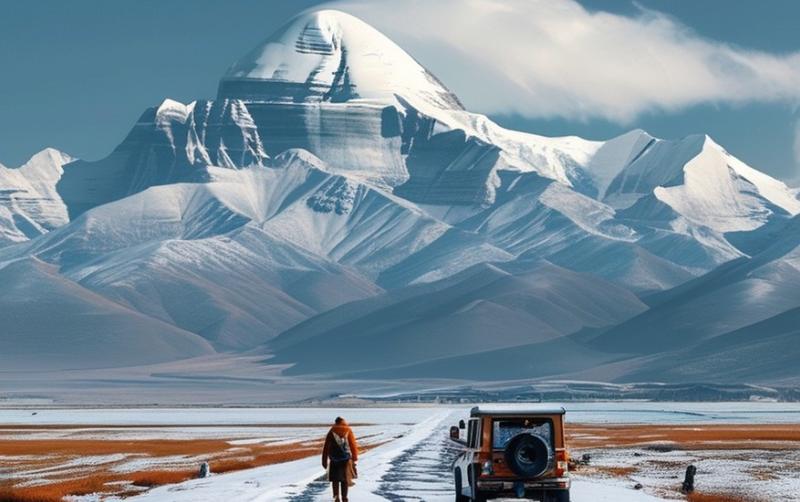
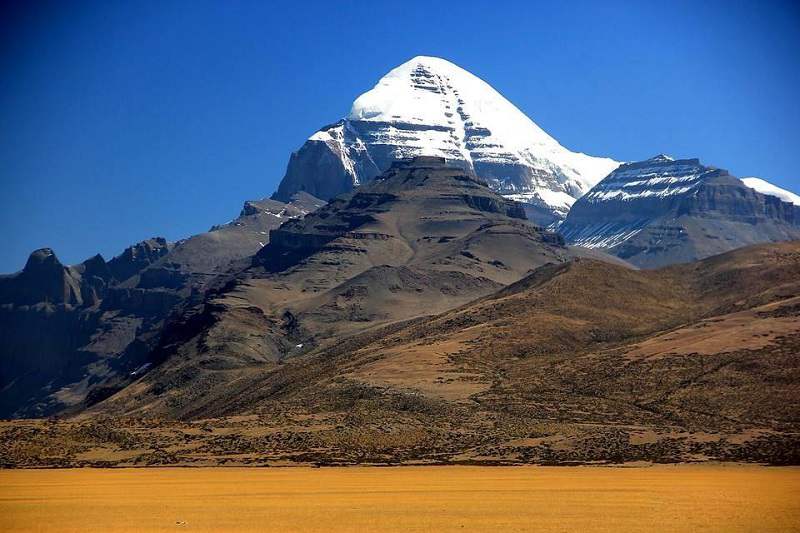
Visually, Mount Kailash is striking for its nearly perfect four-sided pyramid shape. The summit remains permanently covered by snow and glaciers, while its steep, symmetrical faces give it an almost man-made appearance. One of the mountain’s most famous features is a vertical ice groove on its southern face, intersecting horizontal rock layers to form a natural swastika-like pattern, a sacred symbol in Buddhism and Hinduism. Under the intense plateau sunlight, this formation appears luminous, reinforcing the mountain’s divine reputation.
Another intriguing phenomenon is its unusual snow behavior: the sun-facing side remains snow-covered year-round, while the shaded side often melts rapidly when sunlight appears. Though scientifically explainable through wind patterns and solar radiation, this paradox has long been interpreted as a sign of divine presence.
Why Mount Kailash Has Never Been Climbed
Despite exceeding 6,000 meters, Mount Kailash has never been summited, not due to technical difficulty, but because of universal religious consensus. Across all four major faiths that revere the mountain, climbing to the summit is considered a sacrilege.
This shared respect – transcending nationality, culture, and religion — has preserved Mount Kailash in its pristine and solemn state. In a modern era defined by exploration and conquest, Kailash remains a rare example of collective restraint.
Source of Asia’s Great Rivers
Mount Kailash is also regarded as the source of four major rivers in Asia, each flowing in a different direction:
- Indus River (Shiquan River)
- Sutlej River (Xiangquan River)
- Brahmaputra River (Yarlung Tsangpo / Maquan River)
- Karnali River (Kongque River)
Together, these rivers sustain hundreds of millions of people across South and Central Asia, reinforcing Mount Kailash’s identity as a life-giving sacred mountain, not merely a spiritual symbol.
Core Altitude Data: Understanding Mount Kailash Elevation
When discussing Mount Kailash altitude, it is important to distinguish between symbolic elevation and practical travel elevations.
- Mount Kailash summit: commonly cited as 6,656 m (tourism use), with 6,638 m used by some Chinese scientific institutions
- Mountain base: approximately 4,500 m
- Darchen (Tarchen) town: about 4,675 m
- Drolma La (Zhuomala) Pass: approximately 5,630 m
For travelers, the altitude of Darchen and Drolma La Pass matters far more than the summit height, as these elevations directly affect oxygen availability, acclimatization, and altitude sickness risk.
Mount Kailash
Darchen: The Gateway to the Mount Kailash Kora
Darchen is the main starting point for the Mount Kailash pilgrimage (kora). Sitting at 4,675 meters, it is already higher than most alpine regions worldwide. The town exists almost entirely because of the pilgrimage and becomes highly international between May and October, with pilgrims from Tibet, India, Nepal, Europe, and beyond.
Signs in local guesthouses and restaurants often appear in English, Hindi, Tibetan, and Russian, reflecting the global nature of the pilgrimage. Darchen is also the most important location for initial altitude acclimatization, and rushing through this stage significantly increases the risk of altitude sickness.
Climate and High-Altitude Challenges
Mount Kailash experiences a typical alpine plateau climate characterized by:
- Low average temperatures year-round
- Large day–night temperature differences
- Strong winds and rapid weather changes
- Low precipitation but sudden storms
Even in summer, daytime temperatures rarely exceed 10–15°C (50–59°F), while nights can fall below freezing. At these elevations, oxygen levels are 40% lower than at sea level, making altitude sickness the single greatest threat to travelers.
High-Altitude Acclimatization and Health Preparation
Proper acclimatization is the most effective way to prevent altitude illness. Ideally, travelers should spend 1–2 weeks at progressively higher altitudes in Tibet before reaching Darchen, staying first in places like Lhasa and Xigazê.
After arriving in Darchen, allow 2–3 full rest days before beginning the kora. Avoid strenuous activity, alcohol, and frequent showers. Light walking is encouraged, but exertion should be minimal.
Medical preparation is equally important. A pre-trip health check focusing on heart and lung function is strongly recommended. Travelers with serious cardiovascular or respiratory conditions should not attempt high-altitude journeys like Mount Kailash.
Common altitude-support medications are often used, but these should be taken under medical guidance, not as substitutes for acclimatization. Carry basic first-aid supplies, pain relief medication, gastrointestinal medicine, and wound-care items.
Hydration is critical: drink water frequently in small amounts, aiming for 2–3 liters per day. Eat light, carbohydrate-rich meals and avoid heavy, greasy foods that burden digestion.
Clothing and Gear for High Altitude
Mount Kailash’s climate demands proper gear. A layering system is essential:
- Moisture-wicking base layer
- Insulating mid-layer (fleece or lightweight down)
- Windproof and waterproof outer shell
High-altitude UV radiation is extremely intense, so SPF 50+ sunscreen, UV-protective sunglasses, wide-brimmed hats, and face coverings are mandatory. Good hiking boots, trekking poles, and thermal gloves greatly improve safety and comfort.
Mount Kailash Kora: Altitude Profile and Route Overview
The outer kora is the route followed by most pilgrims and travelers. The core circuit is approximately 53 kilometers and typically completed in three days, with altitude changes forming the main challenge.
The highest point, Drolma La Pass (5,630 m), is widely regarded as the most physically demanding section due to steep ascent, strong winds, and extreme altitude. The route then descends gradually back toward Darchen.
Because supply points are limited and mobile signal is unreliable, travelers must carry sufficient water, high-calorie snacks, and backup power sources.
Best Time to Visit Mount Kailash
The safest and most stable periods for the Mount Kailash kora are April–May and September–October. These months offer clearer skies, lower precipitation, and safer road conditions.
The rainy season (June–August) brings muddy trails and landslide risks, while winter (November–March) presents extreme cold, heavy snow, and dangerous passes.
Permits, Transport, and Practical Logistics
Mount Kailash lies in a sensitive border area, requiring a border permit specifying Burang County. These can be arranged in advance in major Tibetan cities. International travelers must also ensure appropriate visas and entry permissions.
Transportation options include flights to Ngari Gunsa Airport followed by overland transfer, or multi-day overland journeys from Lhasa that allow gradual altitude gain.
Accommodation in Darchen is basic, especially during peak season, so advance booking is advised.
Common Mount Kailash Altitude Q&A
Q1: What is the highest altitude on the pilgrimage route, and will severe altitude sickness occur?
A1: The highest point on the kora is Zhuomala Pass, at an altitude of 5630 meters. This is the area with the lowest oxygen levels and the highest risk of altitude sickness. Whether severe altitude sickness occurs depends on individual physical fitness and altitude acclimatization. It’s recommended to acclimatize in Darchen (4675 meters) for 2-3 days in advance, carry altitude sickness medications during the kora, avoid strenuous exercise, and immediately stop advancing and seek help if symptoms like difficulty breathing occur.
Q2: Will flying directly from Lhasa to Ngari and then traveling to Mount Kailash trigger altitude sickness due to sudden elevation gain?
A2: The risk is relatively high. Lhasa is at an altitude of approximately 3650 meters, Ngari Gunsa Airport at 4280 meters, and Darchen at 4675 meters. A sudden elevation gain from low to 4675 meters in a short period makes it difficult for the body to adapt quickly, significantly increasing the chance of altitude sickness. It’s recommended to travel overland first, gradually acclimatizing by passing through areas like Xigazê (3836 meters) and Everest Base Camp (5200 meters). Alternatively, after arriving in Ngari, rest for 1 day in Shiquanhe Town (4280 meters) before traveling to Darchen.
Q3: Are children and the elderly suitable for traveling to Mount Kailash? Are there any altitude-related restrictions?
A3: It’s not recommended for children under 12 or adults over 60 to travel to Mount Kailash. The core reason is the extremely high altitude of Mount Kailash and the pilgrimage area (minimum 4675 meters, maximum 5630 meters). The elderly and children have lower physical tolerance, face a higher risk of altitude sickness, and may struggle to cope with the arduous pilgrimage route and potential emergencies. If travel is unavoidable, a comprehensive physical examination must be conducted in advance, and the traveler must be accompanied by family members. High-intensity activities like the kora should be avoided throughout the trip.
Q4: With the variable climate in high-altitude areas, what should be noted regarding clothing and gear?
A4: The core principle is windproof, warm, and layered clothing. Even in summer, snowfall may occur at Zhuomala Pass, so carry a windproof and waterproof hiking jacket, thick down jacket, and fleece. For the base layer, choose moisture-wicking clothing to avoid getting cold after sweating. Additionally, ultraviolet radiation at high altitudes is extremely strong—equipped with sunscreen (SPF 50+), wide-brimmed hats, and sunglasses to prevent skin and eye damage.
Key Safety Considerations for the Mount Kailash Kora at High Altitude
When discussing Mount Kailash kora safety, the most critical factor is the extreme high-altitude environment. The entire kora route remains above 4,600 meters, with the highest point, Drolma La Pass, reaching approximately 5,630 meters. Prolonged exposure to low-oxygen conditions makes altitude sickness the most common and serious risk during the pilgrimage. Even travelers with prior trekking or mountaineering experience may develop symptoms such as headaches, nausea, insomnia, shortness of breath, or rapid fatigue if acclimatization is insufficient.
Proper preparation is therefore essential for a safe Mount Kailash kora. This includes allowing enough time for altitude acclimatization, completing basic medical checks before departure, carrying altitude sickness medication, and equipping yourself with layered clothing that provides adequate insulation, wind protection, and sun protection. During the kora, maintaining a slow and steady pace, staying well hydrated, and monitoring physical symptoms are key strategies for reducing high-altitude risk. If severe discomfort occurs near Drolma La Pass or during the descent, stopping or descending immediately is a responsible decision, not a failure. Completing the Mount Kailash kora safely requires a clear understanding of altitude risks and a strong commitment to prioritizing health and safety at every stage of the journey.
If you want to embark on this journey more safely and smoothly, China Dragon Travel has rich experience in organizing high-altitude trips in Tibet. We can provide you with professional itinerary planning, altitude sickness response guidance, and thoughtful logistical support, allowing you to focus on experiencing the sacredness and grandeur of Mount Kailash without worrying about altitude, transportation, accommodation, or other issues.