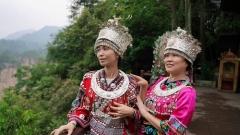

Beyond its dramatic sandstone pillars, Zhangjiajie offers a rich local food culture shaped by the Tujia and Miao communities. Traditional practices – smoking and curing pork, fermenting preserved meats, and using wild vegetables—produce distinctive flavors expressed in dishes like Sanxia Guo (three-in-one pot), cured smoked pork, and local rice noodles. Including dining in your travel plan not only fuels your body but also deepens your understanding of local life and traditions.
Three Pot Stew: The No.1 Signature of Must-Try Foods in Zhangjiajie
Three Pot Stew is the most representative dish in Zhangjiajie’s cuisine. According to local legend, when the Tujia soldiers went to war in the Ming Dynasty, they stewed smoked cured pork, radish and tofu together in a pot due to time constraints, which evolved into the current method after years of development. Modern Three Pot Stew usually selects three ingredients from pork intestines, pork tripe, beef tripe, pork jowl and so on, and is served in a dry pot with chili, Chinese prickly ash, potato and other side ingredients. It is eaten while heating, the soup gradually thickens and the ingredients absorb the flavor well.
Restaurants serving Three Pot Stew are densely distributed in Zhangjiajie urban area. Here are several popular ones among local residents:
- Master Hu’s Three Pot Stew (near Fengwan Bridge): A time-honored restaurant, Three Pot Stew is 15 CNY per serving, and a 30 CNY portion is enough for two people. It is recommended to combine stir-fried pork intestines with dry chili, stir-fried pork jowl and Xiangxi Smoked Cured Pork, and match with sour radish to cut the greasiness.
- Fu Zhengyi’s Three Pot Stew (multiple branches): 50-60 CNY per capita, the signature dry pot Three Pot Stew is well-received, and the branch near the railway station gets good feedback from tourists.
- Brother Jun’s Intestine House (Ziyun Community, Ziwulu Road): 48 CNY per capita, featuring pork intestines and smoked cured beef, with customers praising its authentic taste.
Three Pot Stew is available in two types: dry pot and soup pot. The dry pot has a rich flavor, suitable for those who like spicy food; the soup pot has a lower spiciness level and the soup is drinkable. The spiciness level can be chosen as mild, medium or extra spicy, and it is recommended for first-time tasters to choose mild spicy. The per capita consumption is about 50-80 CNY. You can cook the ingredients for a while to make them more flavorful when eating, and it is a common local way to mix the soup with rice at last.
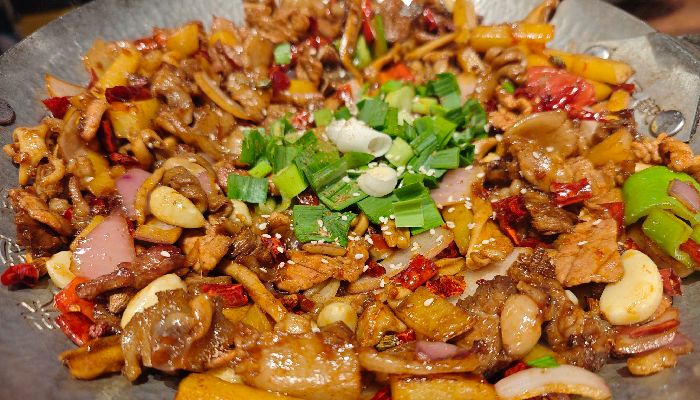
Dry Pot Three Pot Stew in Zhangjiajie
Tujia Smoked Cured Pork: The Smoked Flavor of Must-Try Foods in Zhangjiajie
The traditional craft of making smoked cured pork by the Tujia Nationality: after killing the New Year pig every year, rub the pork with salt and Chinese prickly ash, hang it above the hearth, and slowly smoke it with pine and cypress branches and orange peels for about two months, making the meat golden and translucent with a smoky aroma. Smoked cured pork can be preserved for a long time and is a staple food on the daily table. Common cooking methods include stir-frying with garlic sprouts, stir-frying with bracken and steaming.
Recommended restaurants:
- Tujia Smoked Flavor Restaurant (Xibu Street, Wulingyuan District): The smoked cured pork is self-smoked, with alternating fat and lean meat. Stir-fried smoked cured pork with garlic sprouts is a typical dish, and the smoked cured pork slices stir-fried with garlic sprouts are moist and palatable.
- Sister-in-Law of the Stockade Restaurant (near Tianmen Mountain Cableway Branch): Stir-fried smoked cured pork with wild bamboo shoots is one of the signature dishes, matching smoked cured pork with seasonal wild bamboo shoots.
- Suoxi Mountain Village Restaurant: Some tourists feedback that its suspended pot rice and tofu are popular, and the smoked cured pork dishes are also worth a try.
The price of smoked cured pork dishes is about 50 CNY per plate. If you want to buy some to take away, it is recommended to purchase freshly cut smoked cured pork at the local farmers’ market, which is cheaper than the packaged products in scenic areas and you can taste it first. Note that smoked cured pork has a high salt content, and you can ask for less salt when ordering. Vacuum-packed smoked cured pork can be checked in, but you need to abide by the entry regulations of the destination customs on meat products.
Sour Pork: The Sour and Spicy Flavor from Fermentation
Sour pork is a traditional method of meat preservation by the Tujia Nationality: mix pork with chili, glutinous rice and Chinese prickly ash, put it into a jar and seal it for fermentation. The finished product has a unique sour aroma and a non-greasy taste. It is eaten by slicing and frying until the surface is golden brown, crisp on the outside and tender on the inside, with the sour taste penetrating the meat, suitable for eating with rice. Some tourists feedback that they may not get used to the sour taste at the first bite, but they will gradually accept it and even find it appetizing after a few more bites. This dish is common on the daily table of the Tujia Nationality, but it is not easy to find in restaurants in other places.
Dining information: Old Street Sour Pork Restaurant in the urban area specializes in this dish. According to the restaurant, it uses local pork with sufficient fermentation time, and the per capita consumption is 25 CNY. The restaurant is located in the old urban area, small in size but mostly patronized by locals. In addition, most farmhouses around the ticket office of Zhangjiajie National Forest Park also serve sour pork, and you can ask the restaurant if it is available. It should be noted that the fermentation degree and saltiness of sour pork vary slightly in different restaurants, and you can ask the restaurant for recommended cooking methods when ordering. Price reference: about 30-40 CNY for a plate of sour pork.
Artemisia Baba: A Seasonal Snack in Spring
Artemisia Baba is a traditional pastry in western Hunan in spring, with tender wormwood leaves and glutinous rice flour as the main raw materials. Around the Qingming Festival every year, local people pick fresh wormwood leaves, rinse and mash them, mix them with glutinous rice flour to make dough, wrap it with sweet or savory meat filling, and then steam it wrapped in tung leaves. The finished product has a unique faint scent of wormwood, with a soft and glutinous taste and no stickiness to the teeth.
There are two ways to eat it:
- Steamed: Retaining the original faint scent and soft glutinous taste, suitable for breakfast or tea time snacks.
- Fried: Slice the steamed Baba and fry it until golden brown on both sides, with a crisp outer skin and soft glutinous inside, and a stronger aroma.
The price at street stalls is about 2 CNY each, and it is also served in restaurants. On-site making stalls can be seen at the Xibu Street Night Market, and the flavor is the best when just out of the pot. It is recommended to choose stalls that make and sell on the spot when buying, and avoid industrial packaged products. If you visit in spring, you can also pay attention to the Artemisia Baba homemade by farmers, with more abundant ingredients.
Zhangjiajie Rice Noodles: A Breakfast Choice for Local Residents
Rice noodles are a common breakfast in Zhangjiajie. The rice noodles are divided into round and flat ones, the soup base is simmered with pork bones, and the toppings include braised beef, shredded pork, three delicacies and so on, served with chopped green onions and sour cowpeas. The price of a bowl is about 8-15 CNY.
Popular local restaurants:
- Cili Rice Noodles (opposite Renrenle Supermarket, Weiyang Road, Wulingyuan District): A 10-year-old restaurant, featuring braised beef rice noodles with self-service side ingredients.
- Jiawang Snacks (No.311 Jiefang Road, Yongding District): In addition to rice noodles, steamed buns and pine needle buns are also popular.
- Dousha Rice Noodle Shop (No.515 Ziwulu Road, Yongding District): A small restaurant with many customers, it is recommended to add soybeans and dried cowpeas.
- Xiong’s Straw Hat Noodles (Renmin Road, Yongding District): The noodles are neither too hard nor too soft, and the pork mince sauce has alternating fat and lean meat.
If you stay near Dayong Mansion City, there are many breakfast restaurants around, and you can enter the one with many local customers.
Hezha: A Simple Soybean Dish
Hezha, also known as “Lazy Tofu”, is a common home-cooked dish on the daily table of the Tujia Nationality. The production method is to grind soybeans into soybean milk without filtering out the soybean pulp, pour the pulp and milk directly into a pot, add chopped green vegetable leaves and boil them together to make it. The finished product is paste-like, with a rich soybean aroma, fresh and sweet green vegetables, and a simple and mild taste.
In Zhangjiajie, there are two common ways to eat Hezha:
- With chili dipping sauce: Put Hezha into a bowl and serve with a small dish of chili dipping sauce mixed with minced garlic and chopped green onions. When eating, scoop a spoonful of Hezha and dip it in the sauce, blending the light taste with the spicy and fragrant flavor in the mouth.
- Boiled with minced pork: Some restaurants add stir-fried minced pork to Hezha to enhance the umami taste and make it more filling.
Although this dish seems simple, it embodies the culinary wisdom of the Tujia people – not wasting any ingredients and being nutritious and balanced. For tourists, after tasting heavy-flavored smoked cured pork and Three Pot Stew for several days, a bowl of light Hezha can balance the taste and soothe the stomach.
This dish is served at the Tujia Style Building on the Food Street of Dayong Mansion City, priced at about 20-30 CNY per serving for a taste. If you want to experience a more authentic homestyle cooking, you can also ask the restaurant to recommend the fresh Hezha of the day.
Straw Hat Noodles: A Special Noodle Dish Sold at Street Stalls
Straw Hat Noodles gets its name from the vendor who wears a straw hat to set up the stall all year round. The sauce is homemade and the noodles are handmade. The stall is located 10 meters inside the second alley on the left from the entrance of the bus station towards the department store, without a sign, only marked by a cart and a worn straw hat. Due to the hidden location and no sign, first-time tourists often need to look carefully for it, and they can ask locals nearby, most of whom know this stall.
The business hours are not fixed, usually setting up the stall in the morning and selling out around 1 pm every day, and it depends on luck whether you can eat it. The vendor may not set up the stall on rainy or bad weather days. It is 2 CNY for a small bowl and 2.5 CNY for a large bowl, and the price has remained unchanged for years. The noodles have a firm texture, the sauce has alternating fat and lean meat, the taste is recognized by customers, and many regular customers come specially to eat it. If you want to try it, it is recommended to arrive before 11 am, with a shorter waiting time and a lower probability of selling out.
Wulingyuan Grand Workshop Food City: A Concentrated Experience of Tujia Cuisine
Wulingyuan Grand Workshop Food City is located in the Wulingyuan Scenic Area, covering an area of more than 3,000 square meters and can accommodate more than 400 people to dine at the same time. The building is an all-wood courtyard house with multiple workshops inside:
- Wine Workshop: Brew wine on site, providing pure rice wine, corn liquor, sorghum wine and fruit wines such as bayberry wine and kiwi wine.
- Tofu Workshop: Make stone-ground tofu, and you can taste original flavor tofu.
- Smoked Meat Workshop: Make Xiangxi smoked cured pork, smoked sausage, smoked pork knuckle and so on.
- Glutinous Rice Cake Workshop: Pound glutinous rice cakes on site during dining hours, and tourists can join in.
- Barbecue Area: Provide roasted lamb chops, whole roasted fish, whole roasted rabbit and so on.
The food city has a visitors’ cooking demonstration area where tourists can cook by themselves. Reservation Hotline: 0744-5668188. Singers perform live in the evening.
Zhangjiajie Food Gathering Spots: Places for Concentrated Tasting
If time is limited, you can choose the following areas for a concentrated taste of local foods:
- Xibu Street (Wulingyuan District): An antique commercial street, bustling at night, gathering stalls of Three Pot Stew, Artemisia Baba, barbecue and so on.
- Dayong Mansion City (urban area): A historical and cultural block with many restaurants gathered.
- Xinmatou Night Market City: A concentrated place for night catering, with honey spicy skewers and iced sweet rice wine being more popular.
- North Main Street: A night snack street with many snack stalls.
- Nanzhuangping Grand Market: A local farmers’ market, with snacks such as fried rice cakes and oil lamp-shaped fried cakes in the morning market, cheaper than those in scenic areas.
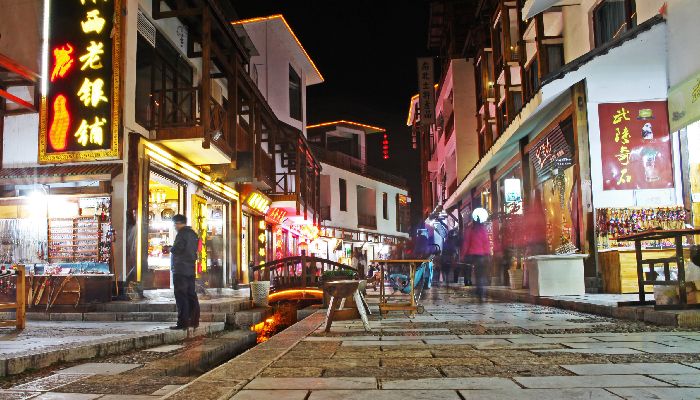
Night Market at Xibu Street in Zhangjiajie
Practical Tips for Tourists’ Dining in Zhangjiajie
- Spiciness level selection: Dishes in Zhangjiajie usually contain chili. If you are not used to spicy food, clearly request “mild spicy” or “non-spicy” when ordering. Some chilies have a high spiciness level, so be cautious for the first try.
- Price differences between inside and outside scenic areas: Restaurants in scenic areas are usually more expensive, such as plain noodles on the top of Tianmen Mountain costing about 30 CNY. It is recommended to finish eating at the foot of the mountain before entering the scenic area, or prepare food in advance.
- Menu check: Some restaurants may mark seasonal dishes with “market price”, please confirm the price before ordering.
- Follow local customers: Choose restaurants with many local customers, which have higher credibility than online-promoted restaurants.
- Cash preparation: Mobile payment is widely used in the urban area and scenic areas, but remote areas or street stalls may only accept cash, so it is recommended to carry a small amount of cash.
- Macaques in scenic areas: There are many macaques in the Golden Whip Stream area, do not feed them or hold food in your hand to avoid being scratched.
- Dish portion size: Dishes such as Three Pot Stew have large portions, you can ask the waiter for the suggested portion when ordering to avoid food waste.
Bring Home the Taste of Zhangjiajie, Hunan China
Sampling local dishes in Zhangjiajie—whether a hearty Sanxia Guo, smoky cured pork, or freshly made herb cakes—adds cultural depth to the sightseeing experience. Favor local-frequented restaurants and night markets for the most authentic flavors, and adjust spice levels and portions to suit your palate.
If you prefer hands-off planning, China Dragon Travel can help arrange dining recommendations, reserve tables at popular restaurants, and coordinate local transport so you can enjoy both the scenery and the region’s food culture with minimal hassle.