
Travelers heading to Everest Base Camp in Tibet care most about the best spots and experiences at the foot of the world’s highest peak. Based on official altitude data, on-site experience and the latest border control policies and accommodation info, this guide lists the top ten unmissable experiences at Everest Base Camp. It covers the five 8,000-meter snow-capped mountains view at Gawula Pass, the best photo spots at Rongbuk Monastery, the ideal times for the Golden Mountain at Sunrise, tent accommodation details and Milky Way shooting methods. All info is presented practically and operably, helping travelers prep thoroughly before departure and arrange time and energy efficiently upon arrival.
Transportation to Mount Everest Base Camp
To get to Mount Everest Base Camp, you first need to sort out the transportation from your departure place to Tibet. With a high altitude and special geographical location, Tibet requires most travelers to reach Lhasa or Shigatse first, then transfer to other vehicles to enter the Mount Everest scenic area.
Transportation to Tibet for International Travelers
International travelers usually need to fly to major cities in China first and then take a connecting flight to enter Tibet.
- Flight Options: There are flights to Lhasa Gonggar Airport from cities such as Chengdu, Chongqing, Xi’an, Beijing and Shanghai, with the most frequent flights from Chengdu, taking about two hours.
- Airport Transportation: Lhasa Gonggar Airport is about a one-hour drive from the urban area, with airport shuttles and taxis available.
- Train to Tibet: The Qinghai-Tibet Railway train departing from Xining crosses Hoh Xil and the Tanggula Mountains, with Tibetan antelopes, snow-capped mountains and grasslands visible along the way.
- Altitude Acclimatization: The oxygen supply system on the train helps the body acclimatize to high altitudes gradually, making it a milder option for people who are prone to altitude sickness.
- Ticket Booking Tips: Tickets for the Qinghai-Tibet Railway are in short supply during the tourist peak season, so it is recommended to book them one month in advance.
Transportation from Lhasa to Mount Everest
The total distance from Lhasa to Mount Everest Base Camp is about more than 600 kilometers, passing through Yamdrok Lake, Karola Glacier, Gyantse Fortress, Shigatse and other places along the way.There are three main transportation options as follows:
- Private Car Charter: Off-road vehicles or business vans with experienced drivers are the most cost-effective when the cost is shared by about four people, with a flexible itinerary that allows stopping for photos at any time.
- Group Tours: With a high cost performance ratio, travel agencies arrange vehicles, drivers and accommodation uniformly, and travelers only need to follow the scheduled plan.
- Self-driving: Suitable for people with high-altitude driving experience. The “108 Bends”on the road to Mount Everest is a test of driving skills, and you need to apply for the Border Control Permit in advance.
Continuing south from Shigatse, you enter the Mount Everest National Nature Reserve via Tingri County, transfer to the scenic area eco-friendly sightseeing bus in Zhaxizong Township, and finally reach the tourist camp near Rongbuk Monastery. Ordinary private cars are not allowed to drive directly into the core area.
Mount Everest Base Camp
Viewing Snow-Capped Mountains at Gawula Pass
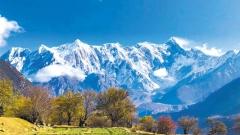
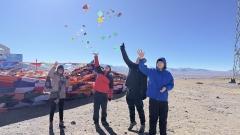
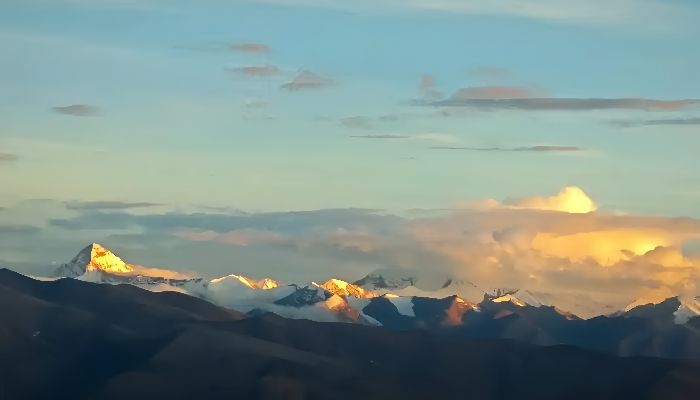
Gawula Pass, with an altitude of about 5,210 meters, is the only viewing platform in the world where you can see five snow-capped peaks over 8,000 meters above sea level at the same time. From left to right, they are Makalu, Lhotse, Mount Everest, Cho Oyu and Shishapangma. There are a total of fourteen 8,000-meter-high snow-capped mountains in the world, and nearly half of them can be seen here at one time. The light is the softest within an hour after sunrise, the outlines of the snow-capped mountains are illuminated by the morning light, and the ridge lines are clear and distinct.
Check-In Tips for Gawula Pass
- The best shooting time is within an hour after sunrise, when the snow-capped mountains show distinct layers from dark to bright.
- The wind at the pass is extremely strong; you must wear a windproof coat, a hat and gloves, and get prepared for keeping warm before getting off the vehicle.
- There are stupas and prayer flags beside the viewing platform, which can be used as a foreground to make the shot more layered.
- It is recommended to stay for more than 20 minutes instead of leaving after taking just a few photos. Sit quietly for a while and feel the broadness of the view.
Golden Mountain at Sunrise on Mount Everest at Gawula Pass
Capturing Classic Shots of Mount Everest at Rongbuk Monastery
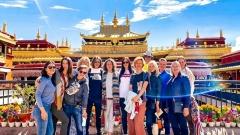
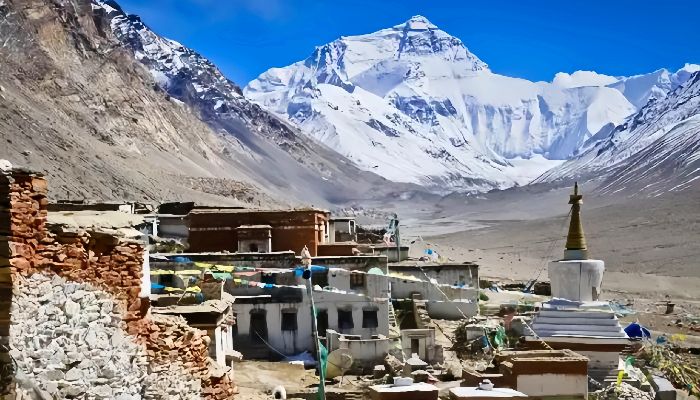
Rongbuk Monastery, with an altitude of about 5,154 meters, is the highest monastery in the world. It faces the north slope of Mount Everest with almost no obstruction in between, making it the best location for taking standard photos of the mountain. White stupas and prayer flags frame Mount Everest together, blending religious architecture with natural scenery. The morning light shines on Mount Everest, making the texture of the snow-capped mountain clear; an hour before sunset in the evening, the peak is dyed golden, which is the Golden Mountain at Sunrise. Rongbuk Monastery has an old and a new part, and the new monastery is the best spot for viewing Mount Everest.
Travel Tips for Rongbuk Monastery
- The best shooting time is before 8 a.m. or after 5 p.m., when the light is soft.
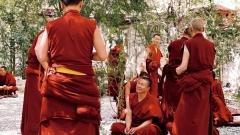
- You can enter the monastery for a visit; the courtyard is quiet, with thangkas on the walls and prayer wheels spinning in the wind.
- If your physical strength permits, you can walk a short way up the hillside behind the monastery for a broader view.
- The monastery is usually open from 9:00 a.m. to 4:00 p.m., so you need to arrange your time reasonably.
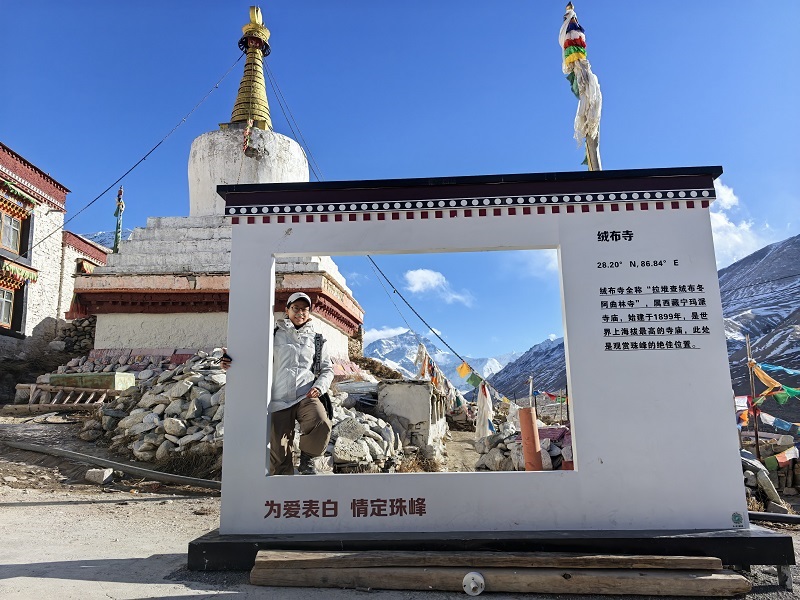
Rongbuk Monastery Visitors
Sending Postcards at the Highest Post Office at Mount Everest Base Camp
There is a small post office at Mount Everest Base Camp, which is a simple hut in appearance. Its postmark is printed with the words “Mount Everest Base Camp”and the altitude, which is of commemorative significance. Many travelers buy postcards here, write on them and drop them into the green postbox.
Information About This Post Office
- There are basically staff on duty during the tourist peak season, and the post office may be unattended in the off-season. If it is not open, you can hand the postcards to the tent homestay owners for forwarding.
- It takes about one to two months to receive the postcards after they are sent, so there is no need to hurry.
- Postmark stamping is free, and you can bring your own blank postcards or envelopes.
- Be sure to write the recipient’s address and postal code clearly on the postcards.
Taking Photos in Front of the Mount Everest Altitude Monument
There are several iconic stone steles in the base camp area. One of them, about 500 meters from the tent area, is the Mount Everest Altitude Monument, marked with 8,844.43 meters. This is the closest viewing and photo-taking spot to Mount Everest that ordinary travelers can reach. Taking photos here is a regular ritual for trips to Mount Everest.
Practical Photo-Taking Tips
- There are the fewest people before 9 a.m. and after 5 p.m., so no queuing is needed.
- Squat down and tilt the camera slightly upward to capture both the stele and Mount Everest behind it in the frame at the same time.
- There is no need to be disappointed on cloudy days; Mount Everest surrounded by clouds and mists presents a different ink painting-like effect.
- You can ask others to help take a trick photo of you stretching out your hand to “hold up”the mountain peak.
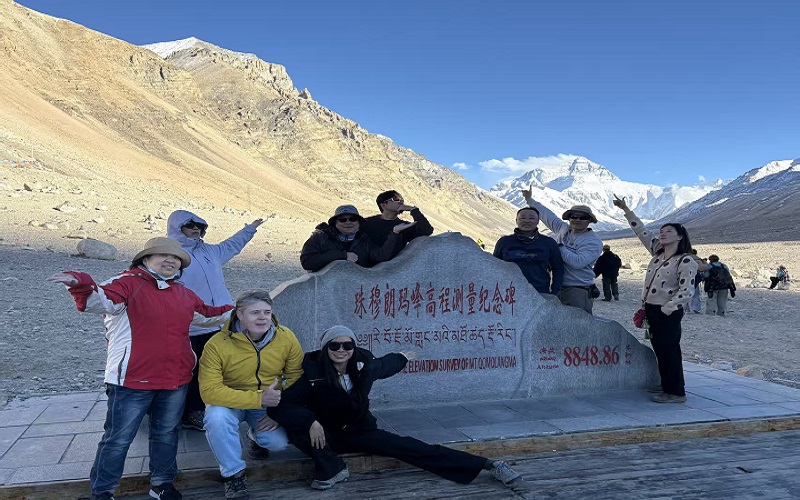
Tourist Photo of Mount Everest
Overnight Accommodation Experience at the Tent Camp of Mount Everest Base Camp
Staying at the tent homestays at the base camp is a unique accommodation experience on trips to Mount Everest. These tents are built by local Tibetans with yak hair and have windproof and warm-keeping functions. There is an iron stove with yak dung burning in the center of the tent, and the fire keeps burning even when there is a strong wind outside. Guests sit around the stove, drinking Tibetan sweet tea and chatting. The tent accommodation conditions at Mount Everest Base Camp have been improved year by year, and some tents are equipped with electric blankets and space heaters.
Key Information About Tent Accommodation
- Most tents offer shared beds and a small number of standard rooms, equipped with electric blankets and thick cotton quilts, and some tents have WiFi and charging ports.
- The tent owners will prepare Tibetan sweet tea, butter tea and simple meals. It is not easy to have hot food at an altitude of 5,000 meters.
- Public toilets and washing facilities are still simple, so it is recommended to bring your own wet wipes and hand sanitizer.
- If you have high requirements for accommodation conditions, you can choose homestays in the villages within the scenic area, where you can also see the starry sky.
- You should ask about the availability of electric blankets and the location of public toilets before booking, as the conditions of different tents vary greatly.
Observing the Night Milky Way at the Foot of Mount Everest
There is almost no light pollution at Mount Everest Base Camp. On clear days, you can see dense stars when you look up. The core area of the Milky Way in summer passes right above the peak of Mount Everest, and a faint band of light can be seen with the naked eye. Photographers need to avoid the days around the 15th day of the lunar calendar when the moonlight is strong; a moonless clear night is the best time for starry sky photography.
Tips for Watching the Starry Sky and Shooting the Milky Way
- The Milky Way is the brightest in summer, facing directly above Mount Everest.
- You can shoot with a mobile phone: turn on the night mode or professional mode, adjust the exposure time to 15 to 30 seconds, and fix the phone with a stone.
- When shooting with a camera, you can place the outline of Mount Everest at the bottom of the frame and the starry sky at the top.
- The temperature drops below zero at night; you need to wear the thickest clothes, a hat and gloves, and carry a flashlight to light the way.
- You can ask the tent owners about the weather forecast for the night before observation to increase the success rate.
Encountering Yak Caravans and Mountaineers at Mount Everest Base Camp
Yak caravans can often be seen near Mount Everest Base Camp. They carry mountaineering equipment or supplies and march from Rongbuk Monastery to higher places. Most Tibetan porters herding yaks are talkative, and they will smile if you say “Tashi Delek”. Sometimes you can also meet mountaineers who have just retreated from the mountain, their faces tanned but their eyes bright.
The Specialness of This Experience
- Talking with the porters herding yaks allows you to hear many local stories about Mount Everest.
- When meeting mountaineers, asking them about their real feelings of climbing is more direct than media reports.
- Such accidental conversations are more unforgettable than fixed scenic spots.
- You can hand them a bottle of water or a piece of chocolate, and they will express their gratitude.
Enjoying the Blue Hour of Mount Everest After Sunset
About half an hour after sunset, the sky does not turn completely dark immediately but presents a deep blue color. The last trace of the sunset glow still lingers on the peak of Mount Everest, turning into light pink. Photographers call this period the “Blue Hour”, and the photos taken at this time have a unique tone. On the early morning after rain, the probability of seeing the sea of clouds at high-altitude passes such as Gawula Pass also increases.
Shooting Suggestions for the Blue Hour
- The view on the small hillside to the east of the tent area is the broadest, where you can shoot the whole process of Mount Everest gradually fading from the blue sky.
- You need to carry a headlamp or a flashlight; there are no street lamps on the way back, and you have to walk on the dirt road trodden by feet.
- This period only lasts for 20 to 30 minutes, so it is recommended to watch with the naked eye besides taking photos.
The Best Time to Watch the Golden Mountain at Sunrise on Mount Everest
The Golden Mountain at Sunrise is the most iconic landscape at Mount Everest Base Camp. When sunlight shines on the top of the world’s highest peak, the mountain tip gradually changes from dark red to golden. The official snow surface elevation of Mount Everest is 8,848.86 meters, and the rock surface elevation is 8,844.43 meters. The few short minutes when the sunlight hits the mountain tip are enough to leave a deep impression.
Key Information for Viewing the Golden Mountain at Sunrise
- The best seasons are from April to May and from September to October. Tibet has a dry climate at this time, and there are few clouds and mists in the Mount Everest area, so the probability of seeing the whole mountain is the highest.
- The golden color at sunset is richer, lasting for about 10 to 15 minutes, offering a more relaxed viewing experience.
- The golden color at sunrise is lighter, but the transition of the sky from deep blue to pink purple and then to golden yellow is very special, and there are fewer people and less wind in the morning.
- The open area at the gate of Rongbuk Monastery is a classic shooting spot. The low stone wall at the gate of the tent area at the base camp is also a suitable location.
- It is recommended to arrive at least half an hour in advance to find a shooting spot. The sunrise and sunset times vary every day, and you can ask the local homestay owners in advance.
Preparations for the Trip to Mount Everest Base Camp
Mount Everest Base Camp is at an altitude of more than 5,000 meters with a changeable climate, so thorough preparations are essential.
Essential Pre-Departure Checklist
- Border Control Permit: You must hold the Border Management Area Pass to go to Mount Everest Base Camp. It is recommended to apply for it at the public security organ of your household registration place, which is free and the most worry-free. Be sure to fill in “Tingri County, Shigatse Prefecture”in the destination column. The functions of applying for the Tibet Border Control Permit have been adjusted in recent years, and you can also entrust a regular travel agency in Lhasa to handle it for you, which usually takes one to two working days and incurs a certain service fee.
- Clothing: Adopt the onion layering method, namely quick-drying underwear, fleece mid-layer and windproof jacket. Sunglasses and sunscreen are necessities, as the ultraviolet radiation on the plateau is extremely strong.
- Medicines: Portable oxygen cylinders, painkillers, glucose and cold medicine. It is recommended to stay in Lhasa for one to two days to acclimatize to the altitude before heading to Mount Everest.
- Other Items: An insulated water bottle (which can be used as a hot water bottle when filled with hot water and put into the sleeping bag), wet wipes, hand sanitizer and a small amount of cash (mobile payment may not be available when the signal at the base camp is unstable).
Focus on the Moments That Matter at Everest
Everest Base Camp isn’t about doing a lot – it’s about being in the right place at the right time. Instead of rushing through, it helps to know which moments are worth waiting for and where to spend a little more time. Standing in strong winds at a mountain pass or looking up at a sky full of stars outside your tent often becomes the part people remember most. If you’d rather not plan every detail yourself, China Dragon Travel can help arrange the logistics, so you can focus on the experience instead.