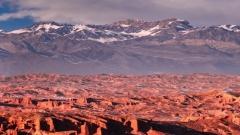
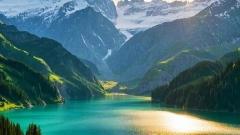
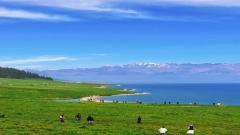
Northern Xinjiang, located in the northern part of the Xinjiang Uygur Autonomous Region of China and straddling the northern foot of the Tianshan Mountains, has attracted much attention for its varied scenery across different travel seasons. It not only boasts majestic snow-capped mountains, vast grasslands, and deep lakes but also gathers the unique cultures of multiple ethnic groups such as the Kazakh, Uyghur, and Tuvan people. For overseas tourists, every stage of the travel seasons in Northern Xinjiang holds surprises— the Apricot Valley in spring is filled with pink blossoms and fragrant snow, the Narat Grassland in summer echoes with pastoral songs, Kanas in autumn is ablaze with layered forests, and Hemu Village in winter is wrapped in silver. The four seasons in Northern Xinjiang are like four oil paintings with distinct styles, each with its own iconic scenery.
Spring (April-May): The Pink Rhapsody of the Apricot Valley
Spring in Northern Xinjiang is a dream soaked in pink. From April to May, the Ili River Valley ushers in the most romantic flower-viewing season of the travel year in Northern Xinjiang, with the Turgen Apricot Valley as the core attraction. It is one of the four major wild apricot valleys in the world, where tens of thousands of mu of wild apricot trees spread along the undulating mountains. Pink and white petals flutter gently in the crisp spring breeze, with a few branches of deep pink blossoms dotted here and there, forming a striking color contrast with the snow-capped Tianshan Mountains in the distance, like a scene from a fairy tale. In the early morning, the thin mist in the mountains has not yet dispersed, and the apricot blossoms loom in the mist. Sunlight breaks through the clouds and sprinkles down, making the dewdrops on the petals sparkle— this is the best time to photograph the apricot blossoms.
In addition to the Apricot Valley, the wild fruit forests in Ili are also a not-to-be-missed scenery in spring. The Xinyuan Wild Fruit Forest is the world’s largest and most well-preserved wild fruit forest. In spring, cherry plums and wild apples bloom one after another, and the pink-white and snow-white sea of flowers, together with the surrounding green grass and streams, form a fresh picture scroll. At this time, the temperature in Northern Xinjiang is mild, with an average temperature between 10 and 20 degrees Celsius, ideal for hiking and flower viewing. Overseas tourists can walk deep into the Apricot Valley, communicate with local Kazakh herdsmen, taste their homemade milk tea and naan, experience the fun of setting up yurts, and feel the freshness and vitality of Northern Xinjiang in spring.
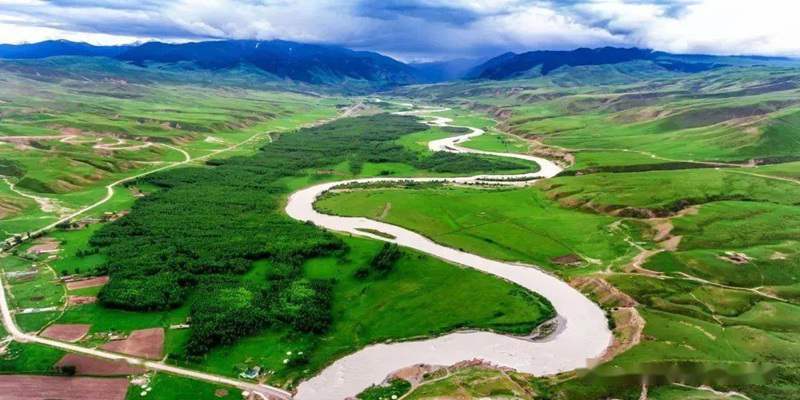
The Ili River Valley
Summer (June-August): A Green Feast of Grasslands and Lakes
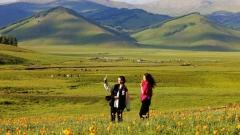
Entering June, the travel season in Northern Xinjiang ushers in a vibrant summer, with the core scenery being the vast green grasslands and clear blue lakes. The Narat Grassland is known as the “Grassland in the Sky”. From June to August, the grass on the grassland grows to waist depth, and the emerald green meadows stretch like an endless green carpet from the foot of the mountains to the distant Tianshan Mountains. The grassland is dotted with scattered wild flowers— yellow trollius, purple verbena, blue forget-me-nots— together with white yurts, black horse herds, and brown cattle herds, forming a gorgeous pastoral scroll. Climb to Tianjietai, a high vantage point in Narat, and you can overlook the magnificent panorama of the entire grassland, with snow-capped mountains in the distance, grasslands nearby, and moving livestock, composing a dynamic landscape masterpiece.
The Bayanbulak Grassland is another pearl of Northern Xinjiang in summer. With flat terrain and abundant water and grass, it is Asia’s largest natural swan reserve. Every June to July, thousands of swans migrate from the south to inhabit and forage in the wetland marshes of the Kaidu River. White swans play on the green water surface, complementing the surrounding grassland scenery, making it a paradise for photography enthusiasts. The Kaidu River winds and twists on the grassland, forming the famous “Nine Bends and Eighteen Turns” landscape. At sunset, the glow of the setting sun sprinkles on the river surface, making the water shimmer with golden light, and the winding river course is like the veins of the earth, extremely spectacular.
Summer in Northern Xinjiang not only has the vastness of grasslands but also the cool comfort brought by lakes, with Sayram Lake being the most representative. Located in the western section of the Tianshan Mountains, Sayram Lake is known as “the last tear of the Atlantic Ocean”. From July to August, the lake water is as blue as a gem, with a transparency of up to 12 meters. The meadows around are covered with blooming wild flowers, and the snow-capped mountains in the distance are reflected in the lake, forming a stunning landscape painting. Driving along the loop road around Sayram Lake, you can encounter different scenery at every bend: the east bank has a gentle terrain, allowing close contact with the lake water; the south bank has a large area of grassland, the best place to shoot the combination of lake and grassland scenery; the west bank is adjacent to snow-capped mountains, where you can capture the magnificent scene of snow-capped mountains and lake water in the same frame.
In addition to Sayram Lake, the Zhaosu Grassland in Ili is also a must-visit in summer. Known as the “Hometown of Horses in China”, Zhaosu features millions of mu of rapeseed flowers in full bloom in July. The golden sea of flowers stretches as far as the eye can see, contrasting beautifully with the distant snow-capped mountains and white clouds, forming a unique three-dimensional scenery. On the Zhaosu Grassland, you can also witness the spectacular scene of ten thousand horses galloping— thousands of Ili horses race across the grassland, kicking up dust, with overwhelming momentum. Summer in Northern Xinjiang has long days and short nights. In the evening, the setting sun casts a layer of golden glow on the grasslands and lakes, and herds of returning cattle and sheep move slowly in the twilight. Such scenes are enough to make every tourist linger. Notably, summer is the season when ethnic minority festivals in Northern Xinjiang are concentrated, such as the Kazakh Naadam Festival. Tourists can watch equestrian performances and wrestling matches, taste special foods like hand-grasped mutton and roast whole lamb, and deeply experience the ethnic customs of Northern Xinjiang.
Autumn (September-October): A Colorful Fairy Tale in Kanas
From September to October, the travel season in Northern Xinjiang ushers in the most gorgeous golden autumn, with the core scenery concentrated around Kanas Lake. It is as if God has overturned a paint palette here— coniferous and broad-leaved forests display various colors such as dark green, light yellow, orange red, and fiery red, with layers of forests dyed in color, contrasting with the clear blue lake water and snow-white snow-capped mountains, forming a brilliant oil painting. Kanas Lake is the soul attraction of Northern Xinjiang in golden autumn. The lake water shows different shades such as dark blue, light green, and dark green with changes in light, known by locals as the “Color-Changing Lake”. The three bays by the lake— Shenxian Bay (Fairy Bay), Yueya Bay (Moon Bay), and Wolong Bay (Dragon Bay)— are the best places to appreciate the lake and colorful forests.
In the early morning, Shenxian Bay is often shrouded in thin mist, with the lake water looming in the mist, and the surrounding colorful forests reflected in the water, like a fairyland. Yueya Bay is named for its crescent-shaped lake water; the red forests on the bank complement the yellow poplars, and the two small islands in the lake are like the footprints of the moon, making it an iconic shooting spot in Kanas. Wolong Bay is named after the island in the lake that resembles a lying dragon, surrounded by colorful forests with magnificent scenery. Overseas tourists can take a cruise on the lake to appreciate the lake and mountain scenery up close, or hike along the plank road by the lake, walking through the colorful forest and listening to the rustle of autumn wind through the leaves.
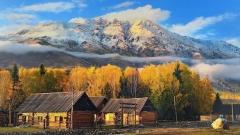
Hemu Village near Kanas Lake is another must-visit in Northern Xinjiang’s golden autumn. It is a Tuvan village. In golden autumn, the poplars and birches around the village turn golden, and wooden cabins are scattered on the grassland. The roofs are covered with a thin layer of morning frost, and cooking smoke curls up in the early morning, forming a paradise-like scroll with the surrounding colorful forests and snow-capped mountains. The viewing platform in Hemu Village offers a bird’s-eye view of the entire village, the best spot to photograph the sunrise and the village panorama. Baihaba Village is located on the border between China and Kazakhstan, known as the “First Village in the Northwest”. In golden autumn, the mountains and forests around the village are colorful, contrasting with the boundary steles on the border and the white Tajik dwellings, with a unique charm.
In addition, Northern Xinjiang has clear weather and fresh air in golden autumn, making it the best season for star photography. At night, on the grasslands of Kanas or Hemu Village, you can look up to see a sky full of stars, with the Milky Way clearly visible. The glow of the stars sprinkles on the golden grassland, shining with the lights of the village. Such a starry sky experience is enough to make every overseas tourist unforgettable. It should be noted that golden autumn is the peak tourist season in Northern Xinjiang, with a large number of visitors. It is recommended to plan your trip and book accommodation in advance.
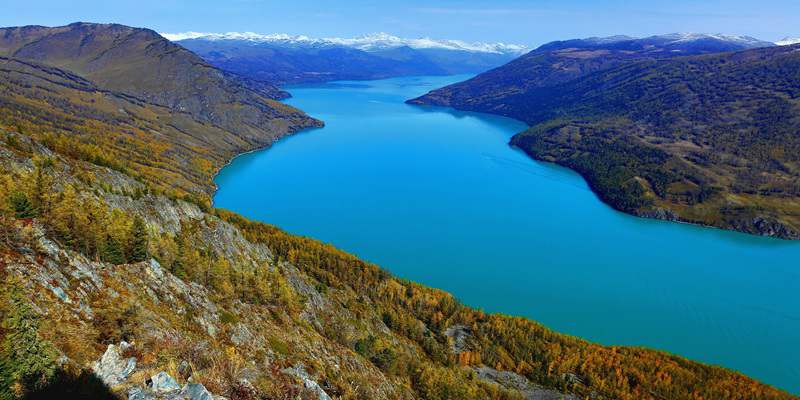
Kanas Lake
Winter (November-March): A Tranquil Kingdom Covered in Ice and Snow
From November to March of the following year, the travel season in Northern Xinjiang enters a silver winter. Although cold, Northern Xinjiang hides another kind of breathtaking beauty at this time, with the core scenery being the ice and snow landscapes of Kanas and Hemu, as well as the ski resorts in Urumqi. Winter in Northern Xinjiang is a kingdom of ice and snow— attractions such as Kanas, Hemu, and Narat are covered with thick snow, a vast white expanse like a fairy tale world. Kanas Lake freezes in winter, with a white jade-like ice surface up to 1 to 2 meters thick. The surrounding forests are covered with rime, sparkling in the sunlight, forming a unique snow rime landscape.
Winter in Hemu Village is even quieter. Thick snow covers the wooden cabins, with the snow on the roofs like a layer of marshmallows, and cooking smoke curls up in the snow, forming a tranquil winter scroll. In Hemu Village, tourists can experience the winter life of the Tuvan people: take a horse-drawn sleigh through the snow, with the jingle of horse bells breaking the village’s tranquility, and enjoy the magnificent snow scenery along the way; or walk into Tuvan families, taste butter tea and hand-grasped mutton hot pot, and feel the hospitality of the locals. The Narat Grassland in winter sheds its green attire and puts on a white coat; the frozen rivers on the grassland are like silver dragons, contrasting with the surrounding snow-capped mountains, with majestic scenery.
Although the temperature in Northern Xinjiang is low in winter (with an average temperature between minus 10 and minus 20 degrees Celsius), it is a paradise for skiing enthusiasts. The ski resorts around Urumqi are well-equipped, among which the Silk Road Ski Resort is one of the largest in Northern Xinjiang, with ski trails totaling over 40 kilometers, ranging from beginner trails to advanced trails for professional skiers, with excellent snow quality close to that of the European Alps. Baiyanggou Ski Resort is close to downtown Urumqi with convenient transportation, suitable for family tourists and beginners.
Tourism in Northern Xinjiang Is Suitable All Year Round
In addition, Northern Xinjiang has a unique rime landscape in winter. Places such as around Sayram Lake in the Ili River Valley and the Kurgarle Mountain in Tacheng witness spectacular rime every winter. Rime is ice crystals formed by the sublimation of water vapor in the air on tree branches at low temperatures. The branches are covered with crystal-clear ice hangings, like jade carvings, showing colorful halos in the sunlight, extremely beautiful. For overseas tourists who like tranquility and pursue unique experiences, winter in Northern Xinjiang is a pure land away from the hustle and bustle, allowing people to calm their minds in the ice and snow world and feel the magic and grandeur of nature.
Every season of the travel year in Northern Xinjiang has its unique charm. Whether you like the blooming spring, vibrant summer, gorgeous autumn, or snow-covered winter, you can find your own travel experience in Northern Xinjiang. This land not only has magnificent natural landscapes but also a diverse ethnic culture— every breath lets you feel the integration of nature and humanity. However, Northern Xinjiang is vast, with long distances between attractions, and customs different from those overseas. For overseas tourists who want to fully enjoy the charm of Northern Xinjiang’s travel seasons, choosing a professional travel agency is crucial.
China Dragon Travel has been deeply rooted in the Northern Xinjiang tourism market for many years, focusing on providing high-quality travel services for overseas tourists. According to the different characteristics of Northern Xinjiang’s travel seasons, China Dragon Travel has carefully designed a variety of personalized itineraries. Whether you want to chase the pink dream of the Apricot Valley in spring, roam the grasslands and lakes in summer, admire the colorful forests of Kanas in autumn, or experience the fun of the ice and snow kingdom in winter, you can find the most suitable itinerary for yourself. The travel is equipped with professional tour guides proficient in multiple languages, who are not only familiar with every corner of Northern Xinjiang but also can explain the local natural landscapes, ethnic cultures, and customs in detail, making your trip not only about scenery but also about depth. In addition, China Dragon Travel offers one-stop services, including visa assistance, air ticket and hotel booking, and attraction ticket purchase, providing full support for your Northern Xinjiang trip. You don’t have to worry about any trivial matters, just focus on enjoying the infinite charm of Northern Xinjiang’s travel seasons. Choose China Dragon Travel to start your secret journey to Northern Xinjiang, and let the four-season scenery of this land become the most precious memory in your life.
![11 Day Tour[Winter Limited] Drunken Beauty Xinjiang Ice and Snow Kanas Fairy Tale New Vision](https://www.chinadragontravel.com/wp-content/uploads/2025/12/25cff76cef9e445-240x135.jpg)