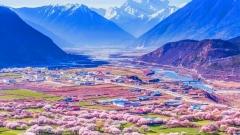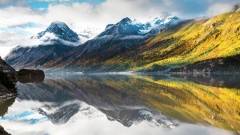

Tibet is often described through its mountains, monasteries, and vast open skies. Yet beneath the dramatic landscapes lies a quieter story—one written in grasses, flowers, shrubs, and forests that have learned how to survive where survival itself is a challenge.
At an average altitude of over 4,000 meters, the Tibetan Plateau is one of the most extreme environments on Earth. Oxygen is scarce, ultraviolet radiation is intense, winters are long, and the growing season is remarkably short. For plants, this is not a place of abundance, but of restraint.
And yet, life persists.
The plants of Tibet do not grow fast or tall. They grow patiently, adapting over centuries to wind, cold, and scarcity. To understand Tibetan plants is to understand the philosophy of endurance—and this is why they are essential to anyone seeking a deeper, slower way of traveling through the plateau.
1. The Tibetan Plateau: A Natural Laboratory of Survival
Unlike temperate regions where vegetation grows freely, Tibet demands adaptation at every level. The plateau’s flora has evolved with a few defining characteristics:
-
Low, compact growth to avoid wind damage
-
Deep and extensive root systems to retain moisture
-
Hairy or waxy leaf surfaces to reduce water loss
-
Slow life cycles that conserve energy
These plants do not compete for dominance. Instead, they coexist quietly, forming stable ecosystems that have remained largely unchanged for centuries.
For travelers, this means that Tibet’s beauty is subtle. It reveals itself slowly, to those who take the time to look closely.
2. Alpine Meadows
The Green Foundation of the Plateau
Alpine meadows are the most widespread plant communities in Tibet. Stretching across vast plains in regions such as Lhasa, Nagqu, and Ngari, they form the ecological backbone of the plateau.
2.1 Kobresia and Sedge Species
Kobresia grasses dominate Tibetan meadows. Though modest in appearance, they play a critical ecological role:
-
Stabilizing fragile soils
-
Preventing erosion from wind and meltwater
-
Supporting both wildlife and pastoral livelihoods
These grasses grow slowly and recover even more slowly. Damage caused by trampling or overgrazing can take decades to heal—one reason why responsible travel is so important in high-altitude environments.
2.2 Meadows as Living Systems
Alpine meadows are not empty spaces between destinations. They are living systems that sustain yaks, wild herbivores, and nomadic communities. Without them, the plateau’s cultural and ecological balance would collapse.
3. Wildflowers of Tibet
Brief, Brilliant, and Meaningful
Tibet’s flowering season is short, typically from June to August. During this brief window, the plateau transforms.
3.1 Snow Lotus: The Ultimate Alpine Survivor
Snow lotus grows at altitudes above 4,500 meters, often emerging from bare rock. Its compact structure protects it from extreme cold and radiation.
In Tibetan culture, the snow lotus symbolizes purity, endurance, and spiritual resilience. It reminds us that beauty does not require comfort—it requires commitment to survival.
3.2 Gentians, Primroses, and High-Altitude Color
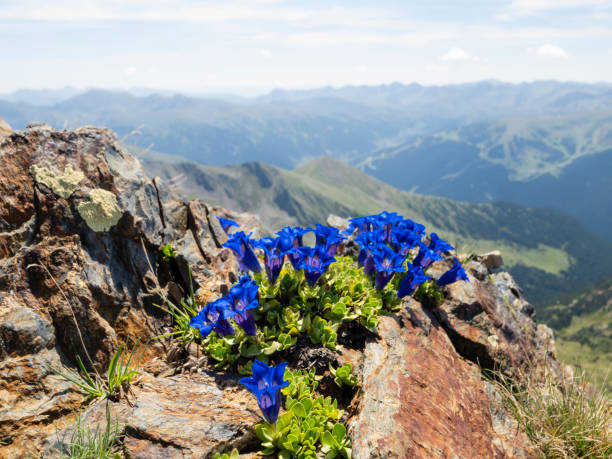
Blue gentians, yellow primroses, and other alpine flowers punctuate the meadows and valleys. Their intense colors contrast sharply with the vast landscapes, offering moments of unexpected softness.
For photographers and slow travelers alike, these flowers teach an important lesson: timing matters more than speed.
4. Medicinal Plants of Tibet
Nature, Healing, and Traditional Knowledge
Tibetan medicine has developed over centuries through close observation of the natural world. Plants play a central role in this system.
4.1 Rhodiola: Energy and Adaptation
Rhodiola grows in rocky, high-altitude terrain and is valued for its ability to support endurance and resilience. In Tibetan medicine, it is associated with balance rather than stimulation—a reflection of the plateau’s philosophy of moderation.
4.2 Cordyceps and Ecological Fragility
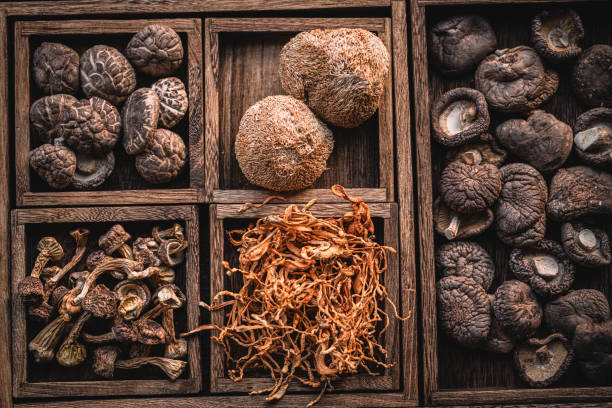
Although technically a fungus, cordyceps thrives in alpine grasslands and depends on a healthy ecosystem. Its rising demand has highlighted the delicate balance between economic need and environmental preservation.
For travelers, cordyceps serves as a reminder: natural resources on the plateau are finite and easily disrupted.
5. Forests of Tibet
Rare, Sacred, and Ecologically Vital
Due to altitude and climate, forests are limited in Tibet. However, in regions such as Nyingchi and eastern Kham, dense alpine forests still exist.
5.1 Spruce, Fir, and Highland Woodlands
These slow-growing trees regulate water cycles, stabilize slopes, and provide habitat for birds and mammals. Their ecological importance far exceeds their limited geographic range.
5.2 Sacred Forests and Cultural Protection
In Tibetan Buddhism, certain forests are considered sacred and are traditionally protected from logging. These belief systems function as early conservation practices—long before modern environmentalism.
6. Plants in Daily Tibetan Life
Practical Use and Spiritual Meaning
Plants in Tibet are not decorative. They are practical and symbolic.
-
Shrubs and grasses provide fuel
-
Medicinal plants support health
-
Juniper and herbs are burned in purification rituals
This relationship reflects a worldview in which nature is not owned, but respected.
7. Traveling Through Tibet’s Plant World
A Slow Travel Perspective
To travel responsibly in Tibet means understanding that plant life is fragile and slow to recover.
Slow travel principles here include:
-
Observing without collecting
-
Staying on established paths
-
Respecting sacred landscapes
The most meaningful encounters often happen when nothing is touched.
What Tibetan Plants Teach Us
Tibetan plants do not grow aggressively.
They do not seek dominance.
They endure.
In a world obsessed with speed and abundance, the flora of Tibet offers a different lesson—one of patience, restraint, and quiet strength.
To notice these plants while traveling is to learn how to belong to a landscape, rather than consume it.
And perhaps that is the deepest journey Tibet has to offer.