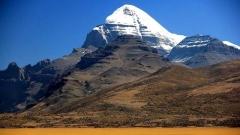

The Qinghai-Tibet Railway, known as the Sky Road on the Roof of the World, is the most ceremonial way to enter Tibet. During the 19-22 hour journey from Xining to Lhasa, you’ll pass through the azure of Qinghai Lake, the vastness of Hoh Xil, and the grandeur of the Tanggula Mountains. As the altitude rises gradually, your body acclimatizes to the plateau, allowing Tibet’s magnificence to seep into your senses—both visually and physically. For international travelers, the Qinghai-Tibet Railway is more than just a transportation line; it’s the prologue and highlight of a Tibet trip. Choosing the right train, using the oxygen supply properly, and capturing the沿途 scenery are key to experiencing this Sky Road. This guide focuses on the core experiences and practical details of the Qinghai-Tibet Railway, from booking tickets to handling altitude sickness, and from sightseeing to on-board facilities, helping you plan a smooth Sky Road journey comprehensively.
Key Information Overview of the Qinghai-Tibet Railway
Item Detailed Description Key Data/Highlights
| Item | Key Details |
| Railway Positioning | World’s highest & longest plateau railway, known as “Sky Road” (Tibet entry trunk line) |
| Route & Length | Xining Station → Lhasa Station, total length 1,956 km |
| Journey Duration | Direct (Xining→Lhasa): 19-22 hrs; Mainland transfer: 33-54 hrs |
| Fare Range (USD) | Xining→Lhasa: $32 (Hard Seat) – $112 (Soft Sleeper); Chengdu→Lhasa: $43-$142 |
| Core Highlights | Passes Qinghai Lake/Hoh Xil/Tanggula Pass/Cuona Lake; full-train oxygen; Tibetan antelope sightings possible |
Core Positioning of the Qinghai-Tibet Railway: Why It’s the Top Choice for Tibet Entry
The uniqueness of the Qinghai-Tibet Railway makes it a must-choice (not an alternative) for many international travelers to Tibet, with three core values:
- World-Class Scenic Experience: The route passes through diverse landscapes—plateau meadows, salt lakes, no-man’s lands, and snow-capped mountains. Sections like Hoh Xil No-Man’s Land, Tanggula Pass, and Cuona Lake offer a visual feast unmatched by flying. Especially between 9-11 AM when passing Hoh Xil, you’ll often spot rare wildlife like Tibetan antelopes and wild yaks.
- Scientific Acclimatization to Altitude Sickness: Starting from Xining (2,261m) and gradually ascending to Lhasa (3,650m), plus the train’s full oxygen supply, your body has ample time to adapt to altitude changes. The incidence of altitude sickness is over 60% lower than flying into Tibet.
- Unique Cultural Symbol: As a landmark plateau railway project in China, the train itself is a “mobile plateau museum.” On-board announcements introduce the geography and culture along the route, and attendants have basic English communication skills to answer altitude-related questions.
Routes & Trains of the Qinghai-Tibet Railway: Choose the Right Train to Avoid Missing Scenery
Core Route: The Essence of Xining→Lhasa Section
The core experience of the Qinghai-Tibet Railway lies in the Xining→Lhasa section, divided into three scenic segments—each with unique highlights:
- Xining→Golmud Section (Altitude 2,261→2,808m): Passes Qinghai Lake (golden rapeseed flowers mirroring the blue lake in July) and Qarhan Salt Lake (China’s largest salt lake, like a glassy mirror). The gentle altitude change here is ideal for initial acclimatization.
- Golmud→Nagqu Section (Altitude 2,808→4,513m): Enters the core plateau area, passing Hoh Xil No-Man’s Land (a world natural heritage site), Jade Dragon Snow Mountain (the highest peak along the railway), and Tanggula Pass (5,231m, the railway’s highest point). The train activates full oxygen supply in this segment.
- Nagqu→Lhasa Section (Altitude 4,513→3,650m): Passes Cuona Lake (only 10 meters from the tracks, bluer than the sky) and Yangbajing Hot Spring Area. The altitude gradually drops, reducing physical strain.
Recommended Popular Trains (Top Choices for International Travelers)
- Z164 (Shanghai→Lhasa): Golden Scenic Train. The Xining→Lhasa section runs entirely during the day—7:00 for the sunrise over Qinghai Lake, 10:00 for Hoh Xil, and 16:00 for Tanggula Pass. It captures all沿途 scenery completely. Soft sleeper tickets need booking 35 days in advance.
- Z322 (Chengdu→Lhasa): Top choice for Mainland transfers. You can fly from Chengdu to Xining then transfer to this train, or buy a direct Chengdu→Lhasa through ticket. It runs steadily with clean soft sleeper compartments, ideal for travelers departing from southwest China.
- Z21 (Beijing→Lhasa): Steady speed. The Xining→Lhasa section departs in the afternoon and arrives the next morning, allowing you to enjoy the sunset over Qinghai Lake and the starry sky above Tanggula Pass on board. Perfect for travelers who love night scenery.
- Z323 (Xining→Lhasa): Direct train departing Xining at 10:00 AM. It passes Qarhan Salt Lake in the afternoon, crosses Tanggula Pass at night, and arrives in Lhasa the next morning. Balances scenery viewing and rest, offering great value.
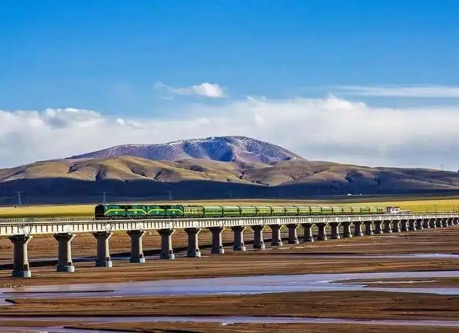
Panoramic View of Qinghai-Tibet Railway
Fare & Booking Guide: Tips for International Travelers to Avoid Pitfalls
Fare Details (By Seat Class)
- Hard Seat: $32 (Xining→Lhasa), $43 (Mainland departure: Chengdu→Lhasa). 6 seats per row (fixed, non-adjustable). Suitable for budget-conscious young travelers with plenty of time (long rides can be tiring).
- Hard Sleeper: $71 (Xining→Lhasa), $89 (Mainland departure: Chengdu→Lhasa). 6 berths per compartment (upper, middle, lower). Lower berths are great for viewing (close to windows), middle berths offer good value, and upper berths provide privacy—most travelers’ top choice.
- Soft Sleeper: $112 (Xining→Lhasa), $142 (Mainland departure: Chengdu→Lhasa). 4 berths per compartment (upper, lower) with independent curtains. 60cm-wide beds with cotton bedding and independent oxygen ports. Top choice for international travelers (balances comfort and privacy).
Booking Channels for International Travelers (2 Main Options)
- Travel Agency Booking (Recommended):
◦ Advantages: No Mainland China phone number needed; processes Tibet Travel Permit for free simultaneously; prioritizes soft sleeper tickets for popular trains like Z164/Z21 in peak season (June-Sept); provides Chinese-English booking confirmations.
◦ Process: Provide passport + Chinese Tourist Visa scans 35 days in advance. After full payment, the agency collects physical tickets in advance—pick up directly at the station with your passport.
- 12306 Official Website (For Those with Mainland China Phone Numbers Only):
◦ Registration Requirement: Requires Mainland China phone number verification. Enter name in all uppercase (no spaces, e.g., JOHN DOE) as it appears on your passport.
◦ Ticket Pick-Up Note: Must collect at station ticket windows (self-service machines cannot recognize passports) with your passport + printed Tibet Travel Permit. Arrive at the station 2 hours early.
Key Booking Reminders
- Pre-Sale Period: Tickets go on sale 30 days in advance. Soft sleeper tickets sell out within 10 minutes in peak season (June-Sept, Spring Festival). Contact travel agencies 35 days early to lock in tickets.
- Transfer Note: Mainland departure trains (e.g., Shanghai→Lhasa) require a transfer to plateau oxygen-equipped trains in Xining. All passengers must get off to change trains; luggage can stay in the original compartment. Follow staff guidance (transfer time is about 20 minutes).
- Refund/Change Rules: No fee for refunds more than 8 days before departure; 5% fee for 48-8 days before; 10% fee for less than 48 hours before; 20% fee for less than 24 hours before. Confirm your itinerary before booking in peak season.
On-Board Facilities of the Qinghai-Tibet Railway: Plateau-Exclusive Comfort Guarantees
Qinghai-Tibet Railway trains are tailor-made for high-altitude environments. Core facilities directly affect journey comfort—focus on these three points:
Oxygen Supply System: Core of Altitude Sickness Prevention
- Operation Method: Diffused oxygen supply activates from Golmud→Lhasa (above 3,000m). In-car oxygen concentration stays at 21%-23% (similar to plains). Each berth in soft/hard sleeper compartments has an independent oxygen port (free to use—ask attendants for a straw).
- Note: Smoking is strictly prohibited during oxygen supply. Smoking triggers smoke alarms, interrupts oxygen supply, and incurs fines. If you feel a headache or chest tightness, activate the independent oxygen port at any time—symptoms will gradually ease.
Seat & Berth Selection
- Soft Sleeper (Top Choice): 4-person private compartment with curtains. 1.9m-long, 0.6m-wide beds (plenty of room to move). Charging ports and reading lights next to each berth. No disturbance during nighttime rest—ideal for families, solo travelers, or those needing long-ride comfort.
- Hard Sleeper Lower Berth: Close to the aisle, easy access to the dining car and restrooms. Perfect viewing angle by the window. Downside: May be disturbed by passengers passing by. Suitable for social travelers who love taking photos.
- Hard Sleeper Middle/Upper Berths: $7-$11 cheaper than lower berths. High privacy—ideal for quiet travelers with medium budgets (upper berths have limited space; not recommended for those over 1.8m tall).
Other Practical Facilities
- Basic Facilities: 24-hour water heaters at car ends (for instant noodles or warm water), charging ports (1 per soft sleeper berth, 2 per hard sleeper compartment), altitude display (real-time altitude alerts for physical condition).
- Restrooms: Both seated and squat toilets, stocked with toilet paper and hand soap (kept clean). Some cars have simple laundry sinks (for small items).
- Temperature & Lighting Control: In-car temperature is constant at 20-22℃ (warm in winter, cool in summer). UV-protective wide windows ensure good lighting while reducing discomfort from direct sunlight.
Must-See Scenery Along the Route: Core Spots You Can’t Miss
The scenery along the Qinghai-Tibet Railway is once-in-a-lifetime. Master the timing and viewing positions for each segment to capture great photos:
Qinghai Lake Section (Xining→Delingha, 7:00-9:00)
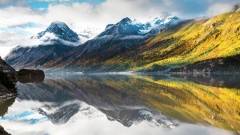
- Scenery Features: China’s largest inland lake. In July-August, golden rapeseed flowers carpet the lakeshore, mirroring the blue sky. In October, the lake freezes into a glassy surface reflecting clouds.
- Viewing Position: Left side seats (facing the direction of travel). Arrive early to secure a seat—light is best 1 hour after sunrise.
Qarhan Salt Lake Section (Delingha→Golmud, 12:00-14:00)
- Scenery Features: The world’s second-largest salt lake. Crystallized salt forms “salt bridges” on the lake surface, appearing pale blue in sunlight—like a mirror of the sky.
- Viewing Position: Right side seats. Strong midday sunlight—wear sunglasses. Get close to the window to reduce glare when taking photos.
Hoh Xil No-Man’s Land Section (Golmud→Nagqu, 9:00-11:00)
- Scenery Features: One of the world’s largest no-man’s lands. Grasslands mix with Gobi deserts. Herds of Tibetan antelopes and wild yaks are common (the train slows down for passengers to take photos).
- Viewing Position: Both left and right sides. Prepare a camera with a telephoto lens. Do not make loud noises (to avoid disturbing wildlife).
Tanggula Pass Section (Nagqu→Amdo, 14:00-16:00)
- Scenery Features: The highest point of the Qinghai-Tibet Railway (5,231m). Snow-capped mountains stretch far away, and grassland pastures lie nearby. On-board announcements explain the pass’s geography.
- Note: This is the highest altitude segment. If you feel a headache, activate the oxygen port immediately and avoid strenuous activity.
Cuona Lake Section (Amdo→Lhasa, 16:00-18:00)
- Scenery Features: The closest lake to the Qinghai-Tibet Railway tracks (only 10 meters away). The lake is deep blue, and glows golden under the sunset—your last highlight before reaching Lhasa.
- Viewing Position: Right side seats. Close the window to reduce glare when taking photos. Use continuous shooting mode on your phone/camera.
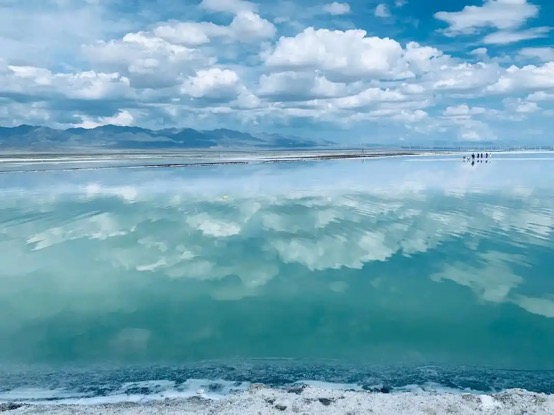
Qarhan Salt Lake
Altitude Sickness Management: A Peace of Mind Guide on the Qinghai-Tibet Railway
While the Qinghai-Tibet Railway reduces altitude sickness risk, preparation is still essential—focus on these three steps:
Pre-Trip Preparation (1 Week Before Tibet Entry)
- Medication Priming: Take Rhodiola 1 week in advance ($11-$19 per box, available at pharmacies in Mainland transfer cities). 2 pills twice a day to enhance the body’s hypoxia resistance.
- Physical Adjustment: Avoid colds and fevers (high-altitude colds can trigger severe reactions); reduce strenuous exercise and maintain regular作息; avoid overeating—stick to light meals.
On-Board Management (During the Train Ride)
- Dietary Principles: Drink 1.5-2L of warm water daily to boost metabolism; avoid alcohol, coffee, and cold drinks; choose light foods in the dining car (e.g., vegetable noodles, eggs) and eat small, frequent meals.
- Symptom Handling: If you experience mild headaches or chest tightness, activate the independent oxygen port (set to medium flow) and rest in bed for 30 minutes. If symptoms worsen (e.g., difficulty breathing, vomiting), contact attendants (cars have first-aid kits with emergency medication).
- Activity Advice: Do not stand or walk for long periods—get up and move for 5 minutes every hour. Avoid running or jumping in the car to reduce heart strain.
Essential Medications (Carry On Person)
- Core Medications: Gaoyuan’an ($7 per box, relieves headaches/nausea), Glucose Oral Liquid ($4-$7 per box, boosts energy), Ibuprofen ($3-$5 per box, pain/fever relief), Motion Sickness Pills (take 30 minutes in advance if prone to motion sickness).
- Note: Print English medication instructions (for customs inspection); keep medications in your carry-on bag (not checked luggage) for easy access.
Pre-Trip Packing List: Tailored Tips for the Qinghai-Tibet Railway
Focus packing on “altitude adaptation,” “scenery viewing needs,” and “convenience”—avoid unnecessary items:
- Clothing: Fleece jacket + windbreaker (20-22℃ inside the train, possibly below 0℃ outside—large temperature difference), thin sweater (for nighttime warmth), slippers (must-have for soft sleeper travelers to boost comfort), UV-protective sunglasses + hat (strong sunlight outside—protects eyes and skin).
- Items: Power bank (within 10,000 mAh—some car sockets may not work), camera + spare battery (plenty of scenic photo ops), disinfecting wipes (for on-board restrooms), small backpack (for personal items—carry when going to the dining car or viewing scenery).
- Documents & Cash: Original passport, Chinese Tourist Visa, 2 printed copies of Tibet Travel Permit (may be checked on the train), $140-$215 in RMB cash (only cash accepted in the dining car and by mobile vendors).
- Other Thoughtful Items: Earplugs + eye mask (possible light disturbance in soft sleeper cars at night), energy bars + chocolate (boosts energy), insulated cup (fills with warm water—refill at car water heaters anytime).
Frequently Asked Questions: Common Queries for International Travelers
Q1: Is there a difference in the oxygen supply between soft sleepers and hard sleepers?
A1: No essential difference! Both soft and hard sleepers have diffused oxygen supply + independent oxygen ports. The only difference is that soft sleeper oxygen ports are next to the berths, while hard sleeper ports are on the aisle wall (1-2 meters from the berths)—both are easy to use.
Q2: Can I receive train ticket booking information without a Mainland China phone number?
A2: Yes! When booking through a travel agency, provide your regular email. The agency will send the booking confirmation (including train number, time, and seat number) to your email—print it as proof.
Q3: Is the dining car expensive? Can I bring my own food?
A3: Not expensive—$8.5-$14 per person for a hot meal (e.g., Tibetan Yak Meat Rice Bowl for $9.5, Vegetable Stir-Fried Noodles for $5). You can bring your own food (e.g., bread, fruit, instant noodles), but avoid strong-smelling food (e.g., instant noodles—carriages are enclosed, and odors linger).
Q4: Is it convenient to get from Lhasa Railway Station to the city center?
A4: Very convenient! Lhasa Railway Station is about 8 km from the city center. Outside the station, there are buses ($0.1), taxis ($4-$7), and ride-hailing cars ($3.5-$5). Most taxi drivers speak basic English—you can say your hotel’s English name (it’s recommended to save a Chinese screenshot of your hotel address in advance).
Q5: Do Qinghai-Tibet Railway trains get delayed due to weather?
A5: Rarely! The Qinghai-Tibet Railway has complete snow-clearing and anti-freezing facilities. Only blizzards may cause 1-2 hour delays, and travel agencies will notify you of adjustments promptly—no need to worry excessively.
Why Choose China Dragon Travel for Your Qinghai-Tibet Railway Journey?
International travelers often worry about “language barriers + unfamiliar details” when traveling the Qinghai-Tibet Railway—uncertainty about choosing trains, using oxygen supplies, or timing for scenic photos. China Dragon Travel offers exclusive services to solve these pain points: ① Books popular Qinghai-Tibet Railway trains (prioritizes soft sleeper tickets for Z164/Z21 in peak season) and processes Tibet Travel Permits for free (no extra paperwork); ② 2-12 person international small groups with Chinese-English guides (covers airport transfers, on-board altitude sickness guidance, and Lhasa city transfers—seamless service); ③ Provides combined itineraries (Qinghai-Tibet Railway + Lhasa + Nyingchi) with reasonable stay times, allowing you to experience the Sky Road without missing Tibet’s core attractions.
In 2026, if you want to start your Tibet journey in the most immersive way, the Qinghai-Tibet Railway is an excellent choice. When the train glides past Hoh Xil, Tibetan antelopes leap across the grassland, and Tanggula’s snow-capped mountains glow in the distance, you’ll understand: this slow journey itself is the most precious memory of your Tibet trip. To get details on visa/Tibet Travel Permit processing for your home country, customize an exclusive Qinghai-Tibet Railway itinerary, or check availability of popular trains, contact China Dragon Travel—our professional team will help you create a smooth, peace-of-mind Sky Road journey.