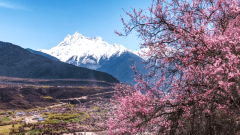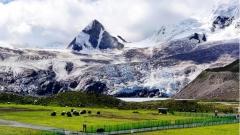

Traveling to Tibet by rail is an unforgettable way to cross China’s vast inland and to arrive gently into the roof of the world. The Qinghai–Tibet Railway (often called the Qingzang Railway) stitches together plains, plateaus and some of the highest tracks on earth, letting passengers go from lowland cities to the highland capital Lhasa while sleeping, eating and watching the landscape slowly transform outside the window.
Why Choose the Qinghai–Tibet Railway?
- A gradual geographic transition. The line is engineered so passengers experience an incremental change in landscape and altitude rather than a sudden jump — plains become loess plateau, then mountain range, then high-altitude grassland and finally the Tibetan Plateau.
- Comfort and safety. Modern coaches on most services are oxygen-assisted and insulated for cold; many trains offer soft sleepers, hard sleepers and hard seats, with dining cars and basic services on board.
- Unmatched scenery. The window view between Golmud (Golmud/Ge’ermu) and Lhasa — crossing high passes, salt lakes, and remote grasslands — is widely regarded as the railway’s greatest reward.
- Cultural entry. Arriving by rail lets you land in Lhasa refreshed (compared with flying), and to approach Tibetan culture slowly — useful for acclimatization and for savoring the journey’s build-up.
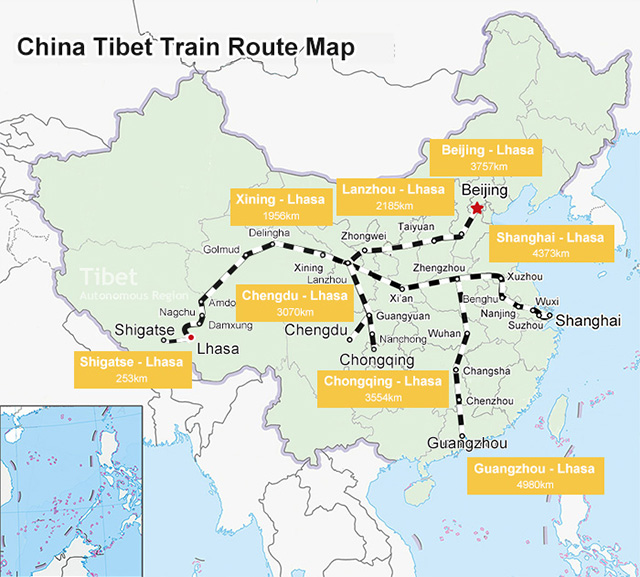
Qinghai Tibet Railway Map
Quick timetable primer (what “Z” means and what to expect)
Most long-distance conventional (non–high-speed) passenger services to Lhasa are coded with a “Z” prefix (for direct express services). These trains run daily or every-other-day depending on the origin. Journey durations vary from about 20 hours (from Xining) to more than 50 hours (from Guangzhou), so choose based on time availability, scenic preferences and ticket availability.
Overview of the Seven Major Departure Cities for Trains to Tibet
Below are clear, traveler-focused breakdowns of each origin city, including the usual train number(s), departure time windows, total duration as commonly scheduled, and what you are likely to see during the trip. These reflect the timetables and route characteristics commonly used by international travelers; always confirm specific departure dates and times before you purchase.
Beijing → Lhasa — Train Z21 (popular daily night departure)
Typical schedule shape: evening departure from Beijing West → ~39–40 hours → mid-day arrival in Lhasa.
Why travelers choose it: it connects China’s capital directly to Tibet and gives a long, leisurely cross-country experience.
What you’ll commonly see and when
- Night departure and early hours: the train leaves Beijing in the evening; the first night covers North China plain and loess territory. Expect sleep on the first night and sunrise in the more arid northwest the next day.
- Midway daylight segment: between Zhongwei and Xining (depending on that day’s timings) passengers see steppe, river valleys (including stretches along the Yellow River), and the landscape’s slow climb.
- High-plateau approach: after Golmud/Ge’ermu the terrain becomes high and wide; between Golmud and Nagqu the route crosses very remote area including parts of the Tibetan Plateau. The train sometimes traverses long night segments where in-window views are limited.
- Arrival into Lhasa: usually on the third day late morning; allow time to disembark, collect luggage, and adjust to altitude.
Practical notes
- Expect around 39–40 hours aboard on most schedules; overnight sleep twice. The Beijing–Lhasa Z21 remains one of the main long-haul choices for those who want the full cross-country experience.
Shanghai → Lhasa — Train Z164 (evening departure, long but scenic)
Typical schedule shape: evening departure from Shanghai → ~44–46 hours → afternoon arrival in Lhasa.
What’s special: this route covers densely populated eastern China before heading west across a dramatic ecological gradient that culminates in the Tibetan highlands.
Scenic highlights by segment
- Jiangnan & central plains: the early hours move through water-town regions, bustling midland cities and fertile plains.
- Loess and Yellow River: as the train pushes west, you’ll cross loess plateaus and, in daylight windows, glance the Yellow River carving through the landscape.
- Highland revelation: the stretch after Lanzhou/Xining toward Golmud and then Lhasa delivers the dramatic snow-peaks and plateau lakes that make the last segment unforgettable.
Practical notes
- Typical journey duration is about 44–46 hours and most schedules leave Shanghai around early-to-late evening. The Z164 often runs daily; if you want more daylight on the plateau portion, plan to have the Golmud→Lhasa segment during daytime hours so that the plateau vistas are visible.
Guangzhou → Lhasa — Train Z265 / Z264 (longest single ground route)
Typical schedule shape: morning departure from Guangzhou → ~50–53+ hours → late-afternoon arrival in Lhasa on the third day.
Why some travelers pick it: if you’d like to cross China from the deep south to the high plateau purely by rail, this is the classic long-haul option.
Route & rhythm
- First day (lowlands and subtropical hills): the journey begins in low-altitude, lush southern landscapes and climbs gradually northwards.
- Mid-way transition: around Zhengzhou and Lanzhou the green hills give way to drier plateaus and then to highlands.
- Final stretch: as with other long routes, Golmud→Lhasa contains the most iconic plateau scenery; plan to be awake on the daylight hours of this section.
Practical notes
- This is among the longest single train journeys to Lhasa — allocate time accordingly, and bring extra supplies and entertainment for the cabin. Schedules around ~53 hours are commonly quoted, but train numbers and exact times can vary seasonally.
Chengdu → Lhasa — Train Z322 (shorter long-route; southwestern gateway)
Typical schedule shape: late-evening departure from Chengdu West → ~34–35 hours → morning arrival in Lhasa.
Why travelers choose this origin: Chengdu is the closest of these big cities by rail distance and offers a relatively shorter rail time, plus a cultural bonus (food and local life in Chengdu before you leave).
Scenic character
- Chengdu to Lanzhou: the train first moves through Sichuan’s basin and then follows a path northward and westward where plains give way to mountain foothills.
- Plateau approach: after Lanzhou and Xining the train climbs toward Golmud and Lhasa, giving a compact version of the classic plateau reveal.
Practical notes
- The ~34–35 hour duration is convenient for travelers who want a major rail experience without the extra day of travel that some eastern or southern departures require. Chengdu departures often alternate with Chongqing services on certain schedules.
Chongqing → Lhasa — Train Z223 (alternate southwestern origin)
Typical schedule shape: late-evening departure → ~33–36 hours → morning arrival in Lhasa.
What’s notable: the Chongqing rail department sometimes alternates service days and timetables with Chengdu departures; beyond that, scenery and the plateau approach are very similar to the Chengdu route.
Practical notes
- If your travel plans include river cruises or south-west China exploration, Chongqing can be a convenient rail gateway. Expect comparable scenery after the trains converge on the same line beyond some major transfer points.
Xi’an → Lhasa — Train Z917 (central origin with historic city start)
Typical schedule shape: late-evening departure → ~32–35 hours → late morning/around-midday arrival in Lhasa.
Why try Xi’an: Xi’an’s cultural heritage makes it a logical starting point for travelers who want to combine historic China with the plateau. The route crosses sizable loess and plateau landscapes before meeting the Golmud→Lhasa stretch.
Practical notes
- Xi’an departures are useful for those basing themselves in central China; ticket availability can be easier or harder depending on season, so book early in peak months.
Xining → Lhasa — Trains Z8981 / Z8991 (the high-altitude short hop)
Typical schedule shape: daytime and evening options; around 20–22 hours total.
Why Xining matters: Xining is the gateway city to the Tibetan Plateau and shortens your rail time dramatically. This route shows the most high-altitude scenery in the shortest time and is the most practical for travelers who want the plateau experience without extended time on the train.
Scenic highlights
- Xining → Golmud → Lhasa: from Xining you quickly enter highlands, see Qinghai Lake on some timetables, and then cross the plateau — expect vast open skies, wetlands and, in daylight, clear views of the Tangula Mountains.
- Day vs night boardings: Z8981 typically departs midday and arrives the next morning; Z8991 is a later evening departure arriving the following evening — select your train to align the Golmud→Lhasa daylight window with your waking hours if viewing is a priority.
Practical notes
- The Xining–Lhasa pair (and similar short-hop trains) are prized because they deliver the plateau in a single day and night. If you have limited time, this is often the recommended option. (Two standard Xining departures — a midday and an evening — operate frequently in current schedules.)
Choosing Your Departure City
- Time vs scenery: If you value extra daytime plateau views but have limited time, leave from Xining. If you want the full cross-China experience and don’t mind longer travel, Beijing/Shanghai/Guangzhou are spectacular.
- Ticket availability: soft sleepers sell out quickly in high season. Regional departures (Xining, Lanzhou, Chengdu) often have higher availability.
- Pre-trip logistics: consider domestic flights, visas, and connecting travel. For example, if you plan to explore East China first, Shanghai departures save domestic transfers; if you plan to combine Sichuan or Yunnan, Chengdu/Chongqing is more convenient.
- Acclimatization strategy: departing from a city closer to the plateau (Xining, Lanzhou) shortens the time you spend gaining altitude on the train — some travelers prefer longer, gradual ascent for acclimatization, others prefer quicker exposure and shorter total transit.
Scenic Highlights by Railway Segment
The Qinghai–Tibet Railway can be described as a sequence of scenic chapters. Knowing which chapters you most want to see helps you pick the best train and cabin.
- Lowland Rivers & Jiangnan Towns (Shanghai, Guangzhou segments): rice paddies, low hills and small water towns. Good for those who want variety: coastal life → plateau.
- Loess Plateau & Yellow River (Beijing/Xi’an directions): dramatic gullies, ocher terraces and the meandering Yellow River — a different palette from the south.
- Qinghai Basin & Qinghai Lake (Xining approaches): high saline lakes and the broad, calm expanse around Qinghai Lake (seasonal color changes).
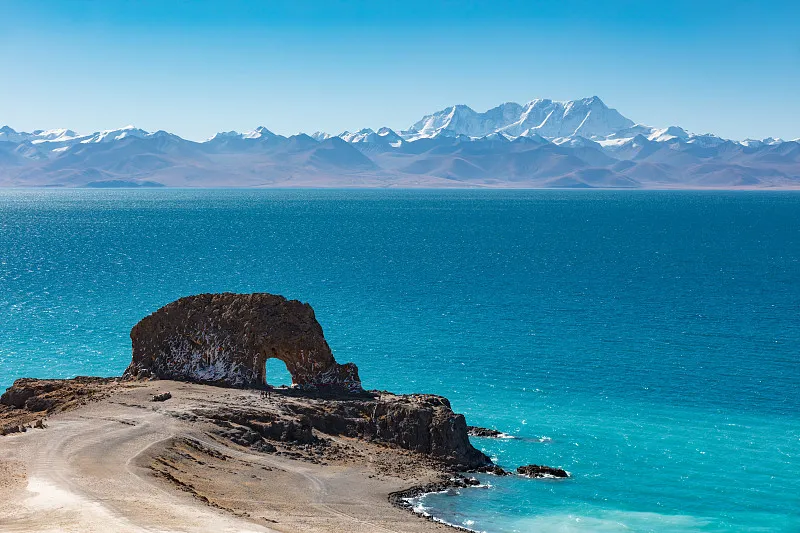
- Golmud → Tangula → Lhasa (the plateau core): salt lakes, snow-capped passes, high grassland, free-roaming herds and, in some seasons, wild antelope — this is the “poster” segment of the entire railway.
- Remote sections (Kekexili/Cocoxiili area at night): long stretches of minimal lights and few settlements; part of the romance — and a reminder to prepare for limited services during those stretches.
Seat Classes and On-board Life
- Soft Sleeper (4-berth compartment): best for couples or the privacy-seeking traveler. Lockable compartment, bedding supplied; quieter and often preferred for long overnight stretches.
- Hard Sleeper (6-berth open bays): the budget travel classic — social, lively and economical. Privacy is limited; good for meeting other travelers.
- Hard Seat: very economical but noisy and upright; better for short segments.
- Dining car / trolleys: most long routes have a dining car or food trolleys. Food quality is functional — bring favorites if you have dietary requirements.
- Oxygen supply: many coaches have supplemental oxygen outlets in sleeper cars; staff can open oxygen supply for short periods. Carry a personal oxygen bottle only if advised by a physician.
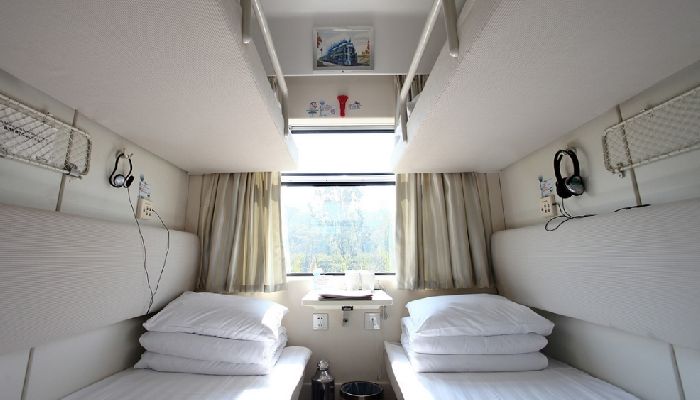
Soft Sleeper Compartment on the Qinghai-Tibet Railway
Safety, Comfort and Etiquette on Board
- Respect the local cultures: Tibetan areas are culturally sensitive; dress respectfully when off the train and avoid loud behavior in shared sleepers.
- Be cautious with heat: trains can be very dry; use moisturizer and drink steadily.
- Luggage security: store valuables near you; overnight compartments lock from the corridor in some trains but keep essentials with you.
- Hygiene: station stops can be short; plan restroom use accordingly.
Health & Altitude: Preparation and In-train Strategies
Traveling into Tibet means ascending to high elevation; the railway helps by incremental ascent but precaution is essential.
- Pre-travel health check: if you have cardiac, respiratory or serious chronic conditions, consult a physician before travel.
- Acclimatization basics: ascend gradually whenever possible; stay hydrated, avoid heavy alcohol and strenuous activity in the first 24–48 hours after arrival.
- Onboard tactics: sleep on the train, avoid overexertion during station stops, use the cabin oxygen supply if you feel breathless, and keep warm clothing accessible.
- Medication: bring common AMS (acute mountain sickness) medications if prescribed (e.g., acetazolamide) and OTC remedies for headaches and nausea. Always use under physician guidance.
- Recognize red flags: severe breathlessness, confusion, fainting, persistent vomiting or chest pain requires immediate medical attention.
Booking Tips & Ticket Strategies
- Book early in high season. Spring (April–June) and late summer (July–September) are popular — secure soft sleeper cabins several weeks (or months) ahead if possible.
- Use a reputable agent or China railway portal. International travelers often use trusted booking services that support English and foreign payment methods; official China Railway apps/websites sometimes require local ID or payments.
- Be flexible with dates and departure city. If your preferred train is sold out, check alternate start cities nearby (e.g., take a short domestic flight to Xining or Lanzhou to catch more frequent trains).
- Check regulations for foreigners. Travelling to Tibet usually involves additional permit processes for international visitors; verify permit requirements well before departure (your tour operator or the relevant authority will advise).
- Get travel insurance. Choose coverage that includes high-altitude evacuation and medical care.
What to Pack for the Train
- Passport, visa, Tibet Travel Permit (if required), printed and digital train tickets.
- Warm layered clothing (temperatures change quickly); a light down jacket is useful.
- Sleep mask, ear plugs, neck pillow and compact blanket.
- Refillable water bottle, snacks, and instant hot water sachets (many stations sell boiling water).
- Basic first-aid kit, personal medications and AMS medicine if prescribed.
- Portable battery pack and power adapter (train power outlets exist but can be limited).
- Wet wipes, hand sanitizer, toilet paper and small towel.
- Small foldable bag for walking off the train during longer station stops.
Seasonal Considerations — When is Best to Travel?
- Spring (April–June): ice melts, early flowers and clearer skies; popular for travel and pilgrimages.
- Summer (July–August): warmer plateau weather but also the rainy season in lower regions; some flooding elsewhere can cause delays.
- Autumn (September–October): stable skies, crisp views and fewer mosquitoes; a favorite for photographers.
- Winter (November–March): dramatic, snowy peaks but much colder; trains run year-round though nights are frigid.
Common FAQs about Qinghai–Tibet Railway
Q: Can foreigners buy tickets directly at Chinese stations?
A: Yes, but many ticket counters and machines require ID that’s a Chinese ID number. International travelers often find it easier to book online with an agency or via platforms that accept passport details.
Q: Do I need a permit to enter Tibet?
A: International travelers commonly need an additional travel permit to enter Tibet; rules vary and change — confirm with your operator or local consulate before travel.
Q: Are oxygen supplements available?
A: Many Tibet-bound trains provide emergency oxygen and some coaches have outlets. Bring your own oxygen only if it is medically advised and permitted.
Q: Is the food on the train OK for foreign diets?
A: Dining cars serve Chinese-style meals. Bring extra snacks or specialty items if you have strict dietary preferences.
Making the Most of the Railway Arrival into Lhasa
Arriving in Lhasa by train is more than transit; it’s a gradual, sensory approach to Tibet’s high plains and spiritual neighborhoods. Whether you chose the long, full-crossing experience from Beijing or Shanghai, the southern odyssey from Guangzhou, the southwestern convenience of Chengdu/Chongqing, Xi’an’s cultural pairing, or the short and scenic Xining hop, the railroad gives you time to watch China’s geography and history unfurl. Plan thoughtfully, prepare for altitude, and choose the timetable that best matches your appetite for scenery and travel time — the Qinghai–Tibet Railway rewards the traveler who arrives with patience and curiosity.