
The Sichuan-Tibet Highway 318, about 2,140 kilometers long from Chengdu to Lhasa with distinct altitude differences and seasonal scenery, sees May-June and September-October as the most popular travel periods for their excellent experience. This article analyzes these two golden periods in detail (scenery, road conditions, tips) to help all travelers—photography enthusiasts, parents or novices—choose wisely and enjoy the 318’s grandeur.
Sichuan-Tibet Highway 318 in May-June: Vitality and Clarity of Late Spring and Early Summer
Analysis of Scenery Highlights
From May to June, the Sichuan-Tibet Highway 318 is in late spring and early summer, combining the tenderness of spring and the vitality of summer. Avoiding the peak season crowds, you can encounter more pure beauty:
- Blossoms and Snow-Capped Mountains: In early May, the remaining peach blossoms in Nyingchi interweave with new green leaves, matched with the snow-capped mountains that have not yet completely melted, creating a rich and layered picture, soft and vivid.
- Clear and Transparent Lake Water: In June, the clouds and mist over Ranwu Lake dissipate, and the lake surface clearly reflects the snow-capped mountains and green plants, like a sapphire, allowing you to take filter-free photos easily.
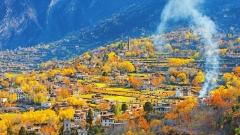
- Strong Tibetan Folk Atmosphere: Pear blossoms and gesang flowers bloom in the Tibetan villages along the way, with cooking smoke intertwined with the aroma of butter tea, accompanied by fluttering prayer flags, showing a quiet atmosphere.
- Full of Wild Fun: The main peaks of Genie Snow Mountain and Gongga Snow Mountain are clearly visible, surrounded by lush primeval forests, and various wild animals can occasionally be seen.
After the snow completely melts in June, the Sichuan-Tibet Line is full of vitality. Driving through it, you can fully feel the unique charm of the plateau in late spring and early summer:
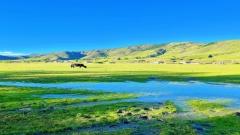
- Renewed Grasslands: The grasslands along the way are fully covered with green, with cattle and sheep wandering, contrasting with the steepness of the Nujiang 72 Turns, which is open and poetic.
- Road Adaptability: After the snow melts, driving on high-altitude sections is stress-free, with wide views on bends, providing a better self-driving experience.
- Comfortable Climate: The temperature is moderate at this time, without the trouble of extreme heat, allowing you to maintain a good state when hiking and sightseeing, and immerse yourself in the beautiful scenery.
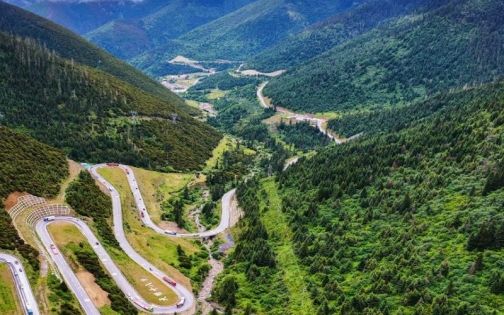
G318’s “Heavenly Road” Eighteen Bends in the Sichuan-Tibet region
Road Conditions and Travel Advantages
May-June is one of the most stable periods for road conditions on the Sichuan-Tibet Line, suitable for all types of travelers, especially novices:
- Safe Road Conditions: It has not yet entered the rainy season, the road surface is dry and flat, with few landslides and mudslides. Both sedans and SUVs can pass smoothly.
- Convenient Driving: The snow on high-altitude sections has completely melted, with no hidden dangers of icy and snowy roads, allowing novices to calmly adapt to the mountain driving rhythm.
- High Cost-Effectiveness: There are fewer travelers, no need to queue for accommodation and catering, and the price is affordable, making it the first choice for travelers with limited budgets.
In addition to the advantages of road conditions, the climate and travel experience in May-June are also highly competitive:
- Suitable Temperature: The temperature is 18-26℃ during the day and 8-12℃ in the morning and evening. You can dress lightly without carrying heavy down jackets, reducing travel load.
- Pure Experience: Avoid the peak season crowds, no interference from passers-by when taking photos, allowing you to enjoy the scenery quietly and immerse yourself in the Tibetan atmosphere.
- Convenient Booking: There is no need to book accommodation and vehicles too far in advance, and you can easily lock in your favorite travel supporting facilities.
Combined with the travel characteristics of May-June, here are some additional detailed advantages to help you travel easily:
- Leisurely Sightseeing: There is no crowding at popular scenic spots, allowing you to visit slowly without rushing, enhancing the sense of travel happiness.
- Controllable Cost: The price of catering and accommodation is friendly, without peak season premiums, suitable for families, students and other groups with limited budgets.
- Cultural Adaptability: Strolling in Tibetan villages in the afternoon, you can more easily communicate with local villagers and deeply experience Khampa culture.
Practical Travel Tips
- Clothing Preparation: Focus on light and warm clothing, bring thin jackets, long-sleeved T-shirts, thick sweaters and long pants. The temperature difference between morning and evening is large, so you need to add or remove clothes in time to avoid catching cold; some sections are slightly hot in the afternoon in June, so you can prepare a short-sleeved T-shirt for standby.
- Sun Protection: The plateau has strong ultraviolet rays, and the sunshine is sufficient in May-June. You need to prepare high-factor sunscreen, sun hats, sunglasses and masks in advance to avoid sunburn; you can bring a sun protection jacket when hiking to fully protect yourself.
- Altitude Sickness Countermeasures: Take Rhodiola 1 to 2 weeks in advance, carry oxygen cylinders and glucose oral liquid when departing. Avoid strenuous exercise after arriving at the plateau, drink plenty of water, and slowly adapt to the altitude change; the air is humid in May-June, and the symptoms of altitude sickness are relatively mild, but still need to be taken seriously.
- Road Condition Attention: There may be a small amount of residual snow on some high-altitude sections. Drivers need to slow down and pass sharp bends carefully, and check the real-time road conditions before departure; some sections may be under construction, so you need to follow the command of on-site staff and arrange your itinerary reasonably.
Sichuan-Tibet Highway 318 in September-October: The Pinnacle of Autumn Colored Forests
Analysis of Scenery Highlights
September-October is the pinnacle of beauty of the Sichuan-Tibet Highway 318, with mountains covered with colored forests and clear weather, making it a golden period for photography and sightseeing:
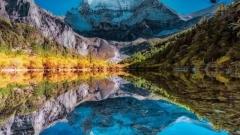
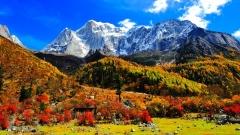
- Colored Forest Feast: Poplar forests turn yellow, maple leaves turn red, and pine and cypress remain green. The colorful forests winding around the mountains are like a palette.
- Clear Snow-Capped Mountains: There is little precipitation and high visibility, so the main peaks such as Namcha Barwa Peak and Gongga Snow Mountain have a high probability of showing their true appearance.
- Excellent for Photography: The colors of the blue sky, colored forests and snow-capped mountains are clearly contrasted, allowing you to take desktop-level photos easily without post-processing.
Every scenic spot on the Sichuan-Tibet Line in September-October shows the charm of autumn:
- Xinduqiao Scenery: Golden poplars set off against Tibetan-style dwellings, matched with distant snow-capped mountains, making it a must-shoot place for photography enthusiasts. The light is best in the morning and evening.
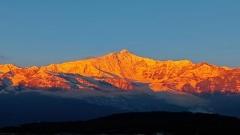
- Golden Sunlit Snow Mountains: At sunset, the sun shines on the snow-capped mountains, forming a shocking golden sunlit snow mountain landscape, which is highly ornamental.
- Unique Atmosphere: Thin mist surrounds the mountains in the morning, and the warm sun is soft in the afternoon, filling the air with an autumn atmosphere and providing an excellent sightseeing experience.
In mid-to-early October, the autumn scenery of the Sichuan-Tibet Line reaches its peak:
- Ranwu Lake Beauty: The lake surface is blue, and the colored forests on the shore are reflected in the lake, forming a stunning picture with white glaciers and clear blue sky.
- Daocheng Yading: Three snow-capped mountains stand towering, with colored forests surrounding the foot of the mountains. The Milk Sea and Five-Color Sea shimmer in the sun, grand and soft.
- Harvest Atmosphere: The grasslands in Litang, Batang and other places are golden. It is just the harvest season in Tibet, allowing you to feel the strong Tibetan folk atmosphere.
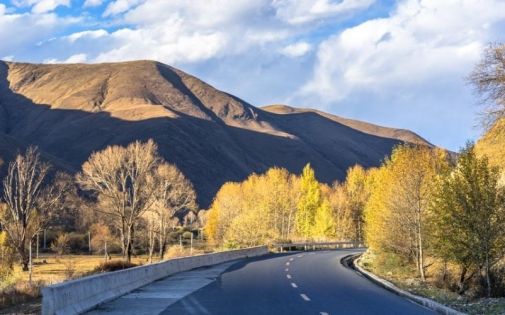
Autumn Scenery along the Sichuan-Tibet Highway G318
Road Conditions and Travel Advantages
The rainy season ends in September-October, and the road conditions reach the best of the year, suitable for all types of travel methods:
- Excellent Road Conditions: The road surface is dry and flat, without the trouble of water accumulation, landslides and falling rocks. Sedans, SUVs and RVs can all pass smoothly.
- Widely Adaptable: Whether you are a novice driver, traveling in a group or hiking, you can get a comfortable and safe travel experience.
- Smooth Driving: The road surface along the way is well-maintained, making mountain driving stress-free, allowing you to calmly feel the joy of driving on the Sichuan-Tibet Line.
In addition to the advantages of road conditions, the weather and temperature in September-October are also very suitable for travel:
- Clear Weather: The sunny rate is high, without the trouble of sudden rain, so you don’t have to worry about the weather affecting sightseeing and photography.
- Comfortable Temperature: The temperature is 20-28℃ during the day and 10-15℃ in the morning and evening, allowing flexible dressing without the trouble of extreme heat and cold.
- Suitable Light: The ultraviolet rays are milder than in summer, and the light is soft, with a high photo success rate, suitable for photography enthusiasts.
The travel experience in September-October balances liveliness and comfort:
- Moderate Crowds: There is no crowding in the summer peak season, nor is it deserted in winter. You can both feel the travel atmosphere and enjoy the scenery quietly.
- Complete Supporting Facilities: The accommodation and catering facilities along the way are complete, and you can get a good experience by booking in advance.
- Excellent Cultural Experience: It is just the harvest season in Tibet, allowing you to taste local characteristic food and deeply experience Tibetan folk culture.
Practical Travel Tips
Clothing Preparation: Bring long-sleeved T-shirts, thin sweaters, thick jackets and long pants. The temperature difference between morning and evening is large, so it is recommended to choose a windproof style for the thick jacket to cope with the cold wind in the mountains; you can bring a scarf, which is both warm and can be used as a photography prop to add atmosphere.
Sun Protection: The plateau’s ultraviolet rays are still strong in autumn. You need to bring high-factor sunscreen, sun hats, sunglasses and sun protection jackets to avoid sunburn; the sun is sufficient in the afternoon, so you can do a good job of facial protection when taking photos to avoid sunburn from backlighting.
Road Condition Response: Drivers need to maintain speed, carefully pass sharp bends and steep slopes. There are many section speed limits along the way, so you need to strictly abide by the speed limit regulations; refuel when the fuel gauge is half full. There are gas stations in counties such as Litang, Batang and Zuogong to avoid running out of fuel on the way; it is recommended to travel with companions and download offline maps in advance to cope with emergencies.
Altitude Sickness and Health: The air is dry in autumn, so you need to drink plenty of water to supplement body moisture; carry oxygen cylinders, Rhodiola and other medicines, avoid strenuous exercise, and slowly adapt to altitude changes; it is strictly forbidden to take a bath on the first day after arriving in high-altitude areas such as Litang to prevent colds from causing altitude sickness; you can bring lip balm and hand cream to relieve dryness.
Sichuan-Tibet Highway 318: Two Golden Seasons, How to Choose the Most Suitable One
May-June and September-October are the two golden seasons of the Sichuan-Tibet Highway 318, with excellent overall experience:
- Both Periods Are Preferred: With stable road conditions, stunning scenery and comfortable experience, they have become the first choice for most travelers.
- High Guide Adaptability: The previous article has detailed the scenery, road conditions and tips of the two periods, which can be directly referred to for itinerary planning.
- Core Principle: Choose according to your own needs. Novices focus on safety, while photography enthusiasts focus on scenery, both of which can get an excellent experience.
Combined with the characteristics of the two periods, here are precise selection suggestions for travelers with different needs:
- Novice Drivers / Limited Budget: Prioritize May-June, with stable road conditions, fewer travelers and affordable accommodation, making travel more worry-free.
- Photography Enthusiasts / Pursuing Extreme Scenery: Prioritize September-October, with mountains covered with colored forests and clear snow-capped mountains, and a high photo success rate.
- General Suggestion: No matter which period you choose, you need to plan in advance and focus on road conditions and altitude sickness protection.
No matter which period you choose, you need to remember these core preparations before traveling:
- Itinerary Planning: Check real-time road conditions in advance, arrange daily itineraries reasonably, and avoid fatigue driving.
- Protection Preparation: Do a good job in altitude sickness, cold and sun protection, and carry necessary medicines and clothing.
- Cultural Respect: Abide by local folk customs and etiquette, protect the ecological environment, and travel civilly.
Frequently Asked Questions About Traveling on Sichuan-Tibet Highway 318
Combined with the two golden travel periods of May-June and September-October, we have sorted out the most frequently asked questions by travelers to help you solve travel doubts:
Q1: Which is better for novice drivers on Sichuan-Tibet 318, May-June or September-October?
Both periods suit novice drivers, but May-June is better. It’s not the rainy season, with dry roads and no residual snow, making driving easier. Fewer travelers mean gentler traffic, while September-October has more crowds and higher adaptability requirements.
Q2: Any difference in altitude sickness measures, and what to prepare?
There are slight differences but similar altitude sickness risks. May-June’s humid air eases symptoms; September-October’s dry air requires more water. Prepare Rhodiola and oxygen in advance, avoid strenuous exercise, and adapt gradually to the altitude.
Q3: Any big difference in accommodation prices between the two periods, and how early to book?
Prices differ: May-June (off-peak) has affordable accommodation, book 3-5 days in advance. September-October (peak) has higher prices and tight rooms, book 7-10 days in advance (15+ days for National Day).