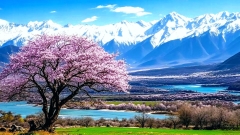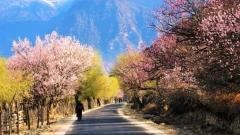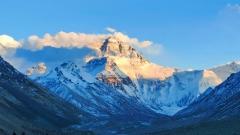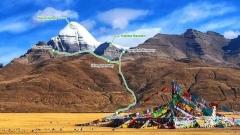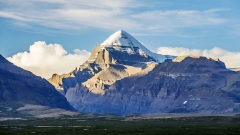

Located in the southern part of the Tibet Autonomous Region, Shannan lies south of the Gangdise and Nyainqêntanglha Mountains, and along the middle and lower reaches of the Yarlung Zangbo River. As the cradle of Tibet’s historical civilization, it is where the Tubo Dynasty rose to prominence. This land witnessed the birth of Tibet’s first palace – Yumbulagang, the first monastery – Samye Monastery, the first Buddhist scripture, and the first piece of farmland. It is also home to Yamdrok Lake, one of Tibet’s three sacred lakes, the magnificent and mysterious Kulha Kangri Snow Mountain, and the meandering scenic belt along the Yarlung Zangbo River. From a map-based perspective, this guide systematically organizes Shannan’s tourist attractions, inviting you to explore this dual treasure trove of Tibetan culture and natural beauty.
Regional Division of Shannan Travel Map
Shannan boasts abundant and concentrated tourism resources, primarily distributed along the Yarlung Zangbo River Valley and the southern border line. Based on geographical features, transportation routes, and cultural themes, it can be divided into the following major tourist regions for convenient itinerary planning:
- Yarlung Zangbo River Cultural Core Zone: Stretching along the north bank valley of the Yarlung Zangbo River, this area is the most densely packed with humanistic attractions in Shannan. It encompasses iconic historical sites such as Samye Monastery, Yumbulagang, Tradruk Monastery, and the Tomb Complex of Tibetan Kings, serving as the core area to understand the history of the Tubo Dynasty and the origin of Tibetan culture.
- Yamdrok Lake Scenic Area: Located in the northwest of Shannan, it centers around Yamdrok Lake, one of Tibet’s three sacred lakes. Renowned for its stunning combination of lake and mountain scenery in southern Tibet, the loop road around the lake connects multiple prime viewing spots and offers distant views of the Nyainqêntanglha Glacier.
- Kulha Kangri Snow Mountain Hiking Area: Situated in the southern border area of Shannan, in the middle section of the Himalayas. Dominated by the majestic Kulha Kangri Snow Mountain, the area features colorful alpine lakes like Baima Lin Lake and Jiejiu Lake at its foot, emerging as a popular destination for moderate hiking and landscape photography in recent years.
- Lebu Valley Ecological and Cultural Zone: Located on the southern slope of the Himalayas, at the southern edge of Shannan. With a humid climate, dense forests, and clusters of waterfalls, it is the main settlement of the Monba ethnic group, boasting unique ethnic culture and border customs.
- Pumoyongtso Lake & No. 40 Glacier Area: Home to the crystal blue Pumoyongtso Lake and the spectacular accessible land glacier, No. 40 Glacier (Cuojia Glacier), it is ideal for adventurers seeking extreme natural scenery.
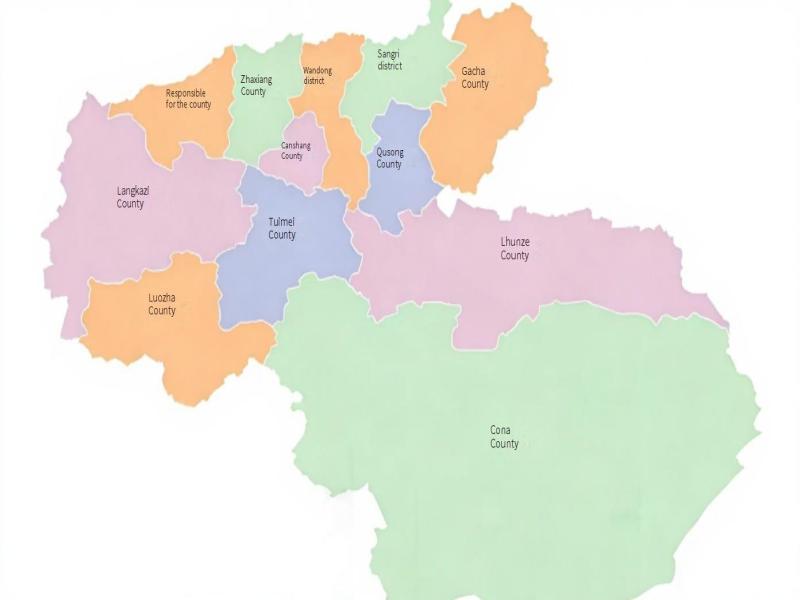
Regional Division of Shannan
Tourist Attractions in Shannan
Cultural Attractions
- Samye Monastery: Located on the north bank of the Yarlung Zangbo River in Zhanao County. Built in the 8th century during the Tubo period, it is Tibet’s first official monastery equipped with the Three Jewels of Buddhism: Buddha, Dharma, and Sangha. Its architectural layout is unique, integrating Tibetan, Han, and Indian styles, with a breathtaking cosmic design concept.
- Yumbulagang: Situated south of Tsetang Town in Nedong District. Legend has it that it was built in the 2nd century BC, making it the first palace in Tibet’s history, which later became a Buddhist monastery. Perched majestically atop Zhaxi Ciri Hill, it stands as a symbol of the rise of the Tubo Dynasty.
- Tradruk Monastery: Located in Tradruk Town of Nedong District. Said to be constructed by Songtsen Gampo, it is one of the oldest monasteries in Tibet, enjoying equal fame with Jokhang Temple. Its prized possession is the pearl Thangka “Avalokiteśvara at Rest”, revered as the monastery’s treasure.
- Tomb Complex of Tibetan Kings: Located in Qonggyai County, it houses the mausoleums of the 29th to 40th Zanpos (kings) of the Tubo Dynasty. Among them, the tombs of Songtsen Gampo and Trisong Detsen are the most famous, with grand scales that witness the rise and fall of the Tubo Dynasty.
- Qingpu Hermitage: Nestled in a valley northeast of Samye Monastery. As one of Tibet’s most renowned hermitages, it is said to have 108 meditation caves and temple ruins, offering a tranquil and spiritual environment.
- Lhamo La-tso Lake: Located amidst the Qukogel Mountains in Gyaca County. Known as the most legendary “Oracle Lake”, it holds a special position in the reincarnation system of Tibetan Buddhism. Believers hold that they can glimpse their past and future lives through the visions reflected on the lake surface.
Natural Attractions
- Yamdrok Lake: Located in Nagarze County, it is the largest inland lake on the northern foot of the Himalayas. The color of its water changes with light and shadow, presenting rich shades of blue and green, forming a stunning landscape with the distant snow-capped mountains. There are multiple viewing platforms around the lake, with the Gangbala Pass offering the most classic view.
- Pumoyongtso Lake: Situated at the junction of Nagarze County and Lhozhag County. With an altitude of approximately 5,010 meters, the lake boasts crystal clear blue water. In winter, the frozen lake surface forms a spectacular “blue ice” landscape, and the nearby Tuiwa Village is known as “the highest administrative village in the world”.
- Kulha Kangri Snow Mountain Group: Located in Lhozhag County. The main peak, Kulha Kangri, stands at an altitude of 7,538 meters, surrounded by a cluster of snow-capped mountains. The lakes at its foot, including Baima Lin Lake, Jiejiu Lake, and Zhegong Lake, exhibit distinct colors, making it a perfect destination for hiking and admiring snow mountain reflections.
- Lebu Valley: Located on the southern slope of the Himalayas in Cona County. Its altitude drops sharply from over 4,000 meters to around 2,000 meters, featuring a mild climate and lush vegetation. Visitors can enjoy waterfalls, forest landscapes, and experience the unique Monba ethnic culture.
- 40 Glacier: Located near the border between Lhozhag County and Bhutan. As one of the most accessible land mountain glaciers known to date, it showcases stunning landscapes such as ice towers and crevasses.
- Yarlung Zangbo River Scenic Belt: Flowing through multiple counties and districts in Shannan, it forms a magnificent canyon landscape between Sangri County and Gyaca County, boasting spectacular and majestic scenery.
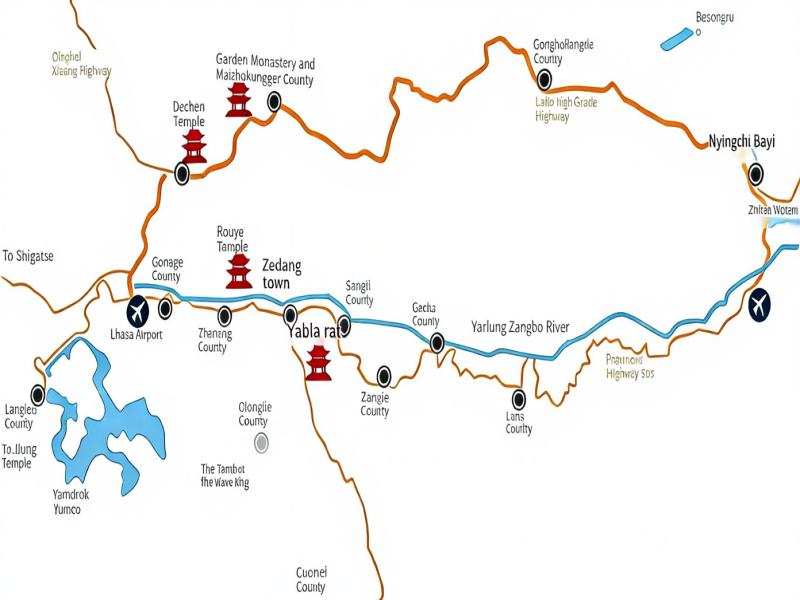
Tourist Attractions in Shannan
Core Transportation for Shannan Travel
Highways form the backbone of Shannan’s transportation network, connecting various counties, districts, and core scenic areas. Given the scattered distribution of attractions and the remoteness of some locations, it is crucial to familiarize yourself with the local highway system and its layout for trip planning.
- National Highway G349: The main artery connecting Lhasa and downtown Shannan, serving as the primary route to core attractions such as Samye Monastery, Yumbulagang, and Tradruk Monastery.
- National Highway G560: A trunk line leading to Qonggyai and Comai, it is the essential passage to attractions like the Tomb Complex of Tibetan Kings and Zhêgu Lake.
- Provincial Highway S307: Circling Yamdrok Lake and connecting Gyangze County in Xigazê, it serves as the main loop for sightseeing around Yamdrok Lake.
- National Highway G219: An extension of the Xinjiang-Tibet Highway, passing through Lhozhag, Comai, and other areas, it is a vital route to Kulha Kangri and the southern border regions.
These national and provincial highways constitute the transportation framework for Shannan’s tourism. Travelers can plan self-driving or chartered car loop routes based on this network, efficiently linking cultural heritage sites and natural wonders.
Q&As for Shannan Travel
Q1: What is the altitude of Shannan? Is altitude sickness more likely than in Lhasa?
Downtown Shannan (Tsetang, with an altitude of approximately 3,500 meters) is slightly lower than Lhasa (3,650 meters). However, many of Shannan’s prime attractions are located at higher altitudes, such as the Yamdrok Lake viewing platform (around 4,800 meters), Pumoyongtso Lake (about 5,010 meters), and the starting point of the Kulha Kangri hiking trail (around 4,200 meters). Therefore, the overall altitude challenge is similar to or even higher than that of Lhasa. It is recommended to fully acclimatize in Lhasa or Tsetang before traveling to high-altitude scenic areas and move at a slow pace.
Q2: Is Shannan suitable for self-driving tours? What key points should be noted for self-driving?
Self-driving is recommended for certain sections, such as the well-paved asphalt roads from downtown to Yamdrok Lake and Samye Monastery. However, roads leading to destinations like Pumoyongtso Lake and the Kulha Kangri hiking starting point include mountain roads and gravel roads with numerous bends and steep slopes. Mobile phone signals are weak in some remote areas (e.g., the Kulha Kangri mountain area). It is advisable to download offline maps in advance, stay in contact with companions, and avoid traveling alone in a single vehicle.
Q3: Are there any special cultural taboos to observe when traveling in Shannan?
When circumambulating monasteries, mountains, or lakes, please follow the clockwise direction strictly. Hats must be removed and clothing should be neat when entering Buddha halls; photographing Buddha statues and monks is prohibited without permission. Do not point at Buddha statues with your fingers; instead, use an open palm gesture.
Why Shannan Is Essential for Understanding Tibet’s History and Landscapes
Among Tibet’s many travel destinations, Shannan stands out as both the birthplace of Tibetan civilization and a region rich in dramatic natural scenery. From the earliest palaces and monasteries of the Yarlung Valley to sacred lakes, glaciers, and towering Himalayan peaks, Shannan offers a rare combination of cultural depth and environmental diversity.
Viewing Shannan through a travel map helps visitors clearly understand how historical sites and natural attractions are distributed across the region. Cultural landmarks are concentrated along the Yarlung Tsangpo River valley, while high-altitude lakes, snow mountains, and trekking areas extend toward the southern border. This gradual transition from cultural exploration to natural adventure makes Shannan an ideal extension of a broader Tibet itinerary.