Nestled in the fertile river valleys along the middle and lower reaches of the Yarlung Zangbo River, Shannan has nurtured the splendid civilization over thousands of years. For every food lover with reverence, traveling to Shannan is not only to feast on its magnificent natural scenery, but also to its unique catering culture. Every dish and every flavor here carries ancient legends, ethnic memories and survival wisdom adapted to the plateau, elevating the taste experience into an in-depth dialogue with history, nature and faith. This guide will analyze Shannan’s catering culture, introduce featured dishes and provide local dining guidelines to help you return from your Tibetan trip with fruitful gains.
Shannan Catering Culture of Tibet
Influenced by geographical environment, climatic conditions, production methods and ethnic traditions, the catering culture of Shannan in Tibet has formed a unique dietary system highly compatible with the regional environment. In Shannan’s cuisine, the application of every ingredient and the preparation of every dish reflect the philosophy of harmonious coexistence between humans and nature.
- Yarlung Zangbo River Valley Agricultural-Pastoral Zone: It is the region with the most diverse catering culture in Shannan. Located at the intersection of agricultural and pastoral areas, the diet here combines both agricultural and pastoral characteristics, featuring exquisite highland barley products and abundant dairy products. Many traditional Tibetan dishes have been best inherited and developed here.
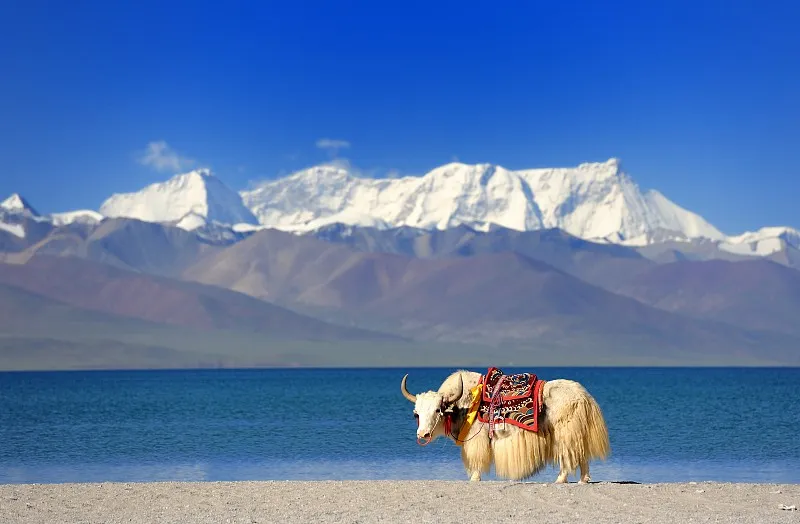
- Yamdrok Lake Pastoral Zone: Surrounding the sacred Yamdrok Lake, the diet in this pastoral area is dominated by yak products. Herders here are skilled in making various dairy products, especially butter and yogurt with exquisite craftsmanship. The diet in pastoral areas is characterized by simplicity and high nutrition, focusing on the preservation and portability of food to fully meet the needs of nomadic life.
- Lebu Valley Ecological Catering Zone: Located on the southern slope of the Himalayas, Lebu Valley has formed a unique catering culture due to its humid climate and abundant products. The diet of the Monba people here mainly consists of wild mountain ingredients. They are good at collecting various wild vegetables and fungi, and their cooking methods are different from mainstream Tibetan cuisine, showing the dietary wisdom of mountain ethnic groups.
- Pumoyong Lake Alpine Pastoral Zone: The alpine environment with an altitude of over 5,000 meters has shaped a highly adaptive catering culture here. The diet is characterized by high calorie and easy preservation, with butter tea and air-dried meat becoming indispensable daily foods. This kind of diet not only meets the body’s energy needs, but also reflects human survival wisdom in extreme environments.
The dietary characteristics of each region profoundly reflect the survival wisdom of Tibetan people. It is the cultural crystallization of this ethnic group’s adaptation to the environment and respect for nature over thousands of years. Tasting Shannan’s food is like opening a living record of local customs, allowing travelers to deeply feel the vitality and spiritual inheritance of this land through taste buds, and complete an in-depth cultural dialogue beyond taste.
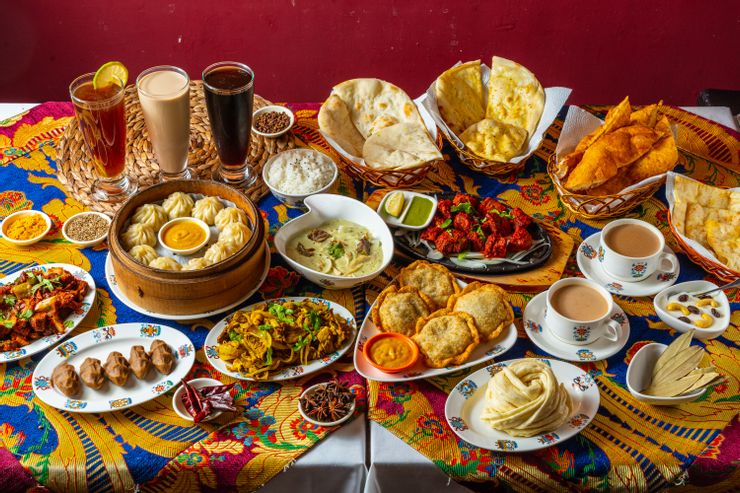
Shannan Tibetan Cuisine
Must-try Foods in Shannan Tibet
Staple Foods
- Zanba: Zanba is the most traditional staple food in Shannan. High-quality zanba is made from top-grade highland barley grown in the current year through multiple processes such as cleaning, stir-frying and grinding into powder. To eat, first put an appropriate amount of zanba powder into a bowl, add butter tea, then gently stir along the edge of the bowl with fingers and gradually knead into a ball.
- Tibetan Noodles: Tibetan noodles are one of the local breakfast options. They are made by mixing highland barley flour and wheat flour in a specific ratio, resulting in chewy and elastic noodles. The soup base is simmered from yak bones for a long time, and the ingredients usually include diced yak meat, sliced white radish and a small amount of coriander.
- Tibetan Steamed Buns: They are important food for entertaining guests during festivals. The bun skin is as thin as paper, and the color of the filling can be faintly seen through the skin. The filling is mainly fresh yak meat, seasoned with a small amount of onions and Tibetan-style spices. They are usually eaten with homemade chili sauce, featuring a unique flavor.
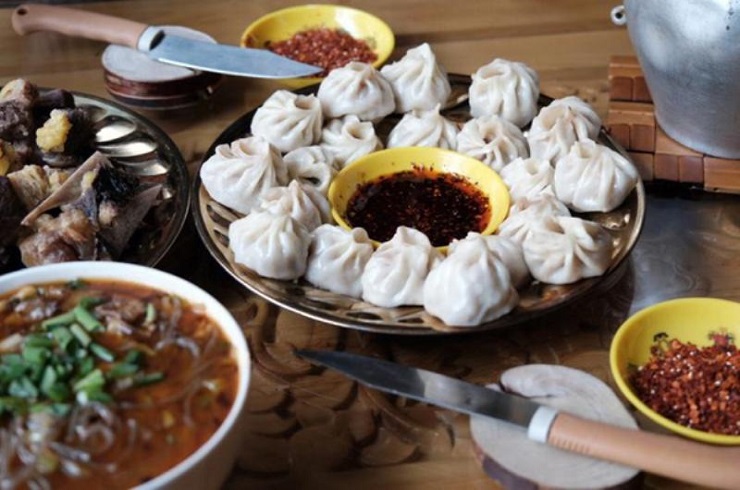
Tibetan Steamed Bun: Food for Guests During Festivals
Meat Dishes
- Air-Dried Yak Meat: It is the most characteristic meat product in Shannan’s pastoral areas. After being marinated with a small amount of salt and spices, it is hung in a well-ventilated and cool place to air dry naturally. The whole process takes two to three months. The air-dried yak meat has firm texture, which can be eaten directly or used for cooking.
- Yak Meat Stewed with Radish: It is a representative home-style dish in Shannan. Selected bone-in yak meat and locally produced white radish are stewed over low heat for several hours with simple seasonings. The radish fully absorbs the essence of the meat juice, with a soft, glutinous and sweet taste.
- Blood Sausage: It is an important food during festivals. To make it, fresh yak blood is evenly mixed with zanba, minced meat and spices, poured into cleaned sausage casings, tied tightly in sections with strings and then boiled.
Dairy Products
- Butter: It is made using a special wooden barrel. Fresh yak milk is poured into the barrel, and then stirred up and down thousands of times with a long-handled stirrer to separate and coagulate the milk fat. The resulting butter is golden in color and rich in aroma. Butter is not only used to make butter tea, but also an important seasoning for many dishes.
- Yogurt: Local yogurt is made using traditional fermentation techniques without adding any chemical ingredients, featuring a thick texture and moderate sweetness and sourness. A layer of golden cream will form on the surface of high-quality yogurt, which local people believe is the essence of yogurt. It can be eaten with white sugar or zanba for a better flavor.
- Cheese Residue: It is a by-product of butter making. After being dried in the sun, it can be stored for a long time. It has a sweet and sour taste, is rich in protein and calcium, and can be eaten directly as a snack or used for cooking.
Featured Drinks
- Butter Tea: To make butter tea, brick tea is first brewed into strong tea soup, then put into a special tea barrel together with butter and salt, and beaten repeatedly with a stirring rod to fully emulsify water and oil. Drinking butter tea can not only supplement energy, but also help adapt to the plateau environment.
- Highland Barley Wine: It is an important drink for entertaining guests during festivals. Traditional highland barley wine is made by natural fermentation. Cooked highland barley is mixed with distiller’s yeast and sealed in pottery jars for fermentation. The fermentation time ranges from several days to several months, and the longer the time, the mellow the wine taste. Highland barley wine has a low alcohol content and a sweet and sour taste.
- Sweet Tea: It is a drink formed under the influence of foreign cultures and is quite popular in Shannan’s towns. It is made by boiling black tea together with milk and white sugar. Sweet tea has a sweet and mellow taste, and is especially loved by young people and tourists.
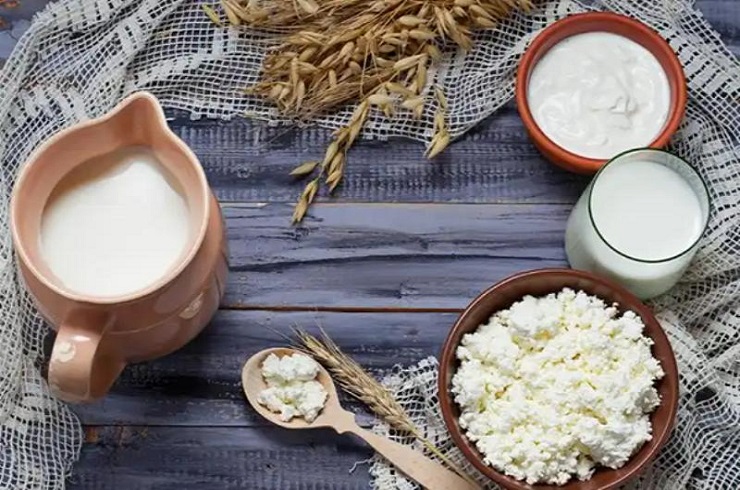
Cheese Residue: Essential Ingredient for Cooking and Desserts
Tips for Shannan Cuisine
- Suggestions for First-Time Tasters: For tourists trying Tibetan food for the first time, it is recommended to start with milder foods. Tibetan noodles, yogurt, buckwheat cakes are all relatively easy to accept. You can try a small amount of butter tea first, and increase the intake after adapting to its unique flavor. You can taste a small amount of special foods such as air-dried meat and blood sausage to experience their unique flavors.
- Suggestions for In-Depth Experience: If you want to deeply experience Shannan’s catering culture, you can participate in local catering culture experience activities. Many Tibetan homestays offer experience programs such as butter tea making and zanba kneading, allowing tourists to personally participate in the making process of traditional foods. Visiting during festivals, you can also experience rich festival catering culture.
- Suggestions for Dietary Adaptation: In the plateau environment, digestive function may be affected, so it is recommended to eat small meals frequently. The diet should be light and avoid excessive greasiness. Drinking an appropriate amount of butter tea helps adapt to the plateau environment, but excessive consumption may cause discomfort. Maintaining adequate water intake is very important, and warm water is recommended.
Q&As for Shannan Dining
Q1: How to choose hygienic and safe restaurants during a trip to Shannan?
It is recommended to choose restaurants frequented by local people. These restaurants usually use fresh ingredients and follow standardized cooking procedures. In Tsedang Town, there are many time-honored Tibetan restaurants with guaranteed hygienic conditions and food quality. Avoid buying food randomly on the street, especially cold and raw food.
Q2: How to handle special dietary requirements such as vegetarian diet or food allergies?
Traditional Shannan diet is dominated by meat, so vegetarian options are relatively limited. If you have special dietary requirements, it is recommended to communicate with the restaurant in advance. Many restaurants can adjust dishes according to guests’ requirements. For people with food allergies, you should ask about the ingredients in detail when ordering to avoid eating food that may cause allergies.
Q3: How to deeply experience Shannan’s catering culture?
In addition to tasting various kinds of food, you can also participate in local catering culture experience activities. Many Tibetan homestays offer traditional food making experiences, such as learning to make butter tea and knead zanba. Visiting during festivals, you can participate in rich festival catering activities and deeply experience the charm of Shannan’s catering culture.
Tasting Shannan: Understanding Tibet Through Its Food
Food in Shannan is more than sustenance—it is a living expression of history, geography, and belief. Shaped by fertile river valleys, high-altitude pastures, and mountain ecosystems, Shannan’s cuisine reflects how Tibetan communities have adapted to their environment over centuries.
From hand-kneaded tsampa and slow-dried yak meat to rich butter tea and naturally fermented dairy products, every dish carries the wisdom of survival on the plateau. For travelers, experiencing Shannan’s food is not simply about trying local flavors, but about gaining insight into Tibetan life, values, and traditions. In Shannan, a single meal can become the beginning of a deeper understanding of Tibet itself.