
Sichuan, often called the “Land of Abundance,” is famous for its diverse landscapes that range from fertile basins to high plateaus and mountain valleys. This varied geography creates a unique environment where flowers bloom throughout the year. In spring, rapeseed flowers, peach blossoms, and cherry blossoms cover the countryside with vibrant colors. Summer brings rhododendrons in the mountains and lotus flowers in lakes and parks. Autumn is filled with the fragrance of osmanthus and colorful chrysanthemums, while winter offers the delicate beauty of plum blossoms and camellias. With such seasonal diversity, Sichuan remains a rewarding destination for flower lovers in every month of the year.
Must-see flowers in Sichuan in Spring
Spring is the golden season for flower appreciation in Sichuan. As temperatures rise, the basin and plateau successively welcome tidal waves of blooms. From the first early plum blossoms in February, to the simultaneous blooming of rapeseed flowers and peaches in March, and then the stunning display of pear blossoms in April, the entire land of Shu is enveloped in a colorful sea of flowers. This is the time of year with the richest variety of flower species and the widest range of viewing locations.
- Plum Blossoms: Blooming from late February to mid-March, they can be seen in many places across Sichuan. Chengdu’s “Three Great Plum Blossom Spots” – Du Fu Thatched Cottage, Wangjianglou Park, and Xingfu Meilin (Happiness Plum Forest) – are the best places to appreciate plum blossoms within the city.
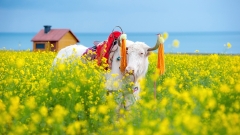
- Rapeseed Flowers: Blooming from early March to early April. Famous viewing locations include the Jiayang Small Train in Qianwei, Leshan; Chongzhou Chongqing Road in Chengdu; and Zhongdu Town in Yibin. From the Western Sichuan Plain to the hills of Eastern Sichuan, golden flower seas blanket the landscape, offering an incredibly beautiful sight.
- Cherry Blossoms: Blooming from mid-March to early April. Viewing spots include Fenghuang Lake in Qingbaijiang, Sanlang Town in Chongzhou, and Yaowang Valley in Mianyang. Pink blossoms cover the branches, reflecting beautifully with the mountain mists, creating a scene reminiscent of a fairyland.
- Peach Blossoms: Blooming from mid-to-late March to mid-April. Longquanyi Peach Blossom Hometown, Hanyuan Jiuxiang in Ya’an, and Jianshan Scenic Area in Zigong are all famous viewing sites. The peach blossoms at Jianshan are particularly known for their wide variety and long blooming period, lasting from mid-March to early April.
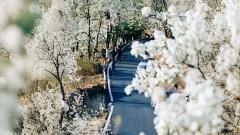
- Pear Blossoms: Blooming from mid-to-late March to early April. Viewing locations include Jinchuan Pear Blossom Valley in Aba, Hanyuan Jiuxiang in Ya’an, and Xinjin Pear Blossom Stream in Chengdu. Xinjin Pear Blossom Stream is just a 30-minute drive from downtown Chengdu, making it a top choice for citizens seeking a suburban pear blossom viewing experience.
Spring in Sichuan is a grand floral feast where plum, peach, pear, and cherry blossoms bloom in succession. From city parks to plateau canyons, each flower tells the story of spring in its own unique way.
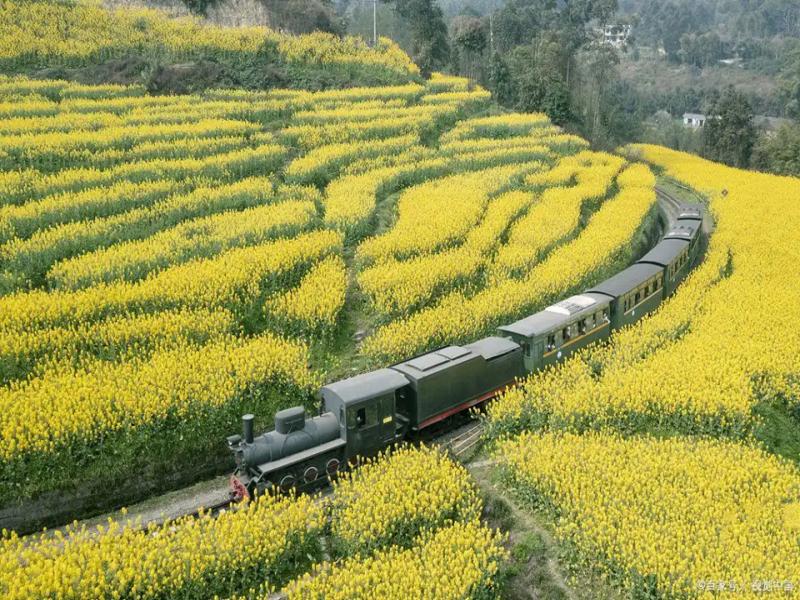
Jiayang Small Train, Qianwei: Journeying with Rapeseed Flowers
Must-see Flowers in Sichuan in Summer
Summer (June to August) in Sichuan offers pleasant temperatures, with the mountain areas being particularly cool and refreshing. The flowers that bloom during this period are mainly azaleas, gardenias, lotuses, and lavender, characterized by vibrant colors and captivating fragrances.
- Azaleas: Sichuan is the homeland of azaleas, boasting numerous species in a riot of colors. Their blooming period is from late April to mid-June. Prime viewing locations include Mount Emei, Mount Wawu, Hailuogou, and Mount Siguniang. Mount Wawu is hailed as the “Kingdom of Azaleas,” with over 60 varieties, many of which are unique to the mountain.
- Lotuses: Blooming from late June to mid-August. Recommended viewing spots include the Lotus Moonlight at Sanxiang Township in Chengdu, Sansu Shrine in Meishan, and Fangxing Town in Xinjin. Fangxing Town is a famous lotus hometown on the outskirts of Chengdu, with a planting area covering thousands of mu.
- Gardenias: Blooming from June to July. It is recommended to visit Sanxiang Township in Chengdu and Anzhou District in Mianyang. Anzhou District has a large gardenia planting area, reaching full bloom in mid-to-late June. There are fewer tourists here, making it suitable for those who prefer a quiet flower-viewing experience.
- Lavender: Blooming from June to August. Recommended viewing spots are the Lavender Valley in Chengdu and Mao County in Aba. The Lavender Valley on the outskirts of Chengdu is the largest lavender viewing base in Sichuan. From June to August, the lavender is in full bloom, with the purple sea of flowers contrasting with European-style architecture, creating a romantic, exotic atmosphere.。
Summer in Sichuan sees every flower offering unique colors and fragrances, bringing refreshing beauty to the hot season. Whether you venture deep into the mountains to seek alpine blooms or take a leisurely stroll in the suburbs to admire flowers, Sichuan’s summer floral events will always bring you delightful surprises.
Must-see Flowers in Sichuan in Autumn
Autumn (September to November) in Sichuan has cool, crisp weather, making it the perfect time to appreciate osmanthus, chrysanthemums, and hibiscus. The flowers of this season are prized for their fragrance, with colors mainly golden-yellow and pure white, evoking a warm and serene feeling.
- Osmanthus: Osmanthus is widely planted across Sichuan, especially in Chengdu, which is known as the “City of Osmanthus.” The blooming period is concentrated from mid-September to early October. Recommended viewing spots include Guihua Xiang (Osmanthus Lane) in Chengdu, Xindu Guihu (Osmanthus Lake), and Fule Mountain in Mianyang. Xindu Guihu is one of the top five osmanthus viewing sites in China, with hundreds of ancient osmanthus trees within the garden, many over a hundred years old. The osmanthus at Fule Mountain are known for their wide variety and long blooming period.
- Chrysanthemums: Several cities in Sichuan hold chrysanthemum exhibitions, with the blooming period concentrated from mid-October to late November. The best viewing spots include People’s Park and Tazishan Park in Chengdu, and Jinghu Lake in Deyang. The chrysanthemum exhibition at People’s Park began in 1953, making it the oldest and largest chrysanthemum event in Chengdu. From mid-October to late November each year, hundreds of varieties and tens of thousands of potted chrysanthemums are displayed throughout the park.
- Hibiscus: The hibiscus is the city flower of Chengdu. Because Meng Chang, the emperor of the Later Shu Kingdom during the Five Dynasties period, planted hibiscus extensively throughout Chengdu, the city gained the name “Rongcheng” (City of Hibiscus). Its blooming period is from October to November. Recommended viewing spots are Baihuatan Park, Wangjianglou Park, and Hibiscus Ancient Town in Chengdu. Baihuatan Park is the best place to admire hibiscus in Chengdu, with a large number of hibiscus plants in a wide variety of rich colors.
In Sichuan’s autumn, the millennium-old fragrance of Osmanthus Lane, the vast chrysanthemum exhibition in People’s Park, and the reflection of hibiscus in the waters of Baihuatan – each flower, in shades of gold and white, tells the story of this ancient city’s composure and elegance. When you stroll under the ancient trees of Guihu or pause by the hibiscus bushes at Wangjianglou, you’ll understand why Chengdu is called “Rongcheng.”
Must-see Flowers in Sichuan in Winter
Winter (December to February of the following year) in Sichuan, although cold, still sees flowers bravely blooming. Wintersweet, camellias, and narcissus add a touch of bright color and a wisp of fragrance to the bleak winter days.
- Wintersweet: The blooming period is concentrated from late December to early February of the following year. Wintersweet is planted in many places across Sichuan. Recommended viewing spots include Xingfu Meilin and Tazishan Park in Chengdu, and Fule Mountain in Mianyang. The wintersweet at Fule Mountain is known for its variety and long blooming period, lasting from late December to early February. The wintersweet within the scenic area, set against ancient buildings and stone carvings, has a unique charm.
- Camellias: Camellias have a relatively long blooming period, from January to March. Ideal viewing locations include Mount Tiantai in Qionglai, the Chengdu Botanical Garden, and Mount Emei. The camellias on Mount Emei are famous for their variety and long blooming period, which can last from January to April. Meanwhile, Mount Tiantai boasts hundreds of thousands of wild camellias, with dozens of varieties, making it the largest wild camellia viewing area in Sichuan.
The subtle fragrance of wintersweet at Xingfu Meilin, the vibrant, fire-like display of wild camellias on Mount Tiantai, and the camellias reflecting Zen contemplation beside ancient temples on Mount Emei – these flowers, unafraid of the cold, warm the entire season with their beauty.
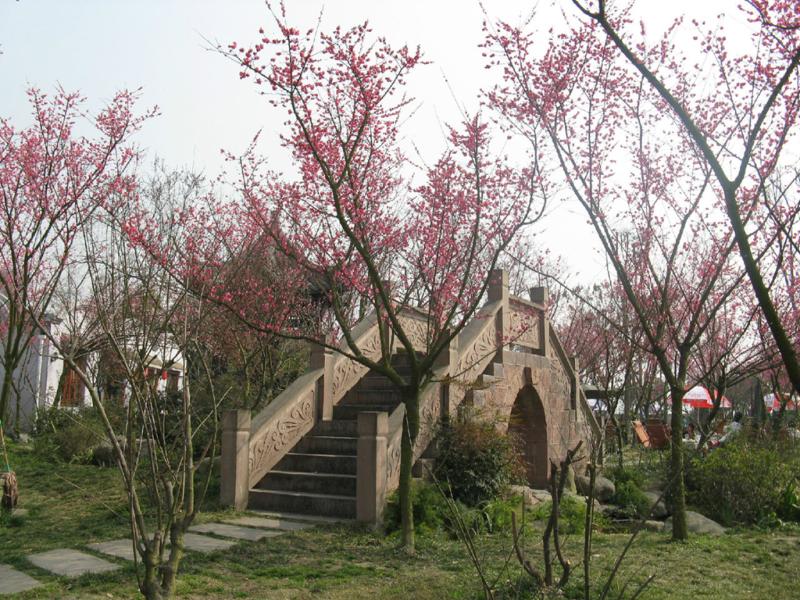
Xingfu Meilin, Chengdu: A Spectacle of Plum Blossoms
Tips for Appreciating Flowers in Sichuan
From the rapeseed flower seas on the Western Sichuan Plain to the snowy pear blossoms on the Western Sichuan Plateau, every floral event deserves careful planning. To make your flower-viewing trip more comfortable and smooth, here are some practical tips to help you easily capture the beauty of spring.
- Camera: To capture the beautiful moments of blooming flowers, it is recommended to bring a telephoto lens for close-up shots of flowers, capturing the texture of petals and the play of light and shadow. A wide-angle lens is suitable for panoramic shots of flower seas, taking in the magnificent spring scene. If you want to take portraits with flowers, a 50mm or 85mm prime lens is also a good choice.
- Sunscreen: Although the ultraviolet rays in the Sichuan Basin are not as strong as on the plateau, the sunlight gradually intensifies during the spring flower-viewing season. Prolonged outdoor activities still require attention to sun protection. Sunscreen (SPF30+ recommended), a sun hat, and sunglasses are essential to avoid sunburn affecting your flower-viewing mood.
- Warm Clothing: Temperatures vary greatly between day and night when viewing flowers in the Western Sichuan Plateau region (such as Jinchuan Pear Blossoms, alpine azaleas). While daytime sunshine may be warm, early mornings and evenings can drop below 5°C. Be sure to prepare a warm jacket or light down coat to cope with the drastic temperature changes.
- Comfortable Footwear: Flower viewing often requires walking for long periods, especially on village paths or mountain trails. It is recommended to wear comfortable sports shoes or hiking boots. Avoid high heels or new shoes that might rub, allowing your feet to accompany you comfortably through the sea of flowers.
- Water and Snacks: Some flower viewing locations are relatively remote, such as Jinchuan Pear Blossom Valley and Mount Wawu Azalea Forest, where supplies are scarce along the way. It is advisable to bring plenty of water and energy snacks (chocolate, nuts, biscuits) to replenish your energy at any time, making your flower-viewing trip more relaxed.
Travel Tips for Exploring Sichuan’s Flower Seasons
Flower seasons in Sichuan change gradually with altitude and climate. Vast rapeseed fields appear in the plains during spring, alpine rhododendrons brighten the mountains in summer, osmanthus trees fill historic towns with fragrance in autumn, and winter plum blossoms quietly bloom in colder months. Because the province stretches across multiple landscapes, travelers can often find different flowers blooming in different regions at the same time.
Planning ahead can make a flower-viewing trip even more rewarding. Combining destinations around Chengdu with scenic areas in western Sichuan allows visitors to experience both vibrant flower landscapes and dramatic mountain scenery. With thoughtful timing and route planning, a journey through Sichuan can easily become a memorable exploration of nature’s changing colors throughout the year.