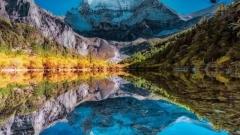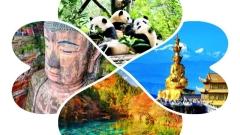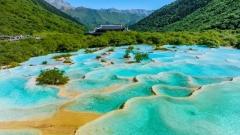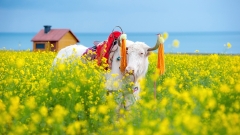

The Sichuan-Tibet Highway Southern Route (G318 from Chengdu to Lhasa) stretches about 2,142 km, a world-famous landscape road boasting snow-capped mountains, glaciers, canyons, lakes and grasslands. Tibetan villages and sacred religious sites scatter along the way, each a visual feast. With drastic altitude changes and complex road conditions, thorough planning is key to exploring its top spots efficiently. This guide curates the must-visit attractions, detailing their highlights, best travel time, transport, accommodation, budget and travel hacks in route order. Packed with practical tips, it lets you explore G318’s highlights effortlessly and immerse in the line’s unique charm.
General Travel Guide for the Sichuan-Tibet Highway Southern Route
Itinerary Planning: The whole journey is about 2,142 km—reserve 7-10 days to avoid fatigue and missing attractions. Best travel seasons: April-May (blooming peach blossoms with mild climate) and September-October (clear autumn sky with stunning scenery). Winter (November-March): some sections have snow—4WD cars with snow chains are required. Summer (June-August): rainy season—watch out for mudslides and landslides.
Vehicle Selection: Self-driving: recommend 4WD SUVs (e.g., Toyota Prado, Haval H9) with strong road adaptability. No self-driving experience: carpool (3,000-5,000 CNY per person for the whole journey) or private car hire (about 10,000-15,000 CNY per car for the whole journey, 4-6 passengers) to save planning effort.
Altitude Sickness Prevention: Altitude rises gradually from 500 m—acclimatize step by step. Take Rhodiola rosea 3 days before departure. Bring portable oxygen tanks, glucose oral liquid and motion sickness medicine. Avoid strenuous exercise, drinking alcohol and staying up late; drink plenty of warm water and eat light meals.
Packing List: Adopt “onion dressing” (thermal underwear + fleece jacket + windproof jacket) to adapt to temperature changes and altitude variations. Bring high-SPF sunscreen, sunglasses, a hat and lip balm for strong ultraviolet rays and dry climate. Prepare sufficient cash (no signal for mobile payment in some remote sections), ID card (checked anytime in Xizang) and driving license (mandatory for self-driving).
Cultural Etiquette: Respect local Tibetan religious beliefs and customs. Do not take photos of Buddha statues, ritual utensils and monks without permission in monasteries; circumambulate clockwise. Do not touch Tibetans’ heads at will; accept hada and food with both hands. Do not chase cattle and sheep on grasslands or damage the natural environment.
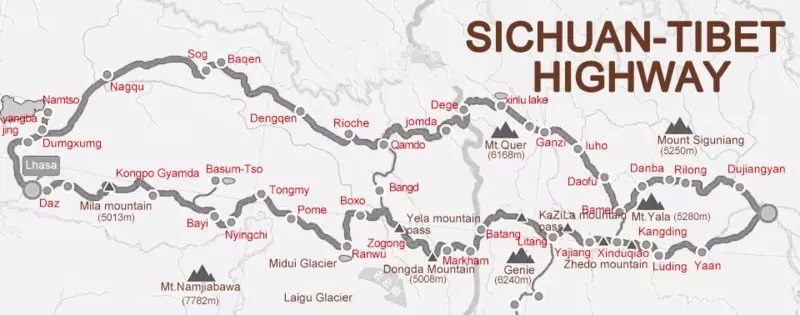
Sichuan Tibet Highway
Kangding-Xinduqiao Section: The Scenic Start with Light and Shadow
Leaving Chengdu for Xinduqiao via Kangding, this is the starting section of the Sichuan-Tibet Highway Southern Route, with altitude rising gradually from 500 m to 3,460 m. It’s ideal for acclimatizing to the plateau and enjoying diverse scenery, recommended stay: 1-2 days.
Highlight Attractions
- Zheduo Mountain Pass: At 4,298 m, it’s the first high-altitude pass on the Sichuan-Tibet Highway Southern Routeand a landmark of the “First Pass of Kham”. Overlooking the Gongga Snow Mountain range from the viewing platform, countless prayer flag arrays flutter in the strong wind, full of Tibetan plateau charm. Free entry, recommended stay: no more than 20 minutes to avoid altitude sickness. The temperature here is over 10℃ lower than the foot of the mountain; bring a windbreaker or light down jacket and windproof sunglasses even in summer.
- Xinduqiao Photography Corridor: The 10-plus-km stretch of G318 from Zheduo Mountain to Xinduqiao Town is known as a “world of light and shadow”. Grasslands, streams, cypresses and red-white Tibetan-style dwellings form a stunning picture. Especially at sunrise and sunset, sunlight filters through treetops creating Tyndall effect, with ever-changing light and shadow—every snap is a perfect shot. Free entry. The core check-in spot is Yuzixi Viewing Platform (ticket: 30 CNY per person), a 20-minute drive to the top for a 360° overlook of snow mountains and grasslands; drone shooting captures the breathtaking “snow mountains embracing grasslands” view. Jiagenba, a lesser-known spot with interweaving highland barley fields and cypress forests, is perfect for shooting away from crowds.
Practical Travel Tips
Transport: Chengdu to Kangding: express coach (about 4 hours, 100-120 CNY per person) or carpool (about 3.5 hours, 150-200 CNY per person). Kangding to Xinduqiao: about 75 km, 2-3 hours by car; carpooling is recommended (50-80 CNY per person) for flexible photo stops. You can stop by the “18 Bends of the Sky Road” viewing platform along the way.
Accommodation: Kangding: stay in the old town within walking distance to Liuliu City—3-star hotels: 300-500 CNY per night, Tibetan-style homestays: 200-350 CNY per night (some offer free butter tea). Xinduqiao: choose oxygen-supplied inns first (280-400 CNY for a standard room). For altitude sickness concerns, stay in Yajiang (2,640 m) for better value (200-300 CNY for a standard room).
Budget: 500-800 CNY per person (including transport, accommodation, meals and tickets). Meals feature Sichuan and Tibetan cuisine: try Kangding’s beef and wild mushroom hot pot (80-100 CNY per person) and Yajiang’s pine mushroom chicken hot pot (70-90 CNY per person)—warm and suitable for plateau digestion. Xinduqiao’s Tibetan-style mashed potatoes and zanba (50 CNY per meal) are worth a try, paired with sweet tea to cut greasiness.
Travel Hacks: Zheduo Mountain Pass may experience rain and snow even in summer—check the weather in advance. The best shooting time in Xinduqiao is early morning and evening; midday light is too harsh for photos. Avoid strenuous exercise at the first plateau stop, skip hair washing/bathing for the time being, and drink plenty of warm water or butter tea.
Litang Section: The Magnificent Highland of the “Sky City”
Leaving Xinduqiao for Litang via Yajiang, Litang is the highest county seat on the Sichuan-Tibet Highway Southern Route and a core site to experience Tibetan culture. Recommended stay: 1 day (no overnight stay to reduce altitude sickness risk).
Highlight Attractions
- Litang West City Gate + Letong Ancient Town: A landmark check-in spot in Dingzhen’s hometown. The bright yellow gate engraved with “Litang”, paired with the snow-capped mountains and the iconic “Must Drive 318 in This Life” sign, offers perfect photo opportunities. Free entry. You can walk to Letong Ancient Town next to the gate—with well-arranged Tibetan-style dwellings, stone roads where you can see locals in traditional costumes, and occasional herdsmen selling handcrafted Tibetan ornaments. Renkang Ancient House (free) in the town, the birthplace of the 7th Dalai Lama, has well-preserved architecture to experience traditional Tibetan residential culture.
- Changchun Qoer Monastery: One of the six major Gelug sect monasteries of Tibetan Buddhism, built against the mountain with a magnificent white building complex. It houses numerous gold and bronze Buddha statues, thangkas and ritual utensils (ticket: 40 CNY per person). You can circumambulate with monks and overlook the entire Litang city and Maoya Grassland from the monastery’s upper viewing platform. No loud talking in the monastery; ask for permission before taking photos. Female visitors avoid short skirts and strapless clothes; take off hats when entering the main hall.
Practical Travel Tips
Transport: Xinduqiao to Litang: about 180 km, 4-5 hours by car (100-150 CNY per person for carpooling). The road is in good condition with many bends—observe speed limits (60 km/h in some sections). Litang county: walking and taxi (starting fare: 10 CNY) for short trips.
Accommodation: No overnight stay in Litang (4,014 m, high altitude sickness risk). Head to Batang (2,580 m, low altitude sickness risk) for accommodation—3-star hotels: 220-350 CNY per night (some within walking distance to food streets). For a premium option, Songtsam Rumei Mountain Lodge (1,300-2,200 CNY per night) overlooks the Lancang River with stunning views, offering free oxygen supply and plateau meals.
Budget: 600-900 CNY per person (including transport, accommodation, meals and tickets). Litang: try Tibetan-style mashed potatoes and zanba (50 CNY per meal). Batang: mainly Sichuan cuisine (60-80 CNY per meal)—recommend fresh river fish, tender and delicious with highland barley wine. The main expense is the ticket for Changchun Qoer Monastery; other attractions are free.
Travel Hacks: Rest for 1-2 hours after arriving in Litang before activities; avoid running, jumping and drinking alcohol. Bring portable oxygen tanks (about 50 CNY each locally) and altitude sickness medicine (e.g., glucose oral liquid). Maoya Grassland can be admired along G318 without detours—blooming with wild flowers in summer and golden in autumn, each season has its charm.
Ranwu Lake Section: The “Sapphire” Secret Land on the Plateau
Leaving Zuogong for Ranwu Lake via Nu River 72 Bends, this section is famous for thrilling road conditions and stunning lake scenery, a core highlight of the Sichuan-Tibet Highway Southern Route. Recommended stay: 1-2 days.
Highlight Attractions
- Nu River 72 Bends: The most challenging section of the Sichuan-Tibet Line, also known as “Yela Mountain 99 Bends”. It’s a 42-km continuous downhill from Yela Mountain Pass (4,658 m) to Nu River Gorge (2,740 m), with over 70 bends and a vertical drop of 2,000 m, known as the “most thrilling Sky Road Dancer”. Free entry. The Yela Mountain Viewing Platform (4,688 m) offers a bird’s-eye view of the stunning winding bends—telephoto lens for better effect, drone shooting captures the ribbon-like whole view. Self-drivers control speed (30 km/h speed limit); frequent braking may cause overheating—stop to cool down midway and avoid neutral sliding.
- Ranwu Lake:A plateau barrier lake formed by glacial melting, known as the “Pearl of Eastern Xizang”. The lake water is the bluest from March to May, with snow mountain reflections creating a fairyland; the lakeside trees turn golden with layered forests from September to October. Free entry, divided into upper, middle and lower sections. The core viewing platform is next to Basu Ranwu International RV Camp, offering an elevated view of the lake and central island. A big stone on the peninsula slope is the best shooting spot, with harmonious snow mountain, island and lake views—best shots at dawn and dusk (avoid backlighting). A short drive along G559 leads to lesser-known lake bays, perfect for quiet appreciation away from crowds.
Practical Travel Tips
Transport: Zuogong to Basu: about 200 km, 6-7 hours by car. Basu to Ranwu Lake: about 90 km, 2 hours by car (100-150 CNY per person per section for carpooling). Drive cautiously on Nu River 72 Bends; watch out for falling rocks and landslides in the rainy season (June-August).
Accommodation: Stay in Ranwu Town or near Ranwu Lake—Ranwu RV Camp (455-1,580 CNY per night) with floor-to-ceiling windows and lake views; cost-effective Ranwu Lake View Inn (280-400 CNY for a standard room, some with lake view balconies and free oxygen supply); Tibetan-style homestays in Ranwu Town (200-300 CNY per night) with convenient dining.
Budget: 800-1,200 CNY per person (including transport, accommodation, meals and tickets). Basu: try fresh Nu River fish at Nu River Fish Restaurant (80-100 CNY per person). Ranwu Town: mainly Tibetan simple meals and Sichuan cuisine (60-80 CNY per meal)—recommend cordyceps stewed chicken and butter tea zanba fish soup. No extra ticket expenses, great value for money.
Travel Hacks: Check brakes on Nu River 72 Bends downhill to avoid overheating from continuous braking. Ranwu Lake is at 3,850 m—prepare for altitude sickness and bring portable oxygen tanks. The lake water is muddy in the rainy season (June-August)—avoid this period. Strong wind by the lake—bring a windbreaker and apply sufficient sunscreen.
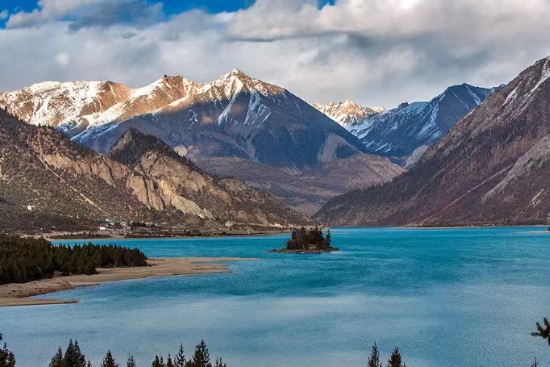
Ranwu Lake
Nyingchi-Lulang Section: Forests and Snow Mountains in the “Jiangnan of Eastern Xizang”
Leaving Ranwu Lake for Nyingchi via Bomi and Lulang, this section has a humid climate with dense vegetation, known as the “Switzerland of Xizang”. It’s a summer resort and natural oxygen bar on the Sichuan-Tibet Highway Southern Route. Recommended stay: 2 days.
Highlight Attractions
- Lulang Forest Sea: A stunning landscape of alpine meadows interweaved with dense forests. Overlooking the whole forest sea from the viewing platform, Namcha Barwa (the “Most Beautiful Snow Mountain in China”) shimmers with sea of clouds—green and lush in summer, with layered golden forests in autumn. Free entry. The core check-in spot is Sejila Mountain Pass (4,728 m), the best place to overlook Namcha Barwa. Catching the “Golden Mountain at Sunrise” depends on luck (highest probability in early morning). You can walk around the forest sea, breathe negative ions and experience the harmony of grasslands and forests.
- Yarlung Zangbo Grand Canyon: The world’s deepest grand canyon, about 120 km from Nyingchi urban area. Turbulent rivers rush through the canyon with snow-capped mountains standing on both banks; the core highlight is the close view of Namcha Barwa (ticket: 150 CNY per person, sightseeing bus: 90 CNY per person). The bus stops at multiple viewing platforms; Zhibai Village is the closest village to Namcha Barwa for a clear full view of the snow mountain. For the energetic, hike the Suosong Village section—encounter peach blossoms (March-April) and waterfalls along the way to immerse in the canyon’s grandeur.
Practical Travel Tips
Transport: Ranwu Lake to Bomi: about 130 km, 3-4 hours by car. Bomi to Lulang: about 100 km, 2-3 hours by car. Lulang to Nyingchi urban area: about 70 km, 1.5-2 hours by car (80-100 CNY per person per section for carpooling). The road is in good condition with beautiful scenery—stop for photos anytime.
Accommodation: Lulang: stay in the International Tourism Town—3-star hotels: 500-800 CNY per night, homestays: 400-600 CNY per night. Nyingchi urban area: diverse accommodation options—3-star hotels: 400-700 CNY per night, homestays: 300-500 CNY per night. Bayi Town is recommended for convenient transport and dining.
Budget: 1,200-1,800 CNY per person (including transport, accommodation, meals and tickets). Highly recommend Lulang stone pot chicken (100-150 CNY per person)—stewed local free-range chicken with pine mushrooms and gymnema sylvestre in a stone pot, with delicious soup. Nyingchi: try Tibetan fragrant pork and pine mushroom stewed chicken (60-100 CNY per meal). The main expenses are tickets and sightseeing bus for Yarlung Zangbo Grand Canyon.
Travel Hacks: Lulang has a humid climate with frequent rainfall—bring rain gear. Sejila Mountain Pass has strong wind and drastic temperature changes—bring a windbreaker. Check the weather in advance for Namcha Barwa’s “Golden Mountain at Sunrise” (higher probability on sunny days). The Nyingchi Peach Blossom Festival is in March-April with large crowds—book accommodation in advance.
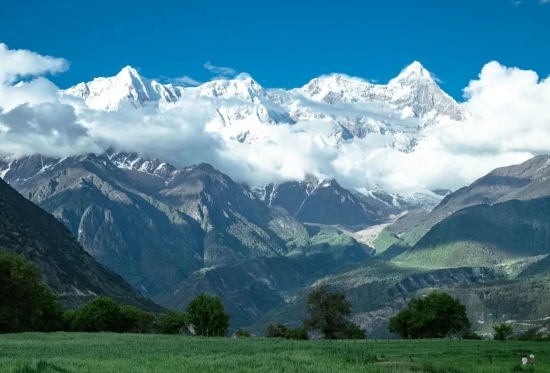
Namcha Barwa
The Sichuan-Tibet Highway Southern Route: An Unmissable Scenic Feast
The charm of the Sichuan-Tibet Highway Southern Route lies in its ever-changing stunning scenery and the unique blend of Han and Tibetan cultures. From the fluttering prayer flags at Zheduo Mountain to the blue tranquility of Ranwu Lake, from the magnificent highland of Litang to the forest sea and snow mountains of Lulang, every recommended spot holds a pleasant surprise. More than a visual feast, this journey is a spiritual baptism—letting you feel the grandeur of nature through mountain passes and experience the profoundness of culture through humanistic exploration. No need to struggle with the itinerary; follow this guide to explore the highlights of the Sichuan-Tibet Highway Southern Route and create unforgettable travel memories. China Dragon Travel knows the ins and outs of the Sichuan-Tibet Highway Southern Route, including road conditions, attraction features and accommodation resources, and can customize exclusive itineraries for you, allowing you to start a perfect Sichuan-Tibet Highway Southern Route journey without tedious planning.