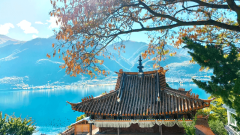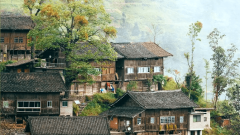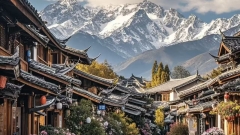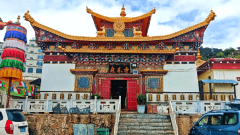

While most of China still shivers in late winter chill, Yunnan has already dressed up in bright spring attire. Traveling to Yunnan in March is a romantic rendezvous with grand flower seas, warm sunshine, and vibrant local cultures. At this time, Yunnan boasts mild and pleasant weather. Luoping’s endless canola flower fields reach their peak bloom, the wind blowing through Dali carries gentle warmth, and the diverse ethnic cultures become even more lively with the arrival of spring. Whether you are a photographer chasing natural wonders or a traveler craving immersive cultural experiences, Yunnan in March offers a dual feast for the senses and the soul.
Why Choose Yunnan in March
Yunnan in March perfectly combines stunning natural landscapes with rich cultural activities, making it an ideal destination for spring travel. Traveling at this time will bring you multiple unique experiences, ensuring your trip is truly worthwhile.
Ideal Climate Conditions
Most parts of Yunnan have completely bid farewell to the cold in March and entered a warm and pleasant spring. Central Yunnan, represented by Kunming, sees daily temperatures steadily ranging from 10°C to 22°C. Days are sunny with strong ultraviolet rays, but standing under the shade of trees, you can feel the gentle spring breeze. Nights are slightly cool, requiring an additional thin coat. The climate in Dali and Lijiang is similar, but due to their higher terrain, the temperature difference between day and night is more significant. You can wander around the ancient towns in light clothes during the day, while a down jacket is necessary to keep warm when watching the sunrise in the early morning. Southern Xishuangbanna has already stepped into “summer” ahead of time, with daily temperatures reaching 18°C-28°C, allowing you to travel comfortably in summer clothes. Throughout March, Yunnan still has little rainfall, dry air, and mostly clear days with blue skies and white clouds, creating excellent conditions for outdoor activities and photography.
Stunning Spring Natural Landscapes
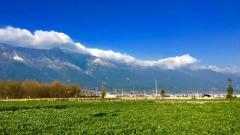
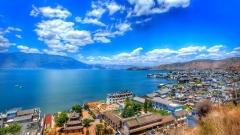
This is one of the most visually striking periods for Yunnan’s natural scenery. In the Luoping Basin in southeastern Yunnan, 800,000 mu of canola flowers reach their full bloom in mid-to-late March. The rolling golden flower seas interweave with scattered karst peaks, forming a magnificent pastoral picture that can be called a world-class spring scene. By Kunming’s Dianchi Lake, the migrating army of black-headed gulls from Siberia has not yet fully returned north. Their dancing figures remain the most vivid scenic sight in spring. The snow line on Dali’s Cangshan Mountains begins to rise, but the mountain tops are still covered in snow, forming a vivid portrayal of “Cangshan snow, Erhai moon, Shangguan flowers, and Xiaguan wind” together with the blue Erhai Lake and newly green willow trees at the foot of the mountain. In addition, rhododendrons are beginning to bloom deep in the Gaoligong Mountains, and exotic flowers and fruits hang on the branches in the tropical rainforests of Xishuangbanna, brimming with vitality everywhere.
Rich Festivals and Cultural Experiences
March is a transitional period when Yunnan’s ethnic festivals move from a warm-up to a climax. Although the grandest Dai Water-Splashing Festival is mainly held in mid-April, many Dai villages start holding warm-up activities such as “flower picking” from late March, and the festive atmosphere gradually becomes stronger. Meanwhile, spring celebrations of other ethnic minorities also begin one after another, such as the “Seedling Planting Opening” ceremony held by the Yi and Bai peoples to pray for a bumper harvest, the “Yellow Rice Festival” of the Hani people celebrating spring, and the grand song fairs held by the Zhuang and Miao peoples on the Lunar “Third Day of the Third Month”. These activities may not be as large-scale as famous festivals, but they have a stronger original ecological flavor, allowing you to directly touch the profound roots of Yunnan’s ethnic cultures.
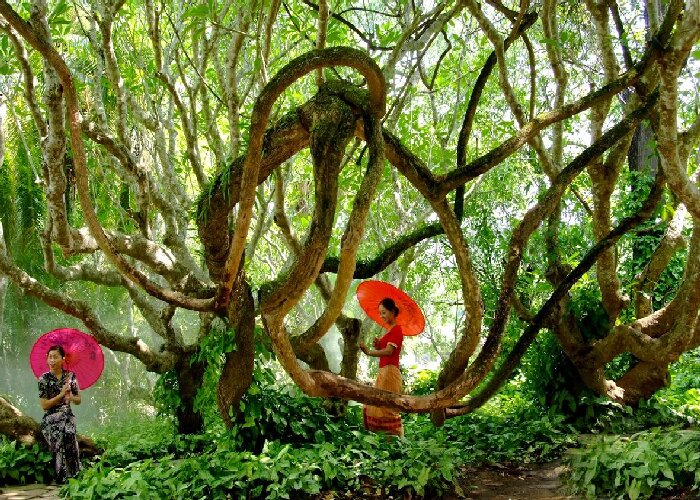
Xishuangbanna Tropical Botanical Garden, Chinese Academy of Sciences
Relatively Comfortable Travel Rhythm
March cleverly avoids the two major domestic travel peaks of the Spring Festival and May Day, belonging to a rare off-peak travel season. At this time, the number of tourists at popular attractions is greatly reduced. You can stroll more leisurely on the stone roads of Lijiang Ancient Town, find a quiet bench by Erhai Lake to relax, without worrying about crowds. Correspondingly, airfare and hotel prices have also dropped to a reasonable range, with more accommodation options available. You can often stay in your favorite inn or hotel at half or even lower prices than in peak seasons, resulting in an extremely high overall travel cost performance.
Unmissable Core Experiences and Destinations in Yunnan in March
Indulge in Golden Flower Seas and Karst Landscapes: Luoping-Puzhehei Classic Route
This route is the soul of a Yunnan trip in March, perfectly combining the ultimate flower sea scenery with unique landscape features. It is recommended to arrange 4-5 days for an in-depth visit.
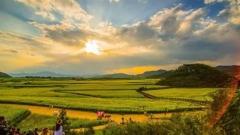
In-depth Tour of Luoping Canola Flower Seas: Jinji Peak Cluster is a classic spot for shooting sunrises and panoramic views of the flower seas. It is advisable to arrive at the viewing platform before sunrise, watching the morning mist flowing like a light veil between the isolated peaks and flower fields. When the golden sunlight of the sunrise shines on the earth, the scene is magnificent and dreamlike. Luosi Tian (Snail Field) presents another kind of exquisite beauty. Canola flowers spiral up along the circular terraced fields with beautiful and smooth lines. The best shooting time is in the afternoon with side lighting. In addition to sightseeing, be sure to go deep into the flower fields. You can rent a bicycle to ride on the rural paths or experience a local traditional ox cart, letting the fragrant earthy smell and strong floral fragrance surround you. Don’t forget to taste Luoping’s special delicacies, such as canola flower honey, colorful flower rice, and Buyi-style sour bamboo shoot fish.
Puzhehei Landscape and Pastoral Tour: Driving from Luoping to Puzhehei, the scenery changes from magnificent flower seas to delicate and beautiful landscapes. It is famous for its typical karst landform and ten-thousand-mu lotus pond (in summer), but Puzhehei in March has a unique quiet beauty. Take a small willow leaf boat to travel through karst caves, lakes, and Yi water towns. The viewing angle on Qinglong Mountain can take in 216 scattered isolated peaks, villages, and lakes in one glance. Although the filming location of Three Lives, Three Worlds, Ten Miles of Peach Blossoms has no peach blossoms, the background of clear water and green mountains is still fresh and elegant, very suitable for relaxing your mind.
Enjoy the Romance of Wind, Flowers, Snow, and Moon with Ancient Town Sunshine: Dali-Lijiang Spring Route
March is the most comfortable and poetic time of the year in Dali and Lijiang, with the climate and scenery reaching a perfect balance. It is suitable for slow travel and careful appreciation, and it is recommended to arrange 6-7 days.
Leisurely Spring Tour in Dali: Cycling around Erhai Lake is a must-do activity. It is recommended to start from the west coast ecological corridor, cycling or walking a section to closely appreciate the redwoods in the water, seagulls skimming the water surface, and newly sprouted water plants. Xizhou Ancient Town is not only famous for its internet-famous corner building, but also its surrounding pastoral scenery is covered with a green carpet in March, dotted with white folk houses, making it an excellent place for shooting fresh-style photos. Don’t forget to climb Cangshan Mountain, take the Gentong Cableway, overlook the panoramic view of Erhai Lake, and feel the vertical climate zone changes of “four seasons on one mountain”. At night in Dali Ancient Town, the bars on Renmin Road and Foreigner Street play soothing music. The spring breeze blows gently, which is less hot than in summer and more pleasant.
Lijiang Ancient Town and Snow Mountain Secret Realm: The spring in Lijiang Ancient Town is the first branch of spring flowers peeking out of the courtyard walls, the Naxi elderly napping in the sun on Sifang Street, and the more cheerful singing of flowing water. Go to Wangu Tower on Shizi Mountain in the early morning to shoot the classic picture of the ancient town’s blue tile roofs and the distant Jade Dragon Snow Mountain in the same frame. Jade Dragon Snow Mountain is still the highlight. The snowfall in March is still abundant. Take the big cableway to reach Glacier Park, as if instantly traveling back to the cold winter, which is extremely shocking. At the foot of the mountain, Blue Moon Valley has dreamy Tiffany blue water due to its rich mineral content, complementing the snow-capped mountains and forests. If you want to find a quiet place, you can go to Baisha Ancient Town, which retains a more primitive Naxi style and also offers the opportunity to visit the ancient Baisha Mural Paintings.
Explore Tropical Rainforests and Dai Customs: Xishuangbanna Warm Spring Route
If you want to completely escape the cold and embrace the fiery Southeast Asian style, Xishuangbanna is the only choice. March here has fully entered the dry and hot season with abundant sunshine. It is recommended to arrange 4-5 days for the experience.
Essential Experiences in Xishuangbanna: Xishuangbanna Tropical Botanical Garden, Chinese Academy of Sciences is a must-visit place. The park is huge, divided into east and west districts. The east district is a primitive tropical rainforest, where you can experience hiking adventures. The west district is a carefully planned special botanical garden. March is the time when many exotic flowers are in full bloom, such as the dancing grass and miracle fruit. Wild Elephant Valley is the only place in China where you can safely observe wild Asian elephants. In addition to the elephant school performances, it is more recommended to walk into the high-altitude elephant observation trestle, looking forward to an unexpected encounter with wild elephant herds. Manting Park was once the royal garden of the Dai king. The exotic flowers and plants, pavilions, and waterside pavilions in the park complement the golden roof of the Main Buddha Temple, which is magnificent. When night falls, the Starlight Night Market in Gaozhuang Xishuangjing is instantly lit up. Thousands of stalls gather food, crafts, and costumes from Dai, Laos, Thailand, and other places, bustling with people and full of fireworks, which is the core of experiencing Xishuangbanna’s night life.
Participate in Special Festivals and Feel the Rhythm of Spring
The festivals in March are the key to an in-depth experience of Yunnan’s culture. If the timing fits, it is definitely worth planning a special trip.
Guide to Major Festivals and Activities: The “Seedling Planting Opening” ceremony of the Yi and Bai peoples is mostly held around the Spring Equinox. Villagers will worship the God of the Land, plant the first batch of seedlings in the terraced fields, accompanied by singing, dancing, and banquets, implying good weather throughout the year. The “Third Day of the Third Month” Song Festival of the Zhuang and Miao peoples is a grand gathering for young men and women to make friends and convey love through singing, especially lively in Wenshan Prefecture. In Dai villages in Pu’er, Lincang, and other places, preparations such as “bathing the Buddha” and making “water-splashing dragons” may start at the end of March, and the festive atmosphere quietly warms up. When participating in these activities, please be sure to show respect. It is best to be accompanied by local friends or guides for explanations to avoid misunderstandings caused by cultural differences.
Recommended Itinerary Plans for Yunnan March Travel (8-10 Days Examples)
Route A: In-depth Tour of Flower Sea Photography and Classic Scenery (9-10 Days)
- Day 1: Arrive in Kunming and acclimatize. In the afternoon, visit Green Lake Park or Haigeng Dam to watch black-headed gulls. In the evening, taste Cross-Bridge Rice Noodles.
- Day 2: Take a high-speed train or private car from Kunming to Luoping (about 3 hours). In the afternoon, go to Jinji Peak Cluster to get familiar with the terrain and shoot the sunset over the flower seas.
- Day 3: Go to Jinji Peak Cluster or Luosi Tian early in the morning to shoot the sunrise and morning mist. In the afternoon, you can visit Jiulong Waterfall Group to experience the beauty of landscapes beyond the flower seas.
- Day 4: Depart from Luoping and travel to Qiubei Puzhehei (about 4 hours by car). In the afternoon, you can easily visit Xianrendong Village and take a boat to enjoy the lake and mountain scenery.
- Day 5: Climb Qinglong Mountain for sightseeing in the morning. In the afternoon, return to Kunming (about 1.5 hours by high-speed train) and transfer to the evening high-speed train to Dali (about 2 hours).
- Day 6: In-depth tour around Erhai Lake in Dali. It is recommended to circle the lake clockwise, focusing on visiting Xizhou Ancient Town, Haise Ecological Park, and Shuanglang Ancient Town (just overlook from the viewing platform).
- Day 7: Visit Dali Ancient Town or take the Gentong Cableway up Cangshan Mountain in the morning. In the afternoon, take a high-speed train to Lijiang (about 1.5 hours). In the evening, stroll around Lijiang Ancient Town leisurely.
- Day 8: Visit Jade Dragon Snow Mountain for the whole day (Glacier Park Big Cableway, Blue Moon Valley, Ganhaizi). Note: Book the cableway tickets in advance.
- Day 9: Visit Shuhe Ancient Town or Baisha Ancient Town in the morning. In the afternoon, return according to the flight or train schedule.
Trip Tips: This route has a moderate intensity, covering the most essential scenery of Yunnan in March, suitable for photography enthusiasts and first-time visitors to Yunnan. Accommodation in Luoping is tight during the peak season, so be sure to book in advance.
Route B: Southeast Yunnan Flower Sea Pastoral and Cultural Heritage Tour (8-9 Days)
- Day 1: Arrive in Kunming.
- Day 2: Take a high-speed train from Kunming to Jianshui (about 2 hours). In the afternoon, visit Jianshui Ancient Town, Zhu Family Garden, and Chaoyang Tower. Experience the ancient town train (Lin’an Station-Tuanshan Station section).
- Day 3: Visit Jianshui Swallow Cave (see stalactites and swallows) in the morning. In the afternoon, visit the exquisitely designed Shuanglong Bridge (17-hole Bridge). Take a high-speed train to Mile in the evening (about 1 hour).
- Day 4: Visit Mile Dongfengyun Art Town (unique red brick buildings) in the morning. In the afternoon, experience the mid-hill hot spring at Huquan Ecological Park. Take a high-speed train to Puzhehei in the evening (about 0.5 hours).
- Day 5: Visit Puzhehei for the whole day, take a boat to have a water fight (when the season is suitable), and climb Qinglong Mountain to view the panoramic scenery.
- Day 6: Take a private car or shared car from Puzhehei back to Luoping (about 4 hours). In the afternoon, visit Luoping Canola Flower Sea (make up for shooting the scenic spots you didn’t go to before).
- Day 7: After shooting the flower sea again early in the morning, return to Kunming from Luoping (by high-speed train/private car). In the evening, you can visit Nanqiang Street to taste snacks.
- Day 8: Depending on the time, you can choose to visit Kunming Stone Forest Scenic Area (a world natural heritage) or Yunnan Provincial Museum. End the trip and return in the evening.
Trip Tips: This route focuses more on the diverse experiences in southeastern Yunnan, integrating world heritage sites, historical ancient towns, art towns, and top flower seas. It is rich in content, suitable for tourists interested in culture and in-depth travel.
Route C: Tropical Rainforest and Border Style Leisure Tour (6-7 Days)
- Day 1: Fly directly to Jinghong City, Xishuangbanna. Rest and acclimatize after checking in. In the evening, go to Gaozhuang Xishuangjing, stroll under the Grand Golden Pagoda, and explore the Starlight Night Market initially.
- Day 2: Visit Xishuangbanna Tropical Botanical Garden, Chinese Academy of Sciences for the whole day (west district + east district battery car). Return to Jinghong in the evening. You can watch the Dai Show or the Mekong River Night Song and Dance Bonfire Party.
- Day 3: Go to Wild Elephant Valley in the morning, walk on the high-altitude elephant observation trestle, and visit the elephant school. On the way back in the afternoon, you can visit Jinuo Mountain Village to learn about Jinuo culture.
- Day 4: Visit Manting Park and the Main Buddha Temple in the morning to experience Dai royal culture. Free time in the afternoon. You can choose to go to Dai Village (Olive Dam) to experience the daily Water-Splashing Festival and Dai family life.
- Day 5: One-day private car tour. Option 1: Daluo Port on the China-Myanmar border, visit the Single Tree Forest and the national gate boundary marker (be sure to confirm the border management policies before traveling). Option 2: Mengla direction, explore Wangtian Tree Scenic Area, and experience the thrilling aerial canopy walkway.
- Day 6: Leisure time in Jinghong City. You can visit Mange Fruit Wholesale Market to buy tropical fruits or visit Xishuangbanna Ethnic Museum. Enjoy the night market food again in the evening.
- Day 7: End the trip and return from Jinghong.
Trip Tips: This route is based on leisure and vacation, full of exotic customs, with loose activity arrangements. It is very suitable for family trips, couple vacations, or tourists simply seeking warm sunshine.
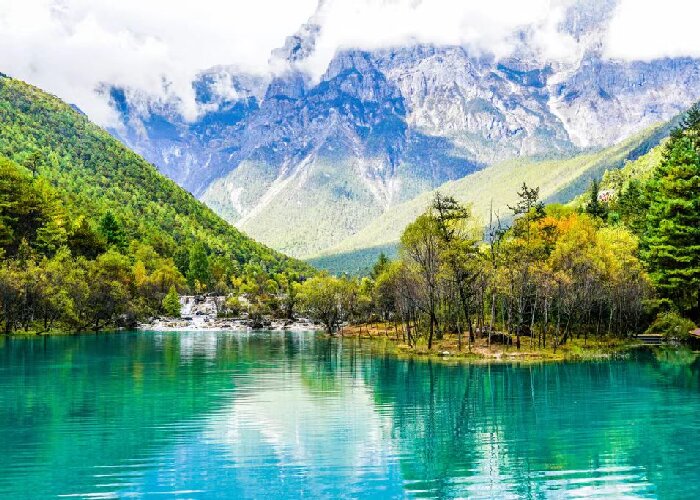
Blue Moon Valley
Pre-trip Preparation and Practical Tips
Clothing Preparation
The “onion-style dressing method” is the core to cope with Yunnan’s changeable climate in March. Specifically, it can include: close-fitting quick-drying clothes, long-sleeve shirts or thin knitted sweaters, fleece jackets or thin down jackets, and windproof and waterproof outerwear (mountain weather is changeable). Pants are mainly comfortable long pants, and you can prepare a pair of shorts for Xishuangbanna. A pair of comfortable and wear-resistant hiking shoes is crucial. For accessories, wide-brimmed hats, UV400 sunglasses, SPF50+ sunscreen, and lip balm must be used daily. The ultraviolet rays on the plateau in spring are extremely harmful.
Health and Safety
The basic medicine kit should include: gastrointestinal medicines, cold medicines, anti-allergy medicines, band-aids, and motion sickness medicines. Tourists traveling to Lijiang (2,400 meters above sea level), Shangri-La (3,300 meters above sea level), and other places need to be alert to altitude sickness. After arrival, avoid strenuous exercise, ensure adequate sleep, drink plenty of water, and avoid drinking alcohol. You can take Rhodiola rosea one week in advance and carry ibuprofen with you to relieve headaches. Xishuangbanna has a hot and humid climate, so you need to prepare mosquito repellent and anti-itch ointment. Pay attention to a gradual diet when tasting local food. When trying street food, choose stalls with better hygiene conditions.
Transportation Arrangements
It is recommended to book air tickets and train tickets at least 2-3 weeks in advance for March. Yunnan has a well-developed high-speed rail network, making travel from Kunming to Dali, Lijiang, Jianshui, Mile, and Puzhehei (Qiubei) very convenient. For traveling to Luoping, Puzhehei (departing from Luoping), Lugu Lake, Shangri-La, and other places, private car hire is the most efficient and free way. You can also choose shared car products from regular travel companies. For tourists with complex itineraries involving multiple transfers, seeking professional travel services (such as China Dragon Travel) for the whole journey transportation planning and booking can greatly save time and energy and avoid connection mistakes.
Accommodation and Reservations
Although it is the off-peak season, rooms may still be in short supply on weekends in Luoping (during the flowering season), Dali, Lijiang, and Xishuangbanna. It is recommended to book in advance through reliable platforms, especially characteristic homestays. When choosing, pay attention to checking whether heating or air conditioning is provided (some mountain inns are still cold at night). Living in the ancient town is convenient, but it is inconvenient to drag luggage on the stone roads. Choosing accommodation around the ancient town is quieter and may offer better value for money.
Food Experience
March is a great time to taste Yunnan’s fresh spring ingredients. In addition to classic dishes such as Cross-Bridge Rice Noodles, Steam Pot Chicken, wild mushroom hot pot (dried mushrooms available), and Xuanwei Ham, don’t forget to look for spring wild vegetables, such as toona sinensis scrambled eggs, stir-fried bracken, and jasmine scrambled eggs. In Dai areas, be sure to try lemongrass grilled fish, pineapple rice, and chicken feet. Fruits are abundant everywhere, such as Mengzi pomegranates (end of season), strawberries, pineapples, and various tropical fruits in Xishuangbanna. Pay attention to a balanced diet of meat and vegetables and taste spicy food in moderation.
Photography Suggestions
For Luoping flower seas, a 16-35mm wide-angle lens is suitable for showing the grandeur of large scenes, while a 70-200mm telephoto lens can compress the space, highlight the layers of peaks and flower fields, or capture farmers working in the fields. Preparing a polarizing filter (CPL) can effectively eliminate reflections on leaves and water surfaces, making colors more saturated. The “golden hour” and “blue hour” half an hour before and after sunrise and sunset have the highest rate of producing excellent photos. If using a drone, be sure to understand the local no-fly regulations in advance. Some core scenic spots in Luoping may have flight restrictions.
Start Your Exclusive Spring Yunnan Trip in March
Traveling to Yunnan in March is a visual feast of walking into a natural color palette and a celebration of life feeling the awakening of the earth. It is cheering freely in the golden waves of Luoping, strolling gently in the spring breeze by Erhai Lake, feeling the early spring enthusiasm in Dai villages, and encountering unexpected blooming flowers in ancient streets and lanes. This journey combines the extremely brilliant natural creation with the vivid and simple cultural picture scroll.
Careful planning is the foundation of a perfect journey. Whether you are enthusiastic about independent travel or prefer worry-free and experience-focused semi-independent travel, understanding the destination information in advance is crucial. Professional itinerary planning can help you better grasp the flowering period, connect transportation, and deeply experience local culture. If you need assistance in complex route planning or resource booking, China Dragon Travel can provide customized services to make your Yunnan March trip smoother and worry-free.
Hope this detailed guide can help you weave an unforgettable memory of Yunnan spring. In this season of revival, come to Yunnan and meet the most beautiful spring! Wish you a pleasant journey and a rewarding return!