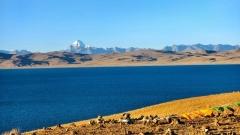

Hidden deep within Tibet’s remote Ali region lies one of the most mysterious lost civilizations in Asia — the Guge Kingdom.
Built on towering clay mountains along the Xiangquan River, this ancient kingdom once flourished as the political, religious, and cultural center of Western Tibet. Known as the “Florence of the Himalayas,” Guge thrived for over 700 years before mysteriously collapsing overnight in the 17th century, leaving behind only ruined palaces, cave dwellings, and fading murals.
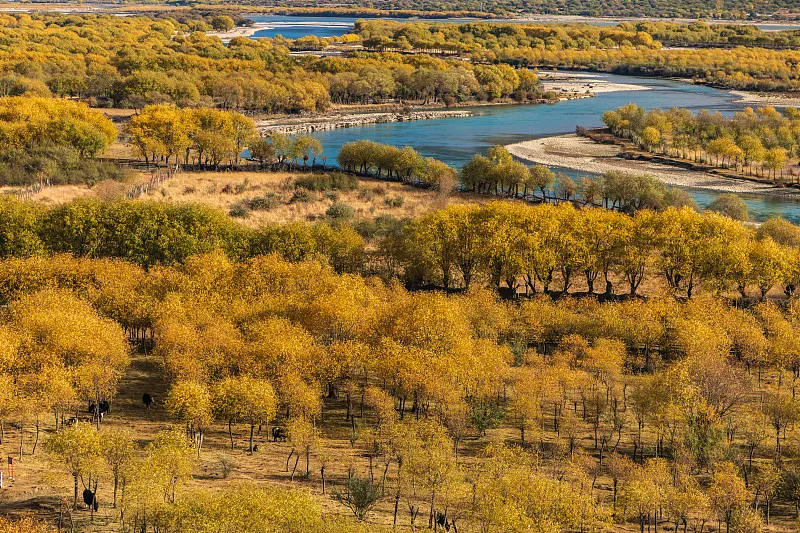
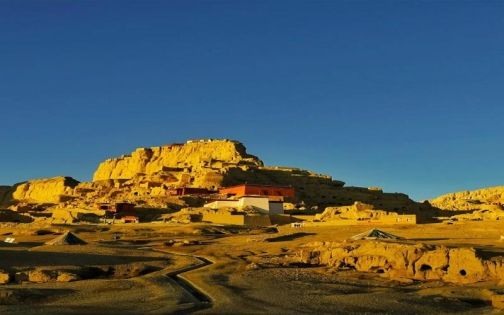
Today, the remains of the Guge Kingdom rise dramatically from the barren earth like a giant fortress frozen in time, surrounded by the breathtaking landscapes of Zanda Earth Forest.
For travelers exploring Tibet’s Ali region, Guge is not just a historical site — it is one of the most unforgettable destinations on the Tibetan Plateau.
Guge Kingdom
🏞️ About the Guge Kingdom
The Guge Kingdom Ruins are located in Zanda County, Ngari (Ali Prefecture), Western Tibet, near the banks of the Xiangquan River.
The ancient city was constructed on a steep earthen mountain known as “Guge Mountain,” with an enormous architectural complex covering approximately 180,000 square meters.
The ruins include:
- More than 300 ancient houses
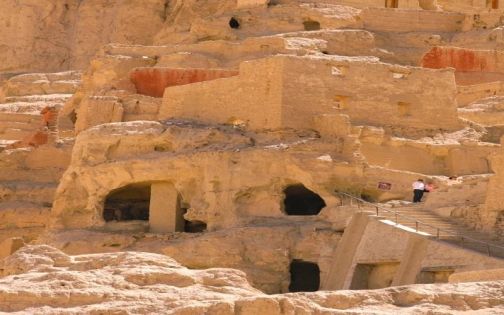
- Over 300 cave dwellings
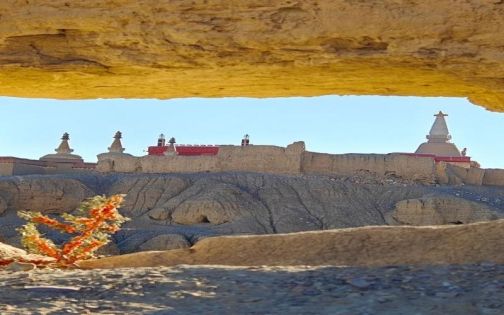
- Several Buddhist temples and stupas
- Royal palaces and ceremonial halls
- Underground tunnels and defensive passages
- A layered city structure divided into palace, monastery, and civilian areas
Viewed from afar, the entire site resembles a massive pyramid rising from the desert-like landscape.
📜 History of the Guge Kingdom
The Guge Kingdom was established around the 10th century by descendants of the Tibetan royal family after the collapse of the Tubo Empire.
✔ Rise of the Kingdom
After political turmoil in central Tibet, royal descendants fled westward and established a new kingdom in the Ali region. Due to its strategic location between Tibet, India, Nepal, and Kashmir, Guge became a major center of trade, Buddhism, and art.
✔ Golden Age
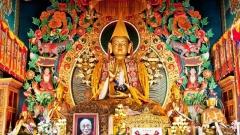
Between the 11th and 15th centuries, Guge reached its cultural peak. Buddhism flourished, and magnificent murals influenced by Indian, Kashmiri, Nepali, and Chinese styles were created inside the temples.
✔ Sudden Collapse
In the early 17th century, political conflict and religious struggles weakened the kingdom. Around 1630, invading Ladakhi forces attacked Guge. After a prolonged siege, the kingdom fell, and the population seemingly vanished overnight.
To this day, the mysterious disappearance of tens of thousands of people remains one of Tibet’s greatest historical mysteries.
Because of its tragic ending and preserved ruins, Guge is often called “The Pompeii of Tibet.”
🚘 How to Get to Guge Kingdom
Reaching Guge is challenging but incredibly rewarding.
✔ Main Route
Most travelers visit Guge as part of the Ali Grand Loop:
- Lhasa → Shigatse → Mount Kailash → Zanda → Guge
- Total distance: around 1,500–1,700 km
A full Ali trip usually requires 10–15 days.
✔ From Zanda County
- Distance to Guge Ruins: about 18 km
- Driving time: approximately 30 minutes
Road conditions can be rough, especially near the site, so SUVs or 4WD vehicles are highly recommended.
✔ Transportation Options
- Self-driving
- Private tour vehicles
- Chartered SUVs
- Small group overland tours
There is currently no public transportation to the ruins.
Guge Kingdom
🎫 Tickets & Opening Hours
- Entrance Ticket: around 65 RMB
- Shuttle Bus: around 20 RMB
- Opening Hours: approximately 09:00–19:00 (seasonal changes possible)
- Recommended Visit Duration: 3–4 hours
⚠️ Important:
- A Tibet Border Permit for Ali Prefecture is mandatory
- Some upper sections are now restricted
- Drone flying has been prohibited since 2014
🕌 Best Things to See Inside the Ruins
The Guge ruins are built vertically across three levels of the mountain.
① Lower Area|Caves & Residential Ruins
- Ancient cave dwellings
- Ruined civilian quarters
- The mysterious Corpse Cave (“Cadaver Cave”)
This section provides insight into daily life inside the kingdom.
② Middle Area|Temple Complex & Murals
This is the artistic heart of Guge.
Key highlights include:
- White Temple
- Red Temple
- Tara Temple
The murals inside these temples are among the finest surviving Buddhist artworks in Tibet, blending Kashmiri, Indian, and Tibetan artistic traditions.
③ Upper Area|Royal Palace
Once the residence of Guge royalty, the upper palace area offers panoramic views of:
- Xiangquan River
- Zanda Earth Forest
- The entire ruins complex
Some summit areas are currently closed for protection.
📸 Photography Guide
Guge Kingdom is one of Tibet’s ultimate “ruins photography” destinations.
✔ Best Time for Photography
- Sunrise: soft golden light on the clay mountains
- Sunset: dramatic red-gold tones across the ruins
✔ Best Photo Spots
- Entrance viewpoint for full panoramic shots
- Red Temple exterior for ancient textures
- Earth forest surroundings for cinematic desert scenery
✔ Clothing Suggestions
Neutral colors work best:
- White
- Black
- Beige
- Khaki
Long coats, hats, sunglasses, and minimalist outfits photograph especially well against the ochre landscape.
Guge Kingdom
⚠️ Altitude & Travel Tips
The Guge Ruins sit at approximately 3,700–3,900 meters above sea level.
Travelers should:
- Walk slowly to avoid altitude sickness
- Bring water and oxygen supplies
- Use sunscreen and lip balm
- Avoid intense physical activity
- Stay hydrated in the dry climate
The climb inside the ruins can be physically demanding.
🧭 Nearby Attractions Worth Visiting
If time allows, combine Guge with nearby sites:
✔ Zanda Earth Forest
A surreal landscape of eroded clay formations often compared to another planet.
✔ Tholing Monastery
The former religious center of the Guge Kingdom, famous for ancient Buddhist murals.
✔ Donggar & Piyang Ruins
Remote cave monasteries with extraordinary preserved wall paintings.
✔ Xiayi Valley
A dramatic canyon landscape ideal for photography and road trips.
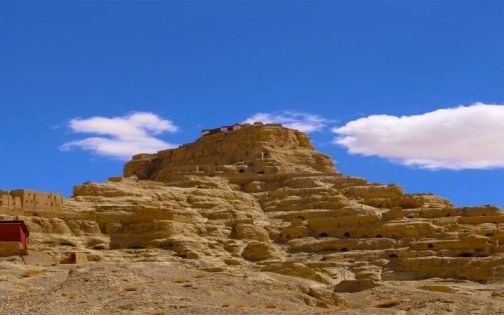
Guge Kingdom
🏁 Final Thoughts|The Kingdom Lost to Time
The Guge Kingdom is more than a historical ruin.
It is a place where forgotten civilization, religion, warfare, and mystery collide beneath the vast Tibetan sky.
As the setting sun turns the clay palaces golden and shadows stretch across the earth forest, it becomes easy to imagine the former glory of this once-powerful kingdom.
Today, only silence remains — but the story of Guge continues to captivate every traveler who makes the journey into the far west of Tibet.
recommend route: