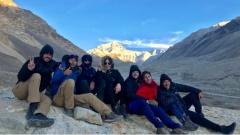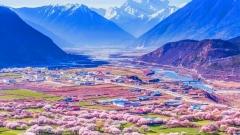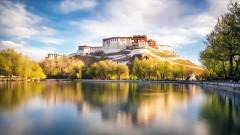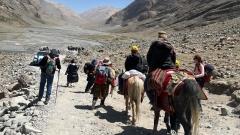

Tibet, the “pure land near heaven”, draws tourists with snow-capped mountains, holy lakes and profound beliefs. Its 4,000m average altitude (60% plain oxygen level) challenges health. The Tibet Entry Health Certificate, a must for entry, safeguards your health by assessing fitness upfront—key for a smooth trip, whether arriving by train or plane.
Core Cognition: Why is the Tibet Entry Health Certificate Indispensable?
The Tibet Entry Health Certificate is not a formalistic review document but a safety guarantee system established based on the particularity of the plateau environment. The air on the Tibet Plateau is thin and the air pressure is low, so the heart and lungs have to bear a greater load. The oxygen content in Lhasa is even only half of that on the plains, and the situation is more severe in areas with higher altitudes. According to the relevant management measures of the Tibet Autonomous Region and the 2025 newly released “Expert Consensus on Health Examination Standards for Entering Plateau Areas”, mainland tourists must provide documents proving that their health status is suitable for plateau travel before entering Tibet.
This Tibet Entry Health Certificate will serve as an important basis for purchasing plateau travel insurance, applying for the Tibet Travel Permit, and accessing scenic spots. Key scenic spots such as Mount Everest Base Camp and Nam Co clearly require verification when entering the park. From real cases, every year some tourists suffer serious consequences due to neglecting health checks. Recently, a tourist unfortunately passed away due to altitude sickness in Daocheng Yading, Garzê Tibetan Autonomous Prefecture. Another case where a patient with congenital heart disease concealed his condition and suffered an acute illness at Yamdrok Lake warns of the importance of health checks. The Tibet Entry Health Certificate screens out unsuitable groups in advance through professional medical evaluations, which is not only a protection of life safety but also a measure to maintain travel order. It should be noted that its validity period is 12 months. Those who meet the conditions can apply for it free of charge, while special cases need to pay according to the standards.
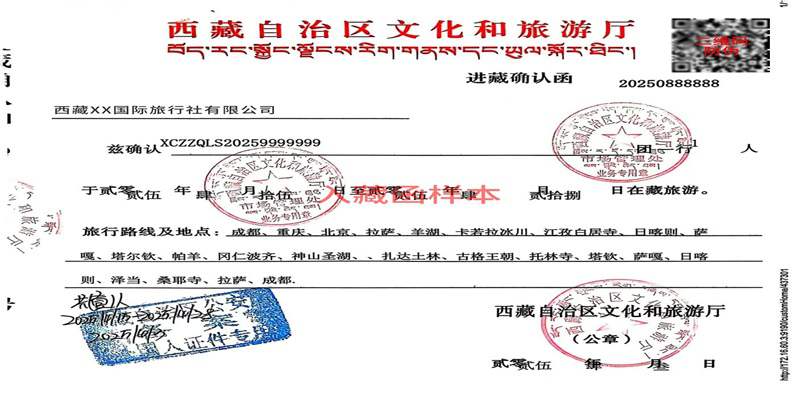
Sample of Tibet Travel Permit
Complete Application Process: From Application to Collection
In 2025, the application for the Tibet Entry Health Certificate has realized a convenient model of online pre-registration + offline physical examination. Combined with the latest policy adjustments, the specific process is as follows. Tourists can plan in advance to avoid delaying their trips:
Online Health Registration: Within 7 days before entering Tibet, log in to the health registration system through the Tibet Government Affairs Service WeChat official account or mini-program to fill in personal information, including ID number, contact information, travel plan, and basic health status, especially truthfully declaring past medical history. The electronic identification code generated after filling in must be screenshot and saved for subsequent physical examination and verification when entering Tibet. This step is the basic link to realize the advance filing of health information.
Offline Physical Examination: The choice of medical institutions is more flexible. Tourists can go to Grade A tertiary hospitals in their place of household registration or residence, or the International Travel Healthcare Centers under the Tibet Entry-Exit Inspection and Quarantine Bureau. West China Hospital Chengdu Office Branch has also launched exclusive plateau residence packages and long-term residence packages, and physical examinations can be paid by swiping a Tibet medical insurance card. When undergoing the physical examination, you need to carry your ID card, 2-inch bareheaded photos, and online registration voucher.
The core items of the physical examination are strictly set in accordance with the “Expert Consensus on Health Examination Standards for Entering Plateau Areas”, including cardiopulmonary function tests (electrocardiogram, chest X-ray, and chest CT and cardiac ultrasound if necessary), blood pressure measurement, blood oxygen saturation detection, and routine blood tests. Those with poor basic lung function also need to undergo a hypoxic reaction test with an oxygen concentration of 15%. Doctors will judge the adaptability based on indicators. If the blood oxygen saturation is lower than 95% at rest or the hematocrit exceeds 50%, it is usually recommended to postpone entering Tibet. Reservations for West China Hospital Chengdu Office Branch can be made through its official account, and you can go as scheduled after selecting the corresponding package.
Certificate Collection and Verification: After passing the physical examination, the medical institution will issue the official certificate within 3 working days, which must be stamped with the hospital’s official seal to be valid. When entering Tibet, whether by plane, train, or road transportation, you must take the initiative to present the paper or electronic version of the certificate. Some transportation hubs and scenic spots have special verification channels. Tourists should keep the certificate properly to avoid damage or loss.
Exclusive Guidelines for Hong Kong, Macao, Taiwan and Overseas Tourists
Hong Kong, Macao and Taiwan Tourists: Special Notes on Documents and Procedures
Due to their special identity attributes, the application for the Tibet Entry Health Certificate for Hong Kong, Macao and Taiwan tourists follows the general principles and has exclusive regulations. Hong Kong and Macao compatriots holding the Home Return Permit do not need to apply for the Tibet Travel Permit, but the Tibet Entry Health Certificate is still a necessary document. Those holding non-Chinese nationality Macao Resident Permits need to go through the procedures according to the standards for foreigners. Taiwan tourists must use the Tibet Entry Health Certificate together with the Tibet Travel Permit, and both must be handled through qualified local travel agencies in Tibet; individual applications are not allowed.
In terms of physical examination and materials, Hong Kong, Macao and Taiwan tourists can choose Grade A tertiary hospitals in their place of household registration, medical institutions in their mainland residence, or the International Travel Healthcare Centers under the Tibet Entry-Exit Inspection and Quarantine Bureau for physical examination. The core materials to be carried include: original and copy of the Home Return Permit (for Hong Kong and Macao tourists) or Mainland Travel Permit for Taiwan Residents, 3 recent 2-inch bareheaded color photos. Taiwan tourists working in the mainland also need to provide an employment certificate issued by the enterprise. Taiwan tourists over 65 years old, regardless of their physical condition, must provide a health assessment report issued by a specialist during the physical examination as supplementary material for applying for the Tibet Travel Permit and health certificate.
It is worth noting that Hong Kong, Macao and Taiwan tourists can purchase train tickets to Tibet on the 12306 platform with valid documents or book air tickets through the official websites of airlines. However, third-party platforms often have system restrictions, so it is recommended to contact the airline directly or entrust a travel agency to book. When checking in, you need to choose hotels with foreigner accommodation permits to avoid being unable to check in due to document issues. When traveling to border areas such as Mount Everest and Ngari, Hong Kong, Macao and Taiwan tourists need to go through travel agencies to handle border permits uniformly with their health certificates and travel permits. Those with mainland residence permits can apply for basic forms at the local police station.
Overseas Tourists: Joint Application of Tibet Travel Permit and Health Certificate
For foreigners and overseas Chinese entering Tibet, the core principle is the dual verification of the Tibet Travel Permit and the health certificate, and both must be handled uniformly through local travel agencies in Tibet; individual application channels are not open. As a prerequisite for applying for the Tibet Travel Permit, the health certificate has stricter application standards. In addition to the regular items for mainland tourists, the physical examination items also need to include infectious disease screening, which meets the monitoring requirements for entry personnel specified in the “People’s Republic of China Frontier Health and Quarantine Law”.
Overseas tourists can choose two types of physical examinations: one is to complete the physical examination at an overseas public hospital. It is necessary to ensure that the report includes all items required by the Foreigner Physical Examination Record, and be certified by the Chinese embassy or consulate in the local area. The validity period of the report is six months. The other is to undergo a physical examination at an International Travel Healthcare Center or a designated foreign-related hospital after entering China, and you can make up for the missing items in the overseas report free of charge. Regardless of the choice, the physical examination report must be provided with a Chinese translation, which can be submitted only after being stamped with the official seal of the translation agency.
In terms of the application process, overseas tourists need to contact a travel agency 15-30 days in advance and submit materials such as a scanned copy of the passport, Chinese visa page, physical examination report (including certification documents), and work certificate or admission notice in China. Those over 65 years old need to provide additional health guarantee documents. After the Tibet Travel Permit and health certificate are issued, the travel agency will send the documents to the tourist’s accommodation in mainland China. The original documents must be presented when entering Tibet by plane, and a copy can be used to pass the inspection when entering by train. In addition, overseas tourists must purchase international travel insurance covering altitude sickness, and the insurance certificate must be carried together with the health certificate for verification.
It should be specially reminded that special groups such as diplomatic personnel and foreign journalists cannot handle relevant procedures through travel agencies. They need to directly apply to the Foreign Affairs and Overseas Chinese Affairs Office of the Tibet Autonomous Region and complete the health check according to the exclusive process. Non-open areas such as the Xinjiang-Tibet Line and Chayu County are prohibited for both mainland and overseas tourists. It is necessary to confirm the opening qualification of the scenic spot in advance when planning the trip.
Health Assessment: Who is Suitable for Entering Tibet? Who Needs to Be Cautious?
The core value of the Tibet Entry Health Certificate lies in the scientific assessment of individual adaptability. Combined with the latest medical consensus in 2025, the following groups need to pay special attention, which is also the key basis for physical examination doctors to decide whether to issue the certificate:
Suitable Groups: Healthy people aged 12 to 60, without severe cardiopulmonary diseases, hypertension, diabetes and other chronic diseases, with a Body Mass Index (BMI) below 28, and no recent colds, surgeries or acute illnesses. Such groups can usually obtain the Tibet Entry Health Certificate smoothly after standardized physical examinations. It is recommended to stop strenuous exercise 15 days before departure to reduce physical oxygen consumption, and drink 300ml of astragalus water every day to improve blood oxygen-carrying capacity, so as to prepare for plateau acclimatization.
Cautious Groups: Including hypertensive patients with stable blood pressure control, mild diabetes patients, elderly people aged 60 to 65 in good health, and children aged 10 to 12. Such groups need to provide additional health certificates after evaluation by specialists, and be accompanied by family members when entering Tibet. After entering Tibet, they need to pay close attention to physical changes and avoid going to areas with an altitude exceeding 5,000 meters.
Prohibited Groups: Even if they have a strong subjective will, such groups are absolutely prohibited from entering Tibet, and doctors will not issue the Tibet Entry Health Certificate. They include patients with cardiopulmonary diseases such as congenital heart disease, asthma, and pulmonary tuberculosis; hypertensive patients with systolic blood pressure exceeding 160mmHg or diastolic blood pressure exceeding 100mmHg; pregnant women, post-operative recovery patients within six months, and severe anemic patients (hemoglobin below 80g/L); children under 10 years old and elderly people over 65 years old; patients in the acute stage of colds, fevers and other illnesses. Nasal edema will aggravate hypoxia and easily cause high-altitude pulmonary edema. In addition, those who have suffered from high-altitude pulmonary edema or cerebral edema must avoid entering Tibet for life.
Preliminary Self-Judgment: Before departure, you can conduct a simple self-test. For example, after climbing 30 steps in place, if your heart rate cannot return to normal within 3 minutes, or you experience symptoms such as chest tightness and purple lips, it is recommended to adjust your physical condition first before applying for the Tibet Entry Health Certificate.
Plateau Acclimatization and Health Management: Safety Guarantee Beyond the Certificate
Obtaining the Tibet Entry Health Certificate does not mean you can let your guard down. Health management during plateau travel runs through the whole process. After arriving in Tibet, you need to follow the sloth principle in the first three days: walk slowly, speak slowly, turn your head slowly, avoid taking hot baths, drinking alcohol, and overeating to reduce physical burden. You can drink an appropriate amount of butter tea to help acclimatize, but do not blindly take anti-altitude sickness drugs. They should be used under the guidance of doctors. If symptoms such as persistent headache, vomiting, and blood oxygen saturation below 90% occur, you should immediately go to a regular medical institution such as Lhasa People’s Hospital for treatment. When seeking medical treatment, you must take the initiative to present the Tibet Entry Health Certificate to facilitate doctors to quickly grasp the past health status.
Whether it is mainland, Hong Kong, Macao, Taiwan or overseas tourists, the core significance of the Tibet Entry Health Certificate is always safety first. China Dragon Travel, as a professional institution deeply engaged in Tibet travel for many years, can not only provide physical examination appointment guidance for mainland tourists but also set up exclusive service channels for Hong Kong, Macao, Taiwan and overseas tourists, including one-stop support such as agency for Tibet Travel Permit, coordination of foreign-related medical institutions, and translation of health documents, ensuring that different groups can start their plateau journey with peace of mind under the premise of complying with policy requirements. From the application of the health certificate to the travel planning, the professional team of China Dragon Travel will follow up the whole process, allowing every tourist to focus on enjoying the scenery of Tibet and travel freely in this pure land without worries.