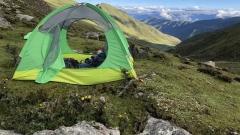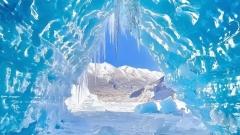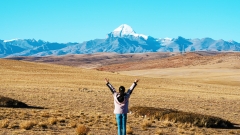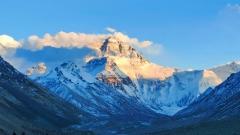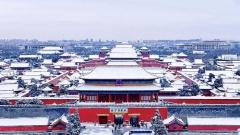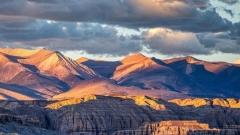

February in Tibet coincides with its profound winter season. At this time, the plateau is outlined in the purest white and blue by snow and sky. Although Tibet’s February weather carries winter chill, it hides unique travel advantages—plenty of sunny days for clear snow-capped mountain views, glaciers and blue ice at their best, and even a chance to encounter lively Tibetan New Year. For travelers planning a trip, mastering Tibet’s February weather characteristics and regional differences is key to a smooth plateau journey. Next, we will fully explain Tibet’s February weather from overall conditions, regional differences, scenic spot adaptation and travel preparations, helping you plan a perfect winter Tibet trip.
Overall Weather Conditions in Tibet in February: Dry, Cold and Sunny Hiding Secret Realms
Season and Overall Climate: Tibet is still in winter in February. The overall weather is characterized by dryness, cold, sunny conditions, large temperature differences between day and night, and obvious wind force. Compared with January, the temperature does not change much, making it one of the coldest periods of the year. However, compared with most northern cities in inland China, due to abundant sunshine, the daytime is not an unbearable cold.
Core Meteorological Data: From a data perspective, the average minimum temperature in Tibet in February is about minus 4 degrees Celsius, the average maximum temperature is about 11 degrees Celsius, and the average precipitation is only 1 millimeter. The extremely low probability of precipitation makes the plateau sky particularly clear, with strong solar radiation and an average daily sunshine duration of up to 8 hours, which is one of the core advantages of traveling to Tibet in winter.
Significant Regional Differences: Another prominent feature of Tibet’s weather in February is the great regional differences. Affected by altitude and geographical environment, the temperature, precipitation and wind force in different regions show obvious differentiation.
Weather Changes in Late February: Around late February, snowfall may occur in many parts of Tibet, mainly concentrated in the eastern and southern regions. After snowfall, some sections of roads are prone to snow accumulation and icing, accompanied by short-term temperature drops; after late February, the temperature in most parts of the region gradually rises, but regional strong winds increase. Areas such as Ngari, Nagqu and Xigaze may experience winds of about level 8, with local gusts reaching level 10 to 11. Travelers need to plan and respond to these weather changes in advance.
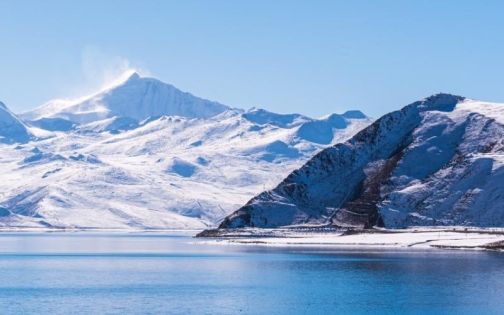
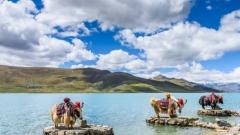
Yamdrok Lake
Regional Weather Differences in Tibet in February: Precisely Plan Your Travel Route
Understanding the regional differences of Tibet’s weather in February is the basis for planning travel routes. The climatic characteristics of different regions directly affect the travel experience and safety. The following is a detailed explanation of the weather in core regions that travelers are most concerned about:
Lhasa: Core Experience Destination for Tibetan New Year
- Overall Weather Advantages: Lhasa’s weather in February is relatively friendly, making it one of the preferred destinations for winter travel. Most of the time is sunny, and the outdoor temperature during the day is comfortable, suitable for visiting scenic spots.
- Core Meteorological Data: The average minimum temperature in February is about minus 6 degrees Celsius, the average maximum temperature is about 9 degrees Celsius, the relative humidity is only 26%, extremely dry, and the average precipitation is 1 millimeter, with very little precipitation.
- Night and Special Weather: The temperature drops sharply at night, with occasional snow showers. After snowfall, there may be a temperature drop of 4 to 6 degrees Celsius; the wind force is relatively strong in the western, northern and southern regions, reaching level 7 to 8, and level 6 to 7 in the river valley areas along the rivers, with local possible sandstorms and floating dust weather.
- Related to Tibetan New Year: The Tibetan New Year usually arrives in late February. The temperature during the festival is relatively stable, but it is necessary to pay attention to temporary weather changes and book accommodation and scenic spot tickets in advance.
Nyingchi: Jiangnan-style Secret Realm with Rain and Snow
- Overall Climate Characteristics: Nyingchi’s weather in February is the warmest among all regions in Tibet, belonging to a rare mild area on the plateau in winter, and also a region with relatively concentrated precipitation in Tibet in February.
- Core Meteorological Data: The average minimum temperature in February is about minus 3 degrees Celsius, the average maximum temperature is about 10 degrees Celsius, and the average precipitation is 5 millimeters.
- Precipitation and Wind Conditions: Precipitation is frequent, mainly light snow or sleet; heavy to blizzard may occur in high-altitude areas such as Bomi and Medog, with new snowfall of 10 to 25 millimeters, snow depth of 15 to 35 centimeters, accompanied by instantaneous gusts of level 4 to 6 and a temperature drop of 3 to 6 degrees Celsius.
- Impact of Snowfall on Traffic: It will cause snow accumulation, icing and low visibility on sections such as G318 from Nyingchi Town to Lulang, Gongbujiangda to Songduo, and the Zhamo Highway, which has a great impact on self-driving travel.
- Scenic Advantages Brought by Snowfall: It makes snow-capped mountains, forests and lakes form a picturesque snow scene, and the water of Basum Tso shows a unique deep blue color; there is abundant sunshine on sunny days, which is one of the best seasons to view Mount Namjagbarwa, making it easy to see the full view of the sacred mountain.
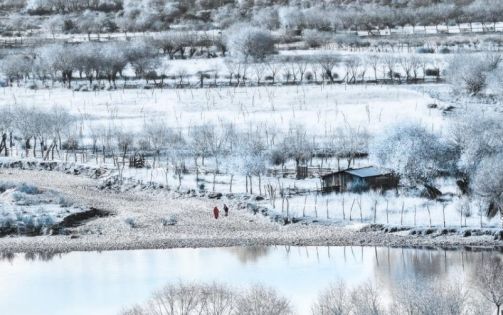
Scenery of the Nyang River in Nyingchi
Shannan: Dry, Cold and Windy, the Best Area for Blue Ice Viewing
- Overall Weather Characteristics: Shannan’s weather in February is characterized by dryness, cold, strong winds and little precipitation, with mostly sunny days, making it the core area for viewing blue ice.
- Core Meteorological Data: The average minimum temperature is about minus 12 degrees Celsius, the average maximum temperature is about 10 degrees Celsius, the average precipitation is 0 millimeters, and the air is dry.
- Wind Conditions: The wind force is relatively obvious in February. After the temperature rises in late February, gusts can reach level 5 to 6, with local gusts of level 7 to 8, and the wind force is stronger along the lake areas.
- Scenic Advantages Brought by Weather: The dry and cold weather makes lakes such as Yamdrok Lake, Pumoyong Tso and Qiangyang Tso enter the best viewing period for blue ice. The blue ice surface of Yamdrok Lake winds in blue, and the blue ice of Qiangyang Tso is deep blue with dense white mesh patterns under the ice.
- Travel Notes: Some high-altitude sections in Shannan may have snow accumulation due to snowfall in adjacent areas. Drivers need to drive carefully when self-driving to blue ice scenic spots.
Xigaze: Magnificent Snow-capped Mountains and Glaciers
- Overall Weather Characteristics: Xigaze’s weather in February is colder and windier, more severe than that in Lhasa.
- Core Meteorological Data: The average minimum temperature in February is about minus 10 degrees Celsius, and the average maximum temperature is about 8 degrees Celsius.
- Precipitation Conditions: Light to moderate snow may occur in the southern and western regions in February, with heavy to blizzard in some areas; snowfall processes are more obvious from late February to early March, and heavy to blizzard may occur in some towns along Zhada, Purang, Gyirong and Nyalam, with new snow accumulation having a great impact on traffic.
- Scenery Under Severe Cold Weather: The Karola Glacier still maintains a magnificent icefall scenery, which is the filming location of the movie “Red River Valley”; the Tashilhunpo Monastery is more solemn under the winter sun, with clear architectural details and fewer tourists, making it easy to feel the profound religious culture.
- Travel Notes: The altitude of the Karola Scenic Area reaches 5500 meters. The risk of altitude sickness increases under severe cold weather. It is recommended to prepare oxygen by yourself, and those who have not adapted to high altitudes should go carefully.
Everest Base Camp: Extreme Cold and Windy Challenging Scenic Spot
- Overall Weather Conditions: The weather at Everest Base Camp in February is the worst, making it a challenging tourist destination with frequent snowy and windy weather.
- Core Meteorological Data: The average minimum temperature in February can reach minus 15 degrees Celsius, the average maximum temperature is only 4 degrees Celsius, the night temperature is extremely low, and the daytime temperature may also drop to minus 10 degrees Celsius with strong winds.
- Travel Restrictions: The roads leading to the base camp may be closed or covered with snow and ice due to heavy snow, making travel difficult; the tents at the base camp cannot provide accommodation, requiring high physical fitness and equipment from travelers.
- Scenic Advantages of Severe Weather: After snowfall, Mount Everest is covered with a pure white snow cap, which is extremely magnificent under the sunny sky, bringing an unforgettable visual impact.
- Travel Advice: It is necessary to confirm the road traffic conditions in advance, equip with a full set of cold-proof equipment, and travel in groups to ensure safety.
Ngari and Nagqu: Severe Cold and High Risk(Not Recommended)
- Overall Weather Characteristics: The weather in Ngari and Nagqu in February is characterized by extreme cold, frequent strong winds and closed roads, belonging to high-risk areas, and is not recommended for ordinary travelers in February.
- Core Meteorological Data: The average temperature is below minus 10 degrees Celsius, and the night temperature can reach above minus 20 degrees Celsius.
- Wind and Other Weather Conditions: Strong winds above level 8 may occur in late February, with local gusts of level 10 to 11, frequent sandstorms and floating dust weather; roads are often closed due to heavy snow, making traffic and rescue extremely difficult.
Adapting to Tibet’s Weather in February: Selected Scenic Spots and Routes
Based on the characteristics of Tibet’s weather in February, choosing suitable scenic spots and routes can make the travel experience twice as effective with half the effort. The following are selected scenic spot and route recommendations that adapt to the weather, ensuring both travel experience and safety:
Route 1: Lhasa – Nyingchi
Route Weather Adaptation Advantage: Adapting to the warm and sunny weather in Lhasa and the warm and snowy weather in Nyingchi, it can take into account both the sunshine of the holy city and the snow scenery and snow-capped mountains in southeastern Tibet.
Itinerary Planning Suggestion: Stay in Lhasa for 2 days and Nyingchi for 3 days, with a slow rhythm suitable for plateau adaptation needs.
Core Attractions in Lhasa: Visit the Potala Palace, Jokhang Temple and Barkhor Street. The sunny weather during the day is suitable for taking photos, and it is necessary to keep warm at night.
Core Attractions in Nyingchi: Cover classic scenic spots such as Basum Tso, Xincuo, Lulang Forest Sea and Suosong Village.
Highlight of Basum Tso: Under the weather in February, the lake water presents a deep blue color, surrounded by snow-capped mountains, with scenery as clear as gems.
Highlight of Xincuo: The primeval forest is covered with white snow, and the sunlight filters through the cedar forest and falls on the mountain trails, suitable for hiking; you can rent a sand motorcycle to reduce physical consumption.
Highlight of Suosong Village: The best location to view the golden sunlit mountains of Mount Namjagbarwa. There are many sunny days in Nyingchi in February, which greatly increases the probability of seeing the full view of the snow-capped mountains.
Travel Notes: Some sections in Nyingchi may have snow accumulation and icing. It is recommended to choose a driver with snow driving experience and slow down when driving.
Route 2: Lhasa – Shannan
Route Weather Adaptation Advantage: Perfectly matching the dry, cold and sunny weather in Shannan, focusing on winter-limited blue ice scenery, accurately meeting the needs of glacier and blue ice lovers.
Itinerary Planning Suggestion: Rest in Lhasa for 1 day to adapt to the plateau environment, then go to Shannan and stay for 2 to 3 days.
Core Attractions: Visit blue ice and glacier characteristic scenic spots such as Yamdrok Lake, Qiangyang Tso and Karola Glacier.
Suggestion for Visiting Yamdrok Lake: Depart as early as possible in the morning and arrive at the scenic spot at noon. At this time, Tibet’s weather in February is relatively warm and the wind force is small, providing a better blue ice viewing experience.
Suggestion for Visiting Qiangyang Tso: It is close to Pumoyong Tso and can be visited on the way; it is necessary to equip crampons to prevent slipping when stepping on the ice, and crampons can be purchased in Lhasa in advance.
Suggestion for Visiting Karola Glacier: The scenic area is at a high altitude. It is necessary to pay attention to keeping warm and preventing altitude sickness under dry and cold weather. It is recommended to carry an oxygen tank.
Characteristic Folk Experience: During the Tibetan New Year, the Tibetan villages in Shannan have a lively atmosphere. You can experience local traditional customs, taste characteristic food and enjoy the Guozhuang Dance.
Coping with Tibet’s Weather in February: Comprehensive Travel Preparation Guide
In response to the characteristics of Tibet’s weather in February, such as dryness, cold, large temperature differences between day and night, strong winds and strong ultraviolet rays, adequate travel preparations are essential to ensure a comfortable and safe journey. The following are classified and detailed preparation suggestions:
Clothing Matching: Layered Warmth and Wind Protection as the Main Priority
- Core Clothing Principle: Adapting to the low temperature and strong wind characteristics of Tibet’s weather in February, follow the principle of “layered wearing, easy to add or remove, windproof and warm”, and adopt the three-layer clothing method of “inner layer for perspiration wicking + middle layer for heat preservation + outer layer for windproof”.
- Choice of Clothing for Each Layer: The inner layer chooses quick-drying and perspiration-wicking thermal underwear to avoid getting cold due to dampness after sweating; the middle layer wears a thick fleece jacket or down vest to enhance heat preservation; the outer layer is matched with a waterproof and windproof thick down jacket or jacket to resist strong winds and occasional snowfall.
- Lower Body and Foot Equipment: Wear thick thermal pants + waterproof and windproof outdoor pants on the lower body; choose high-top snow boots for the feet, matched with thick wool socks to ensure warmth and dryness.
- Recommended Essential Accessories: Warm hats, thick gloves and scarves are essential, preferably windproof materials; sunglasses are indispensable, which can resist strong solar radiation and snow reflection; you can carry hand warmers and foot warmers to improve comfort at night or in severe cold areas.
- Note on Indoor Warmth: Most indoor areas in Tibet do not have central heating, and the indoor temperature of some hotels and restaurants is low. It is recommended to keep the middle layer of warm clothing indoors.
Protective Equipment: Sun Protection, Moisturizing and Coping with Altitude Sickness
- Core Protection Premise: Tibet’s weather in February is dry, with strong solar radiation and high ultraviolet index. Sun protection and moisturizing are crucial, and at the same time, it is necessary to do a good job in preventing altitude sickness.
- Specific Sun Protection Suggestions: Carry high-factor sunscreen with SPF50+ and PA+++ or above, and reapply every 2 to 3 hours. Strengthen protection when engaging in long-term outdoor activities in snow or open areas; sun hats and scarves can both keep warm and protect, reducing ultraviolet damage to the face and neck.
- Essential Moisturizing Products: Carry facial cream, hand cream and lip balm with good moisturizing effect to cope with skin chapping and lip cracking caused by dry weather, and replenish water in time.
- Altitude Sickness Prevention Measures: Severe cold weather in February may aggravate altitude sickness symptoms. It is recommended to take anti-altitude sickness medicine one week in advance; avoid strenuous exercise after arrival, drink plenty of warm water and ensure adequate rest; carry portable oxygen tanks for backup when visiting high-altitude scenic spots; pay attention to keeping warm to prevent colds, as colds may induce severe altitude sickness, and carry common cold medicine and anti-inflammatory drugs.
Although Tibet’s Weather in February is Cold: It Hides Unique Surprises
Tibet’s weather in February is mainly dry, cold and sunny. Although there are challenges such as large temperature differences between day and night, snowfall in some areas and strong winds, it also creates unique advantages such as clear views of snow-capped mountains, magnificent glacier blue ice and few tourists, and even the chance to encounter the strong folk customs of the Tibetan New Year. As long as you master the weather characteristics of various regions in advance and make adequate preparations for keeping warm, sun protection, altitude sickness prevention, and transportation and accommodation planning, you can encounter the purest plateau secret realm in the cold air of Tibet in February.
Whether you are pursuing the golden sunlit mountains of Mount Namjagbarwa, indulging in the blue ice wonder of Yamdrok Lake, or feeling the solemnity of the holy city under the sunshine of Lhasa, Tibet in February can bring you a travel experience different from other seasons. Pack your bags, bring your yearning for Tibet, and start an unforgettable winter plateau journey accompanied by Tibet’s weather in February.