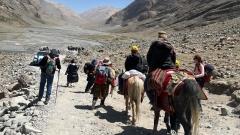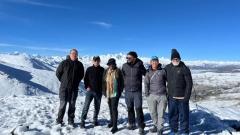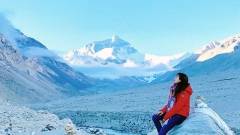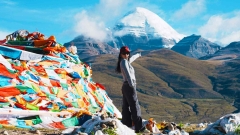

When talking about Tibet, the first thing that comes to people’s minds is the awe-inspiring Tibet’s Altitude. This land not only boasts the topographic elevation of the Third Pole of the Earth but also carries the cultural height accumulated over millennia and the spiritual altitude of a pure land for the soul. For foreign travelers eager to explore polar landscapes, Tibet’s Altitude has never been a barrier, but a threshold leading to unique experiences. Crossing this threshold, you will encounter sky so blue it seems transparent, snow-capped mountains as pure as sacred objects, and the pure and passionate beliefs of the Tibetan people. Whether you are an outdoor adventure enthusiast or a cultural experience traveler, Tibet’s Altitude will bring you unprecedented sensory and spiritual shock.
Understanding Tibet’s Altitude: More Than Just a Number
The core of Tibet’s Altitude lies in its average topographic elevation of 4,058 meters, a figure that makes Tibet the administrative region with the highest altitude in the world and earns it the reputation of the Roof of the World. However, the true Tibet’s Altitude has never been limited to the marks on the map: Lhasa, the capital of the Tibetan region, sits at an altitude of 3,650 meters, making it an ideal starting point for foreign travelers to acclimatize to the plateau; Mount Everest, the world’s highest peak, is located in the southwestern border of Tibet, with an altitude of 8,848.86 meters, representing the physical limit of the Earth; while plateau sacred lakes such as Namtso and Yamdrok Yongtso lie at altitudes above 4,000 meters, reflecting the purity between heaven and earth.
For foreign travelers, the first step in understanding Tibet’s Altitude is to recognize the environmental changes brought about by the elevation: the oxygen content in the air is only 60%-70% of that in the plains, the temperature difference between day and night can reach 15 degrees Celsius, and the ultraviolet radiation is strong. But these characteristics have also created Tibet’s unique scenery – the transparent atmosphere makes the starry sky exceptionally bright, the strong sunlight gives the lakes a rich layered blue, and the low-temperature environment preserves the intact ecology and simple culture. Instead of fearing the altitude, learning to coexist with it is the key to enjoying a smooth trip in Tibet.
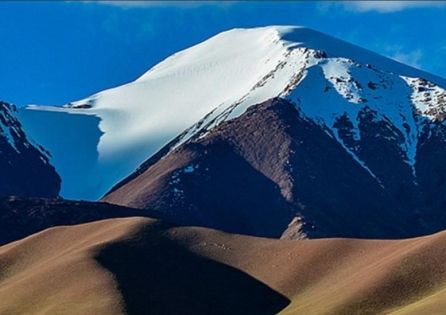
Tibet
Exploring Tibet’s Altitude: Essential Procedures for Foreign Visitors
The prerequisite for exploring Tibet’s Altitude is completing the necessary entry procedures, which is an important consideration for foreign travelers different from domestic tourists. First, you need to apply for the Tibet Travel Permit in advance. This document is issued by the Tibet Tourism Development Department and can only be applied for through a formal travel agency after booking a trip; individuals cannot apply directly. When applying, you need to provide a copy of your passport, a copy of your Chinese visa page, and a detailed itinerary. The processing period is usually 7-10 working days and may be extended during peak seasons, so it is recommended to prepare one month in advance.
Second, some areas in Tibet are border control zones, such as Everest Base Camp, Ngari Prefecture, and Zhangmu Port. To travel to these areas, you need to apply for an additional Border Pass, which can be handled with the assistance of a travel agency or at the local public security organs in Tibet, requiring the original Tibet Travel Permit and passport. It should be noted that the Tibet Travel Permit is only valid within the specified itinerary. If you change your itinerary temporarily, you need to contact the travel agency in a timely manner to update the procedures to avoid affecting your trip. Planning ahead and completing the procedures properly will allow you to experience the charm of Tibet’s Altitude without hindrance.
Altitude Adaptation Guide: Coexisting Peacefully with Tibet’s Altitude
In the face of altitude sickness caused by Tibet’s Altitude, scientific acclimatization is the best strategy. Foreign travelers do not need to panic excessively, as most people can adapt after 1-2 days of adjustment. After arriving in Lhasa, it is recommended to rest in the urban area first, avoid bathing and strenuous exercise within the first 24 hours to reduce physical oxygen consumption. You can drink more warm water to replenish body moisture, focus on light and easy-to-digest foods in your diet, avoid greasy and spicy foods, and do not drink alcohol or smoke, so as not to increase the body’s burden.
If you experience mild altitude sickness symptoms such as headache, dizziness, and insomnia, it is a normal phenomenon. You can relieve it by inhaling oxygen (oxygen equipment rental is available in hotels and scenic spots), or prepare medicines such as Gaoyuan’an and Hongjingtian in advance. If the symptoms continue to worsen, such as nausea, vomiting, and difficulty breathing, you need to go to Lhasa People’s Hospital for medical treatment in a timely manner, which has a dedicated department for altitude sickness treatment. It is particularly important to note that you should not rely excessively on oxygen due to fear of altitude sickness; proper physical adjustment is more conducive to adapting to Tibet’s Altitude.
Core Attractions: Encountering Extreme Scenery at Tibet’s Altitude
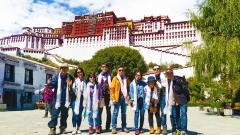
Tibet’s Altitude endows various scenic spots with unique charm, from religious holy places to natural wonders, each worthy of careful appreciation. The Potala Palace in Lhasa is a symbol of Tibetan culture, built on the Red Hill at an altitude of 3,700 meters, with the palace standing majestically against the mountain. As a world cultural heritage site, it houses countless Buddhist scriptures, thangkas, and cultural relics. When visiting, you must follow the designated route, respect local religious customs, remove your hat, keep quiet, and do not take photos of the cultural relics inside the palace casually. It is recommended to book tickets online in advance to avoid wasting energy queuing on site.
Namtso, 120 kilometers away from Lhasa, is one of the three sacred lakes in Tibet, with a lake surface altitude of 4,718 meters. In Tibetan, Namtso means Heavenly Lake. Standing by the lake, the crystal-clear blue water merges with the deep blue sky, and the snow-capped Nyenchen Tanglha Mountains in the distance form a magnificent picture. The ecological environment here is extremely fragile, so tourists must abide by the regulations: do not litter casually and do not chase the wild animals by the lake. Due to the high altitude, you should not stay in Namtso for too long. It is recommended to bring warm clothes to resist the strong wind and low temperature by the lake.
Yamdrok Yongtso is located in Shannan City, with a lake surface altitude of 4,441 meters. Different from the vastness of Namtso, Yamdrok Yongtso meanders between the mountains, shaped like coral, hence it is also known as the Coral Lake. It takes about 2 hours to drive from Lhasa to Yamdrok Yongtso, and the winding mountain roads along the way are the best places to enjoy the lake scenery, with different views waiting around every corner. The villages by the lake retain the traditional Tibetan way of life. Under the guidance of local villagers, tourists can experience the etiquette of presenting hada and drinking butter tea, and feel the enthusiasm and hospitality of the Tibetan people.
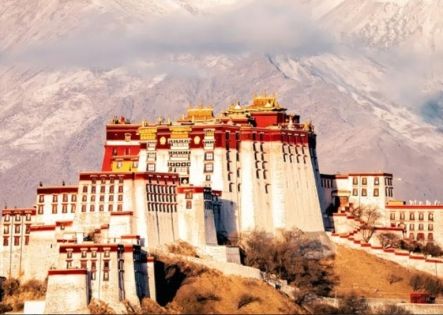
Potala Palace
Cultural Etiquette: Respecting the Spiritual Connotation of Tibet’s Altitude
Tibet’s Altitude is reflected not only in its terrain and scenery but also in its culture and beliefs inherited for thousands of years. For foreign travelers, respecting local cultural customs during the trip is a prerequisite for a good experience. When entering a temple, you need to take off your hat and sunglasses, and avoid wearing revealing clothes such as shorts and skirts; prayer flags and mani piles in the temple are the spiritual sustenance of Tibetans, so do not touch, step on or take photos of them casually; when communicating with Tibetans, often use Tashi Delek (meaning auspiciousness and good fortune) to greet them, maintain a modest and polite attitude, and avoid talking about sensitive topics such as religion and politics.
In terms of diet, butter tea and highland barley cakes are special Tibetan delicacies. If you are not used to their taste, you can take a small bite and should not refuse them directly or show dissatisfaction; when purchasing local specialties such as thangkas and Tibetan incense, you should buy them in regular stores. If you do not want to buy after asking the price, you need to politely decline to avoid disputes with vendors. Tibetans have a deep reverence for nature, so tourists should abide by the principles of no littering, no graffiti, and no damaging the ecology at scenic spots to jointly protect the purity of Tibet’s Altitude.
Itinerary Planning and Practical Information
For foreign travelers’ itinerary planning, it is recommended to follow the principle of low-altitude acclimatization + high-altitude experience. A regular itinerary can be arranged for 7-10 days: spend the first 3 days in Lhasa to acclimatize to the altitude and visit the Potala Palace, Jokhang Temple, and Barkhor Street; on days 4-6, travel to attractions such as Namtso and Yamdrok Yongtso to gradually increase the altitude; in the last 2 days, return to Lhasa to buy souvenirs and adjust your physical condition. The peak season (June-September) is the peak tourist period in Tibet, with green scenery and pleasant climate, but there are many tourists, so it is necessary to book hotels and itineraries in advance; the off-season (October-May of the next year) has lower temperatures, but fewer tourists, more affordable tickets and accommodation prices, and you can also enjoy the Tibetan scenery covered in snow.
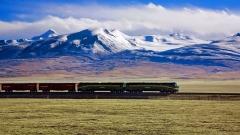
In terms of transportation, foreign travelers can fly directly to Lhasa Gonggar International Airport or take the Qinghai-Tibet Railway from Xining, Qinghai to enter Tibet. Train travel is conducive to gradual acclimatization to the altitude and allows you to enjoy the magnificent scenery along the Qinghai-Tibet Railway. Within Tibet, the distance between scenic spots is relatively long, so it is recommended to book a chartered car service through a travel agency. The drivers are familiar with the local road conditions and can ensure the safety of the trip. In addition, Tibet has good telecommunications signal coverage, with 4G networks available in major scenic spots and urban areas. You can download map navigation apps and translation software in advance to facilitate communication.
Encountering a Better Self at Tibet’s Altitude
Tibet’s Altitude has never been a cold number, but a life coordinate jointly built by snow-capped mountains, sacred lakes, temples, and humanities. Every breath of air here carries the scent of faith, every stretch of lake water reflects the purity of heaven and earth, and every snow-capped mountain witnesses the vicissitudes of thousands of years. For foreign travelers, the process of exploring Tibet is both an adventure to experience plateau scenery and a practice to feel different cultures. Here, you will learn to revere nature, understand to respect differences, and more importantly, in the dialogue with Tibet’s Altitude, encounter a stronger and purer self deep in your heart. Whenever you come, Tibet will welcome you with its broadest mind, allowing you to carry the memories of the Roof of the World and move towards a longer life journey.