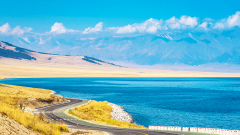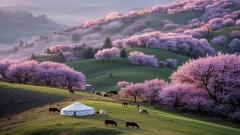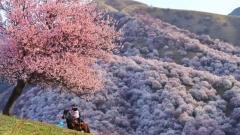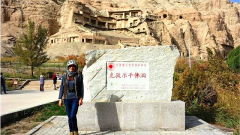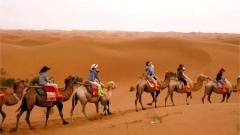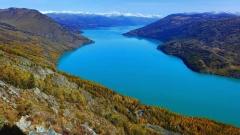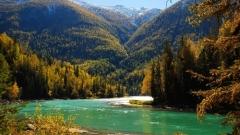

Urumqi, nestled at the Tianshan Mountains’ northern foot, features a moderate temperate continental arid climate. Its dramatic seasonal and daily temperature shifts—often likened to “wearing a fur coat in the morning and gauze at noon”—demand adaptable packing. With scant annual rainfall (~280 mm) and abundant sunshine (2,500–3,000 hours), the city yields exceptionally sweet fruits. Understanding its unpredictable weather patterns—sun, wind, and brief showers—is vital for enjoying its desert-grassland-mountain landscapes and planning flexible travel schedules. Pack versatile layers to stay comfortable.
Core Characteristics of Urumqi’s Weather
Before delving into the four-season weather, grasping the core attributes of Urumqi’s weather can help overseas tourists establish a basic understanding and avoid the impact of climate differences on their travel experience.
Extreme Temperature Differences
The most prominent feature of Urumqi’s weather is the extreme temperature difference. The average daily temperature range can reach 12-15℃ annually, and even exceed 18℃ in summer— the temperature may soar to 30℃ at noon but drop sharply to around 12℃ after nightfall. The seasonal temperature difference is even more striking: the average temperature in January is as low as -15℃ to -10℃, with an extreme minimum temperature of -41.5℃; while the average temperature in July rises to 23℃ to 29℃, with a record extreme maximum temperature of 41.7℃. This drastic fluctuation stems from its geographical location deep in the hinterland of Eurasia, far from oceanic regulation, leading to temperatures being prone to sharp changes under the control of continental air masses.
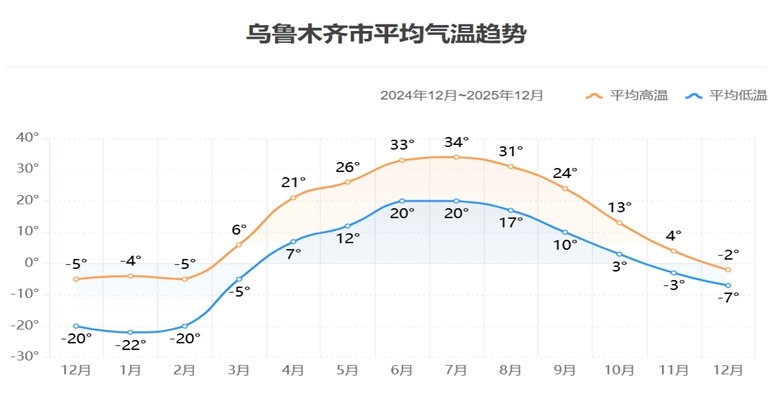
The average temperature trend chart of Urumqi City in 2025
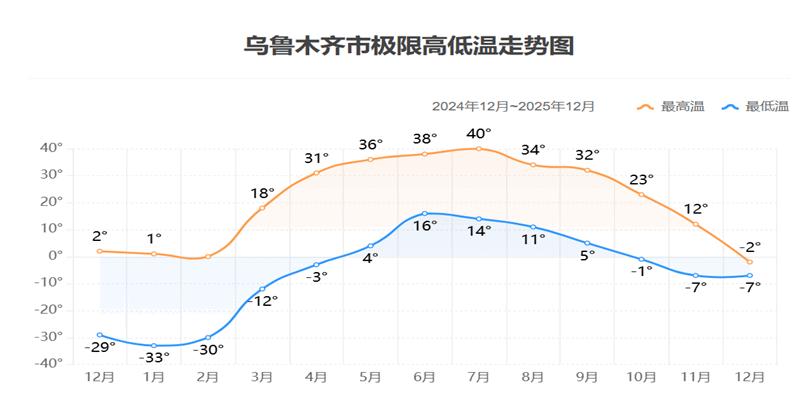
The trend chart of extreme high and low temperatures in Urumqi City in 2025
Dry and Low-Precipitation
Affected by factors such as the Tianshan Mountains blocking the warm and humid air currents from the Indian Ocean and being more than 2,500 kilometers away from the sea, Urumqi’s weather shows obvious arid characteristics, with annual precipitation only one-third of that in eastern regions at the same latitude. Precipitation is highly concentrated in time: 60%-70% of the annual precipitation falls from May to August, and more than 70% of it is short-term thunderstorms, which usually last only 2-3 hours each time but with high intensity. Winter precipitation is mainly in the form of snow: the urban area has an average of 120-140 snow cover days per year, with a maximum snow depth of about 30 centimeters, and mountainous areas can reach more than 50 centimeters, providing excellent conditions for winter activities such as skiing.
Sandstorms and Sunshine
Spring (March to May) is a season with frequent sandstorms in Urumqi. At this time, the surface vegetation has not fully turned green, the average wind speed reaches 3.5-4.5 meters per second, and gales of level 8 or above occur 5-8 times annually, easily causing sand blowing or floating dust weather. Meanwhile, Urumqi’s annual sunshine hours are among the highest in Chinese cities at middle and high latitudes: from May to August, the monthly sunshine exceeds 260 hours, and the UV index often reaches an extreme level (10+). Although the strong sunshine is conducive to the accumulation of sugar in fruits, it also places strict requirements on tourists’ sun protection measures.
Detailed Explanation of Urumqi’s Weather in Four Seasons
Urumqi’s weather has distinct characteristics in different seasons, and the corresponding tourism highlights and pre-trip preparations are also completely different. The following breakdown by season provides overseas tourists with accurate weather response plans.
Spring: Warming Up with Fluctuations, Wind and Dust Prevention First
Urumqi’s weather in spring is characterized by “large fluctuations in temperature rise”. The average temperature in March is only -2℃ to 3℃, rising to 8℃-14℃ in April and 16℃-23℃ in May. However, cold air activities are frequent, with an average of 2-3 “late spring cold snaps” with a daily temperature drop ≥8℃ annually. Precipitation in this season accounts for only 15%-20% of the whole year, the relative air humidity is only 40%-50%, and sandstorm weather is frequent, making it the season that requires the most attention to protection throughout the year.
Dressing Guide: Adopt the “multi-layer layering method”—wear a breathable long-sleeve T-shirt as the inner layer, a thin sweater or fleece jacket as the middle layer, and a windproof and sandproof jacket as the outer layer. For pants, long casual pants or jeans are recommended to avoid exposing skin with shorts. For accessories, sandproof sunglasses, sun hats, and dust masks are essential. Choose casual shoes with good sealing to prevent sand from entering.
Itinerary Suggestions: Vegetation gradually turns green after late April. You can go to Nanshan Pasture, a 1-hour drive from the urban area. At this time, the grassland begins to show a tender green, with Kazakh white yurts scattered among it, and you can taste hot milk tea in the windproof yurts. In the urban area, Shuimogou Park is recommended—there are gurgling springs in the river valley and dense vegetation, which can effectively block part of the sand and wind. If sand blowing weather occurs, you can temporarily adjust the itinerary to indoor attractions, such as Xinjiang Folk Street showcasing the cultures of 13 ethnic groups, to avoid long-term outdoor exposure.
Summer: Hot and Dry, with Distinct Day and Night Temperatures
Urumqi’s weather in summer is centered on “hot and low-precipitation, cool days and nights”. The average temperature in June is 19℃-26℃, reaching 22℃-29℃ in July (the peak period of extreme high temperatures), and gradually dropping to 20℃-27℃ in August. Although the noon temperature is relatively high, due to dry air (relative humidity 50%-60%), the body’s feeling of stuffiness is far lower than that in southern cities, and the temperature drops significantly at night, so there is no need to worry about sweltering heat. Although there are showers in this season, most are short-term afternoon rains, which have limited impact on the itinerary.
Dressing Guide: During the day, light-colored, lightweight quick-drying long-sleeve clothes and pants are recommended, which can resist strong ultraviolet rays and help dissipate heat; a thin coat or windbreaker should be added at night. Sunscreen equipment is essential—wide-brimmed sun hats, UV400 sunglasses, and UPF50+ sunscreen clothing can effectively reduce UV damage. Choose breathable sports shoes or sandals, but avoid wearing flip-flops for long outdoor walks to prevent the soles of the feet from being scalded by the high-temperature ground (the surface temperature can reach 50-60℃ at noon).
Itinerary Suggestions: Plan the itinerary using the temperature difference characteristic—arrange outdoor activities in the early morning or evening, such as going to Yamalike Mountain Desert Park in the early morning to experience the unique landscape where deserts and cities blend in the cool temperature; during the high-temperature noon period, you can go to the Xinjiang International Convention and Exhibition Center to visit the “flying saucer”-shaped building or indoor exhibitions. Summer is the season when fruits ripen—don’t forget to taste fresh grapes and Hami melons at Consulate Lane to experience the local flavor. It should be specially noted that avoid long outdoor hikes during the core high-temperature period from 10:00 to 18:00 to prevent heatstroke. If symptoms such as dizziness and confusion occur, move to a cool place to cool down and seek medical attention immediately.
Autumn: Sunny and Dry, the Golden Season for Tourism
Urumqi’s weather in autumn can be described as “clear skies and pleasant climate”, making it the most suitable season for tourism throughout the year. The average temperature in September is 14℃-21℃, dropping to 5℃-12℃ in October, and plummeting to -3℃-4℃ in November, with a monthly temperature drop of 7-9℃, the fastest among the four seasons. Precipitation in this season accounts for only 15%-20% of the whole year, mostly stable light rain, with a high proportion of sunny days, good air cleanliness, and sufficient sunshine, which is very suitable for outdoor sightseeing.
Dressing Guide: Follow the “thin and thick matching” principle—wear a long-sleeve shirt with a thin coat in September, and replace it with a sweater, windbreaker, or thin down jacket after October. The temperature is low in the morning and evening, so it is recommended to carry a warm coat that is easy to put on and take off; you can properly take off clothes when the temperature rises at noon to avoid catching a cold after sweating. The air is dry in autumn, so it is necessary to strengthen skin moisturization and carry body lotion and lip balm.
Itinerary Suggestions: Nanshan Pasture in autumn presents a golden grassland landscape, set against the distant snow-capped mountains. Riding a horse up the mountain to enjoy the interlaced scenery of pine forests and grasslands is a spectacular sight. Hongshan Park in the urban area is the best place to overlook the whole city—at dusk, the setting sun dyes the city golden, contrasting with the Qing-dynasty Hongshan Pagoda, with a unique charm. After late October, the first snow begins to appear around Tianchi Lake of Tianshan Mountain, and the clear lake water reflects the snow-capped mountains, making the scenery particularly magnificent, but it is necessary to carry warm clothes to cope with the temperature drop. In addition, autumn is the harvest season, and the exhibition on reclamation culture in the Xinjiang Production and Construction Corps Museum is also worth a visit to deeply understand the local reclamation history.
Winter: Cold and Long, Covered in Snow
Urumqi’s weather in winter is characterized by “cold and long, frequent cloudy and foggy days”. The average temperature is -15℃ to -10℃, with an extreme minimum temperature of -41.5℃, and the winter in the urban area lasts up to 150 days. Affected by the basin terrain, an inversion layer is easily formed in winter, resulting in poor air mobility and occasional cloudy and foggy days. However, snowfall is abundant: the maximum snow depth in the urban area is about 30 centimeters, and in mountainous areas, it can reach more than 50 centimeters, providing superior conditions for winter sports.
Dressing Guide: Focus on “comprehensive warmth preservation”—wear thermal underwear as the inner layer, a thick sweater or fleece jacket as the middle layer, and a thick windproof and snowproof down jacket as the outer layer. For pants, fleece-lined casual pants or down pants are recommended, paired with long socks and waterproof and antifreeze snow boots. For accessories, a woolen hat, scarf, gloves, and antifreeze face mask are indispensable; it is recommended to choose styles with good windproof performance to avoid frostbite on the face and ears. Electronic devices such as mobile phones consume power quickly at low temperatures, so spare batteries or thermal bags should be carried.
Itinerary Suggestions: Nanshan Pasture turns into a skiing resort in winter, open from 10:00 to 18:00, where you can experience unique activities such as skiing and snow goat grabbing. Shuimogou Park in the urban area is a great place for winter leisure—the hot springs are steaming, and soaking your feet in the snow scenery has a unique charm, and you can also experience Kazakh horse sleds. If the weather is clear, it is recommended to visit the Dabancheng Wind Power Station, where the white wind turbines are particularly spectacular against the snow and blue sky, and you can take amazing photos casually. It should be noted that the road surface is easy to freeze in winter; wear non-slip shoes when going out, and replace with snow tires and drive carefully if self-driving.
Essential Skills and Precautions for Dealing with Urumqi’s Weather
No matter which season you visit, mastering the following skills for dealing with Urumqi’s weather can make your trip more comfortable and safe.
Hydration and Moisturization
Urumqi is dry all year round, and overseas tourists are prone to dry mouth and skin dryness. It is recommended to actively replenish 1,500-2,000 milliliters of water daily, and carry a thermos with warm water to avoid drinking too much ice water that irritates the stomach. When engaging in outdoor activities, replenish 500-800 milliliters of water per hour; when sweating a lot, choose sports electrolyte drinks containing sodium and potassium to maintain the body’s electrolyte balance. For skin moisturization, carry small bottles of body lotion and lip balm and reapply them at any time.
Check the Weather Forecast in Real Time
Urumqi’s weather changes rapidly, especially spring sandstorms and summer showers. It is recommended to check real-time weather forecasts and early warning information through mobile apps (such as China Weather Network) before going out. If you receive an orange/red high-temperature warning or a strong wind warning, adjust your itinerary in a timely manner and avoid going to open areas such as deserts and Gobi. In winter, if a heavy snow warning is issued, reduce long-distance travel and prioritize urban attractions.
Adjust Jet Lag and Work Rest
Xinjiang uses Beijing time, but the sunrise and sunset are about 2 hours later than inland areas—for example, the sunrise time in summer is about 6:30, and the sunset time is after 21:30. This jet lag characteristic echoes the day and night changes of Urumqi’s weather. It is recommended that overseas tourists properly adjust their work and rest to adapt to the local life rhythm, such as going out for outdoor activities in the evening, which can not only avoid high or low temperatures but also make full use of the advantage of long sunshine hours.
The variability of Urumqi’s weather adds a unique experience to the trip but may also cause troubles for overseas tourists in itinerary planning—how to adjust the route according to temperature changes? How to ensure safety in sandstorm or snowfall weather? These problems can be perfectly solved through the services of professional travel agencies. China Dragon Travel has been deeply engaged in Xinjiang tourism for many years and has an extremely in-depth understanding of the seasonal characteristics and regional differences of Urumqi’s weather, and can tailor flexible itinerary plans for overseas tourists. Whether it is a combination of indoor and outdoor itineraries to avoid sandstorms in spring, a morning and evening tour plan to avoid high temperatures in summer, a photography route to capture the best light and shadow in autumn, or a safe and comfortable skiing experience in winter, China Dragon Travel can provide comprehensive support. China Dragon Travel is equipped with tour guides proficient in multiple languages, reminds of weather changes and protection points throughout the journey, and prepares emergency supplies to deal with sudden weather, allowing overseas tourists to enjoy the magnificent scenery and strong ethnic customs at the foot of the Tianshan Mountains without worrying about the weather in Urumqi and have an unforgettable trip to Xinjiang.