

When traveling to Yunnan, buying local specialty products is part of many people’s plans. Faced with numerous options, finding authentic and reasonably priced Yunnan specialties requires specific guidance. This guide directly lists five main categories of Yunnan specialties—Pu’er tea, wild mushrooms, ham, medicinal materials, and handicrafts—and provides practical information such as where to buy them, how to judge their quality, and what to pay attention to, helping you complete your shopping efficiently.
Yunnan Specialty: Pu’er Tea – Types, Markets & Identification
As the core representative of Yunnan specialties, it is crucial to understand the basic classification and price composition of Pu’er tea before purchasing.
Differences Between Raw and Ripe Pu’er Tea & Selection Tips
Pu’er tea is divided into raw tea and ripe tea. Raw tea undergoes no artificial fermentation, with a strong tea nature, a fresh and astringent taste, a high aroma, and great aging potential. Ripe tea goes through the wet pile fermentation process, featuring a mild tea nature, a mellow and smooth taste, and a distinct aged fragrance, making it more suitable for daily drinking or people with sensitive intestines and stomach. When choosing, do not blindly pursue the year or the “ancient tree” concept; instead, decide based on your own taste preferences and drinking habits.
Purchasing Locations & Quality Observation Points
Recommended purchasing locations: Large tea markets in Kunming, such as Xiongda Tea City and Kangle Tea Culture City, where stores are concentrated, the selection range is wide, and price transparency is relatively high. Regular tea plantations in producing areas like Menghai County, Xishuangbanna, or Pu’er City are also good options.
Quality identification steps:
- Appearance: Check if the shape of the tea cake (or tuocha, brick tea) is regular, the tea strips are clear, the color is natural, and there are no obvious impurities or mold spots.
- Smell: Smell the dry tea aroma, which should be pure and free of off-flavors. Raw tea has a fresh fragrance, while ripe tea has an aged fragrance. Avoid buying tea with sour, musty, or other pungent odors.
- Tasting: If allowed, ask the merchant to brew a sample for tasting. Observe if the tea soup is clear and bright, taste if the mouthfeel is mellow, and if the aftertaste is comfortable.
- Information: Inquire about and confirm the tea’s origin, production year, grade, and other information. Reliable merchants will provide these basic details.

Xiongda Tea City in Kunming
Yunnan Specialty: Wild Mushrooms – Dried Products & Safety Considerations
Wild mushrooms are unique mountain treasures in Yunnan. Fresh mushrooms are not easy to preserve, so dried and deep-processed products have become the main Yunnan specialty commodities.
Introduction to Main Purchasable Mushroom Products
- Dried matsutake: Rich in aroma, often used in high-grade soups. When purchasing, prioritize those with intact fruiting bodies, unopened caps, natural colors, and high dryness.
- Dried boletus: There are many varieties with a strong fragrance. Pay attention to whether the product is clean and free of excessive sand and debris.
- Termitomyces oil: This is one of the most recommended and convenient Yunnan specialties. Made by frying Termitomyces mushrooms, it is ready to eat after opening, with a unique flavor. It can be used for mixing rice, noodles, or cooking, and is easy to carry and preserve.
- Mixed wild mushroom dried soup packs: Convenient products mixed with various mushrooms, suitable for stewing soup. Pay attention to the ingredient list when purchasing.
Reliable Purchasing Channels & Notes
Main purchasing markets: The “Mushuihua Wild Mushroom Trading Market” in Kunming is the largest and most professional wild mushroom trading center, with a large supply of dried goods even in non-mushroom seasons. Specialty sections in major supermarkets also offer packaged products.
Important notes:
- Be wary of low-priced products: Dried goods with prices much lower than the market average may be shoddy, of poor quality, or insufficiently dried.
- Check dryness: Dried goods should be crisp and hard, easy to break. If they feel soft, tough, or damp, they are prone to mold and deterioration.
- Prefer packaged products: Pre-packaged products are usually marked with the manufacturer, production date, and shelf life. Compared with bulk products, they offer better guarantees in terms of safety and quality traceability.
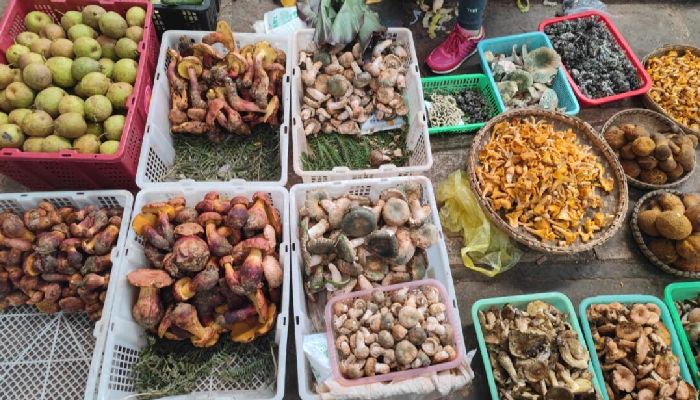
Yunnan Wild Mushrooms
Yunnan Specialty: Xuanwei Ham & Cured Products
Meat products cured and fermented for a long time have a unique flavor, are representative Yunnan specialties, and are suitable as gifts or for personal use.
How to Identify and Purchase Xuanwei Ham
High-quality Xuanwei ham has a regular shape, a waxy yellow skin, bright rose red or peach red lean meat, white fat, and dense texture. It has a unique ham aroma instead of rancid or strange odors.
For travelers, it is recommended to buy vacuum-packed sliced, small pieces, or diced ham, which is convenient to eat, carry, and mail. Purchasing a whole ham requires considering the difficulty of processing and carrying.
Other Cured Products & Purchasing Suggestions
Yunnan’s sausages and cured pork are also very distinctive, often cured with local spices, each with a unique flavor. Nuodeng Ham in Dali is famous for being cured with ancient well salt, and its flavor differs from that of Xuanwei Ham.
It is recommended to buy from brand counters in large supermarkets, regular specialty stores, or reputable market stalls. Avoid buying bulk cured products without any labels from street stalls with poor hygiene conditions.
Yunnan Specialty: Chinese Herbal Medicines & Health Teas
Yunnan’s rich plant resources have nurtured many genuine medicinal materials, and extra caution is needed when purchasing such Yunnan specialties.
Purchasing Tips for Several Common Medicinal Materials
- Panax notoginseng: Mainly produced in Wenshan. Prefer those with a large size, heavy weight, firm texture, smooth surface, and grayish-green or dark green cross-section. For ordinary consumers, buying Panax notoginseng powder is more convenient, but be sure to choose regular pharmacies or well-known brands to prevent adulteration.
- Gastrodia elata: High-quality Gastrodia elata has a hard texture, is not easy to break, has a flat and translucent cross-section, and emits a special odor similar to horse urine (commonly known as “horse urine smell”).
- Dendrobium: Especially Dendrobium officinale, whose dried product is called “Fengdou”. High-quality Fengdou has plump grains, tight curls, a sticky texture when chewed, and a light sweet taste.
Selection of Flower Teas
Yunnan’s rose tea and jasmine tea are of high quality. When purchasing, check if the flowers are intact and the color is natural; avoid products with excessively bright colors (which may be dyed). Sealed packaging can better preserve the aroma and prevent moisture.
Yunnan Specialty: Ethnic Handicrafts
Handicrafts carry local ethnic culture and are meaningful Yunnan specialties.
Worthwhile Handicraft Types & Purchasing Locations
- Tie-dye and batik products: Zhoucheng Village in Dali is the hometown of tie-dye. Handmade tie-dye patterns have natural color gradients, with slight differences between each piece. Machine-printed patterns have neat edges and uniform colors.
- Silver jewelry: There are many silver jewelry stores in the ancient cities of Lijiang, Dali, and other places. When purchasing, look for marks such as “sterling silver” and “S925” (92.5% silver content), and ask for a certificate indicating the material and price.
- Jianshui Purple Pottery: As one of China’s famous potteries, Jianshui Purple Pottery tea sets, vases, and other handicrafts are both practical and artistic. When choosing, check if the shape is regular, the surface is smoothly polished, and the carved and filled decorations are exquisite.
- Dongba Paper cultural and creative products: Dongba Paper, made using traditional Naxi craftsmanship, is durable and textured. Cultural and creative products such as notebooks, bookmarks, and lamp shades made from it are unique.
Yunnan Specialty Shopping Action Guide: Complete Steps from Planning to Carrying
To ensure a smooth and satisfactory Yunnan specialty shopping experience, following these steps can help you reduce mistakes.
Step 1: Make a Purchasing Plan and Budget
Before departure or in the early stage of your trip, clarify the types, approximate quantity, and total budget of Yunnan specialties you need to buy. Advance planning can effectively avoid impulsive consumption and exceeding your budget.
Step 2: Choose Reputable Purchasing Locations
- Bulk specialties (tea, mushrooms, ham): Prioritize large wholesale markets in producing areas or large professional markets and supermarkets in Kunming, the provincial capital. These places offer a wide selection, sufficient competition, and relatively transparent prices.
- Handicrafts: You can visit the ancient city commercial districts in Dali, Lijiang, and other places, but you need to have identification skills. If conditions permit, buying from original villages (such as Zhoucheng for tie-dye) may be more meaningful.
Step 3: Apply Basic Identification Methods
Remember the principle of “look more, compare more, ask more”. Do not rush to place an order at the first store. For food specialties, pay attention to appearance, smell, and dryness; for handicrafts, understand their craftsmanship characteristics and materials. Do not hesitate to ask merchants questions—reliable sellers are happy to answer.
Step 4: Arrange Carrying and Mailing Properly
When purchasing, ask the merchant if they provide mailing services and inquire about related fees. It is particularly important to note that meat products, high-oil foods (such as mushroom oil), and certain Chinese herbal medicines may have strict restrictions on air freight and entry into other countries. Be sure to understand the relevant regulations in advance to avoid losses.
Bring Yunnan Home – Make It Easy with Local Support
From sourcing and quality checks to packaging and shipping, each step affects whether your Yunnan purchases arrive safely and retain their value. If you’d rather focus on tasting and choosing than on logistics and customs, consider getting local professional support. China Dragon Travel can connect you with reputable suppliers, help verify product authenticity, arrange sturdy packaging and reliable shipping, and advise on export regulations—so you can enjoy Yunnan’s specialties without the hassle.