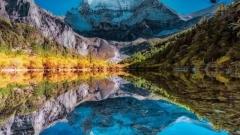

Planning a trip to Western Sichuan, many people first face the question: When is the best time to visit Western Sichuan? Western Sichuan is not a single tourist destination, but a vast area covering various landscapes such as plateaus, snow-capped mountains, grasslands, forests, and canyons. Therefore, there is no unified answer to this question. The best time to visit Western Sichuan actually depends on your core expectations for the travel experience: do you want to admire spring wildflowers, summer grasslands, autumn colorful forests, or winter snowfields? Different seasons present completely distinct landscapes and travel conditions.
Spring (April-June): A Fresh Choice for Exploring Western Sichuan
If you wish to feel the awakening of nature in relative tranquility, spring is a key period to consider when evaluating the best time to visit Western Sichuan.
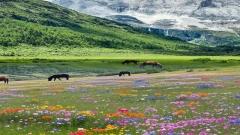
- Main Scenery: During this period, the grasslands of Western Sichuan turn from yellow to green, and alpine rhododendrons and other wildflowers bloom gradually from low to high altitudes. From late May to early June, some grassland areas will form colorful flower seas. The snow-capped mountains that have not yet fully melted form a striking contrast with the spreading new green at the foot of the mountains, creating a vibrant scene.
- Climate and Travel Tips: The temperature rises, but the temperature difference between day and night is significant. A windproof jacket is needed during the day, and a thick down jacket at night. Precipitation is higher than in winter, and the prelude to the rainy season may arrive in June, so rain gear must be carried. The main transportation routes are smooth, but when traveling to some high-altitude mountain passes (such as Zheduo Mountain and Que’er Mountain Pass), pay attention to weather changes and guard against black ice.
- Suitable Groups: Suitable for travelers who want to avoid the peak season crowds and prefer photography (especially ecological and landscape photography). At this time, the mid-to-low altitude hiking routes have a comfortable environment.
Important Note: High-altitude areas are still relatively cold in early April, and the grasslands are not fully green. The weather uncertainty increases in mid-to-late June. If viewing flower seas is the main purpose, it is recommended to arrange the trip in late May.
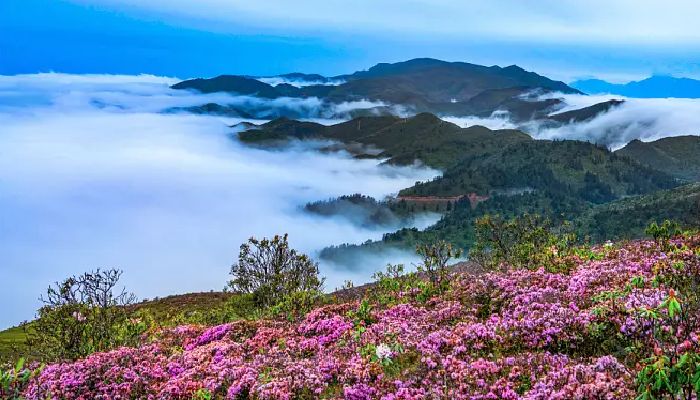
Wild Flowers in Western Sichuan in Spring
Summer (July-August): The Peak Season for Summer Retreat in Western Sichuan
When the plains are sweltering, summer in Western Sichuan provides a clear direction for the question “When is the best time to visit Western Sichuan” for summer retreat.
- Main Scenery: The grasslands of Western Sichuan enter the most lush season of the year. Ruoergai, Hongyuan, and Tagong Grasslands are covered with green, dotted with flocks of cattle and sheep and wildflowers. The lakes are full of water, presenting a vast and magnificent scene with peak vitality.
- Climate and Travel Tips: The daytime climate is cool and pleasant, making it an ideal summer retreat. However, July and August are the concentrated rainy seasons, with frequent showers or night rains, which may trigger local flash floods and landslides, causing temporary impacts on transportation. It is crucial to closely monitor real-time early warning information released by local meteorological and transportation departments before and during the trip.
- Suitable Groups: Very suitable for family tourists, student groups, and all travelers yearning for classic plateau grassland scenery. This is also the peak period to experience folk festival activities such as Tibetan horse racing events.
Important Note: This is the period with the largest number of tourists and the highest travel costs throughout the year. Air tickets, hotels, and chartered car services must be booked several months in advance. The itinerary plan should allow for a certain degree of flexibility to cope with possible weather delays.
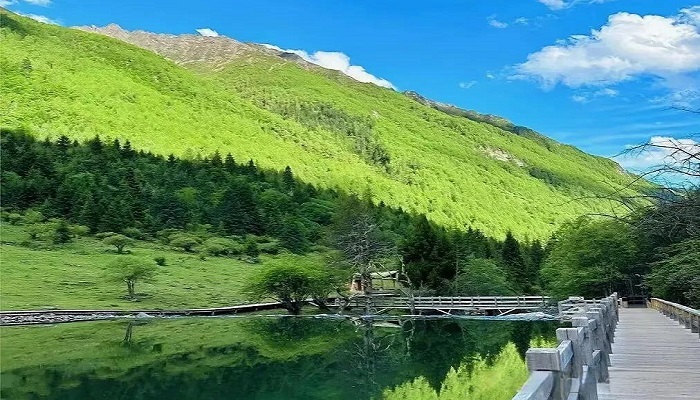
Western Sichuan in Summer
Autumn (September-October): When Western Sichuan’s Landscape Reaches Its Peak
In the hearts of many travelers and photography enthusiasts, autumn is usually the standard answer to the question “When is the best time to visit Western Sichuan”.
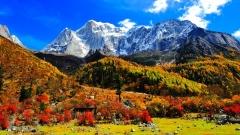
- Main Scenery: This is the most colorful season in Western Sichuan. Poplars, larch, and other plants turn golden and reddish brown. From Daocheng Yading to Xinduqiao, and from Bipenggou to Danba Tibetan Villages, picturesque scenes of forests dyed in various colors can be seen everywhere. The air visibility is high, and the outline of the snow-capped mountains is particularly clear and sharp.
- Climate and Travel Tips: The weather is high and crisp with mostly sunny days, little precipitation, and extremely stable climate. It is warm during the day, but the temperature drops sharply at night, with a huge temperature difference. This is the period with the most reliable road conditions throughout the year.
- Suitable Groups: Undoubtedly the best season for photography creation and in-depth landscape sightseeing. For hikers, both the climate and scenery are in the golden state.
Important Note: The number of tourists reaches its peak during the National Day Holiday (October 1 to 7). Accommodation and vehicle resources are extremely tight, and prices soar. Travel during this period should be strongly avoided. Choosing mid-to-late September or after October 15 will provide a better experience.
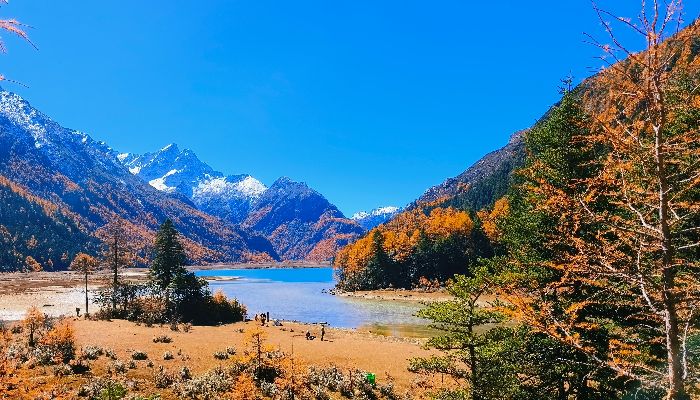
Colorful Forests in Western Sichuan in Autumn
Winter (November-March Next Year): A Special Time to Find Quiet Wonders in Western Sichuan
For travelers seeking unique experiences, winter offers a niche and profound perspective when considering the best time to visit Western Sichuan.
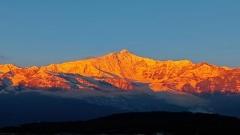
- Main Scenery: Few tourists visit, and the world returns to tranquility. The snow-capped mountains have distinct edges and corners, the lakes (haizi) freeze into dreamy blue ice, and the branches of trees are covered with rime, forming a pure ice and snow wonderland. The sun is abundant, and the sunny rate is high.
- Climate and Travel Tips: The climate is extremely cold, especially at night. Many high-altitude scenic areas (such as parts of Daocheng Yading and Seda Buddhist Academy) may be closed or have restricted access due to snow accumulation. Self-driving must use four-wheel-drive vehicles equipped with anti-skid chains, and the driver must have experience in driving on icy and snowy roads. Warm clothing must be professional-grade.
- Suitable Groups: Suitable for experienced travelers or photographers who are not afraid of the cold, seek extreme tranquility, and hope to shoot unique snow scenes. Winter is also a good time to enjoy hot springs in places like Hailuogou and Gulugou.
Important Note: Before traveling, you must repeatedly confirm the specific opening status and road access conditions of the destination. Some inns and restaurants are closed in winter, and the reception conditions are limited, so the itinerary plan must be particularly cautious.
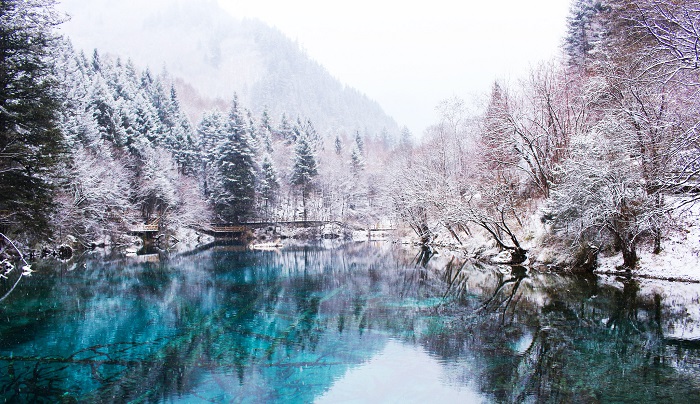
Jiuzhaigou in Winter
Practical Tips for Traveling to Western Sichuan
After a detailed understanding of the different aspects of Western Sichuan’s four seasons, to finally decide the best time to visit Western Sichuan, you can match your main needs with the following targeted suggestions:
- Pursuing extreme scenery and photography effects: Priority should be given to late September to late October (be sure to avoid the National Day Holiday). This is the stage where the combination of landscape layers, color saturation, and weather stability is optimal.
- Balancing budget and crowd experience: May or late October to early November is the ideal time. The travel cost is relatively lower, there are fewer tourists, and you can capture the transitional beauty of spring and autumn.
- Family travel or first visit, valuing climate comfort and convenience: Summer (July-August) is the most suitable. Although there are dense crowds, the warm climate, complete tourism services, and classic grassland scenery can ensure a relaxed and pleasant journey. All arrangements need to be confirmed as early as possible.
- Taking hiking and in-depth exploration of nature as the core goal: It is recommended to travel in May-June or early September-October. During these two periods, the temperature is suitable, the hiking routes are in good condition, and the natural scenery is distinctive.
- Yearning for tranquility, daring to challenge, and exploring winter-exclusive landscapes: You can consider traveling from December to February next year. This requires thorough preparation, including coping with extreme weather, vehicle equipment, and accommodation guarantees. The reward is unparalleled tranquility and wonders.
There Is No Perfect Season – Only the Right Season for You
Ultimately, the best time to visit Western Sichuan depends on what you value most in a journey. Autumn is widely regarded as the visual peak, offering clear skies and vibrant colors, but spring’s renewal, summer’s expansive grasslands, and winter’s serene snow landscapes each deliver unique experiences. Rather than following peak-season trends, travelers benefit most from aligning seasonal characteristics with their own expectations – photography, comfort, budget, or solitude.
Given the region’s vast distances, altitude changes, and weather sensitivity, choosing the right timing often requires more than surface-level information. For travelers seeking informed decisions and smoother planning, China Dragon Travel offers professional insight into seasonal conditions, accessibility, and realistic pacing—helping ensure that your chosen season truly fits your travel goals.