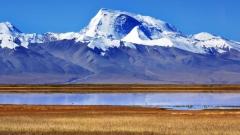

In the vast Qinghai-Tibet Plateau, the Xining to Lhasa Train carries countless travelers’ yearning for the mysterious land and is hailed as the closest railway to the sky. This 1956-kilometer journey is not only a geographical migration but also a dual spiritual and visual practice. From diverse cultures in Xining to strong Tibetan customs in Lhasa, the train shuttles between snow-capped mountains, meadows, salt lakes and no-man’s lands, slowly unfolding the magnificence of the Third Pole of the Earth. For travelers planning to visit Tibet, taking the train allows them to gradually adapt to plateau altitude and immerse in the unique scenery along the way. This detailed guide will escort your heavenly road journey.
Xining to Lhasa Train Ticketing Guide: Avoid Peak Seasons for a Smooth Trip
Ticketing for the Xining to Lhasa Train needs to be planned in advance, especially during the peak tourist season from June to August when tickets are in short supply. Early preparation can avoid travel regrets. The core ticketing points are sorted out as follows:
Train Schedule Selection
- Train Z323: Departs Xining at 11:55 and arrives in Lhasa at 07:41 the next day, with a total travel time of 19 hours and 46 minutes, suitable for travelers who want to arrive in Lhasa early for rest.
- Train Z21: Departs Xining at 15:32 and arrives in Lhasa at 11:42 the next day, with a total travel time of 20 hours and 10 minutes, allowing travelers to enjoy more scenery during the day on the way.
- Train Z165: Departs Xining at 19:28 and arrives in Lhasa at 15:30 the next day, with a total travel time of 20 hours and 2 minutes. It travels for a long time at night, suitable for travelers who want to save one night’s accommodation.
- Train Z9817 (temporarily added): Departs Xining at 22:00 and arrives in Lhasa at 18:26 the next day, with a total travel time of 20 hours and 26 minutes, which can be used as a supplementary option for travel during peak seasons.
Ticket Price Standard
Different seat types of the Xining to Lhasa Train have different prices, and the starting price of each train is the same. The specific prices are as follows:
| Seat Type | Price (CNY) | Target Crowd |
| Hard Seat | ¥224 | Young Travelers |
| Hard Sleeper | ¥495 | First Choice for Cost-Effective Travelers |
| Soft Sleeper | ¥781 | Travelers Pursuing Privacy and Comfort |
Ticketing Channel Explanation
- Mainland Travelers: Tickets can be purchased through the 12306 official website, railway station ticket halls, self-service ticket machines or third-party travel platforms. It is recommended to pay attention to the ticket release time 30 days in advance and buy tickets on time; third-party platforms may charge handling fees, so please choose carefully.
- Hong Kong, Macao and Taiwan Travelers: Tickets need to be purchased with a Hong Kong and Macao Pass or a Taiwan Compatriot Permit. Taiwan travelers also need to prepare a Tibet Travel Permit. It is recommended to buy tickets through a travel agency to simplify the process.
- Foreign Travelers: A Tibet Travel Permit must be provided. The processing of the Tibet Travel Permit takes about 10 days, while tickets go on sale one month in advance. The safest way is to customize the itinerary and buy tickets through a local Tibet travel agency to avoid the situation where tickets are sold out after the Tibet Travel Permit is issued.
Seat Selection for Scenery Viewing
- Priority is given to window seats for better viewing.
- The section from Golmud to Lhasa is the most beautiful part of the scenery. If you choose a train that passes through this section during the day (such as Train Z165), try to choose a window seat on the right side to better capture the beauty of Tibetan antelopes, snow-capped mountains and other scenery.
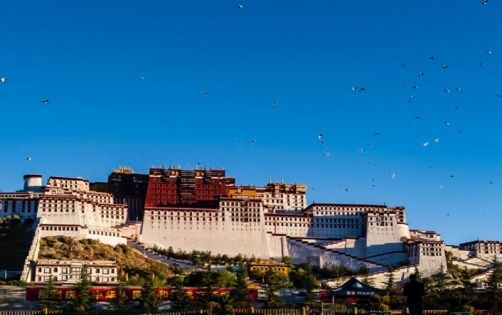
Sunrise at the Potala Palace in Lhasa, Tibet
Xining to Lhasa Train Carriage Experience: Comfort Guarantee for Plateau Travel
As a plateau-specific train, the Xining to Lhasa Train fully considers the particularity of the plateau environment in terms of facility configuration, comprehensively ensuring travel comfort and safety. The core facilities and experience points are as follows:
Core Guarantee Facilities
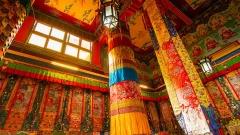
- Tibetan-style Atmosphere: The carriages adopt characteristic color matching such as Tibetan red, Tibetan yellow and light gray, decorated with Tibetan-style patterns and ornaments, creating a strong Tibetan-style atmosphere.
- Multilingual Signs: The displays and signs are available in Chinese, Tibetan and English, facilitating understanding for different travelers.
- Oxygen Supply System: After passing Golmud Station, the full-train diffuse oxygen supply is turned on. There is an emergency oxygen supply port next to each berth. If altitude sickness occurs, you can contact the crew to get an oxygen tube to relieve discomfort.
Facility Features of Different Carriages
- Soft Sleeper Carriage: Whether it is a domestic or BSP Qinghai-Tibet 25T model, the convenient facilities are considerate; the space under the lower berth is sufficient to accommodate large suitcases; there are five-hole sockets and USB charging sockets under the small table; the compartment is equipped with broadcast volume adjustment buttons, compartment lighting switches and crew call buttons, which are convenient and private.
- Hard Sleeper Carriage: The BSP Qinghai-Tibet 25T model has more superior configuration. The lower berth is equipped with a soft sleeper back cushion, there is a wood grain backboard in the middle of the berth, and there are coat hooks and armrests. The warm lighting in the corridor is cozy; the domestic hard sleeper carriage focuses on practicality, with a reasonable space layout to meet basic rest needs.
Public Area Configuration
- Washbasin: Equipped with a mirror and a storage rack. Some models adopt lace glass with an arched washbasin, which is exquisitely designed.
- Toilet: Divided into squatting and sitting types to meet different travelers’ habits, and kept clean and tidy throughout the journey.
- Dining Car Service: Provides a variety of catering options, including Qinghai characteristic cuisine and light meals suitable for the plateau stomach, with moderate prices; you can enjoy the scenery outside the window while dining, enhancing the sense of ritual.
- Real-time Information Display: The carriage displays the train speed and altitude in real time, facilitating travelers to grasp the travel progress and plateau environment changes.
Xining to Lhasa Train Scenery: Travel Through the Mysteries of Heaven and Earth
Starting from Xining, the Xining to Lhasa Train starts a visual feast, and every scenery along the way is a classic. The core scenery and travel points of each section are sorted out according to the train’s driving route as follows:
Xining to Golmud Section: Northwest Scenery and Initial Cultural Experience
Core Scenery: The unique interweaving landscape of Gobi and oasis in the northwest. The outline of the Qilian Mountains stretches in the skyline. Under the morning light or sunset, the mountains turn warm amber, showing the grandeur and vastness of the northwest land.
Travel Suggestions: If you have enough time, you can arrive in Xining in advance and visit the Dongguan Mosque before departure (the largest mosque in the northwest, with blue domes and white walls. The scene of tens of thousands of people reciting scriptures together during Friday prayers is shocking); you can also go to Nanshan Park to watch the sunset, overlook the beautiful sunset scenery of the whole city, and feel the unique charm of Xining.
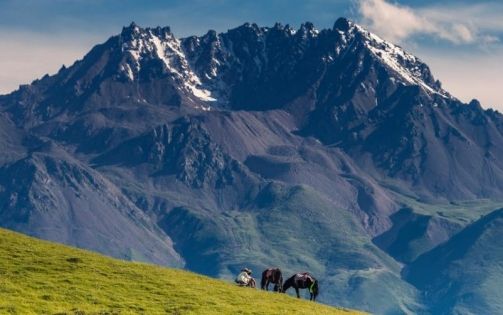
Qilian Mountains
Golmud Section: The Start of the Heavenly Road and Initial Encounter with Tibetan Culture
Station Features: Golmud Station is where the train changes its locomotive. After departing from here, the train officially climbs to the plateau above 4,000 meters above sea level, and the scenery becomes more magnificent.
Core Scenery: Kunlun Pass (4,648 meters above sea level, the Kunlun Mountains stand tall and are covered with snow all year round. When the train passes through the Kunlun Mountain Tunnel, it is like passing through a gate to a mysterious land).
Cultural Experience: You can participate in Tibetan prayer rituals, scatter Lungta and hang prayer flags to feel the sacredness and solemnity of Tibetan culture.
Hoh Xil No-Man’s Land Section: Plateau Creatures and Ecological Wonders
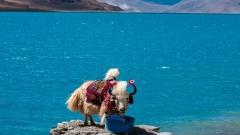
Core Highlights: The vast no-man’s land is a paradise for wild animals. If you are lucky, you can see Tibetan antelope herds, Tibetan wild asses, yaks and other plateau creatures galloping freely.
Ecological Wonders: The train adopts a bridge mode in the Hoh Xil Nature Reserve. The Qingshui River Super Large Bridge is 11 kilometers long, reserving a safe migration channel for wild animals, showing the harmonious coexistence of ecology and transportation.
Nagqu Section: Grassland Pastoral Songs and Romantic Starry Skies
Core Scenery: The Nagqu Grassland is vast and boundless. On the green meadow, yaks graze slowly. The snow-capped mountain meltwater streams in the distance shimmer, full of poetry.
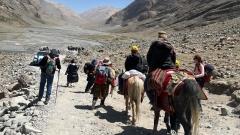
Travel Suggestions: If time permits, you can stay in Nagqu to experience the fun of horse riding on the grassland, and the herdsmen will guide you enthusiastically; the starry sky in Nagqu is not to be missed. Zharen Town in Seni District is an excellent stargazing spot. Under the night sky without light pollution, the Milky Way shines brightly. You can take beautiful star trails with the long exposure mode of your mobile phone, paired with yak wool blankets and sweet tea, which is warm and romantic.
Damxung Section: Holy Lake Mysteries and Snow-Capped Mountain Scenery
Station Features: Damxung is a necessary place to go to Namtso Lake. As one of the three holy lakes in Tibet, Namtso Lake is as blue as a gem, setting off against the Nyainqentanglha Mountains in the distance.
Travel Suggestions: Plan your time in advance and go to Namtso Lake after getting off at Damxung; enter the scenic area before 9 am to avoid crowds, first go to the Holy Elephant Heavenly Gate to take photos of the glacier reflection, taste the freshly caught plateau naked carp at Tashi Peninsula at noon, and watch the golden sunset over the Nyainqentanglha Mountains in the evening.
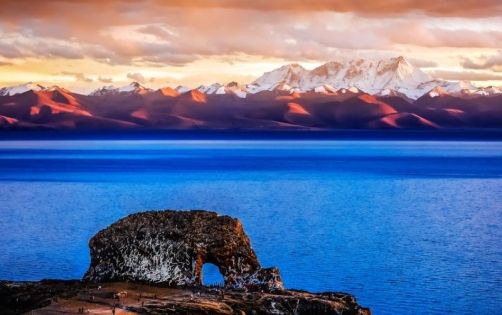
Namtso Lake
Arrival in Lhasa: The Final Chapter of the Holy City
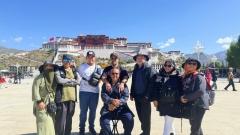
Terminal Scenery: When the train arrives in Lhasa, the outline of the Tibetan holy city gradually becomes clear. The golden roof of the Potala Palace shimmers in the sun, drawing a perfect end to the Xining to Lhasa Train journey.
Xining to Lhasa Train Travel Tips
The particularity of plateau travel requires travelers to make full preparations in advance to ensure a smooth and pleasant Xining to Lhasa Train journey. The core travel tips are sorted out as follows:
Physical Preparation Tips
- It is recommended to conduct a necessary physical examination before departure and take anti-altitude sickness drugs in advance under the guidance of a doctor, such as Rhodiola rosea capsules.
- You need to fill in a passenger health registration card when boarding the train and hand it over to the carriage crew.
- Pay attention to rest during the journey, avoid strenuous exercise, and try to maintain physical strength; quit smoking and drinking, take light food as the main diet, and drink plenty of water to help the body adapt to the plateau environment.
- If you experience symptoms of altitude sickness such as headache and dizziness, there is no need to be overly nervous. You can use the oxygen supply equipment on the train in time, and the symptoms will usually gradually relieve; if the symptoms are severe, you need to contact the crew for help immediately.
Clothing Packing Tips
- The temperature difference between day and night on the plateau is large. Even in summer, it is necessary to prepare windproof jackets, warm sweaters, thin down jackets and other clothing to avoid catching cold.
- The ultraviolet rays on the plateau are strong. It is necessary to carry sunscreen products such as sunscreen, sunglasses, sun hats and masks to protect the skin and eyes from damage.
Personal Item Preparation Tips
- It is recommended to carry portable oxygen cylinders, band-aids, gastrointestinal medicines, antidiarrheals, motion sickness medicines and other commonly used medicines for emergencies.
- Prepare chargers and power banks for electronic devices such as mobile phones and cameras in advance; although there are charging sockets on the train, you may need to queue up to use them during peak periods.
Cultural Etiquette Tips
- After entering Tibet, respect the local customs and habits; when encountering Tibetan travelers or staff on the train, keep friendly and polite and avoid talking about sensitive topics.
- If you participate in prayer rituals along the way, follow the guidance of local guides and correctly scatter Lungta and hang prayer flags.
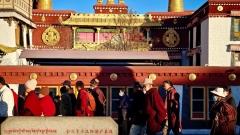
- When visiting religious sites such as the Potala Palace and Jokhang Temple after arriving in Lhasa, abide by the scenic area regulations: do not touch Buddha statues and prayer flags at will, keep quiet, and strictly abide by the no-photography regulations in places where photography is not allowed.
- When shopping, if you want to buy characteristic products such as beeswax, turquoise and Thangka, carefully distinguish the authenticity and can refer to local anti-fraud rhymes; it is recommended to go to local farmers’ markets to buy special products such as yak beef jerky, which are affordable and of guaranteed quality.
Finally, note that some trains require transfer at Xining Station. Follow staff instructions to avoid luggage loss and keep personal belongings secure, especially when boarding/alighting or at stopovers. If visiting en route, plan ahead with ample time to avoid missing subsequent trains. The Xining-Lhasa train journey is unforgettable—with full preparation, you can fully enjoy the heavenly road’s grandeur and Tibet’s unique charm.