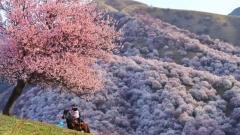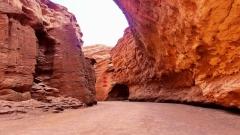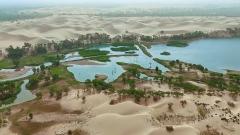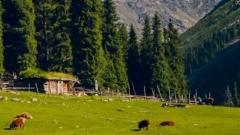

Nestled at the northeastern foot of the Ili River Valley stands a serene city—one without traffic lights, yet never congested. Designed after the ancient Bagua diagram, its crisscrossing streets and lanes resemble a star map etched onto the earth, with every alleyway embodying the ancestral wisdom of living in harmony with nature. Vast grasslands stretch like emerald carpets, winding rivers glisten like silver ribbons, and distant snow-capped mountains paint a picturesque backdrop, embracing this unique town. Here, the grace of the “Land of Heavenly Horses” merges seamlessly with human ingenuity. This is Tekes, a hidden treasure deep in Xinjiang—one so captivating you’ll never want to miss it, a place worth slowing down to savor.
Urban Wisdom in the Bagua Layout
Stepping into the old town of Tekes, the most amazing feature isn’t tall buildings—those are conspicuously absent—but the city’s unique, almost mystical layout that feels like a living embodiment of ancient Chinese philosophy. According to local legend and historical records, Qiu Chuji, a revered Taoist master of the Southern Song Dynasty, was personally invited by Genghis Khan to survey this land and design the city. Drawing inspiration from the Eight Trigrams (Bagua) theory rooted in the Book of Changes, a foundational text of Chinese wisdom, he crafted a urban plan that marries functionality with spiritual harmony.
At the very heart of the old town stands the Taiji Altar, a circular platform adorned with simple yet meaningful carvings that represent the interdependence of Yin and Yang—the core concept of Taoist philosophy. From this central point, eight broad main streets stretch outward like the spokes of a giant wheel, each directly corresponding to one of the eight trigrams: Qian (Heaven), Kun (Earth), Zhen (Thunder), Xun (Wind), Kan (Water), Li (Fire), Gen (Mountain), and Dui (Lake). What makes the design even more intricate is that each of these main streets branches into eight smaller alleys, and these alleys further connect to more lanes, eventually weaving a seamless network of sixty-four interconnected thoroughfares that cover the entire old town area.
This ingenious layout isn’t just a historical curiosity—it ensures remarkably smooth traffic flow throughout the urban area. Unlike the chaotic intersections of modern cities, here, no street is a dead end. No matter which street you start from, whether you wander aimlessly or follow a specific route, you can always either circle back to the central Taiji Altar or find your way to your destination without getting lost. It’s this timeless design that has allowed Tekes to become the only city in China that operates entirely without traffic lights, a testament to the practical wisdom of ancient Chinese scholars.
To truly appreciate this complete “earth star map”—as locals affectionately call the city—the Observation Tower in Bagua Park on the east side of the old town is the unrivaled best choice. As you climb the wooden stairs of the tower, the scent of aged timber mingles with the fresh mountain air drifting from the distant Tianshan Mountains. Reaching the top, the entire old town unfolds beneath you: rows of traditional buildings with gray bricks and dark tiles spread out in neat, geometric patterns along the streets, their low eaves glinting softly in the sunlight. Beyond the town’s edges, the lush green grasslands of the Ili River Valley stretch endlessly, merging seamlessly with the snow-capped peaks on the horizon. It’s a breathtaking panoramic view that blends human ingenuity with natural grandeur, leaving every visitor in awe of the magic of Tekes.

Tekes County, Xinjiang
Natural Gifts of Grasslands and Rivers
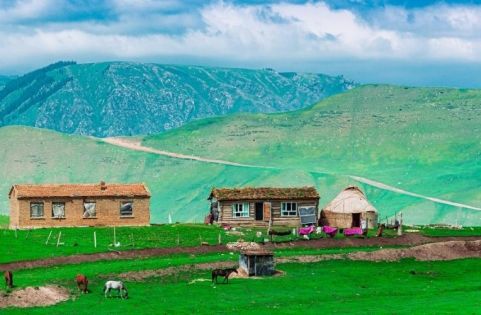
Tekes’ charm isn’t limited to the urban area. The surrounding grasslands and rivers are nature’s most generous gifts here. Karajun Grassland, not far from the city, is known as the “Human Body Grassland”—its rolling meadows present graceful curves under the sun, as soft as the earth’s skin. From June to August every year, the grassland blooms with golden wild chrysanthemums, pink-purple pedicularis, and various other flowers, forming a colorful carpet. Herds of cattle and sheep dot the landscape, and the rustling of waving achnatherum adds to the vivid grassland picture.
Coming down from the grassland, you can wander along the Tekes River. This tributary of the Yili River flows through the city, its clear water reflecting the blue sky, white clouds, and poplar trees on both banks. At dawn, thin mist drifts over the river, and sunlight filters through, sparkling on the water. At dusk, the setting sun dyes the river golden-red, and returning horse herds splash through the shallows—warm and serene. If you have time, spread a cloth on the riverbank grass, savor local roasted buns and milk tea, and breathe in the grassland’s fresh breeze.
Besides Karajun Grassland, Nalati Grassland south of the city is also worth a visit. Lusher and greener, its spruce forests stretch along the mountains, creating the unique “Sky Grassland” landscape. Ride a local herdsman’s horse and walk slowly on the grassland—with the tinkle of horse bells and herdsmen’s songs in your ears, and snow-capped mountains glowing white against the blue sky, it feels like stepping into a paradise.
Western Regions Flavors on the Tongue
While wandering Tekes, don’t miss the local unique cuisines—these dishes full of Western Regions flavors are another way to understand the culture here. Small shops selling roasted buns (kaobaozi) are everywhere in the old streets. Freshly baked, the buns have a crispy crust; biting into them, the juicy mutton filling blends with the sweetness of onions, leaving a lingering aftertaste. Pair it with a bowl of local milk tea—its salty flavor balances the greasiness perfectly, making it a classic breakfast combination.
For more distinctive flavors, try hand-grasped mutton (shouzhuanyu). Local herdsmen use free-range lambs on the grassland, boil them in clear water, and sprinkle only a little salt to highlight the tender meat—non-greasy and non-gamey. Eating it with piyazi (onions) enhances the flavor. Additionally, handmade pulled noodles, spicy chicken in a big plate (dapanji), and spicy peppercorn chicken (jiaomaji) are also popular. Especially dapanji—with bright red chili peppers, tender potatoes, and juicy chicken, mixing it with pulled noodles is spicy and satisfying, a favorite home-cooked dish of locals.
Don’t miss the local fruits either. Due to the large temperature difference between day and night, the fruits here accumulate plenty of sugar—sweet and juicy Hami melons, crystal-clear grapes, and crisp apples. Grab a few kilograms from street fruit stalls; they quench thirst and replenish energy.
Cultural Memories of the Ancient Wusun Land
Tekes is located in the core area of the ancient Wusun Kingdom, so the city is steeped in profound Wusun culture. The Wusun Culture Museum in the urban area displays a large number of cultural relics—from unearthed bronzes and pottery to costumes and musical instruments of ancient nomadic peoples. Each relic tells stories of the Wusun Kingdom’s prosperity. Through these artifacts, you can feel the wisdom and life scenes of ancient nomads and understand the long history of this land.
If you’re lucky enough to catch local folk activities, you can experience Wusun culture firsthand. During the annual Grassland Culture Tourism Festival, there are equestrian performances, wrestling competitions, and ethnic song and dance shows. Herdsmen, dressed in festive costumes, gallop on horseback across the grassland, their horses’ hooves kicking up clouds of dust. Loud songs echo over the grassland, and the enthusiastic atmosphere infects everyone. Join in—learn to dance the Maixi Laifu, taste the herdsmen’s home-brewed kumiss, and deeply feel the locals’ warmth and boldness.
Tekes County
Practical Travel Tips
The best travel season for Tekes is from June to September. During this time, the grassland is lush with green grass and blooming flowers, and the climate is cool and pleasant—perfect for outdoor activities. For transportation, you can first fly or take a train to Yining City, then transfer to a bus to Tekes. The journey takes about two hours, with beautiful scenery along the way, allowing you to enjoy the Yili River Valley’s charm.
There are abundant accommodation options—various hotels and homestays in the urban area. If you want to experience grassland life, choose yurts on the grassland. Lying outside the yurt at night, you can see countless stars, listen to the grassland’s insects and horses’ neighs—a unique experience. It’s recommended to wear comfortable sports shoes for travel; the grassland has slightly undulating terrain, so comfortable shoes make wandering easier. Additionally, the temperature difference between day and night is large—bring a thin coat even in summer to avoid catching a cold at night.
This city built on a star map has unique cultural landscapes, magnificent natural scenery, warm people, and delicious food. Whether you love history and culture, natural scenery, or simply want to experience a slow life, Tekes will bring you unique surprises. Come here, slow down your pace, wander along the Bagua streets, run freely on the grassland, and feel the unique charm of this land. Then you’ll understand why it has become a favorite tourist destination for many.
![11 Day Tour[Winter Limited] Drunken Beauty Xinjiang Ice and Snow Kanas Fairy Tale New Vision](https://www.chinadragontravel.com/wp-content/uploads/2025/12/25cff76cef9e445-240x135.jpg)