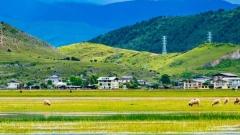

While many places around the world are still wrapped in cold, Yunnan welcomes its most pleasant season in March. Yunnan weather in March is dominated by mild and comfortable conditions, with an average temperature ranging from 10°C to 22°C. It enjoys abundant sunshine and moderate rainfall, making it the perfect time for foreign visitors to explore this secret paradise in spring. Whether you plan to wander through the streets of ancient towns, climb plateau snow-capped mountains, or immerse yourself in the vitality of tropical rainforests, mastering the local weather characteristics and coping skills in advance will make your journey much smoother and more enjoyable.
Weather Overview: Diverse Scenery Under Stereoscopic Climate
Yunnan’s unique topography has created a stereoscopic climate where “one mountain has four seasons, and different weathers exist within ten miles”. Even in March, the weather varies significantly across different regions. On the whole, Yunnan weather in March features “cold in the north and warm in the south, warm during the day and cool at night”. Most areas have mostly sunny days with occasional short showers, and the air is moist and fresh, extremely suitable for outdoor activities.
In terms of data, the central Yunnan region (centered on Kunming) has an average temperature of about 14°C in March, with alternating cloudy, overcast and sunny days, and a day-night temperature difference of about 8°C. The northwestern Yunnan plateau (Lijiang, Diqing) has relatively lower temperatures, with average temperatures of 11°C and 6°C respectively, and the nighttime temperature may drop below 5°C. The southern Yunnan tropical area (Xishuangbanna, Dehong) has entered the warm season, with an average temperature of over 20°C, and Xishuangbanna even reaches as high as 22°C, full of tropical charm. This diverse weather allows you to experience the scenery of different seasons in one trip.
Regional Features: Perfect Match Between Weather and Scenic Spots
Planning your itinerary based on the weather characteristics of different regions can enhance your Yunnan travel experience. Below are detailed suggestions combined with Yunnan weather in March for several regions that foreign visitors are most interested in.
Kunming: Spring City with Blooming Flowers and Pleasant Sunshine
As the gateway to Yunnan, Kunming never disappoints in March. Yunnan weather in March here best embodies the reputation of the “Spring City”. The daytime temperature can reach 18°C-20°C, so a long-sleeved shirt with a light coat is sufficient. The temperature drops slightly at night, and adding a knitted sweater can cope with it. At this time, Kunming is in full bloom with flowers: willows by Dianchi Lake sprout new buds, crabapple flowers in Yuantong Mountain bloom brilliantly, and flocks of black-headed gulls in Cuihu Park have not yet flown away. The sun filters through the branches and leaves, filling every corner with spring vitality. It is recommended to visit the Stone Forest karst wonders in the morning, when the soft sunlight creates the best photography effect. In the afternoon, wander along the bank of Dianchi Lake to enjoy the warm sun and lake breeze.

Rapeseed Flower Fields
Lijiang: Plateau Spring Chill with Snow Mountains and Blooming Flowers
Lijiang still retains the freshness of the plateau in March. Yunnan weather in March here shows a significant day-night temperature difference, with an average temperature of 11°C. The temperature can reach 18°C in the daytime sun, but may drop to around 5°C at night. If you plan to go to Jade Dragon Snow Mountain, be sure to bring a thick down jacket or windproof coat, as the temperature on the mountain is even lower with strong winds. When visiting the ancient town of Lijiang, you can adopt the “layered dressing method” to easily add or remove clothes as the temperature changes. At this time in Lijiang, peach blossoms and apricot blossoms at the foot of the mountain bloom one after another. The pink petals complement the ancient town’s gray bricks and black tiles, and the distant Jade Dragon Snow Mountain is still covered with white snow, forming a stunning scene of “snow mountains reflecting flowers”.
Xishuangbanna: Tropical Warmth and Rainforest Vitality
Different from the freshness of northwestern Yunnan, Xishuangbanna is full of tropical warmth in March. Yunnan weather in March here is the hottest, with an average temperature of 22°C and a maximum daytime temperature of up to 30°C, which is a complete midsummer experience. Shorts, short sleeves and sandals are the standard here, but sun protection is essential – high SPF sunscreen, sunglasses and wide-brimmed sun hats are a must. At this time, Xishuangbanna’s rainforests are lush and green. You may encounter groups of Asian elephants in the Wild Elephant Valley, the giant water lilies in the Xishuangbanna Tropical Botanical Garden of the Chinese Academy of Sciences begin to unfold their leaves, and the flame trees in the Dai villages are brilliantly bright. It is recommended to arrange outdoor activities in the early morning or evening to avoid the midday heat, and bring a light rain gear to cope with occasional showers.
Chuxiong: Flower Feast and Lively Folk Customs
Chuxiong is a sea of flowers in March. Yunnan weather in March here is mild, with an average temperature of 16°C and mostly sunny days, which is very suitable for flower appreciation and participating in folk activities. Tulips cover the slopes of Yongren Fangshan, peach blossoms in Lufeng are as beautiful as rosy clouds, and the rapeseed flower fields in Nanhua are a golden sea, rippling with waves in the breeze. From early to mid-March, various lively festivals are held in different parts of Chuxiong. At the Sanyue Street (Yizhu Flower Inserting Festival) of the Yi people in Dahuao, Tan Hua, Yi people dress in festive costumes, insert rhododendron flowers in their hair and clothes, and sing and dance happily. The Pear Blossom Festival in Mouding features wonderful events such as the “Pear Blossom Fairy” selection and Yi ethnic sports competitions, allowing you to deeply experience the enthusiasm and customs of ethnic minorities.

Jacaranda Trees in Southern Kunming
Dressing Guide: Layered Matching for Temperature Changes
No matter which region you travel to, “layered dressing” is the key to coping with Yunnan weather in March. Choose thin moisture-wicking thermal underwear for the base layer, a sweater or sweatshirt for the middle layer, and a windproof jacket or light down jacket for the outer layer, so you can add or remove clothes at any time according to temperature changes. It is recommended to wear comfortable sports shoes or casual shoes for easy long walks. For Xishuangbanna, you can bring a pair of sandals, which are more convenient in beaches or rainforests. Visitors who like taking photos can prepare bright-colored clothes, which will create better shooting effects against the background of flower seas and snow mountains.
Essential Protection: Equal Importance to Sun Protection and Moisturizing
Yunnan is located on a plateau with thin air and strong ultraviolet rays, even in March. Therefore, sun protection is crucial. It is recommended to bring sunscreen with SPF50+ and PA+++ or above, apply it evenly 15-30 minutes before going out, and reapply every 2-3 hours. Sunglasses can not only protect against sun but also shield your eyes from snow or strong light stimulation. In addition, Yunnan weather in March is relatively dry, especially in high-altitude areas such as Lijiang and Diqing. You need to bring moisturizing toner, face cream, lip balm and hydrating masks to replenish skin moisture at any time and avoid dryness and discomfort.
Emergency Supplies: Medicine and Equipment List
It is recommended to bring a small amount of commonly used medicines during the trip: cold medicine to deal with discomfort caused by temperature changes, gastrointestinal medicine to relieve problems caused by dietary differences, and mosquito repellent for tropical areas such as Xishuangbanna. For visitors going to high-altitude areas such as Shangri-La and Jade Dragon Snow Mountain, you can prepare anti-altitude sickness medicine or carry a small oxygen tank in advance. Avoid strenuous exercise and adapt to the altitude change gradually. In addition, carry a light umbrella or disposable raincoat to cope with short showers, and a power bank is also essential to ensure that electronic devices such as mobile phones and cameras have power at all times for navigation and photography.
Itinerary Planning: A Smooth Travel Route Adapting to the Weather
Combined with the characteristics of Yunnan weather in March, a classic route of “Central Yunnan – Northwestern Yunnan – Southern Yunnan” is recommended to let you enjoy different styles. Arrive in Kunming on the first day, and visit Dianchi Lake and Cuihu Park after adapting to the climate. On the second day, go to Chuxiong to immerse yourself in the sea of flowers and folk customs. On the third day, take the high-speed rail to Lijiang to visit the ancient town and Jade Dragon Snow Mountain – keep warm during this part of the trip. On the fifth day, fly to Xishuangbanna to experience the tropical style – focus on sun protection here. This route advances from north to south, with the temperature gradually increasing, making it easy to adjust your clothes and state.
In conclusion, Yunnan weather in March is mainly mild and comfortable, and the changeable climate endows this land with rich spring scenery. From the blooming flowers in the Spring City of central Yunnan to the fresh and magnificent snow mountains in northwestern Yunnan, and then to the tropical vitality of the rainforests in southern Yunnan, every place is worth exploring. As long as you master the weather characteristics of different regions in advance and make adequate preparations for dressing and protection, foreign visitors will definitely have an unforgettable spring journey here, and let the sunshine and flower fragrance of Yunnan become the most beautiful travel memory.