
The Z22 (Lhasa to Beijing West) is a “Mobile Great Wall” linking China’s snow plateau to the capital’s heart. More than transport, it’s an in-depth experience of geography, culture and comfort. Unlike the altitude sickness caution when entering the plateau, this return trip is calm and nostalgic. Over ~40 hours, you’ll see scenery shift between polar wastelands, Loess Plateau and North China Plain—like a non-fast-forward National Geographic documentary, though long confined hours need careful planning. This article offers a comprehensive Z22 guide from five aspects: hardware, scenery, food culture and long-distance comfort.
Z22 Train Hardware and Service In-depth Analysis: Maximize Comfort and Space Utilization
As a flagship route connecting the snow-covered plateau and the capital, the Z22 train has unique features in hardware configuration and services. Gaining a deep understanding of carriage details is the foundation for enjoying this 40-hour journey.
Smart Sleeper Selection: Experience Differences Between Soft Sleepers and Hard Sleepers
For a 40-hour journey, the choice of sleeper directly determines the quality of rest:
Soft Sleeper (Highly Recommended): It consists of private compartments for 4 people, equipped with lockable doors, offering excellent privacy. The beds are wider and softer. Most importantly, soft sleeper carriages are fitted with independent oxygen outlets and ample power sockets, meeting physical needs during high-altitude sections and solving the anxiety of charging electronic devices. Luggage can be easily placed under the bed or on the overhead luggage rack.
Hard Sleeper (Practical Choice): It is an open space accommodating 6 people. Although it offers good value for money, it is relatively noisy. Among hard sleepers, the upper berth is the quietest but inconvenient for getting in and out; the middle berth provides the best viewing angle but requires climbing; the lower berth is the most convenient but may serve as a public seating area during the day. Regardless of the choice, a large-capacity power bank and noise-canceling earplugs are essential for hard sleeper passengers.
Facility Details and Power Distribution
The train is equipped with diffused oxygen supply throughout the journey, maintaining a comfortable oxygen concentration in the carriages. However, the independent oxygen outlets in soft sleepers are a thoughtful design for passengers who occasionally feel unwell. Hot water is supplied centrally at the carriage connections, so it is advisable to bring a thermos with excellent heat retention. Additionally, due to the large number of passengers, even with regular cleaning by train attendants, it is highly recommended to bring disposable disinfectant wipes and wet toilet paper to maintain personal hygiene.
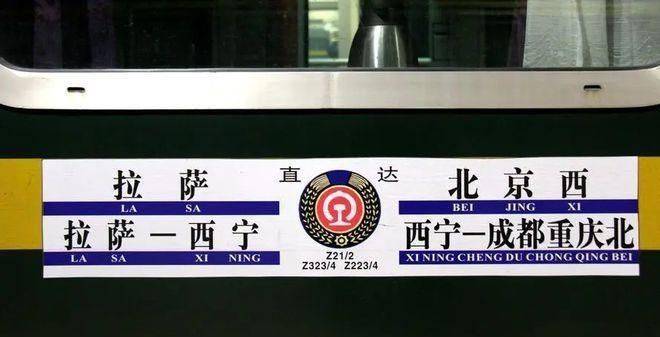
Lhasa to Beijing Train
Altitude and Temperature Transition: Z22 Full Journey Dressing Guide and “Oxygen Intoxication” Adaptation Tips
The Z22 train crosses three climate zones in China, from the high-altitude, oxygen-deficient Lhasa to the warm and dry Beijing. The “onion-layered dressing method” is the core principle for ensuring comfort, and it is also necessary to learn to cope with “oxygen intoxication” when returning from the plateau to the plain.
High-Altitude Section (Lhasa to Golmud, 3,650m to 2,800m)
The carriages have constant temperature and oxygen supply, providing a comfortable feeling. Lightweight and breathable long-sleeve T-shirts or sweatshirts are suitable for indoor wear. However, outside the window are snow-capped mountains and glacial lakes with extremely low temperatures. If you stay on the platform or open the window for sightseeing (please pay attention to safety), you need to put on a light down jacket or fleece jacket. The air in this section is dry, so moisturizing masks and lip balm are essential. Remember to change into soft-soled slippers after boarding to fully relax your feet.
Transition Section (Golmud to Xi’an, 2,800m to 400m)
The altitude drops rapidly, and the scenery shifts from desert Gobi to the Loess Plateau. At this time, your body will enter the “oxygen intoxication” phase—you will feel a rise in body temperature, extreme relaxation, and drowsiness. It is recommended to change into short-sleeve shirts or thin T-shirts, with a thin cardigan or light jacket to adapt to the air-conditioning temperature in the carriage. This is a period of self-adjustment for the body; resting more and avoiding strenuous activities are the best adaptation methods.
Plain Section (Xi’an to Beijing West, 400m to 45m)
Entering the North China Plain, the climate becomes mild and humid, with more greenery. Breathable shirts or thin trench coats are suitable for this stage. When arriving in Beijing, you need to start your new journey in a fresh and neat state.
Breathtaking Scenery Schedule: An Epic Visual Feast on the Daytime Section of the Qinghai-Tibet Railway
The most spectacular scenery of the Z22 train is concentrated in the first 10 hours after departure from Lhasa and the early morning of the next day. Be sure to adjust your schedule to avoid missing this moving National Geographic show outside the window.
Cuona Lake and Nyenchen Tanglha Mountains (About 1-3 Hours After Departure)
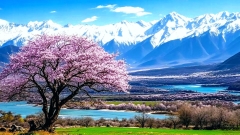
Shortly after the train departs, you will encounter the first highlight—traveling through the magnificent Nyenchen Tanglha Mountains. The most breathtaking moment is when the train runs along the edge of Cuona Lake; the lake water presents a deep blue under the sun, and the close-range viewing experience is refreshing. The light during this period is excellent, making it the golden hour for photography.
Hoh Xil and Tanggula Mountain Sunset (About 5-7 Hours After Departure, Evening)
This is the peak moment of the entire journey. The train climbs to Tanggula Pass (5,072 meters above sea level), the highest point of any railway in the world. In the evening, if the weather is clear, you can enjoy the spectacular “Golden Sunset”—glaciers dyed golden red by the setting sun. Keep an eye on the window at all times: the train will pass through the uninhabited Hoh Xil area, and lucky passengers may catch sight of Tibetan antelopes, wild donkeys, and other wild animals running—this is the most touching display of vitality on the plateau.
Kunlun Mountains and Qaidam Basin (Early Morning of the Next Day)
When you wake up from the gentle swaying of the train on the plateau, the scenery outside the window has already changed. The train passes through the Kunlun Mountains and enters the Qaidam Basin. The scenery transforms from extreme snow-capped mountains to vast desert Gobi, deep and desolate, strongly demonstrating the grandeur and vastness of western China.
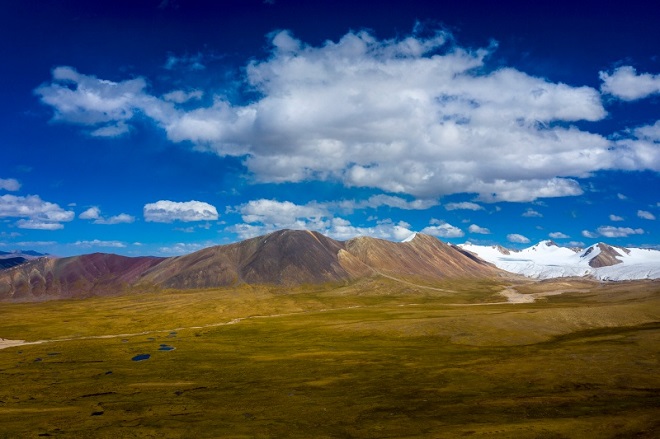
Nyenchen Tanglha Mountains
Crossing China’s Heartland: Geographic Changes from Barren Gobi to North China Plain
On the second day of the journey, the scenery shifts from natural wilderness to human settlements, serving as a vivid lesson in Chinese geography.
Qinghai Land: Xining and Yellow River Culture (Early Morning to Morning of the Next Day)
When the train leaves the Qinghai-Tibet Plateau and travels near Xining, it marks your rapid transition from the Tibetan cultural circle to China’s Yellow River cultural circle. Outside the window, you can see loess, terraced fields, and increasingly dense villages—these are the landscapes of China’s longest-standing agricultural civilization.
Loess Plateau and the Beauty of Shaanxi-Shanxi Region (Afternoon of the Next Day)
The train passes through Lanzhou, Taiyuan, and other places. The scenery outside the window is dominated by the Loess Plateau, hills, and rolling mountains in the Shaanxi-Shanxi region. The scenery here is rich and profound, full of the weight of history, strongly reflecting the ruggedness and resilience of northern China’s land. When the train makes short stops at these major stations, you can get off to stretch your legs and experience the platform culture of different cities.
North China Plain: Greenery and Civilization Before the Imperial Capital (Early Morning of the Third Day)
The train enters Hebei Province, and the flat and vast North China Plain comes into view. Rivers, bridges, dense farmland, and well-organized villages—this green landscape indicates the approaching arrival of Beijing, the capital. After the baptism of the wilderness, the human landscape seen at this time will bring you a sense of solid belonging, drawing a perfect end to the journey.
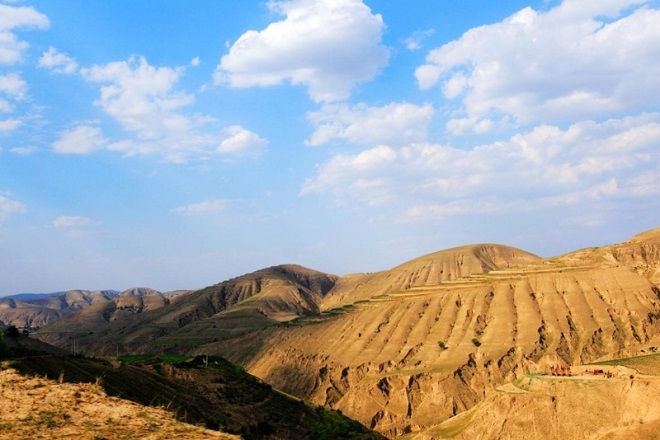
Loess Plateau
Taste on the Z22: Dining Car Delicacies and Platform Supplies Along the Way
During a 40-hour journey, food is the best way to enhance happiness. Who says train rides only offer instant noodles? The dining experience on the Z22 can be quite ceremonial.
Unique Experience in the Dining Car
Scenic Dining Car: The dining car of the Z22 train is usually located in the middle of the train, with wide viewing windows. During non-peak dining hours, ordering a hot drink and sitting quietly in the dining car, watching the wilderness outside the window speed by, is the most premium enjoyment on the train.
Dishes and Flavors: The dining car usually serves hot home-style dishes, Sichuan cuisine, or Beijing cuisine. Although the prices are slightly higher than those on the ground, enjoying fresh hot dishes during a long-distance train ride is extremely satisfying. It is recommended to ask about the daily featured stir-fries—they are more delicious than boxed meals.
Upgrading the Happiness of Self-Prepared Meals
To avoid monotonous food, it is advisable to prepare in advance in Lhasa:
High-Quality Instant Food: Such as non-fried noodles and self-heating rice—with the hot water on the train, you can easily enjoy hot meals.
Drinks and Atmosphere: Bring your favorite tea bags, drip coffee, or instant sweet tea powder. Brewing a cup of hot tea at the foot of Tanggula Mountain is an irreplaceable experience.
Fruit Supplements: Bring long-lasting fruits like apples and cherry tomatoes to supplement vitamins and combat dryness in the carriage.
“Flash” Snacks from Platform Supplies
Take advantage of the short stops at major stations such as Xining, Lanzhou, and Taiyuan to get off and purchase fresh supplies or local specialties:
Xining Station: Buy plateau yogurt and local pastries.
Lanzhou Station: Purchase halal snacks or noodles.
Important Reminder: The stop time at the platform is very short. Please follow the train attendants’ instructions and do not miss the train due to indulging in snacks!
In-depth Humanity and Spiritual Enrichment on a Long-Distance Train
The most precious treasures of this 40-hour journey are not only the scenery but also time and people.
The “Micro-Society” in the Carriage
Most passengers on the Z22 train have just finished their Tibet trips, full of stories and experiences. Sitting in the corridor or dining car, chatting with passengers from all over the country, exchanging photos and travel stories—this unexpected social interaction is the unique charm of long-distance trains, turning boring time into a warm and human experience.
Spiritual Enrichment and Time Management
The unstable signal in the high-altitude section is precisely the best time to say goodbye to digital anxiety. Bring the book you have been wanting to read, a travel journal, or use this time to organize the photos you took in Tibet. Amidst the “click-clack” rhythm of the train, calm down to write down your feelings about this journey, combining the grand memories of Tibet with the quiet moments on the train.
Arriving at the Imperial Capital: Calmness at Beijing West Railway Station and a Perfect End to the Journey
After 40 hours of traveling, the Z22 train will arrive at its final destination: Beijing West Railway Station.
Calmness After Arrival and Transportation Connections
After arrival, please stay alert (to avoid confusion caused by “oxygen intoxication”). Beijing West Railway Station is well-connected by transportation: you can directly transfer to Metro Lines 7 and 9, or take a taxi. After a long journey, it is recommended to slow down and not arrange an overly tight schedule.
The Unique Value and Memories of the Z22 Journey
The Z22 train not only takes you from Lhasa to Beijing but also serves as a time tunnel, allowing you to experience in a short time:
- Geographic Leap: From glacial snow-capped mountains to the Loess Plain.
- Cultural Transition: From Tibetan Buddhism to the core of Chinese civilization.
- Spiritual Settlement: Saying goodbye to the passion of the plateau and embracing the tranquility of the city.
This Is More Than a Train Ride, It’s a Perfect Ending
The Z22 train is the gentlest ending to your Tibet trip. With 40 hours of swaying and beautiful scenery, it provides you with the best space to organize your thoughts and adapt to the return journey. When you step onto the land of Beijing and recall the snow-capped mountains and wastelands that flashed by outside the window, you will find that the value of this train ticket far exceeds its face value.
What are you waiting for? Buy a soft sleeper ticket for the Z22 train and enjoy this magnificent adventure from the roof of the world to the imperial capital!