
Looking to experience Tibet’s most influential religious celebration? The 2026 Shigatse Thangka Festival, also called the Sunning Buddha Festival, is a must-see event that attracts countless travelers worldwide. Marking its date as Tibetan Lunar Calendar May 14-16, it falls on June 28-30, 2026, in the Gregorian calendar, spanning three days of sacred rituals and unique activities. As Western Tibet’s signature festival, it offers a rare chance to witness the solemn unfolding of giant thangkas.
Core Date Details of 2026 Shigatse Thangka Festival
Gregorian-Tibetan Lunar Calendar Conversion
Travelers often wonder, “When is the 2026 Shigatse Thangka Festival?” Rooted in Tibetan tradition, it’s fixed on Tibetan Lunar Calendar May 14-16 annually. After precise conversion, the 2026 dates are confirmed as June 28, 29, and 30 in the Gregorian calendar. Each day features distinct thangka displays and rituals, all centered in the early morning. To catch the full ceremony, advance time planning is essential.
Cultural Connotations of the Date
The festival’s timing isn’t arbitrary but deeply tied to Tibetan Buddhism. Tibetan Lunar May is revered as an auspicious month – with mild plateau weather and abundant sunlight, it’s ideal for pilgrims to gather and protects the precious giant thangkas from damage. Morning rituals (3-5 AM) hold special significance: in Tibetan Buddhism, this “auspicious hour” marks the world’s awakening and purest human hearts, bringing believers closer to the Buddhist pure land. Gentle morning sunlight also minimizes UV damage, preserving these cultural relics for years.
Venue & Admission Reminders
The 2026 festival is primarily held at Tashilhunpo Monastery, the traditional residence of the Panchen Lamas and one of the six major monasteries of the Gelugpa sect. Rituals take place on the monastery’s thangka display platform, with free entry – but advance reservations are mandatory to avoid overcrowding. Ritual sequences vary slightly daily, so choose your focus day based on interests and schedule.
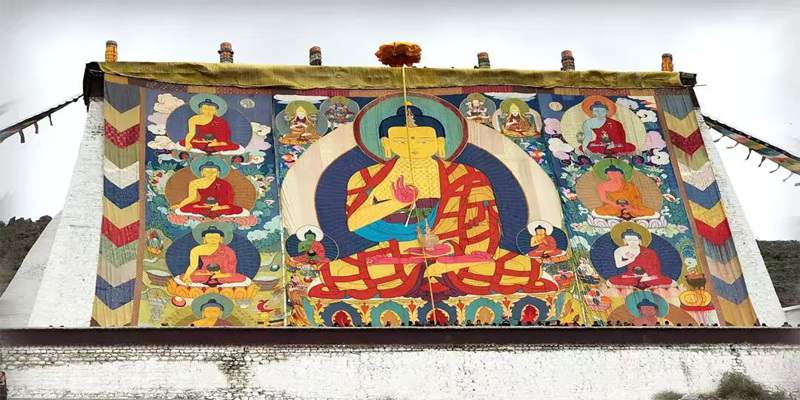
Thangka Festival
Daily Highlights of the Shigatse Thangka Festival
Over three days, the festival showcases giant thangkas representing the Past Buddha, Present Buddha, and Future Buddha, each with solemn, grand rituals that embody Tibetan Buddhism’s sanctity.
Day 1: Past Buddha – Amitabha Buddha Thangka
On June 28 (Tibetan Lunar May 14), the Amitabha Buddha thangka – symbolizing remembrance of the past and gratitude to ancestors – is displayed. Around 5 AM, over 20 young monks carry the thousand-jin thangka from the Tantric College to the 32-meter-high display platform, marching in unison while chanting scriptures. Fifty more monks then secure the thangka with 22 ropes; at the gong of a monk in a yellow hat, they unfurl it slowly as the rising sun casts golden light, creating a breathtaking scene. Pilgrims hold khata scarves, kneel in prayer, and seek peace and blessings as monks chant loudly.
Day 2: Present Buddha – Siddhartha Gautama Buddha Thangka
June 29 (Tibetan Lunar May 15) features the Siddhartha Gautama Buddha thangka, symbolizing cherishing the present and practicing kindness. The ceremony is more grand than the first day: besides the thangka display, monks play suona horns and beat ritual drums during a 30-minute prayer session. Afterward, pilgrims may offer khata scarves, touch the platform for blessings, or donate incense money. In the afternoon, a casual debate session lets monks discuss Buddhist philosophy through questions and arguments – a vivid display of Tibetan Buddhism’s academic spirit open to visitors.
Day 3: Future Buddha – Maitreya Buddha Thangka
On June 30 (Tibetan Lunar May 16), the Maitreya Buddha thangka – representing hope for the future – takes center stage. Often the most exquisite, these thangkas are crafted by multiple artists and tailors over six months using gold thread, silver thread, coral powder, and turquoise powder, boasting vibrant colors and intricate embroidery. At the ritual’s end, two senior monks from the Tantric College throw tsampa (roasted barley flour) to share blessings, and visitors can join in tossing lungta (wind horses) and highland barley. The thangka is then gently folded under colorful canopies and carried back to the Tantric College for preservation until next year.
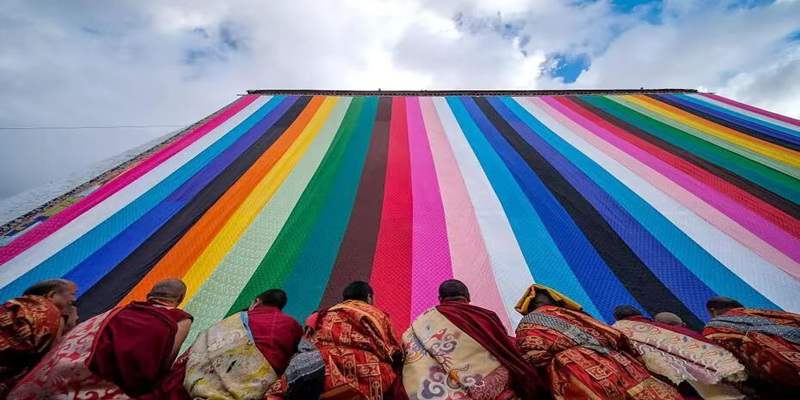
Ritual Rolling-Up of the Sacred Thangka
Surrounding Activities
Beyond core rituals, visitors can enjoy Tibetan opera performances and handicraft fairs near Tashilhunpo Monastery. Explore unique Tibetan opera or shop for thangkas, Tibetan incense, and butter sculptures to deepen your understanding of local culture.
Practical Travel Guide: Transport & Accommodation
External Transport to Shigatse
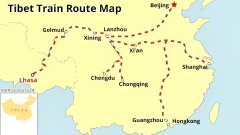
- Lhasa to Shigatse: Trains run multiple times daily (3 hours, budget-friendly), offering views of the Yarlung Zangbo River. Buses from Lhasa Bus Station take 4 hours, with flexible stops for sightseeing.
- Direct Flights: Shigatse Heping Airport connects to major domestic cities. The airport is 49.7 km from downtown (56-minute ride). Taxis cost around 150 RMB, and airport shuttles are 30 RMB.
Downtown Transport to Tashilhunpo Monastery
- Public Transport: Special Tashilhunpo Monastery tourist buses, Route 1, and Route 5 are available. The tourist bus runs from Shigatse Railway Station (first trip 10:55, last trip 17:20) with affordable fares.
- Taxis: 10-20 RMB from downtown (10-minute ride).
- Walking: Convenient if staying nearby. Note: Arrive 1-2 hours early during the festival to avoid traffic delays.
Accommodation Recommendations (By Budget)
The festival is peak season – book 1-2 months in advance!
- Luxury: Choimulangzong Hotel Shigatse, Shigatse Shili Fangfei Summer Palace Healing Hotel (1-2 km from the monastery). Offering panoramic monastery views, elegant settings, and full amenities – 800-1500 RMB/night.
- Mid-to-High-End: Yunzuo Starlight Hotel Shigatse, Home Inn Business Oxygen Hotel (1-3 km from the monastery). Clean, cost-effective, with oxygen supply to ease altitude sickness – 300-600 RMB/night.
- Budget-Friendly: Jiuyue Holiday Hotel Shigatse, Zhuosheng Hotel Shigatse (1.5-3 km from the monastery). Affordable and well-equipped – 150-300 RMB/night.
Essential Packing List (For Plateau Climate)
Shigatse sits at 3,800 meters; June temperatures range from 8-24°C with large day-night differences and strong UV rays.
- Clothing: Light jackets, hiking jackets, and long pants. Layer up for morning rituals and remove layers at noon. Comfortable sneakers or hiking shoes are a must.
- Protection: Sunscreen (SPF50+), sun hats, sunglasses, and masks (UV protection); moisturizer and lip balm (combat dryness).
- Other Items: Altitude sickness medication (e.g., Hongjingtian, Gaoyuan’an – take 1-2 days in advance); small cash (for handicrafts and snacks); ID/passport (required for monastery entry); water and snacks (stay energized during crowds).
Ceremony Etiquette & Notes of Thangka Festival
Core Etiquette (Must Follow)
- Enter Tashilhunpo Monastery with hats off, maintain silence, and avoid disturbing monks or pilgrims.
- Speak respectfully to monks; do not touch their robes or ritual objects, or ask personal questions.
- Queue orderly, follow staff guidance, and avoid pushing.
- Show reverence to thangkas and Buddha statues: no casual photos (ask permission first) or pointing.
Plateau & On-Site Tips
- Avoid strenuous exercise; walk slowly. If experiencing altitude sickness (dizziness, chest tightness), rest, take medication, or seek medical help.
- Guard personal belongings in crowds; dispose of trash properly to protect the environment.
- Avoid buying wildlife products or fake handicrafts – shop wisely.
- Check traffic updates in advance; some roads may be closed during the festival.
Mindset & Atmosphere
The festival is a sacred religious event. Approach it with respect and awe – avoid mocking or inappropriate behavior to preserve the solemn atmosphere and embrace Tibetan culture’s beauty.
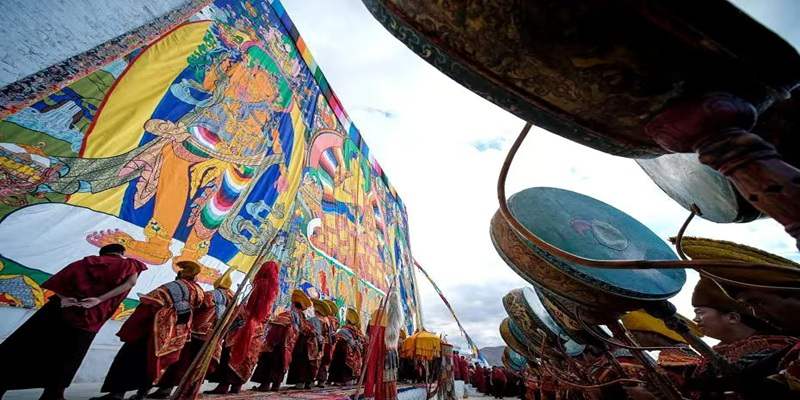
Shigatse Thangka Festival
Nearby Attractions to Explore at Thangka Festival
Tashilhunpo Monastery Deep Dive
Founded in 1447 (completed in 12 years), Tashilhunpo Monastery is a Western Tibetan Buddhist sacred site. Explore its grand architecture, including the Main Assembly Hall, Maitreya Buddha Hall, and Stupa Hall, and admire precious cultural relics, Buddha statues, and thangkas. Spend 1-2 hours post-festival to learn its history.
Zongshan Little Potala (Including Shigatse Museum)
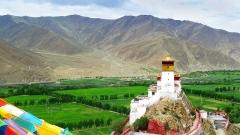
3 km from Tashilhunpo Monastery, this landmark mimics Lhasa’s Potala Palace. Climb to enjoy panoramic views of downtown Shigatse, snow-capped mountains, and grasslands. Nearby, Shigatse Museum showcases cultural relics, photos, and artifacts, offering insights into local history and customs.
Yamdrok Lake Sacred Journey
150 km from Shigatse (3-hour drive), Yamdrok Lake is one of Tibet’s three sacred lakes. Its sapphire waters, surrounded by snow-capped mountains and vast grasslands, make it a perfect photo spot. Join a day trip or charter a car to wander the lakeside and experience its purity.
Everest Base Camp Adventure
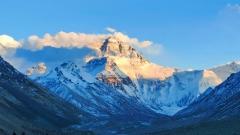
300 km from Shigatse (6-hour drive), Everest Base Camp offers front-row views of the world’s highest peak. Plan ahead and obtain a border permit (available in Shigatse or Lhasa) to witness Mount Everest’s majestic beauty.
Travel Tips
- Distances between attractions are large – choose 1-2 to avoid a rushed itinerary.
- Roads to Everest Base Camp and Yamdrok Lake are rugged – opt for chartered cars or reputable tour groups for safety.
- Pack rain gear and warm clothing – plateau weather is unpredictable.
The Thangka Festival as an Annual Moment of Faith in Tsang
The Shigatse Thangka Festival is far more than a spectacular religious event—it is a living expression of Tibetan Buddhist faith and tradition. Held annually at Tashilhunpo Monastery, the spiritual heart of the Tsang region, the festival unfolds over three days, each dedicated to a monumental thangka representing the past, present, and future Buddhas.
In the early morning light, monks chant scriptures as the enormous thangkas are slowly revealed, creating a solemn atmosphere filled with devotion and meaning. For visitors, this is not a performance designed for tourism, but an authentic religious ritual deeply rooted in Tibetan daily life. Witnessing it offers rare insight into how faith, art, and community continue to shape life on the plateau.
For a stress-free experience, contact China Dragon Travel – their professional team offers one-stop services, including itinerary planning, transport arrangements, and accommodation bookings. Let them handle the details, so you can fully immerse yourself in the sacredness of Tibetan faith and enjoy an unforgettable plateau journey.