
Tibet’s traditional festivals are vivid carriers of the snow-capped plateau’s centuries-old culture, embodying Tibetan people’s piety and life aspirations. For 2026 travelers to Tibet, mastering these festival dates is key to aligning your journey with cultural grand events. Whether it’s the family reunion of Tibetan New Year, the grand Buddha Display of Shoton Festival, or the religious solemnity of Saga Dawa Festival, these occasions add rich humanistic charm to the magnificent plateau scenery, offering a unique experience of visual shock and spiritual touch.
Tibetan New Year: The Grandest Reunion Festival on the Plateau
As Tibet’s most grand and solemn traditional festival, Tibetan New Year holds the same significance for Tibetans as Spring Festival does for Han Chinese. In 2026, it falls on February 19 in the Gregorian calendar, starting from the first day of the Tibetan lunar new year and lasting about a week (even half a month in some remote areas). As early as the first ten days of the 12th Tibetan lunar month, the festive atmosphere permeates Tibet: every household cultivates green highland barley seedlings for the shrine, symbolizing a bumper harvest; in the middle of the month, they fry Kase (a specialty pastry) with butter and flour, filling the streets with fragrance.
On New Year’s Eve, Tibetan families conduct a thorough cleaning, draw eternal symbols on doors with lime, and sprinkle eight auspicious patterns on kitchen walls with flour. In the evening, the whole family gathers to eat Tuba (a kind of pasta), which hides small items like stones, wool, and chili—each carrying interesting meanings that bring laughter to the family. Early on New Year’s Day, people worship the gods first: elders offer a five-grain bucket filled with tsampa and grains, and family members take a handful to throw into the air and then eat, greeting each other with “Tashi Delek” (auspicious wishes).
For travelers, the 2026 Tibetan New Year coincides with early spring, when Tibet enjoys warm sunshine and fresh air. You can wander around Lhasa’s streets to see Tibetans in festive costumes exchanging greetings, or experience traditional activities like threshing highland barley and making butter sculptures in rural areas. Note that sweeping the floor or speaking inauspicious words is forbidden on the first day—please respect this tradition. To immerse deeply, book a local homestay in advance to celebrate with a Tibetan family, savoring butter tea, hand-grasped meat, and other specialties while feeling the plateau’s sincere warmth.
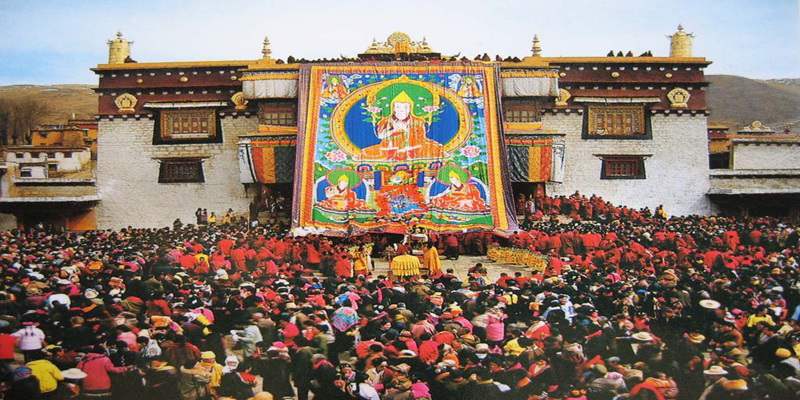
Tibetan New Year
Shoton Festival: A Visual Feast of Yogurt Feasts and Buddha Display
Shoton Festival is one of Tibet’s most distinctive traditional festivals. “Shoton” means “yogurt feast” in Tibetan; later, with Tibetan opera performances becoming the core activity, it is also known as the Tibetan Opera Festival. According to the 2026 schedule, it kicks off on the first day of the 7th Tibetan lunar month (August 14 in the Gregorian calendar) and lasts about a week. The highlight is the Buddha Display Ceremony at Drepung Monastery on August 15. This period falls in Tibet’s summer, with green grasslands and cool weather—an ideal travel season, and the festival makes the trip even more culturally rich.
The festival originated from the precepts of Tibetan Buddhism: in ancient times, monks practiced meditation in seclusion for dozens of days in summer, and on the day of their release, laypeople offered yogurt, gradually forming the festival. Today’s Shoton Festival features diverse activities, centered on Drepung Monastery and Norbulingka in Lhasa. Early on the first day, monks from Drepung Monastery slowly unfold a giant Buddha thangka (tapestry) tens of meters long on the hillside. Bathed in sunlight, the colorful thangka looks solemn and sacred, attracting countless believers and travelers. The scene is crowded yet orderly, and the piety and grandeur are unforgettable.
After the Buddha Display Ceremony, Tibetan opera takes center stage. At Norbulingka, Tibetan opera troupes from across Tibet perform classic plays like Princess Wencheng and Prince Norzang in turns. Travelers can spread a mat under the shade of trees, order yogurt and Tibetan sweet tea, and enjoy the performances while tasting delicacies. During the festival, many vendors set up stalls around Norbulingka, selling Tibetan jewelry, handicrafts, and other specialties, creating a lively atmosphere. As the 2026 Shoton Festival coincides with the summer vacation, book accommodation in advance and plan your route to avoid missing key activities.
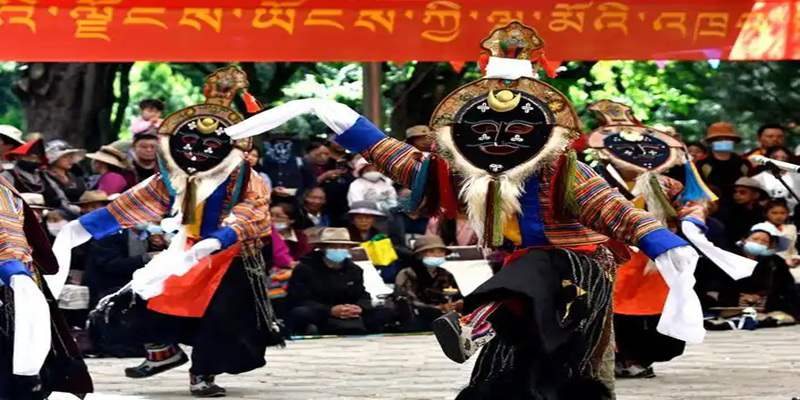
Shoton Festival
Saga Dawa Festival: Tibet’s Most Auspicious Religious Gathering
Saga Dawa Festival is one of the most cherished religious festivals for Tibetan Buddhists. Since the 4th Tibetan lunar month is the month when Sakyamuni was born, attained enlightenment, and passed away, the entire month is regarded as a merit-making month, with the festival’s climax on the 15th day (June 10, 2026, in the Gregorian calendar). As a highly religious event in 2026’s Tibetan festivals, it centers on Jokhang Temple in Lhasa and spreads across the city, attracting numerous believers and travelers.
During the festival, Lhasa’s streets are filled with believers holding prayer wheels and reciting scriptures, circumambulating Barkhor Street clockwise in an endless stream. The smoke from incense burners around Jokhang Temple curls upward, filling the air with the unique scent of juniper smoke and butter. Believers offer butter and hada to the temple, praying for peace and health in front of the Buddha. Additionally, releasing animals (like fish and birds) is an important custom to accumulate merit, reflecting reverence and compassion for life.
For travelers, maintain silence and solemnity, respect religious customs, and avoid randomly photographing believers’ faces or core religious rituals. You can join the circumambulation to experience the ritual sense, or listen to locals talk about festival legends in Barkhor Street’s teahouses. The 2026 Saga Dawa Festival falls in early summer, when Tibet has comfortable temperatures and lush vegetation. After circumambulating, visit nearby parks to enjoy the fresh vitality of the plateau’s early summer. Note that Barkhor Street is extremely crowded—travel during off-peak hours and keep your belongings safe.
Wangguo Festival: Farmers’ Harvest Celebration on the Plateau
Wangguo Festival is a unique traditional festival in Tibet’s agricultural areas. “Wangguo” means “circling the fields” in Tibetan—a celebration held by farmers to pray for a bumper harvest, with a history of over 1,500 years. Unlike festivals with fixed dates, its timing adjusts to local agricultural progress, usually held after highland barley ripens but before harvesting. Based on the 2026 Tibetan festival schedule, it generally falls between the 7th and 8th Tibetan lunar months (late August to early September in the Gregorian calendar), lasting 1-3 days. The specific date is jointly decided by local villagers.
The core activity is circling the fields. Early on the first day, farmers hold colorful arrows and wheat ears, carry Buddhist scriptures, and follow a procession led by lamas and elders to walk clockwise around the village’s fields. The procession holds high Buddha statues and plays religious horns; farmers follow, reciting harvest prayers. The grand procession winds through golden wheat fields and villages, creating an inspiring scene. After circling the fields, villagers gather at the village entrance to offer highland barley wine to the participants, celebrating the completion of the solemn ritual.
Besides religious rituals, the festival features rich recreational activities. On the village square, people hold Tibetan opera performances, singing and dancing, horse racing, archery, and tug-of-war. Participants are full of energy, and the competition venue is filled with laughter. Every household prepares abundant food and drinks—people either picnic on the grassland around the square or invite relatives and friends home for dinner, enjoying the joy before the harvest. The 2026 Wangguo Festival coincides with the highland barley ripening season, where golden wheat fields contrast with Tibetans’ bright costumes, making it a perfect time for cultural and landscape photography. Travelers can enter rural areas to join the activities and experience the unique charm of plateau agricultural culture.
Bathing Festival: Cleansing and Blessings with Water
Known as “Gama Riqi” in Tibetan, the Bathing Festival is a traditional festival where Tibetans clean their bodies and pray for health, with a history of over 800 years. According to Tibetan calendar customs, it is fixed from the 6th to the 12th of the 7th Tibetan lunar month (August 19-25, 2026, in the Gregorian calendar). During these seven days, Tibetans from all regions go to rivers, streams, or hot springs to enjoy bathing—making it a life-filled event among 2026’s Tibetan traditional festivals.
There are various legends about its origin; the most widespread is that the starlight in the 7th Tibetan lunar month is particularly bright, believed to have the power to purify the body and mind. Bathing during this period is said to wash away a year’s dust and illnesses. During the festival, tents and canopies can be seen everywhere along the Lhasa River and rural valleys—people either play and bathe in the water or prepare food on the banks, creating a lively atmosphere like a grand picnic. With improved living conditions, more people choose to visit famous hot springs like Dezhong Hot Spring, relaxing in medicinal Tibetan baths that blend tradition and modernity.
For travelers, the Bathing Festival is a great opportunity to experience Tibetan daily life. You can go to Cojoling Village on the south bank of the Lhasa River to watch locals play in the streams, taste their specialty foods like yak meat and potatoes, and feel the strong life vibe. Or book a formal Tibetan medicinal bath house to relax from travel fatigue and experience the wisdom of Tibetan medicine. Note that riversides are crowded during the festival—prioritize safety and respect locals’ privacy by avoiding random photography in bathing areas. As the 2026 Bathing Festival falls during Tibet’s peak tourist season, hot spring accommodations are in high demand—book in advance.
2026’s Tibetan traditional festivals cover spring, summer, and autumn. From the reunion of Tibetan New Year to the coolness of the Bathing Festival, each festival carries unique cultural connotations, offering diverse choices for travelers’ plateau journeys. Mastering these dates not only enriches your trip but also allows you to deeply connect with Tibet’s soul, experiencing Tibetan people’s life wisdom and pious beliefs. Whether you admire the solemnity of religious rituals or love the joy of folk festivals, Tibet in 2026 will shine more charmingly because of these events.
If you’re confused about itinerary planning during the festivals, consider consulting China Dragon Travel. As a professional agency with years of experience in Tibet travel, it can tailor-make your trip based on 2026’s Tibetan festival dates, and provide thoughtful services like accommodation booking and tour guides. This way, you can fully immerse yourself in the festival charm while traveling the snow-capped plateau without worries, creating unforgettable travel memories.