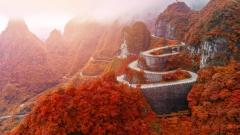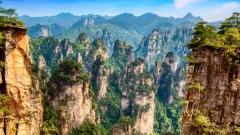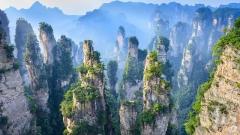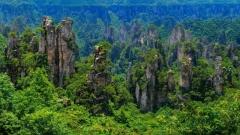

When travelers speak of Zhangjiajie, their minds inevitably drift to the “Hallelujah Mountains”—the towering quartz-sandstone pillars that inspired cinematic masterpieces. However, beneath these gravity-defying peaks lies another sensory landscape just as profound: the culinary world of the Tujia people.
To understand Zhangjiajie’s food is to understand the survival of a mountain civilization. Locked away by the Wuling Mountains, the local diet was forged by high-altitude dampness, a history of isolation, and the ingenuity of the Tujia ethnic group. It is a cuisine defined by the “Three Pillars of Flavor”: Sour, Spicy, and Cured.
Sanxiaguo — A Warrior’s Legacy in a Single Pot
If Zhangjiajie had a national dish, it would undoubtedly be Sanxiaguo. To the casual observer, it is a spicy, simmering stew; to a local, it is a symbol of ancestral sacrifice.
The “Stolen New Year”
The origin of Sanxiaguo is tied to a poignant moment in the Ming Dynasty. Legend has it that the Tujia soldiers were summoned to the coast to defend China against pirates. Fearing they would not return for the Lunar New Year, the tribe decided to celebrate a day early. To save time, they threw their most precious rations—cured meat, tofu, and radishes—into a single pot. This “Early New Year” (Qiang Nian) tradition remains today, and Sanxiaguo remains the centerpiece of this cultural defiance.
Dry vs. Soup: Choosing Your Style
Modern Sanxiaguo has evolved into two distinct styles. The Dry Pot (Gan Guo) focuses on huohou (heat control), tossing pig’s head meat, intestines, and tripe with a heavy hand of dried chilies and local peppercorns until the fats are rendered and crispy. The Soup Pot (Shui Guo) is a gentler, more rustic stew, preserving the “harmony” of the original Ming Dynasty recipe. For the international palate, the Dry Pot offers an addictive, smoky intensity that pairs perfectly with local grain spirits.
Xiangxi Cured Meat — The Alchemy of Smoke and Time
Walk into any traditional village in Zhangjiajie, and you will see blackened slabs of meat hanging from the rafters of wooden stilted houses. This is not neglect; it is Xiangxi Bacon (La Rou), perhaps the most iconic preservation art in China.
The Philosophy of Cold Smoke
The humid climate of Western Hunan makes food preservation a constant battle. Long before refrigeration, the Tujia people mastered the art of the huotang (indoor fire pit). Meat is cured with salt and then hung over a fire fed by pine branches and tea seed husks. For months, the meat absorbs the “breath of the mountains,” slowly dehydrating into a concentrated bomb of flavor.
Visual Deception
First-time visitors are often intimidated by the charred, obsidian exterior of the meat. However, once sliced, the interior reveals a translucent, amber-like glow. When stir-fried with local “Boling” chilies or stewed with dried bamboo shoots, the fat turns buttery and the lean meat releases a woody, smoked aroma that no modern industrial process can replicate.
Hidden Gems — Dagupi and Kudzu Root
Beyond the famous stews lie “insider” flavors that define the daily rhythm of Zhangjiajie’s streets.
Dagupi: The Connoisseur’s Choice
Dagupi refers to the thin, chewy layer of meat and tendon attached to the cow’s ribs. In the back alleys of Zhangjiajie’s Yongding District, you will find small, steam-filled shops specializing solely in this cut. It is braised with pickled peppers and yellow ginger until it reaches a texture that is simultaneously crunchy and tender. It is the ultimate “slow food” in a fast-moving world.
Kudzu Root (Ge Fen): The Mountain’s Gift
Growing in the crevices of Zhangjiajie’s sandstone cliffs is the Kudzu vine. The starch extracted from its root is a local staple. When whisked with hot water, it transforms into a thick, translucent jelly. Historically used for its medicinal properties—cooling the body and detoxifying the liver—it serves as a refreshing, slightly bitter palate cleanser for travelers who have spent the day trekking through the humid valleys.
The Functionality of Sour and Spicy
In Western Hunan, “Sour” and “Spicy” are more than just seasonings; they are biological necessities.
The Culture of Fermentation
In a land where salt was historically a luxury, the Tujia turned to fermentation. Everything in Zhangjiajie can be soured—pork, fish, and even corn flour (Suancai). This biological acidity served to preserve food while providing essential probiotics and a sharp contrast to the heavy, oily dishes common in mountain diets.
The Layering of Heat
Unlike the numbing spice of Sichuan or the pure heat of neighboring Changsha, Zhangjiajie’s spice is “fragrant.” It uses a combination of fresh chopped chilies (duojiao), dried chili powder, and pickled chilies. This creates a multi-dimensional heat that builds slowly, warming the body against the pervasive mountain mist.
Culinary Advice for the High-End Traveler
Navigating Zhangjiajie’s food scene requires a balance of curiosity and strategy.
Escaping the “Scenic Zone” Trap
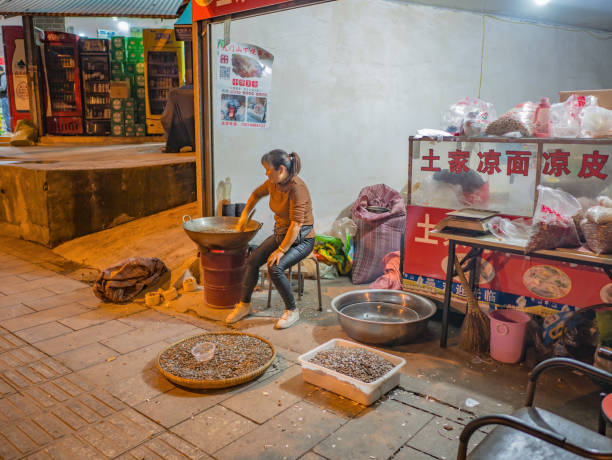
Inside the core scenic areas like Wulingyuan, food is often simplified for mass tourism. To find the “Soul of the City,” we recommend returning to the urban center of Zhangjiajie. Look for restaurants where locals gather around low tables, sharing large pots of stew—this is where the most authentic recipes are guarded.
The Ritual of Berry Tea (Mao Yan Mei)
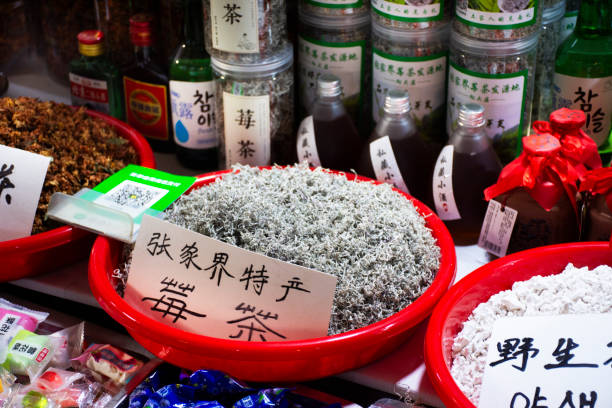
To balance the richness of Tujia cuisine, one must embrace Berry Tea. Grown at high altitudes in the Wuling range, this “divine grass” is naturally covered in a white, frosty-looking flavonoid. It is a natural anti-inflammatory. A cup of Berry Tea after a heavy meal of Sanxiaguo is the local secret to maintaining digestive health and energy for the next day’s climb.
Cuisine is an extension of geography. The jagged peaks of Zhangjiajie created a micro-climate that dictated the character of its ingredients.
When you sit in a wooden lodge, watching the mist roll over the peaks while a pot of Sanxiaguo bubbles before you, you are not just consuming calories. You are tasting the result of a thousand-year dialogue between a resilient people and a wild, vertical landscape. To appreciate the “heavy flavors” of the mountains is to truly understand the spirit of Zhangjiajie.