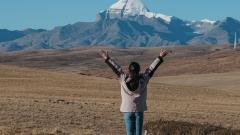

Among all the palaces in the world, the Potala Palace stands apart for one defining reason—its unparalleled spiritual significance. It is not merely a seat of political power, nor solely a monastic institution; instead, it is a monumental symbol where religion, history, politics, and art converge into a single sacred landmark.
If Tibet is a land that shakes the soul, then the Potala Palace is its beating heart. If Lhasa is the crossroads of faith, then the Potala Palace is the closest place one can stand to the source of that faith. Most travelers only witness its exterior—majestic, towering, luminous under the highland sun. Yet the true astonishment lies inside the Potala Palace. The moment you step through its entrance, time seems to slow; each step and each glance feels like reading a chapter from a thousand-year-old story.
Historical Background: The Highest Palace Closest to Heaven
The origins of the Potala Palace date back to the 7th century during the reign of King Songtsen Gampo. It was later massively expanded in the 17th century by the Fifth Dalai Lama, forming the grand architectural complex seen today. The palace consists of two main parts:
White Palace (Administrative & Residential Area)
The residence and political center of successive Dalai Lamas, where governmental affairs were handled.
Red Palace (Spiritual and Religious Core)
Home to:
- The stupas of Dalai Lamas
- Sacred chapels and meditation chambers
- Priceless Tibetan scriptures and artworks
If the Potala Palace were a human body, the White Palace would be its flesh and the Red Palace its soul.
The Potala Palace is located on Red Hill in Lhasa, the Tibet Autonomous Region of China. “Potala” is a transliteration of the Sanskrit word “Potalaka” (Mount Potalaka), which originally refers to the island believed to be the dwelling place of Avalokiteshvara, the Bodhisattva of Compassion.
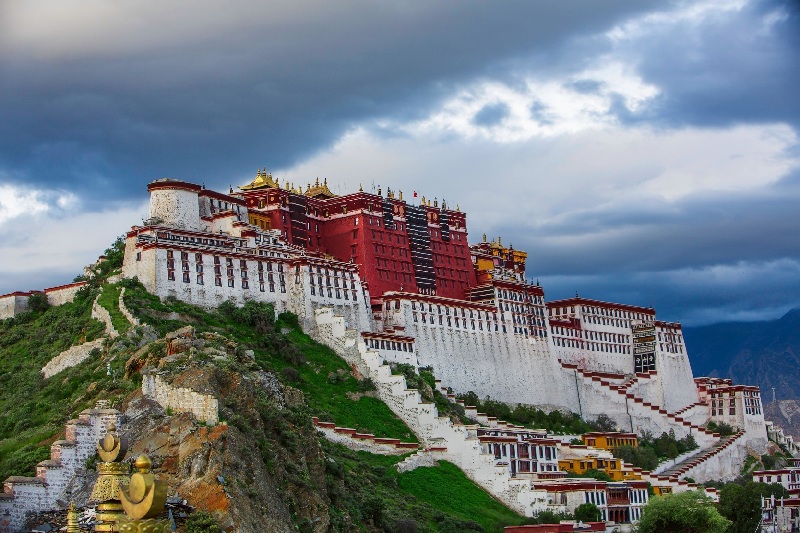
Potala Palace
How to Book Potala Palace Tickets: Why It’s Getting Harder
Due to strict daily visitor limits, tickets are increasingly difficult to obtain.
Official Reservation (Requires Luck)
- Booking required 1–7 days in advance
- Real-name system
- Almost impossible during peak seasons
Join a Travel Group
Travel agencies with guaranteed ticket quotas are the most reliable option for entry.
Important Restrictions
- No oxygen bottles, selfie sticks, or large backpacks
- Photography strictly controlled
- Must follow guide and security instructions
Interior Route and Highlight Breakdown (Step-by-Step Exploration)
The interior visit is limited to 60 minutes, but understanding the route helps you capture its most meaningful sections. The journey moves from the entrance, through the White Palace, and finally into the profound spiritual core: the Red Palace.
Climbing Toward the Entrance: A Ritual Before Stepping Into the Sacred
Mountain Path Staircase
The ascent begins along white stone steps—a symbolic transition “from the secular into the sacred.”
Along the way:
- Observe palace walls several meters thick
- Traditional rammed-earth structure with mineral pigments
- Rough texture revealing centuries of weathering
Traveler impressions:
As travelers climb, heartbeats rise with the altitude; yet with each step, the solemnity of the palace becomes more palpable.
Entering the White Palace: The Center of Tibetan Governance
The White Palace consists of seven floors, once serving as the administrative and residential space for the Dalai Lamas.
The Main Hall: Zhacang Lakang
The first chamber inside the palace.
Highlights:
- Historic murals depicting Songtsen Gampo
- Columns wrapped in cloth and khatas for purification
- Early-period Buddhist statues and artifacts
Atmosphere:
Dimly lit yet spiritually powerful—like stepping into a sacred time tunnel.
East Sunshine Hall — The Most Elegant Room in the White Palace
A brightly lit room decorated with golden window frames.
Highlights:
- Morning sunlight symbolizing wisdom
- Walls covered with Jataka tales and historical murals
- Intricate Tibetan carpets
- The Dalai Lamas’ thrones
Often regarded as the most beautiful hall in the White Palace.
Dalai Lama Living Quarters
Simple yet deeply symbolic.
Highlights:
- Low Tibetan beds, study tables, scripture cabinets
- Traditional stoves using barley and yak dung
- Clay teapots and basic utensils
The simplicity reflects the Dalai Lamas’ emphasis on study and meditation rather than comfort.
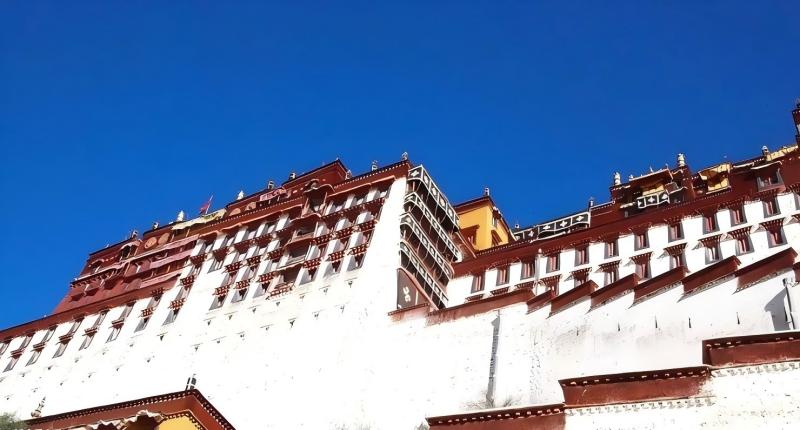
White Palace
Entering the Red Palace: The Spiritual Core of the Potala
The Red Palace embodies the sacred heart of Tibetan Buddhism.
It contains:
- Dalai Lama stupas
- Major prayer halls
- Scripture repositories
- Masterpiece murals
- Ritual chambers
The Fifth Dalai Lama Stupa Hall — The Greatest Sacred Highlight
A chamber that often silences visitors instantly due to its immense spiritual energy.
Specifications & Features:
- 15 meters high
- Enshrined in over 1,100 kg of gold
- Decorated with coral, pearl, dzi beads, amber, turquoise, and glass
- Murals illustrating the Fifth Dalai Lama’s life and reforms
Why it is monumental:
He unified Tibet’s religious and political systems and expanded the Potala Palace to its present grandeur.
Traveler impression:
Some visitors are moved to tears—an instinctive response to the weight of faith and history.
Stupa Halls of Other Dalai Lamas
- Each stupa has its own style and decorations:
- 7th Dalai Lama Stupa: Elegant gold and silver work
- 10th Dalai Lama Stupa: Exquisite carvings and symbolic motifs
Before each stupa burns countless butter lamps, symbolizing continuity and blessings.
Great Assembly Hall (Lecture Hall)
Where major sermons and debates were held.
Features:
- 48 massive wooden pillars
- Colorful cloth banners
- Blue-gold geometric ceiling
- Murals depicting Tibetan history and diplomacy
Atmosphere majestic yet serene.
Chambers of Relics and Sacred Objects
Extremely rare displays include:
700–1000-year-old bronze Buddha statues
Tantric ritual objects
Vajras, conch shells, treasure vases
Human-bone instruments (symbolic Tantric items)
Mural Corridors — The Greatest Artistic Treasure of the Potala
Murals painted with mineral pigments such as cinnabar, azurite, malachite, and lapis lazuli.
Key themes:
- Tibetan historical epics
- Jataka tales
- Construction scenes of the Potala Palace
- Every mural deserves slow, careful viewing.
Scripture Chambers — A Treasury of Ancient Wisdom
Housing:
Handwritten Kangyur and Tengyur
Medical texts and astronomical manuals
Gold-ink scriptures
Many over a thousand years old.
Site of the Golden Urn Ritual
Where the reincarnation of Dalai Lamas and Panchen Lamas was traditionally confirmed.
Highlights:
- The original golden urn
- Ritual murals
- A solemn, deeply historical setting
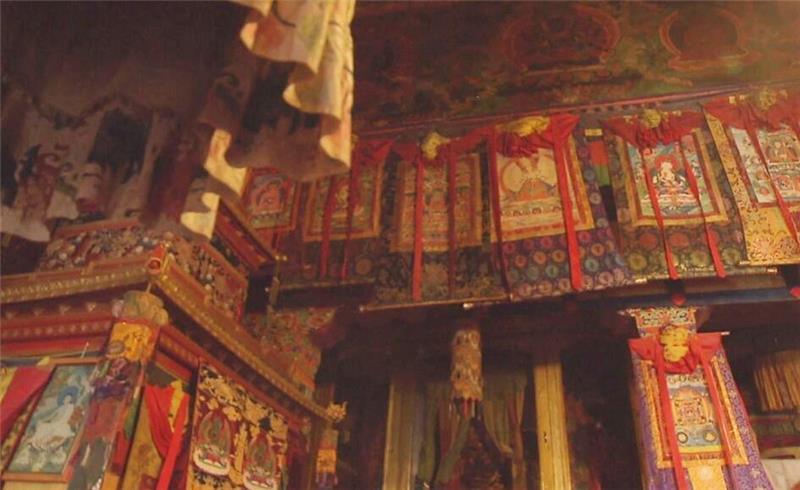
Potala Palace Interior
Exit Route
Descending the palace offers a sweeping view of Lhasa:
- Barkhor Street
- Lhasa River
- Snow mountains and clouds
- Close-up textures of palace walls
- Steps are uneven—walk slowly.
Recommended Visiting Route (Most Efficient 60-Min Plan)
The most efficient visiting route within 60 minutes, fully following the on-site arrangement:
- Entrance Gate → Mountain Stairway
- Zhacang Lakang (White Palace Entrance Hall)
- Main Halls of the White Palace (East Sunshine Hall, Living Quarters)
- Red Palace Entrance → Stupa Hall of the Fifth Dalai Lama (key highlight)
- Stupa Halls of the Successive Dalai Lamas → Great Assembly Hall
- Tantric Halls and Treasure Chambers
- Mural Corridor (must-see)
- Golden Urn Selection Hall
- Scripture Chambers and Buddha Halls
- Exit → Descending Staircases → Palace Square
Artistic Details Inside the Potala Palace: The Aesthetics of Ancient Civilization
If you observe closely, you will find that the art inside the Potala Palace is not merely religious symbolism, but a masterful expression of ancient civilization and craftsmanship.
Murals (A Must-See Highlight)
The murals within the Potala Palace are among the most precious cultural treasures in Tibet and throughout China.
Common themes include:
- Jataka tales depicting the previous lives of the Buddha
- Tibetan history and ancient battles
- Cosmological views explaining the formation of the world
Each mural is rich in detail. The pigments are derived from natural minerals, allowing the colors to remain vivid for over a thousand years in the dry highland climate.
Thangka Paintings
Many thangkas are painted with gold powder, and some rare pieces even use powdered human bone as pigment—representing the ultimate fusion of faith and artistic devotion.
Sculptures and Gold & Silver Ritual Objects
Tibetan Buddhist ritual objects feature diverse forms and profound symbolic meanings.
Items such as conch shells, vajras, treasure vases, and Dharma wheels each carry deep religious and philosophical significance.
If you’d like a more academic tone, shortened version, or SEO-optimized adaptation, I can refine it further.
Nearby Sites to Pair With Your Visit
- Potala Palace Square— best for full-view photography
- Barkhor Street — feel the pulse of faith
- Jokhang Temple— the spiritual center of Tibetan Buddhism
Important Tips for Visitors
Altitude
Over 1,000 steps; altitude sickness common.
Prohibitions
- No photography in many halls
- No lighters, large bags, or noise
Clothing
- Wear anti-slip shoes
- Dress lightly—interior is warmer than outdoors
Who Should Visit the Potala Palace?
- Travelers who love history
- Those interested in Tibetan Buddhism
- Anyone wanting a deeper, more authentic Tibetan experience
Entering the Potala Palace Is Entering the Deepest Part of Tibet’s Soul
From the outside, the Potala Palace is magnificent.From the inside, it is humbling.There is no noise here—only the echo of history.There is no extravagance—only the craftsmanship of ancient masters.This is not an ordinary trip; it is a gentle awakening of the soul.Everyone who steps inside emerges quieter, softer, and closer to understanding the essence of Tibetan belief.
If you wish to secure limited-entry tickets and explore the Potala Palace safely and deeply, China Dragon Travel offers:
- Guaranteed real-name Potala Palace entry
- Professional local guides
- Altitude travel support
- Private car and driver services
Not only will you see the Potala Palace—you will understand it.Your next highland story begins with China Dragon Travel.