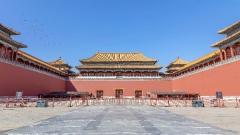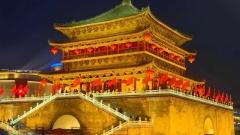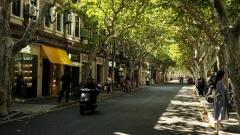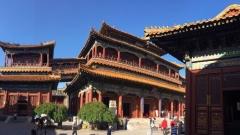

To understand the cuisine of Xi’an, one must first look toward the vast and fertile Guanzhong Plain. Xi’an, known in ancient times as Chang’an, served as the capital for thirteen dynasties and stands as the cradle of Chinese civilization and the eastern gateway of the Silk Road. Its unique geographical and historical status has earned it the title of the “Carbohydrate Capital.” The culinary logic here is a thousand-year-old symphony of the Central Plains’ agrarian traditions meeting the nomadic cultures of the Western Regions. The high-quality wheat of the Guanzhong Plain provides a solid foundation, while the spices brought via the Silk Road—cumin, black pepper, and cardamom—infuse these hearty carbohydrates with an exotic soul. In Xi’an, every dish carries the weight of centuries; when you sit beneath the ancient city walls sipping a hot broth, you are tasting the very essence of Chang’an.

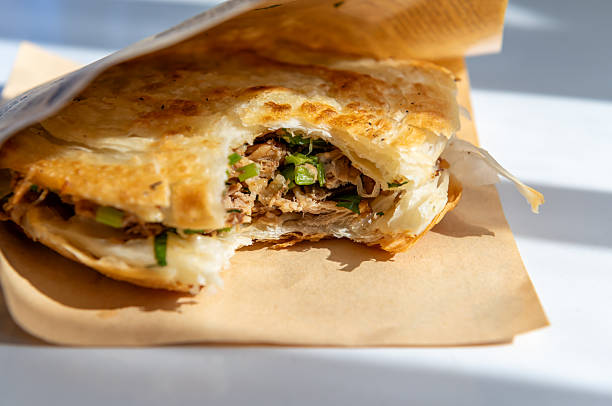
At the heart of Xi’an’s culinary identity is Roujiamo, often affectionately called the “Chinese Hamburger.” Its history can be traced back to the Qin and Han dynasties. The core of an authentic Roujiamo lies in the perfect marriage of “Lazhi” braised meat and the “Baiji” flatbread. The meat is slow-cooked in a centuries-old master brine with dozens of precious spices until it reaches a state where it is tender enough to melt in your mouth without being greasy. The bread, meanwhile, must feature the “Tiger’s Back, Steel Ring, and Chrysanthemum Heart” pattern—crispy on the outside and soft on the inside. When the steaming bread is sliced open and stuffed with finely chopped meat soaked in red-hot gravy, every bite releases a rustic and generous warmth that has remained the most enticing scent on Xi’an streets for millennia.
Mutton Paomo (crumbled flatbread in mutton soup) represents the ultimate ritual in Xi’an dining and serves as a living fossil of the Silk Road’s cultural fusion. This dish is essentially a grand chorus of nomadic and settled civilizations. The highest art of eating Paomo lies in the act of “breaking” (bai). For a local, the two rock-hard pieces of bread must be painstakingly broken by hand into pieces the size of soybeans. This is not only to ensure the rich broth deeply penetrates every crumb during cooking but also acts as a form of meditation and a social prelude. The hand-broken bread is then handed to the chef, who flashes it in a savory, concentrated mutton broth simmered for hours. Served with glass noodles and cilantro, and accompanied by sweet pickled garlic and chili paste, this profound and layered texture is a microcosm of the ancient capital’s grandeur and inclusivity.
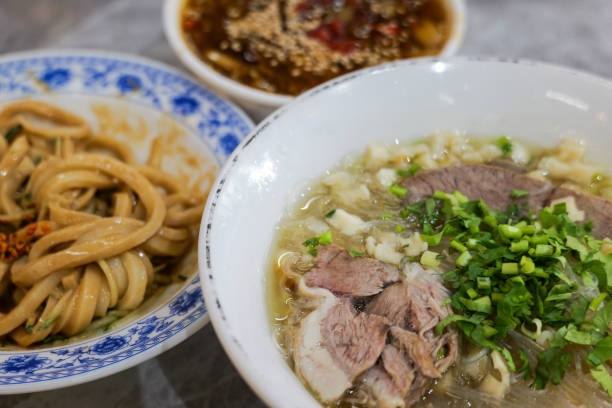
The noodle culture of Xi’an is a living history book in itself. With dozens of varieties, the most powerful is undoubtedly the wide, belt-like BiangBiang Noodles (or Oil-Sprinkled Noodles). This dish showcases the bold and heroic character of the Guanzhong people: hand-pulled noodles with incredible elasticity covered in a thick layer of chili flakes, minced garlic, and green onions. The most evocative moment is when a ladle of scorching rapeseed oil is poured over the top, creating a sizzling “chi-la” sound that releases an intoxicating smoky aroma. This combination of pure spiciness and wheat fragrance was the ultimate energy source for laborers over the centuries. Additionally, Liangpi (cold skins) offers a delicate surprise. Whether it is the chewy Qin Zhen rice skins or the rich Majiang (sesame paste) flour skins, they serve as a refreshing salvation during the city’s sweltering summers, showcasing the finer, sour, and spicy side of Xi’an’s palate.
The culinary map of Xi’an extends far beyond the ancient city walls into the broader Guanzhong region. Qishan Saozi Noodles represent the refined etiquette of the Western Prefecture, emphasizing nine specific characteristics: “sour, spicy, fragrant, thin, chewy, smooth, hot, sparse, and oily.” The essence of this dish lies in the sour, appetizing broth and the vibrant red meat “saozi” (toppings), reflecting the sophisticated lifestyle of the ancient Zhou and Qin rituals. In Qian County, the Guokui flatbread shocks travelers with its “shield-like size and book-like thickness.” This slow-baked bread was once the dry rations for ancient soldiers and remains a testament to traditional charcoal-baking techniques today. Along with Huxian Soft Noodles, Tongguan Roujiamo, and Lantian Heluo (buckwheat noodles), every local flavor is interwoven with local water, dialects, and legends, collectively building the vast and rich “Guanzhong Appetite.”
For travelers from afar, seeking out the flavors of Xi’an is an adventure that requires strategy. While the Muslim Quarter is a vibrant and essential starting point, the true old-world tastes of Chang’an are often hidden in the alleys of Dapi Yuan, Sajin Qiao, or the old lanes near the Southeast corner of the city walls. In Xi’an, do not fear the humble stools or the long queues; they are often the coordinates for the best flavors. For those who are not fond of spice, the “sourness” in Xi’an cuisine perfectly balances the richness of the food, and a cold, bubbly bottle of Ice Peak (Bingfeng) Soda is the ultimate soulmate for any carb-heavy meal. In this ancient city, every mouthful is more than just food; it is the inheritance of three thousand years of passion and history. Standing beneath the Bell Tower as neon lights reflect off ancient stones, with the scent of cumin and roasted meat drifting by, you will realize that Chang’an has never left.