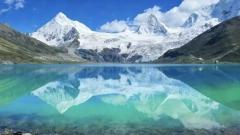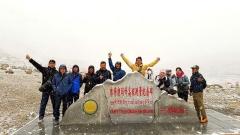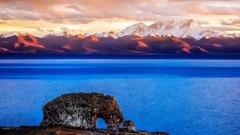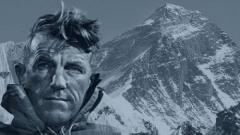

The Lhasa-Kathmandu overland journey is a classic cross-border travel route connecting China’s Tibet and Nepal. Following the China-Nepal Friendship Highway, it transitions gently from the snow-capped plateau to the tropical valleys of Nepal, allowing travelers to admire the magnificent snow-capped mountains, sacred lakes, wetlands and canyons along the way, as well as experience the unique religious buildings and folk customs of both places. This route combines stunning natural scenery with profound cultural experiences, making it an ideal choice for travelers who love in-depth travel and cross-border exploration. It not only offers the solemnity of Tibet’s religious culture but also the unique charm of Nepal, becoming a highly recommended overland cross-border travel route in Asia.
Lhasa-Kathmandu Cross-Border Overland Adventure
Route Overview and Geographical Features
Centered on the China-Nepal Highway, the Lhasa-Kathmandu overland journey is a core land passage connecting the Tibet Autonomous Region of China and the Federal Democratic Republic of Nepal, with a total length of about 900 kilometers. It is divided into two major sections: the Chinese section and the Nepalese section. The altitude difference along the route is significant, and the natural scenery changes dramatically—from the alpine meadows on the Chinese side to the mountainous and valley landscapes on the Nepalese side, presenting a rich and varied travel experience.
This route is not only a transportation artery but also a cultural corridor integrating Tibetan Buddhism and Hinduism. Travelers can come into contact with different religious buildings, living customs and dietary cultures during the journey, experiencing a visual and spiritual impact. With mature supporting facilities along the way, it is suitable for both group tours and self-driving trips, meeting the travel needs of different travelers.
Core Route Composition
- Chinese Section:Departing from Lhasa, passing through Shigatse and Kyirong, and exiting at the Kyirong Port.
- Nepalese Section:Entering from the Rasuwa Gadhi Port and arriving in downtown Kathmandu.
- Key Nodes Along the Route:Lhasa, Shigatse, Mount Everest Base Camp, Kyirong Valley, Kathmandu Valley.
The route stretches along the southern foot of the Himalayas. On the Chinese side, the scenery is dominated by alpine landscapes, with numerous mountain passes and sacred lakes above 5,000 meters above sea level. On the Nepalese side, the climate is mild and humid, with dense vegetation, forming a sharp contrast with the alpine scenery of Tibet, thus creating a complete cross-border travel experience.
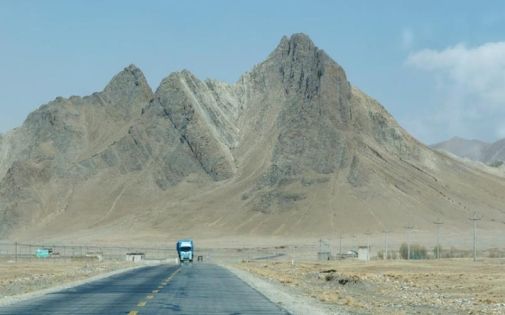
China-Nepal Highway
Pre-Trip Preparation and Document Procedures
A thorough pre-trip preparation is the foundation for a smooth Lhasa-Kathmandu overland journey, covering documents, transportation, health and items. Advance planning can effectively avoid unexpected situations and enhance the travel experience.
Document and Visa Procedures
- Passport:Must be valid for more than 6 months with at least two blank visa pages, serving as the core document for cross-border travel.
- Nepalese Visa:Can be applied for at the Nepalese Consulate in Lhasa, located on Roblin Road, Chengguan District, Lhasa. The processing time is 10:00 AM to 12:30 PM from Monday to Friday, and the visa can be picked up on the same day or the next day. Required materials include the original passport, a 2-inch white-background photo and a visa application form.
- Border Permit:If the itinerary includes visiting border areas such as Mount Everest Base Camp, a border permit must be applied for in advance in Lhasa with an ID card and itinerary. It is not required if no border areas are visited.
- Document Backup:It is recommended to scan and back up documents such as passports, visas and ID cards, and carry a paper backup separately from the original to prevent loss.
Item and Health Preparation
- Altitude Adaptation Items:The section from Lhasa to Kyirong has a high altitude. It is necessary to carry anti-altitude sickness medicine, portable oxygen cylinders and warm clothing. Avoid strenuous exercise and adapt to the altitude gradually.
- Cross-Border General Items:Adapters (Nepal uses European plugs with a voltage of 220V); waterproof equipment (rain is common in Nepal, so backpacks and clothes should be waterproof); common medicines (cold medicine, gastrointestinal medicine, band-aids, etc.) to deal with common physical discomfort along the way.
- Currency andPayment: RMB is used in China, and Nepalese Rupees are used in Nepal. Nepalese Rupees can be exchanged in Lhasa or at the Kyirong Port. Cash payment is supported by most merchants along the way, so it is recommended to carry sufficient cash.
- Communication andamp; Navigation:Activate international roaming in advance or buy a local Nepalese phone card. Download offline maps to ensure smooth navigation and communication along the way.
Detailed Itinerary of the Chinese Section
The Chinese section is the core of the alpine experience of the Lhasa-Kathmandu overland journey, with a total length of about 800 kilometers and a driving time of about two days. It allows travelers to appreciate the magnificent scenery of Tibet’s Shigatse area and the profound Tibetan Buddhism culture, which is an unmissable part of the journey.
Lhasa to Shigatse Itinerary
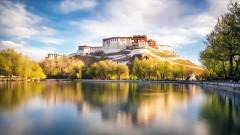
As the starting point of the journey, Lhasa is recommended to stay for 1-2 days to adapt to the altitude. Visit classic attractions such as the Potala Palace, Jokhang Temple and Barkhor Street to experience the profound heritage of Tibetan Buddhism and adjust your physical condition for the subsequent journey.
Traveling west along National Highway 318 from Lhasa, you can enjoy the magnificent scenery of the Nyainqentanglha Mountains in the distance. Upon arriving in Shigatse, visit the Tashilhunpo Monastery, one of the six major monasteries of Tibetan Buddhism Gelugpa Sect. It has magnificent architecture and precious Buddha statues, serving as the religious and cultural center of western Tibet. The urban area of Shigatse has complete accommodation and catering facilities, where you can rest and replenish supplies, and taste local Tibetan specialties such as butter tea and tsampa.
Shigatse to Kyirong Port
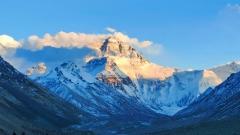
Continuing westward from Shigatse, enter National Highway 219. You can choose to visit Mount Everest Base Camp to get up close to the world’s highest peak and feel its magnificent momentum. Passing through the Kyirong Valley, you can enjoy the stunning scenery of the “Little Jiangnan of Tibet”—with lush vegetation and a mild climate, it is a perfect place to rest before exiting the country.
Kyirong Town is the last resting place before exiting the country. You can experience local folk customs here, taste alpine specialties and adjust your state to prepare for crossing the border into Nepal.
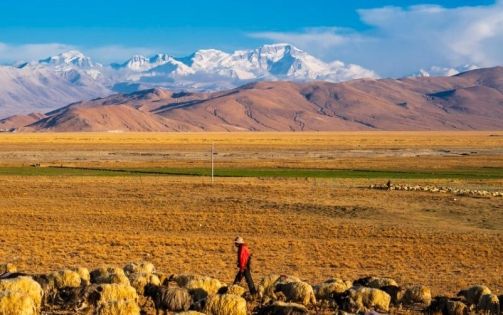
Shigatse
Transportation and Accommodation
- Transportation:From Lhasa to Kyirong Port, you can choose carpooling or a coach. Carpooling is usually a 15-seat commercial vehicle, which is flexible and can stop at scenic spots along the way, costing 300-600 RMB per person. The state-owned Liuwu Coach Station operates regular coaches to Kyirong, which are cost-effective and suitable for travelers on a budget.
- Accommodation:There are various grades of hotels and homestays in Shigatse and Kyirong Town, meeting different needs. The catering mainly includes Tibetan food and Sichuan cuisine, with a moderate taste and convenient supply along the way. It is recommended to carry a small amount of dry food and drinking water for the journey.
Nepalese Section Itinerary
After exiting the country at the Kyirong Port, cross the Rasuwa Gadhi Port to enter Nepal. This section of the journey is about 160 kilometers, with a driving time of about 8 hours. The highway winds along the mountains, allowing travelers to experience Nepalese folk customs and natural scenery, and finally arrive in downtown Kathmandu.
Exit and Transportation
When exiting the country, you need to carry your passport and visa, and cooperate with the customs inspection of China and Nepal. The process is simple and smooth. After crossing the border, you can carpool to Kathmandu at the port. The vehicles are mainly local Nepalese jeeps and coaches, costing 1,000-3,000 Nepalese Rupees per person for a journey of about 8 hours. The mountain roads are winding along the way, where you can enjoy the mountain scenery of Nepal.
The highways in Nepal have large terrain undulations and some bumpy sections. Travelers are advised to be mentally prepared, appreciate the rural scenery and folk landscapes along the way, and experience the local living atmosphere.
Scenery and Humanities
The Nepalese section passes through many villages and mountains, where you can see traditional Nepalese dwellings, rice fields and temples. The local people are warm and friendly, with a strong religious atmosphere. When passing through Rasuwa Gadhi and other places, you can stop briefly to taste local snacks and buy handcrafted souvenirs, experiencing the bustling local market life.
When approaching the Kathmandu Valley, the architectural style becomes richer, with Hindu temples and Tibetan Buddhist temples standing side by side, showing obvious cultural integration characteristics, allowing you to feel the unique charm of Nepal in advance.
Kathmandu Guide
After arriving in Kathmandu, it is recommended to stay in the Thamel District, a gathering place for tourists with complete accommodation, catering and shopping facilities. You can easily find suitable hotels and restaurants here.
Classic attractions in the urban area include Swayambhunath Stupa, Boudhanath Stupa, Pashupatinath Temple and Bhaktapur Durbar Square. These attractions have exquisite architecture and a long history, focusing on showing Nepal’s religious culture and architectural art.
Kathmandu has rich food. You can taste traditional Nepalese cuisine such as dal bhat and milk tea, experience the local dietary culture, and buy unique souvenirs such as thangkas and wood carvings in the local handicraft stores.
Best Travel Season and Itinerary Planning
Choosing the right travel season and planning the itinerary reasonably can greatly improve the experience of the Lhasa-Kathmandu overland journey, helping you avoid bad weather and peak passenger flow and fully enjoy the scenery along the way.
Best Travel Season
- Spring (March to May):Mild climate, with blooming flowers along the way and clear snow-capped mountains, suitable for sightseeing and cultural experiences—it is the golden travel season.
- Autumn (September to November):Clear weather and high visibility, allowing you to clearly see Mount Everest and other peaks. The climate in both the alpine and Nepalese areas is comfortable, providing an excellent travel experience.
- Seasons to Avoid:From June to August, Nepal has heavy rain, which may cause mudslides and other geological disasters, affecting the itinerary; from December to February, the alpine sections are cold, with snow in some mountain passes, making travel more difficult.
Itinerary Planning Suggestions
- Standard Itinerary:1 day for adaptation in Lhasa, 1 day from Lhasa to Shigatse, 1 day from Shigatse to Kyirong, 1 day from Kyirong to Kathmandu, and 2-3 days for sightseeing in Kathmandu. The total duration is about 6-7 days, with a comfortable rhythm to fully experience the scenery along the way.
- In-Depth Itinerary:Add a stay at Mount Everest Base Camp, in-depth tour of Kyirong Valley and visits to small towns around Kathmandu Valley. The total duration is about 10-12 days, suitable for travelers with ample time.
- Itinerary Rhythm:Focus on altitude adaptation in the Chinese section to avoid rushing; flexibly adjust the Nepalese section according to physical strength and interests to ensure travel comfort.
Travel Precautions and Safety Tips
For cross-border travel, it is important to pay attention to cultural etiquette and safety protection, abide by local regulations, respect folk culture, and ensure a safe and smooth journey.
Cultural Etiquette
- Tibet Area: Respect Tibetan Buddhism, take off your hat and visit quietly when entering temples, and do not touch Buddha statues and ritual objects at will; most local residents believe in Tibetan Buddhism, so communication and interaction should be polite and friendly.
- Nepal Area: Respect Hindu and Buddhist customs, take off your shoes when entering temples, and ask in advance before taking photos of local residents and religious sites; Nepalese people are used to carrying things on their heads, so do not touch others’ heads at will and keep a polite distance.
Safety and Health
- Alpine Safety:The Chinese section has a high altitude. Avoid strenuous exercise. If you experience altitude sickness symptoms such as headache and nausea, rest and take oxygen in time, and seek medical attention if severe.
- Traffic Safety:There are many mountain roads along the way. Choose regular vehicles and drivers, fasten your seat belt, and do not take unqualified vehicles.
- Food Safety: Choose clean and regular restaurants, do not drink unboiled water, and wash fruits thoroughly to avoid gastrointestinal discomfort.
- Property Safety: Take good care of personal belongings, keep important documents and cash separately, and stay alert in crowded places.
The Warm Interpretation of the Cross-Border Journey
The Lhasa-Kathmandu overland journey is a classic route integrating natural scenery, humanistic experience and cross-border adventure. From the snow-capped plateau to the Nepalese valley, from the Tibetan Buddhist sacred land to the Hindu cultural center, it crosses the Himalayas and allows you to appreciate two distinct but equally profound cultures and landscapes.
This route not only offers magnificent natural scenery such as snow-capped mountains, sacred lakes and canyons but also allows in-depth contact with the folk customs, religious beliefs and lifestyles of Tibet and Nepal, which is a double baptism of vision and spirit.
Whether you are a traveler who loves natural scenery or a enthusiast of cultural exploration, you can gain unique experiences and memories from this journey. Thorough pre-trip preparation, reasonable itinerary planning and respect for local culture are the keys to a smooth cross-border journey.
Embark on the Lhasa-Kathmandu overland journey, follow the track of the China-Nepal Highway, cross the Himalayas, start an unforgettable cross-border adventure, and feel the unique charm of this journey in Asia.