
Terraces are one of the most sought-after landscapes for photographers visiting China. Magnificent and grand, they change colors and textures with the seasons – from mirror-like water surfaces in spring to surging golden waves in autumn—offering endless inspiration for photographic creation. However, the essence of capturing truly impressive works lies in finding shooting locations with unique perspectives that fully showcase their light and shadow rhythms and the beauty of lines. This guide carefully compiles several recognized best terrace shooting destinations, including recommended shooting times, specific spots, and practical tips, aiming to help you efficiently complete pre-trip preparations with a practical orientation.
Core Elements to Understand Before Shooting Terraces
Before heading to the terraces, mastering a few basic concepts will make your goals clearer and help you capture satisfying photos more easily. Terraces are photogenic mainly due to three factors: regular lines, a layered sense of rhythm, and the reflection of light on the surface of paddy fields or crops. Therefore, finding China’s best terrace shooting locations essentially means locating a high vantage point where you can clearly see the direction of these lines and conveniently use the light of sunrise and sunset, or combine with the common morning mist and sea of clouds in the local area.
Throughout the year, terraces present three main appearances, which determine your shooting theme:
- Irrigation period (usually winter and spring): Terraces are filled with water, like countless mirrors. The main focus is on shooting the reflected sky, clouds, and glow, resulting in pure and dreamy images.
- Growing period (spring and summer): Rice grows, covering the terraces in emerald green, full of vitality. It is suitable for expressing the layers of green and the softness of lines.
- Harvest period (autumn): Rice matures, painting the mountains golden. With rich and warm colors, it is the best time to show harvest and the texture of the earth.
The season you choose directly determines the tone of your photos. In addition, the weather in mountainous areas changes quickly—check the weather forecast in advance. Days after rain are often the best time to encounter ideal mist.
Where to Shoot Specifically: Recommendations for Three Classic Terrace Shooting Destinations
There are many terraces in China, but for photography, the following destinations are most recommended due to their high shootability, magnificent scenery, and relatively complete supporting facilities.
- Yunnan Yuanyang Hani Terraces – Outstanding for Sea of Clouds and Scale
Key attractions: Vast area, frequent magnificent sea of clouds, and integration of terraces with Hani villages.
Best shooting season: December to April of the following year is the irrigation period. Terraces resemble countless mirrors, making it the best shooting season. Among them, the sea of clouds appears most frequently from January to March.
Must-know shooting spots:
– Duoyishu Viewing Platform: The absolute top choice for shooting sunrises. In the morning, sunlight breaks through the clouds and shines on the layered terraces, with villages emerging in the mist, creating a stunning scene. It is recommended to arrive before dawn to secure a good spot.
– Badaguan Scenic Area: Suitable for shooting sunsets. With an extremely wide view, you can see the panoramic view of tens of thousands of mu of terraces. When the sun sets, thousands of layers of terraces reflect light simultaneously, presenting a grand spectacle.
– Laohuzui Scenic Area: (Please confirm whether it is open before traveling) Once a classic sunset viewing spot, featuring terraces with strong three-dimensional sense and distinct lines.

Yunnan Yuanyang Hani Terraces
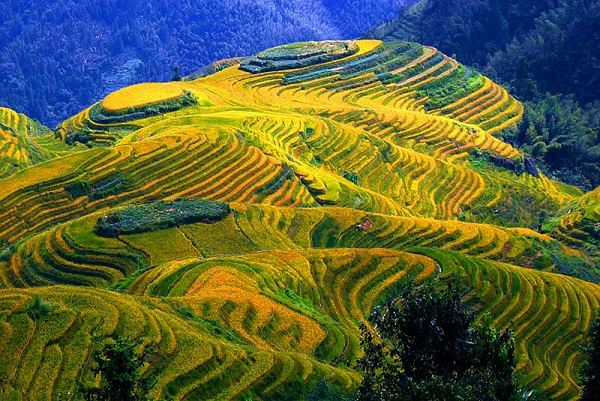
- Guangxi Longsheng Longji Terraces – Soft Lines and Rich Ethnic Characteristics
Key attractions: Beautiful curved terraces surrounding Zhuang and Yao villages, with rich landscape layers.
Best shooting season: Mid-April to early June (irrigation and transplanting, with mirror effect); July to mid-September (emerald green); late September to mid-October (golden ripe rice).
Must-know shooting spots:
– Jinkeng Grand Village (Red Yao Terraces): “Xishan Shaoyue” and “Thousand-Layer Ladder” viewing platforms are excellent locations for shooting sunrises. Thin morning mist often lingers between the terraces on the mountainside.
– Ping’an Village (Zhuang Terraces): “Seven Stars Accompanying the Moon” and “Nine Dragons and Five Tigers” are two iconic landscapes. It is more suitable to shoot here under the side light in the afternoon, as the light can well outline the curved ridge lines of the terraces.
Guangxi Longsheng Longji Terraces
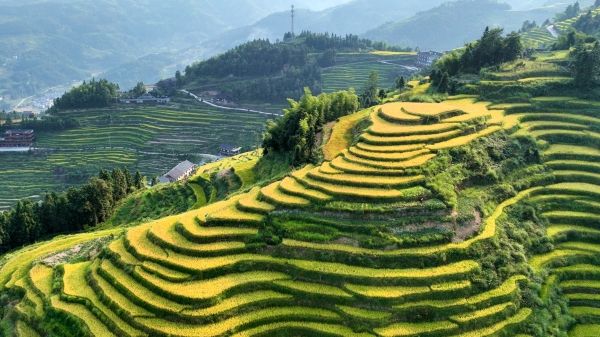
- Hunan Xinhua Ziquejie Terraces – Primitive and Steep Lines
Key attractions: Terraces rely on natural gravity irrigation, with steep slopes, dense and primitive lines, and water all year round, making it easy to capture reflections.
Best shooting season: Spring irrigation period (April-May) and autumn harvest period (September) are the best. The snow scene in winter is also unique.
Must-know shooting spots:
– Yaorenchong Viewing Platform: A great place for shooting panoramic views and sunsets. At sunset, the light can illuminate the terraces of the entire valley.
– Laomatang, Bagua Chong: Suitable for shooting local details and curves of the terraces. Mist is easy to form in the morning, allowing you to capture hazy and soft images.
Hunan Xinhua Ziquejie Terraces
How to Shoot On-Site: Key Skills and Preparations
Now that you know the locations, the next step is to master specific on-site shooting methods.
Pre-Departure Preparation Checklist
– Confirm season and weather: Double-check the current season of the terraces you are visiting (whether irrigated, whether golden). Check the weather forecast before departure—mornings after rain are most likely to have sea of clouds.
– Bring the right photography equipment: Wide-angle lens (for large scenes), telephoto lens (to compress space and shoot lines and figures of distant terraces), stable tripod (essential for low light in the morning and evening), graduated neutral density (GND) filter (to prevent overexposure of the sky).
– Pay attention to clothing and shoes: Shooting spots are all in mountainous areas, which are cold in the morning and evening—bring warm clothes. Be sure to wear non-slip shoes suitable for walking, as the ridge paths may be slippery.
Seize the Most Precious Shooting Time of the Day
For terrace photography, the most important times are half an hour before sunrise to one hour after sunrise, and half an hour before sunset to twenty minutes after sunset. During this period, the light is soft and warm, and the water surface of the terraces will reflect golden or pink light, with the strongest three-dimensional sense. Examples include sunrises at Yuanyang’s Duoyishu and sunsets at Badaguan.
Practical Composition and Lighting Methods
– Make good use of lines: Use the curved ridge lines of the terraces as guide lines to let the audience’s sight penetrate deep into the frame along the lines.
– Express layers: Use a telephoto lens to capture the layered parts of the terraces, emphasizing their sense of repetition and gradual rhythm.
– Add a foreground: Including a tree, a few leaves, or a stone as a foreground in the frame can immediately enhance the three-dimensional sense of the photo.
– Choose appropriate light: Try to shoot with side light or backlight, which can create obvious shadows on the terraces’ ridges, making the lines particularly prominent.
– Incorporate human elements: Properly including working farmers, walking cattle, or village cooking smoke in the frame can make the photo more vivid and storytelling.
Practical Suggestions for Itinerary and Accommodation
Good shooting also requires reasonable itinerary arrangements for support.
How to Arrange Transportation and Accommodation
These terrace scenic areas are all located in mountainous areas. From the county seat to each viewing platform, you usually need to take a chartered car or a local minibus. To not miss the sunrise, it is strongly recommended to stay in a guesthouse or homestay inside the terrace scenic area. This way, you can reach the viewing platform on foot or by short-distance transportation. Many accommodation options themselves offer good viewing angles.
How to Plan a Shooting Itinerary
It is recommended to focus on 1 to 2 terrace areas in one trip and stay for 2 to 3 nights instead of rushing. This way, you will have the opportunity to wait for ideal weather and familiarize yourself with the effects of each shooting spot under different lighting conditions. For example, in Yuanyang, you can go to Duoyishu to shoot sunrise in the morning and Badaguan to shoot sunset in the afternoon on one day; on another day, you can go to villages like Jingkou to shoot cultural themes.
Planning such a photography-centered itinerary requires considering transitions between different shooting spots, arrangements for morning and evening transportation, and accurate grasp of the best shooting times. If you find it cumbersome to arrange on your own, you can consult experienced photography tour operators like China Dragon Travel. They can arrange transportation, accommodation, and shooting schedules according to your shooting needs, saving you a lot of trouble in self-planning.
Start Planning Your Terrace Photography Trip
Terraced fields are among the most visually striking landscapes in China, but their true beauty depends heavily on timing, light, and viewpoint. From mirror-like flooded paddies to lush green growth and golden harvest scenes, each season offers a distinct photographic character. Choosing the right location and season is the key to transforming a beautiful scene into a memorable image.
Focusing on one or two terraced regions and allowing time for changing weather conditions often leads to stronger results than rushing through multiple destinations. Morning mist, side light, and layered compositions reveal the rhythm and structure that make terraced fields such compelling photographic subjects.
For photographers who prefer to concentrate fully on shooting rather than logistics, working with an experienced local operator can be a major advantage. China Dragon Travel has hands-on experience organizing photography-focused journeys to China’s most iconic terraced fields. Based on seasonal conditions and shooting priorities, their team can help design a practical and efficient travel plan—so you can focus on light, composition, and capturing the landscape at its best.