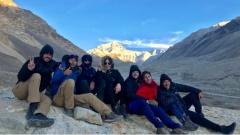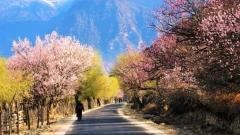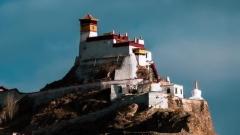

When planning a photography trip to Tibet, one of the most frequently asked questions is: What is the best time to visit Tibet for photography? The answer depends on what you hope to capture. With its majestic snow-capped peaks, turquoise lakes, ancient monasteries, and vast grasslands, Tibet offers extraordinary photographic opportunities throughout the year. Each season presents unique lighting conditions, atmospheric clarity, and natural beauty—spring brings peach blossoms and snowy backdrops, summer reveals lush meadows and dazzling starry skies, autumn offers crystal-clear views and golden forests, while winter showcases pristine blue ice and captivating cultural scenes.
Spring in Tibet (March–May): Peach Blossoms, Snow Peaks, and Melting Lakes
Spring is the season when Tibet warms up gradually from winter. The temperature rises in the daytime, but snow may still fall in high-altitude areas. At this time, southeastern Tibet enters the spring season first. The suitable shooting themes in this period include peach blossoms under snow-capped mountains, melting ice lakes and pastoral scenery in early spring.
March: Early Blooming Peach Blossoms and Fewer Tourists
In mid-to-late March, wild peach trees in Bomi and Gala Village of Nyingchi start to bloom. Mid-to-late March to early April every year is the best viewing period for Bomi Peach Blossom Valley, where tens of kilometers of wild peach forests are in full bloom. At this time, the background is white snow-capped mountains, and the pink peach blossoms form a color contrast with highland barley fields and Tibetan-style houses.
- Suitable shooting locations: Bomi Peach Blossom Valley, Gala Peach Blossom Village, peach blossoms on both banks of the Yarlung Zangbo Grand Canyon
- Light suggestions: The light is soft before 9 a.m. and after 4 p.m.. The noon sun is harsh, making the petals prone to overexposure. The light is gentle in the early morning and evening, making the peach blossoms more bright in color.
- Weather tips: There are occasional rain and snow in Nyingchi in March, so waterproof equipment is a must. The temperature in Lhasa is about 10 to 15 degrees Celsius in the daytime and drops to below zero in the morning and evening. Some mountain passes are covered with snow from March to April, so it is recommended to choose four-wheel drive vehicles.
April: Full Bloom of Peach Blossoms and Initial Thaw of Ice Lakes
Early to mid-April is the peak blooming period of peach blossoms in Nyingchi, and the viewing period of peach blossoms in Nyingchi lasts for two months, the longest in China. Meanwhile, the ice surfaces of Ranwu Lake and Basongcuo Lake start to melt, with the lake water showing a blue-green hue that contrasts with the grass slopes yet to turn fully green. The surface of Nam Co begins to thaw, with broken ice shimmering against the blue lake water.
- Suitable shooting locations: Reflections of Ranwu Lake, the Central Island of Basongcuo Lake, the Golden Sun on Namcha Barwa Peak at Sunrise. Suosong Village is the only spot where you can shoot both Namcha Barwa Peak and the peach blossoms by the Yarlung Zangbo River at the same time.
- Light suggestions: Use a polarizing filter to eliminate glare and enhance blue saturation when shooting lakes. Arrive at the lakeside half an hour before sunrise to wait for the first ray of light.
- Special tips: The weather is unstable in April, and Namcha Barwa Peak is often shrouded in clouds, so it is recommended to reserve two to three days for waiting. Gala Village is about 2900 meters above sea level and can serve as an acclimatization stop for entering Tibet.
May: Emergence of Greenery and Active Wildlife
In May, the grasslands in low-altitude areas turn green, the shelter forests along the Yarlung Zangbo River in Shannan take on a green hue, and road conditions are stable, making it suitable for an in-depth exploration of Tibetan culture. Yaks and Tibetan antelopes start to roam the grasslands. Azaleas can be shot at Sejila Pass, and the flowering period depends on the annual snowmelt condition.
- Suitable shooting locations: The blue-green lake surface of Yamdrok Lake, Tibetan gazelles and Tibetan foxes, azaleas at Sejila Pass
- Light suggestions: Yamdrok Lake is vast, so use a telephoto lens to compress the perspective between the lake surface and distant mountains. The color saturation of the lake water is at its highest in the afternoon with the light behind you. Do not just stay at the viewing platform of Gangbala Pass; the West Ring Road of the lake, west of Nagarze County, has many undeveloped angles to shoot the lake’s varying shades of blue with herds of livestock on the banks.
Spring Summary: If you travel specifically to shoot peach blossoms, late March to early April is the best time for photography in Tibet. If you prefer to shoot blue lakes as the ice and snow melt, mid-April to May is more suitable. This period sees fewer tourists, and the prices of accommodation and air tickets are relatively low.
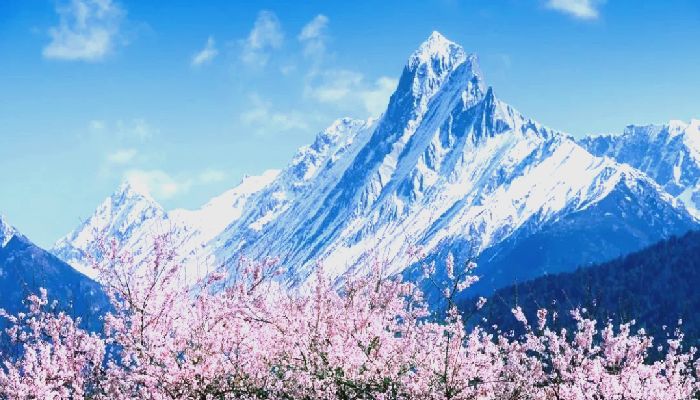
Peach Blossoms in March
Summer in Tibet (June–August): Lush Grasslands, Sacred Lakes, and the Milky Way
In summer, Tibet is covered with lush vegetation, the oxygen content reaches the highest level of the year, the probability of altitude sickness is significantly reduced, and the average temperature is 12 to 25 degrees Celsius, making it a summer resort. However, the rainy season lasts from mid-to-late June to early September, with more rainfall in July and August, mostly showers at night. For photographers, shooting should be arranged during rain breaks, but rainbows often appear after rain, wild flowers bloom on the grasslands, and the Milky Way is spectacular at night.
June: The Last Period of High Transparency Before the Rainy Season
There is little rainfall in early June, with high air visibility, making it suitable for shooting distant views of snow-capped mountains and the starry sky. Wild flowers on the grasslands start to bloom, in yellow, purple and white. The climate is relatively mild in summer, which is the best time to enter Ali Prefecture to shoot wilderness scenery and the starry sky.
- Suitable shooting locations: Wild flowers on Damxung Grassland, the shoreline of Nam Co, the Milky Way at night
- Light suggestions: To shoot the Milky Way, avoid the days around the 15th of the lunar month and choose cloudless and moonless nights. There are good foregrounds at Zhaxi Peninsula of Nam Co. At Mount Kailash in June, you can shoot the Milky Way right after dark, with around 11 p.m. being the best time.
- Weather tips: The temperature is about 20 degrees Celsius in the daytime and drops to 5 degrees Celsius at night in June, so a windproof coat is a must.
July and August: Rainbows After Rain and the Summer Milky Way
These two months see the most rainfall, with showers almost every afternoon. The rainfall brings lush green grasslands, the blooming of flowers such as gesang flowers, and abundant water in rivers and lakes, making the scenery more spectacular. The Naqu Horse Racing Festival is held at the end of July, with Tibetan herdsmen performing horse riding shows, suitable for shooting humanistic themes. The Shoton Festival arrives in mid-to-late August, with rich content such as the Buddha Unfolding Ceremony at Drepung Monastery and Tibetan opera performances. Ali Prefecture in summer is a world-class destination for scenery and starry sky photography.
- Suitable shooting locations: Rainbows spanning Yamdrok Lake after rain, morning mist at Basongcuo Lake, Tibetan wild asses and Tibetan antelopes in the uninhabited areas of Ali. Although July and August are the rainy season, clear starry skies and reflections of holy lakes are more likely to appear after rain, and the chance of encountering rainbows is relatively high.
- Light suggestions: The light changes richly within half an hour after rain, and the light through the gaps in the clouds irradiates the mountains to form a good contrast yet soft light, so quick shooting preparation is needed. The best time to shoot the Milky Way in the rainy season is 1 a.m. to 3 a.m., when the probability of clouds dispersing is relatively high.
- Precautions: Roads in some remote mountainous areas may collapse, so it is recommended to travel by chartered car and avoid self-driving in undeveloped areas.
Summer Summary: If you do not mind occasional rainfall and hope to shoot green grasslands, blooming wild flowers and the summer Milky Way, then summer is the best time for photography in Tibet. But if you pursue stable weather conditions and the full view of snow-capped mountains, summer is not the first choice.
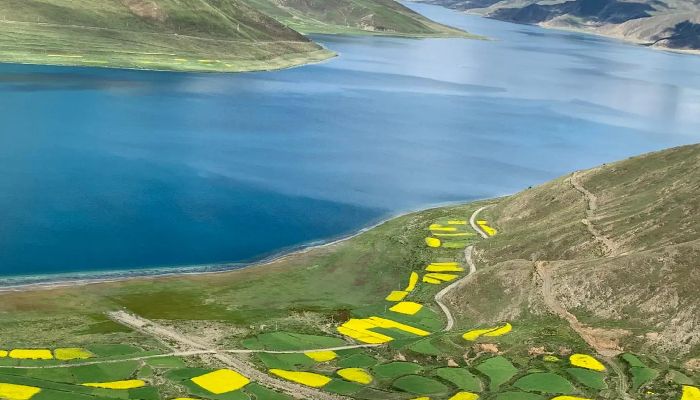
Tibet Yamdrok Lake in Summer
Autumn in Tibet (September–October): Crystal-Clear Skies and Golden Landscapes
Most photographers who live in Tibet for a long time consider autumn the golden season for photography in Tibet. After the rainy season, Tibet has the most stable weather of the year, with a clear sky and high visibility. Especially from late September to late October, the sky is bright blue, the air visibility is extremely high, the leaves turn golden and red, and snow-capped mountains are often fully exposed without any cover.
September: Highland Barley Harvest and Early Autumn Gold
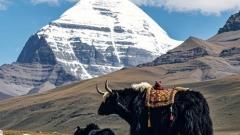
In early September, the highland barley fields in the river valleys start to turn yellow, and Tibetans carry out harvest work, suitable for shooting humanistic themes. Starting from September, the forests around Nyingchi and Ranwu turn orange-yellow and red. The Ali Grand Ring Road enters its best season; Mount Kailash and Manasarovar Lake look more solemn under the clear sky, and the clay forests of the Guge Dynasty Ruins set off against the sunset glow.
- Suitable shooting locations: Highland barley fields in the Lhasa River Valley, autumn harvest scenes in Xigaze, early autumn tree-lined roads in Nyingchi, dusk light and shadow at the Guge Dynasty Ruins
- Light suggestions: Low-angle sunlight can cast long shadows, and 7 a.m. to 8 a.m. is a good time to shoot cooking smoke in villages. The dusk light and shadow of the Zanda Clay Forest and the sunrise at the Guge Dynasty Ruins are the key points of photography in Ali.
- Temperature conditions: The temperature is 15 to 20 degrees Celsius in the daytime and 0 to 5 degrees Celsius in the morning and evening, with a large temperature difference. The climate is dry and comfortable, and there are fewer tourists in scenic spots than in the summer vacation.
October: The Highest Transparency of the Whole Year
October is the month with the cleanest air in Tibet and extremely high visibility, allowing the distant snow-capped mountains to be seen clearly from downtown Lhasa. In mid-October, the grasslands turn golden. The color of all lakes reaches the peak of saturation, and the probability of Mount Qomolangma and Mount Kailash being exposed is very high. There are few clouds and mists in autumn, and shooting the golden sun on Mount Qomolangma at sunrise from the perspective of Rongbuk Monastery yields a stunning effect of golden-red mountain peaks. At the same time, the colorful forest season in Nyingchi reaches its climax, with the banks of Basongcuo Lake covered in layers of dyed forests, featuring progressive layers of golden yellow, bright red and dark green. The probability of Namcha Barwa Peak being exposed rises significantly.
- Suitable shooting locations: The golden sun on Mount Qomolangma at sunrise at Mount Qomolangma Base Camp, distant views of the kora route around Mount Kailash, the bright blue lake surface of Nam Co with Mount Nyenchen Tanglha, colorful forests in Nyingchi. The rural areas are covered in layers of dyed forests in autumn, dotted with red in golden yellow, suitable for shooting landscape blockbusters.
- Light suggestions: To shoot Mount Qomolangma, it is recommended to stay in tents at the base camp or the guest house of Rongbuk Monastery, and set up the camera position two hours before sunset. Sunrise is also a good time for shooting but the temperature is extremely low. For shooting colorful forests in autumn, the light is the best before 10 a.m., soft and not backlit.
- Absolute advantages: There is almost no rainfall, so you can safely arrange shooting in the golden hours of morning and evening. There is much rain and mist in Nyingchi, so it is recommended to reserve time to wait to increase the probability of shooting Namcha Barwa Peak.
Autumn Summary: If you can only choose one time period to enter Tibet, you should choose October. At this time, the best time for photography in Tibet is autumn, especially mid-to-late October. The sky is bright blue, the snow-capped mountains are clear, there are fewer tourists than in the summer vacation, and the travel experience is better.
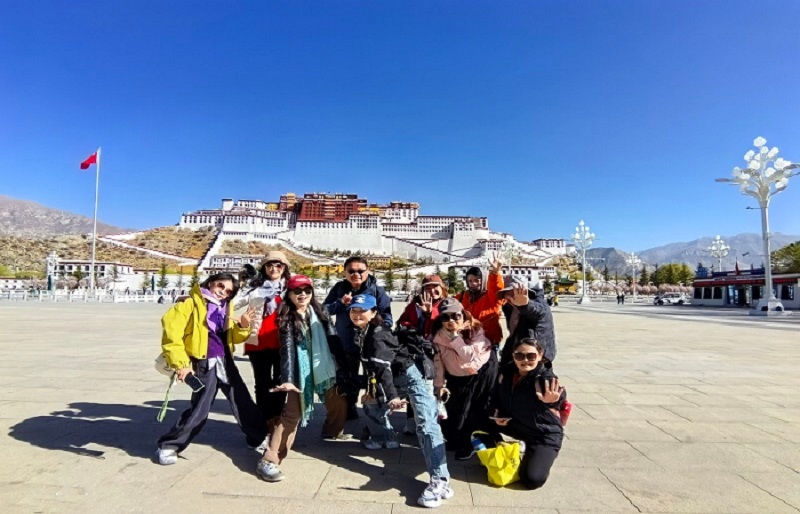
Potala Palace in September
Winter in Tibet (November–February): Blue Ice, Snowy Peaks, and Cultural Wonders
Many travelers think Tibet is too cold for photography in winter, but the actual situation is the opposite. There are very few tourists in Tibet in winter, with an average temperature between minus 10 degrees Celsius and 10 degrees Celsius. Lhasa has abundant sunshine and comfortable daytime temperatures. The advantages are extremely few tourists, low prices of air tickets and accommodation, and many monasteries holding winter Dharma assembly activities. The light angle is low in winter, making the color contrast between the golden roofs of monasteries and the monk robes strong.
November: The End of Autumn Hues and the First Snow of Early Winter
In early November, residual yellow leaves can still be seen in some areas of Nyingchi and Shannan. Snow starts to fall on the plateau in November, with white snow interweaving with golden grasslands, showing distinct layers. Snowfall increases in mid-to-late November, the snow line of snow-capped mountains drops, and the mountain layers become more abundant. The rainy season ends from October to November, the sky is transparent, and the probability of Namcha Barwa Peak being exposed is relatively high.
- Suitable shooting locations: The Potala Palace after snow (shot from the Yaowang Mountain Viewing Platform), pilgrims on the square of the Jokhang Temple
- Light suggestions: The light reflection is strong on sunny mornings after snow, so exposure compensation should be increased. Using side backlight to shoot portraits can outline the silhouette. At Guxiang Lake in Bomi in November, snow-capped mountains, colorful forests and lake water form a single frame, and a mobile phone can also take good shots.
- Special tips: Nam Co and Mount Qomolangma Base Camp may be closed due to heavy snow, so you need to confirm the road conditions before departure.
December and January: Blue Ice and Extreme Purity
This period is the coldest time in Tibet, but also the season when the surface of Pumo Yumco freezes into transparent blue ice. The wind is strong in Tibet in December, and the air is extremely clean. The ice surface of Pumo Yumco presents a blue hue. Ice cracks and bubble ice are suitable for shooting, and there are almost no other tourists. Due to the high mineral content of the lake water, the frozen lake surface shows a gem-like blue color, and ice cracks and bubble ice form natural patterns. The sunrise angle in Lhasa is low, which can illuminate the windows of the Potala Palace.
- Suitable shooting locations: Blue ice bubbles at Pumo Yumco, the ice tongue of Laigu Glacier, warm sun portraits on the streets of Lhasa. The surfaces of Yamdrok Lake and Pumo Yumco freeze in winter, forming blue ice landscapes, with rich color layers on the lake surface at sunrise and sunset.
- Light suggestions: To shoot blue ice, it is best to do it around noon, when the light is vertical, the ice surface color is darker and the shadows are full. The temperature is extremely low in the early morning, but the thin mist at sunrise can make the picture transparent. Pumo Yumco is about 5010 meters above sea level, and sunrise and sunset are the golden hours for shooting blue ice. The bubbles in the ice layer are squeezed out, and when sunlight penetrates, the blue light with a shorter wavelength is reflected, making the ice surface show layered changes from light blue to indigo.
- Equipment requirements: Gloves, face masks and warm shoes must be carried. Camera batteries run out quickly at low temperatures, so it is recommended to prepare several more and put them in close-fitting pockets. The ice surface is very slippery, so crampons are needed to ensure walking safety.
February: Humanistic Themes of the Tibetan Lunar New Year
February is usually the time of the Tibetan Lunar New Year. Local residents wearing new Tibetan costumes can be seen on Barkhor Street in Lhasa, various Dharma assemblies are held in monasteries, and butter flower lanterns are also suitable for shooting. This is the best month to shoot humanistic themes. You can also enjoy winter tourism preferential policies in February; A-level scenic spots are free (except monasteries), with few tourists and low prices of air tickets and accommodation.
- Suitable shooting locations: People prostrating themselves in front of the Jokhang Temple, debating scriptures at Sera Monastery (the winter scripture debating ground is moved indoors with dim light). The snow scene of Mount Zhuomulari is also stunning.
- Light suggestions: Use a large aperture prime lens for indoor shooting, and remember to respect the photographed subjects by smiling or communicating briefly first.
- Special tips: Some guest houses in remote areas may be closed in winter, and chartered car fees rise due to road conditions.
Winter Summary: If you want to shoot blue ice, pure snow-capped mountains and monasteries without tourist interference, and can adapt to the cold climate, then winter is a suitable photography season in Tibet. The blue sky in Tibet is clearer in winter, the snow-capped mountains are purer, the lakes freeze into blue ice, and Namcha Barwa Peak is also exposed more often. The unique cost performance of the best time for photography in Tibet in winter is underestimated by many travelers.
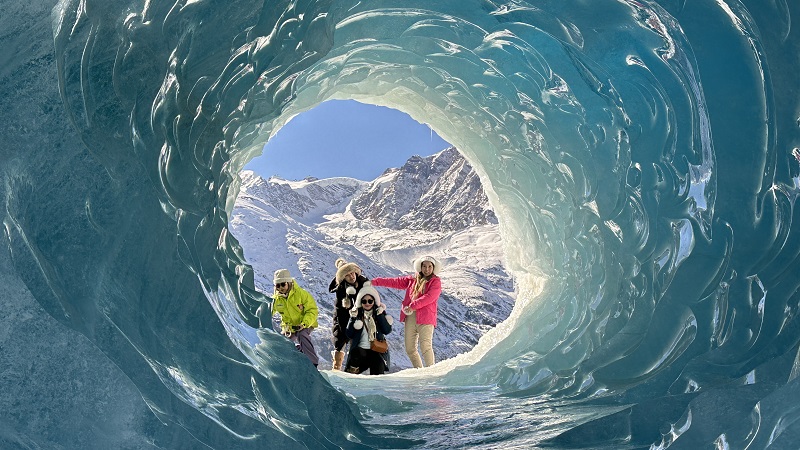
The Laigu Glacier in February
Influence of Transportation Choices on the Best Time for Photography in Tibet
The means of transportation to enter Tibet directly affects the time arrangement of the shooting trip. The following explains the characteristics of different means of transportation.
Air Travel: Fastest Speed and Simple Procedures
The main air gateway to Tibet is Lhasa Gonggar Airport. Tourists departing from other regions can first fly to Chengdu, Chongqing, Xi’an, Kathmandu or Shangri-La, which are closely connected with major international air routes in China and have regular flights to Tibet. The flight from Chengdu to Lhasa takes about 2 hours, which is the most efficient choice. For first-time travelers to Tibet who are not sure about altitude acclimatization, air travel allows them to arrive faster and reserve more time to rest and acclimatize in Lhasa.
Qinghai-Tibet Railway: Combining Scenery Viewing and Altitude Acclimatization
If you are not in a hurry, the Qinghai-Tibet Railway is a good choice. The whole journey from Xining to Lhasa is about 1956 kilometers, the only railway line into Tibet at present, passing through the uninhabited areas of Hoh Xil, the source of the Yangtze River and crossing the Tanggula Mountains, with magnificent scenery. The train enters the plateau at a slow speed, allowing the body to gradually adapt to the altitude and reducing the probability of altitude sickness. For travelers who hope to shoot along the way, the railway line itself is also a moving scenic line.
Overland Entry from Kathmandu: Suitable for In-depth Travelers
There are direct flights from Kathmandu to Lhasa every day, and there is also an overland route into Tibet from the Gyirong Port. The whole overland journey is about 800 kilometers, passing through canyons, primeval forests and waterfalls, with village styles gradually transitioning from Nepalese characteristics to Tibetan styles, suitable for in-depth photography travel with shooting while walking. This route requires applying for a Tibet Travel Permit and a border pass, and it is recommended to arrange it uniformly through a travel agency.
How Light and Equipment Affect the Best Time for Photography in Tibet
Light Conditions Are the Key Factor Determining Shooting Effects
When shooting in Tibet, the best light appears around sunrise and sunset, the so-called golden hours in photography. The light one hour after sunrise and one hour before sunset is warm orange-yellow with a strong three-dimensional sense, suitable for shooting mountains, lakes and clouds. The sky is dark blue and purple 20 to 60 minutes before sunrise or after sunset, suitable for shooting night scenes or frames of snow-capped mountains and cities together. Many photographers wait for a long time at the shooting location to capture this moment of light. From the perspective of a single day, the best time for photography in Tibet is one hour after sunrise and one hour before sunset.
Equipment Preparation Suggestions
- Camera: Carry at least one, preferably two; one with a telephoto lens (200mm or above, 300mm or above is better), and one with a prime or standard zoom lens
- Tripod: A stable tripod is a must, especially in windy areas on the plateau
- Batteries: Batteries run out quickly at low temperatures, prepare several more and put them in close-fitting pockets
- Protection: There is a lot of wind and sand, so it is recommended to protect the camera with a sandproof cover or plastic bag
- Filters: A polarizing filter is used to eliminate glare when shooting lakes, and a graduated neutral density filter is used to balance the light ratio between the sky and the ground.
Guides from China Dragon Travel often remind: Shooting in Tibet depends 70 percent on weather conditions and 30 percent on patience. The best shooting position and the most expensive equipment are not as good as waiting for an extra day or an extra hour at a location.
The Best Time for Photography in Tibet Corresponding to Different Shooting Themes
The recommended travel times are sorted out according to shooting themes as follows:
- Shooting peach blossoms: Late March to early April, the first choices are Bomi Peach Blossom Valley, Gala Peach Blossom Village and Suosong Village
- Shooting the full view of snow-capped mountains (Namcha Barwa Peak, Mount Qomolangma): October to November, and April to May. Namcha Barwa Peak is best shot in Suosong Village, and it is recommended to reserve two to three days for waiting
- Shooting blue ice lakes: Late December to early February, Pumo Yumco and Laigu Glacier. Pumo Yumco is 5010 meters above sea level, the best viewing period for blue ice is late December to February, and the light penetration is the strongest around noon
- Shooting golden forests: Mid-October to late October, the river sections along the rivers in Nyingchi and Shannan. The middle section of the wooden plank road at Guxiang Lake in Bomi is a shooting spot where a mobile phone can also capture snow-capped mountains, colorful forests and lake water in a single frame
- Shooting grassland wild flowers: Mid-June to mid-July, the alpine meadows in Damxung and Naqu
- Shooting humanistic scenes and Dharma assemblies: February for the Tibetan Lunar New Year, or July for the Shoton Festival. The light angle is low in winter, making the color contrast between the golden roofs of monasteries and the monk robes strong
- Shooting the starry sky and the Milky Way: April to June (the center of the Milky Way rises at night), September to October (high air transparency and moderate temperature). Ali Dark Sky Park is the highest dark sky park in the world, with excellent starry sky observation conditions.
Based on the above comparison, the best time for photography in Tibet depends on the theme you want to shoot the most. If you hope to shoot multiple themes, October is the most reliable; if you travel specifically for blue ice, choose winter.
Choosing the Best Time to Visit Tibet for Your Photography Goals
Ultimately, the best time to visit Tibet for photography depends on your creative vision. Autumn—especially October—is widely regarded as the prime season for capturing crystal-clear skies and iconic Himalayan peaks. Spring is ideal for photographing peach blossoms in Nyingchi, while summer offers vibrant grasslands, dramatic clouds, and breathtaking views of the Milky Way. For those seeking rare and ethereal landscapes, winter unveils frozen lakes, sapphire-blue ice, and serene monasteries with minimal crowds.
For a seamless and rewarding photography experience, working with a knowledgeable travel specialist can make all the difference. China Dragon Travel provides expertly designed Tibet photography tours tailored to seasonal highlights, optimal lighting conditions, and exclusive vantage points. With professional guidance and meticulous planning, you can capture Tibet at its most spectacular and transform your journey into an unforgettable visual masterpiece.