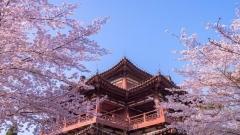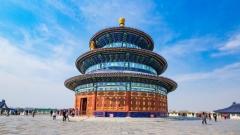

One of the most common questions travelers ask before visiting Xi’an is: “When is the best time to go?” The answer depends largely on what kind of experience you are looking for. Xi’an changes noticeably throughout the year, and each season offers a completely different atmosphere. Spring brings cherry blossoms and pleasant temperatures, autumn fills the ancient city with golden ginkgo leaves, summer creates lively nights around Datang Everbright City, while winter offers quieter streets and fewer crowds at major attractions. For most international travelers, April and October are usually considered the most comfortable months thanks to mild weather and beautiful seasonal scenery. However, even the off-season months can provide unique advantages for travelers who prefer lower prices and a slower pace.
Peak Season in Xi’an
Travel Guide in Spring
April is the most stable month in Xi’an’s spring climate. It is recommended to travel between April 7 and 25. The average temperature is around 15°C. You don’t need heavy jackets during the day, and nights are not too cold. Outdoor visiting conditions at major scenic spots improve significantly. The Pit One exhibition hall at the Terracotta Warriors is not as chilly as in winter. The experience at outdoor scenic areas is much more comfortable. Hotel prices and consumption costs decrease slightly after the Qingming Festival holiday.
Travel Guide in Autumn
Autumn is when Xi’an’s landscapes are most concentrated. The best travel experience comes in mid-to-late October. During this period, the thousand-year-old ginkgo tree at Guanyin Zen Temple has a golden canopy, and fallen leaves carpet the ground, creating the most representative scene of Xi’an autumn. Ginkgo trees line the City Wall Ring Park, making cycling to view them an October-exclusive experience. Xi’an’s air is dry with low humidity in autumn, making it feel comfortable. Note the day-night temperature difference is about 10°C, rainfall is scarce, and the air is dry, so keep warm and protect your skin.
Tips for Peak Seasons
The Qingming Festival holiday (April 4-6) and the National Day holiday (October 1-7) are the peak tourist periods in Xi’an. Hotel prices rise 30% to 50%. Queuing time at Qinglong Temple on weekends can reach 1 hour. Queuing time at the Terracotta Warriors exceeds 1 hour. Foreign travelers should try to depart between April 7-25 or October 8-25. These two windows avoid the crowds of Qingming and National Day, while cherry blossoms or ginkgo are still at their best.
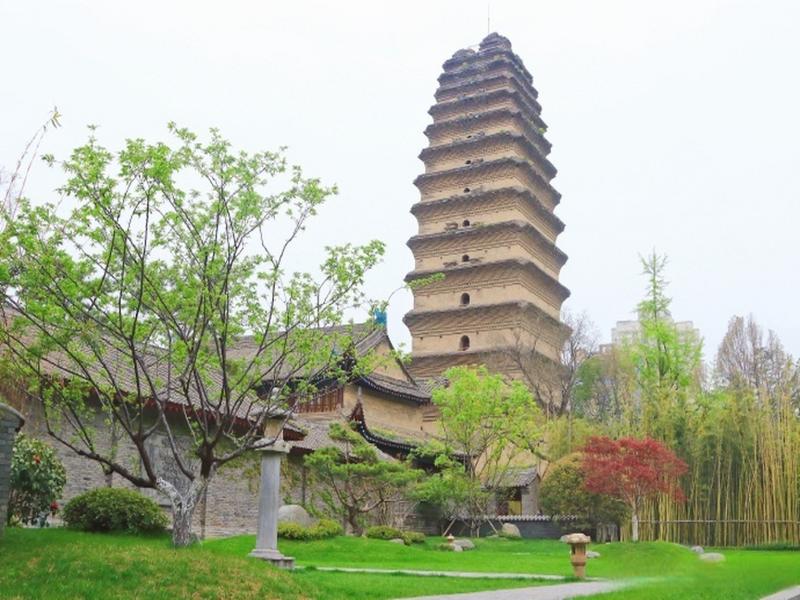
The Vibrant Giant Wild Goose Pagoda
Off Season Travel Guide in Xi’an
Travel Guide in Summer
Summer is not the best season to visit Xi’an, but it has its own appeal. If you only have time during summer vacation, June is the most suitable month temperature-wise. It lacks July’s frequent highs above 35°C. Overall temperatures stay between 20-32°C, within an acceptable range. June is before the summer peak, tourist density hasn’t peaked, and hotel prices are 10-20% lower than in May.
Travel Guide in Winter
Winter is not the best season to visit Xi’an. December and January temperatures can drop to -8°C, significantly shortening outdoor activity time. If you have a limited budget, don’t mind the cold, or want to avoid crowds, November is the most acceptable choice in winter. November temperatures are 3-14°C, allowing comfortable daytime outdoor activities; a down jacket suffices at night. November falls between the National Day and New Year’s holidays, with the lowest tourist density of the year. The Terracotta Warriors receives less than half the daily visitors compared to October. Scenic spots implement off-season ticket prices, 20-30% lower than peak season.
Tips for Off Seasons
If you can only travel to Xi’an in the off-season, note that UV intensity increases in the afternoon in June. It’s not recommended to walk or cycle on the ancient city wall at noon to avoid heatstroke. Drink at least 2 liters of water per day in summer, and bring sunscreen and a wide-brimmed hat. The Terracotta Warriors Pit One is extremely crowded in July and August; try to avoid these two months if you want to see them. Temperatures drop further in late November; the earlier you travel, the more comfortable you’ll feel. Prepare a down jacket, thermal underwear, hat, gloves, and a scarf.
Must-See Sights in Peak Seasons
Qinglong Temple
Qinglong Temple is located north of Tiemiaocun Village in the southern suburbs of Xi’an. The temple is free to enter. Accessible areas include the West Pagoda Court ruins and the East Pagoda Court ruins. You need to make a reservation through WeChat public account to enter. The temple has a relic exhibition room and a Kukai Memorial Hall, displaying the history of Qinglong Temple, archaeological findings, and Kukai’s life story. The visit takes about 1.5 hours.
City Wall Ring Park
The City Wall Ring Park at the foot of Xi’an’s ancient city wall is a belt-like green space encircling the wall, about 14 kilometers long. From early to mid-April, the section from Yongning Gate to Wenchang Gate (about 1.5 km) has the densest flower landscapes. Visitors on the wall can overlook the garden. Renting a bike to cycle on the wall while enjoying both the inner ring park and the outer modern city skyline is an April-exclusive experience. The ring park is free and does not require reservations. City Wall admission is 54 RMB.
Guanyin Zen Temple
Guanyin Zen Temple is located at the northern foot of Zhongnan Mountain in Chang’an District, Xi’an, with a history of over 1,400 years. From late October to early November each year, the canopy of this ginkgo tree turns completely golden. The tree is over 20 meters tall with a crown diameter of about 15 meters. Fallen leaves carpet the entire courtyard, forming a golden floor. It is recommended to arrive before 9:00 am, otherwise the queue to enter may exceed 1 hour. The temple is free. Weekend foot traffic is much higher than weekdays. Nearby, there are Taoist sites like Zhongnan Mountain Ancient Louguantai and Huaniu Spring, which can be visited together.
Giant Wild Goose Pagoda
The Giant Wild Goose Pagoda is located within Daci’en Temple in Yanta District, Xi’an. It has seven stories and is one of Xi’an’s best-preserved Tang Dynasty structures. Climbing to the top offers a panoramic view of the Qujiang New District and the Tang Dynasty Ever Bright City. Daci’en Temple admission is 50 RMB, climbing the pagoda costs an additional 30 RMB. It is recommended to arrive after 4:00 pm, climb the pagoda for the panoramic view, then watch the fountain show in the square after sunset.
Must-See Sights in Off Seasons
Night Performance in Tang Dynasty Ever Bright City
The Tang Dynasty Ever Bright City is a 2.1-kilometer pedestrian street themed on Tang Dynasty culture, located at the foot of the Giant Wild Goose Pagoda. Summer is the season with the densest night performances here. Street performances occur every half hour. Performers like the “Stone Man” and “Floating Samurai” interact with the audience until 10:00 pm. The musical fountain at the North Square of the Giant Wild Goose Pagoda has shows at 8:00 pm and 9:00 pm each night in summer. The fountain is 150 meters long, with water columns reaching up to 60 meters. All performances are free, no tickets required.
Huaqing Palace Performance
“The Song of Everlasting Sorrow” is China’s most famous live historical dance drama. The performance takes place within the Huaqing Palace scenic area, using Li Mountain as the backdrop. It tells the love story of Emperor Xuanzong and Consort Yang. The show involves over 300 actors, using water screens, fire, laser, and other special effects, creating an extremely spectacular scene. In summer, there are two shows nightly (first at 8:10 pm, second at 9:40 pm). Ticket prices range from 299 to 988 RMB depending on seat location. Foreign travelers can purchase tickets on the official platform using their passport.
Provincial Museum
The hours from 11:00 am to 3:00 pm are the hottest part of the day in summer, suitable for indoor activities. The Shaanxi History Museum is air-conditioned. Free tickets need to be reserved 7 days in advance on the official WeChat public account. Weekend tickets are in high demand. If you cannot get a free ticket, you can buy a ticket for the Tang Tomb Murals Gallery (270 RMB). The museum is closed on Mondays. It is recommended to allocate at least 3 hours.
Cuihua Mountain
Cuihua Mountain is located at the northern foot of the Qinling Mountains in Chang’an District, Xi’an. It is the core scenic area of the Qinling Zhongnanshan UNESCO Global Geopark. From late December to early February each year, multiple waterfalls in the area, including Tianchi Waterfall and Lengquan Waterfall, freeze due to low temperatures, forming an ice waterfall landscape. Tianchi Ice Waterfall is about 50 meters high and 10 meters wide. The ice layer is crystal clear, appearing blue-green under sunlight. Visitors can walk along boardwalks for a close view. The ice layer can be over 1 meter thick. Cuihua Mountain has very few visitors in winter, a stark contrast to summer’s crowds. Admission is 65 RMB, one-way cable car is 40 RMB.
City Wall
Winter is the quietest time of year on Xi’an City Wall. The walking experience is far more comfortable than in summer: no sweating, frequent hydration, or sunburn concerns. The wall is 13.7 kilometers long; a winter hike takes about 3 hours. You can briefly rest and shelter from the wind inside the watchtowers along the way. Bike rentals operate normally in winter, but if the road surface has snow or ice, walking is recommended. Admission is 54 RMB. The wall opens at 8:00 am. It is recommended to arrive in the morning when light and temperature are suitable.
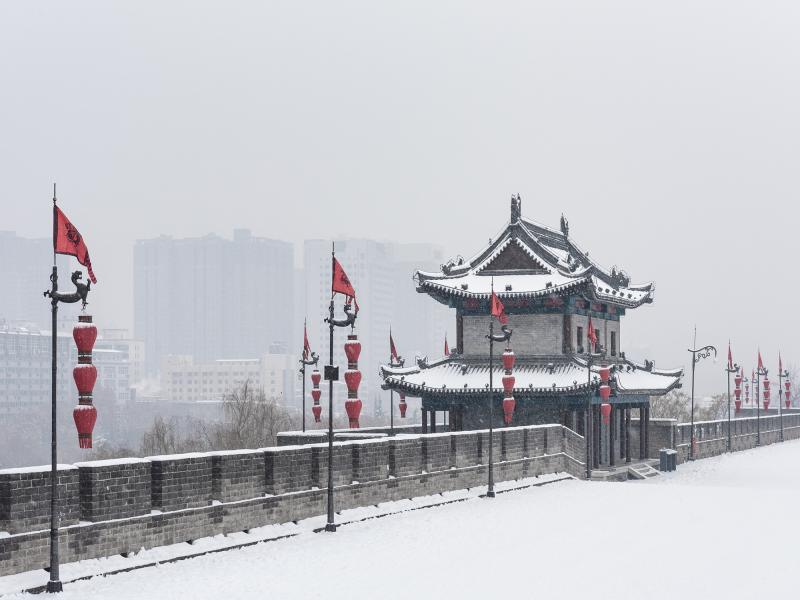
Xi’an City Wall in Winter
Practical Tips for Traveling in Xi’an
Recommended Travel Times
April 7-25 and October 8-25 are the two most recommended travel windows of the year. These periods fall right after the Qingming and National Day holidays. Tourist density has dropped back to normal levels, and hotel prices are significantly lower than during the holidays. If you can only travel in summer, choose June, avoiding the high heat and summer crowds of July and August. If you can only travel in winter, choose November, avoiding the small peaks of New Year’s and Spring Festival.
Ticket Booking
Terracotta Warriors tickets can be booked in advance on the official WeChat public account. It’s recommended to book a week ahead in peak season, 3 days ahead in off season. Free tickets for the Shaanxi History Museum need to be reserved 7 days in advance on its public account. Weekend tickets are in high demand during peak season. City Wall and Bell & Drum Tower tickets can be purchased on the day. Foreign travelers should book with their passport and bring the original for entry via the manual channel.
Clothing by Season
April requires long-sleeved T-shirts, a light jacket, a folding umbrella, and a mask. June requires short sleeves, sun-protective clothing, a sun hat, sunscreen, sunglasses, an umbrella, and insect repellent. October requires long-sleeved T-shirts, a light jacket, a fleece, and lip balm. November requires a down jacket, thermal underwear, a hat, gloves, and a scarf.
The Best Season for Xi’an Depends on the Experience You Want
Xi’an is one of those cities that feels different every season. In spring, ancient temples and city parks are surrounded by blossoms; in summer, the city stays alive late into the night with performances, lights, and busy food streets; in autumn, golden ginkgo trees transform the old capital into one of the most atmospheric destinations in China; and in winter, the quieter streets allow visitors to experience the historical side of Xi’an in a calmer way. Because of this, there is no single “perfect” season for everyone — the best time to visit Xi’an depends on the kind of journey you want to have.
For travelers visiting China for the first time, joining a well-organized seasonal tour can also make the trip much smoother. Experienced companies such as China Dragon Travel often adjust itineraries based on weather, seasonal scenery, and crowd levels, helping travelers combine famous landmarks, local food, night views, and cultural experiences more efficiently. Whether you choose the colorful spring, the lively summer, the golden autumn, or the peaceful winter, Xi’an remains one of the most rewarding cultural destinations in China throughout the year.